
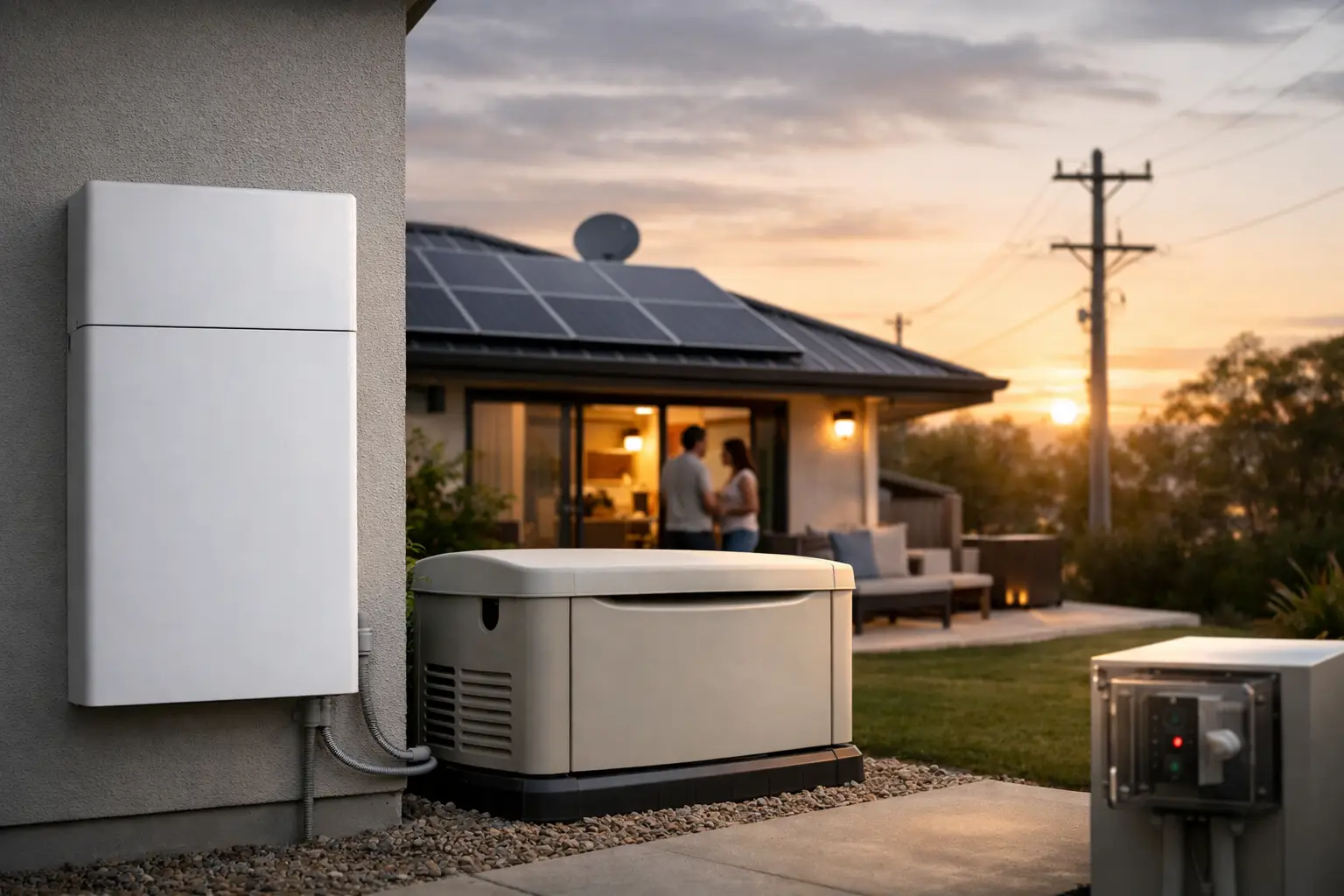
When the power drops out, solar panels alone will not usually keep your home running. For safe, reliable electricity during an outage, your system needs a battery, an appropriate inverter and a backup setup designed for the loads you want to protect. Understanding how backup power works helps you choose a system that supports your household when it matters, rather than simply adding panels that switch off with the grid.
For Australian households facing higher power bills, storm-related outages and growing reliance on electric appliances, backup power is about more than convenience. It gives you more control over when you use your own solar energy and reduces dependence on the grid.
How backup power works with solar and batteries
A solar battery stores surplus electricity generated by your solar panels during the day. Instead of exporting all unused solar energy to the grid for a low feed-in tariff, the battery holds that energy for use later – typically after sunset, during expensive peak periods or when there is a blackout.
During normal operation, your solar and battery system continually balances three energy sources: solar generation, stored battery energy and grid electricity. Your home uses solar power first when it is available. Any extra energy can charge the battery. Once the battery is full, remaining energy may be exported to the grid, depending on your system settings and retailer arrangement.
When solar production falls in the afternoon or evening, the battery can power your home before you need to buy electricity from the grid. This is where much of the day-to-day bill saving comes from. Backup capability adds another layer: it allows selected circuits, or in some cases the whole property, to keep operating when the grid fails.
What happens when the grid goes down?
In a standard grid-connected solar system without a battery, the inverter shuts down during an outage. This is a safety requirement. It prevents your system from sending electricity into damaged power lines while network crews are working to restore supply.
A battery system with backup capability can safely disconnect your property from the grid through a process called islanding. A backup gateway, automatic transfer switch or compatible inverter detects the outage and separates your home from the network. The battery then creates a stable local power supply for the circuits included in your backup configuration.
The changeover may be almost immediate, although the exact experience depends on the equipment and design. Some systems have a brief interruption before backup power starts, while others transition quickly enough that lights and compatible appliances continue with little disruption.
Once the system is operating in backup mode, the battery inverter manages the available power. If the sun is out, your solar panels can continue generating electricity to run appliances and recharge the battery. At night, or in heavy cloud, the home draws from stored battery energy until the grid returns or the battery reaches its minimum reserve setting.
Critical-load backup versus whole-home backup
The most suitable backup arrangement depends on what you need to keep running and the capacity of your battery and inverter.
Critical-load backup protects a dedicated group of essential circuits. This commonly includes selected lights, the fridge, internet equipment, power points, a garage door and possibly a small air conditioner. It is often the most cost-effective option because it avoids asking the battery to support every high-demand appliance in the house.
Whole-home backup is designed to supply most or all household circuits during an outage. It can provide a more familiar experience, but it requires careful planning. Large appliances such as ducted air conditioning, electric hot water, ovens, pool pumps and EV chargers can draw substantial power. A battery may have enough stored energy to run them for a period, but the inverter must also be able to handle their instantaneous demand.
A well-designed system does not simply promise that the whole house will stay on. It identifies the appliances that matter, checks their starting and running loads, then matches the battery capacity and inverter output to realistic usage. That is how you avoid draining the battery quickly or overloading the backup supply.
Battery capacity and power output are different
Two battery specifications shape your backup experience: capacity and power output.
Capacity is measured in kilowatt-hours, or kWh. It tells you how much energy the battery can store. A 10 kWh battery could theoretically supply a steady 1 kW load for around 10 hours, before allowing for reserve limits and system losses. In practice, runtime changes with your appliance use, weather and whether solar generation is available during the outage.
Power output is measured in kilowatts, or kW. It tells you how much electricity the battery can deliver at one time. A battery with suitable capacity but limited output may run your fridge, lights and modem comfortably, yet struggle if several high-draw appliances start together.
This distinction matters for households that want blackout protection. A larger battery gives you more stored energy, while stronger inverter output gives you the ability to run more appliances at once. Neither figure should be considered in isolation.
How long can backup power last?
There is no single answer because every property uses electricity differently. A carefully managed battery may support essential loads overnight and recharge from solar the following day, extending its usefulness through a multi-day outage. A household running multiple air conditioners, cooking appliances and pumps may use the same stored energy much faster.
For example, keeping a fridge, a few lights, internet, mobile charging and selected power points operating requires far less energy than maintaining normal whole-home consumption. During an outage, smart energy management makes a genuine difference. Switching off non-essential loads, delaying laundry and avoiding electric heating or high-power cooking can preserve stored energy for much longer.
Solar conditions also matter. Backup is strongest when the battery can recharge from your panels during daylight hours. In prolonged wet weather, winter or heavy smoke conditions, solar generation may be lower. Battery backup improves resilience, but it does not make energy supply unlimited.
The role of smart monitoring and reserve settings
Modern battery systems give you visibility through an app or monitoring platform. You can see solar production, household consumption, battery state of charge and grid imports or exports. This information helps you understand where your electricity is going and adjust habits to capture more value from the system.
Most systems also allow a backup reserve. Rather than using every available kilowatt-hour to reduce evening grid purchases, you can hold back a set percentage for an outage. A higher reserve provides more protection if the grid fails, while a lower reserve may improve everyday bill savings. The best setting depends on how often outages occur in your area, your energy costs and how much resilience matters to your household or business.
Some batteries can also be configured for time-of-use tariffs, charging when electricity is cheaper and discharging when prices are higher. Eligible systems may participate in a virtual power plant, where available battery capacity supports the wider grid in exchange for program benefits. These arrangements can improve returns, but you should understand how they affect battery control, discharge limits and backup reserve before joining.
Design choices that determine whether backup performs well
Backup power is not an off-the-shelf promise. Your switchboard, existing solar inverter, phase configuration, appliance loads and local network requirements all influence the right solution.
A home with single-phase power has different considerations from a three-phase property. Businesses may need protection for refrigeration, security systems, point-of-sale equipment, communications or essential machinery. Older switchboards may need upgrades before a battery can be installed safely and compliantly.
Installation quality is equally important. The battery, inverter and backup components must be compatible, correctly configured and installed by qualified professionals. Your installer should clearly explain which circuits will remain powered, what cannot run in backup mode and how to manage energy during an extended outage. Government rebates and incentives may also be available, though eligibility, values and program rules can change.
Is a solar battery worth it for backup power?
For many households, the value is not only measured by blackout protection. A battery lets you use more of the solar energy you generate, reduce grid purchases in the evening and respond more effectively to changing electricity tariffs. Backup capability adds confidence that essential services can continue when the network is unavailable.
The right investment depends on your solar production, energy use after sunset, tariff structure, outage risk and future plans such as an electric vehicle or all-electric heating. It also depends on whether you want critical-load protection or a broader whole-home solution.
GridFree Solar designs battery-led systems around those practical questions, including system sizing, compliant installation, monitoring and assistance with applicable rebate paperwork. The aim is a setup that makes financial sense on ordinary days and gives your property useful protection on the difficult ones.
A good backup system should feel simple when the lights go out: the essentials stay on, your stored solar energy is used intelligently, and you know exactly what your home can handle.