
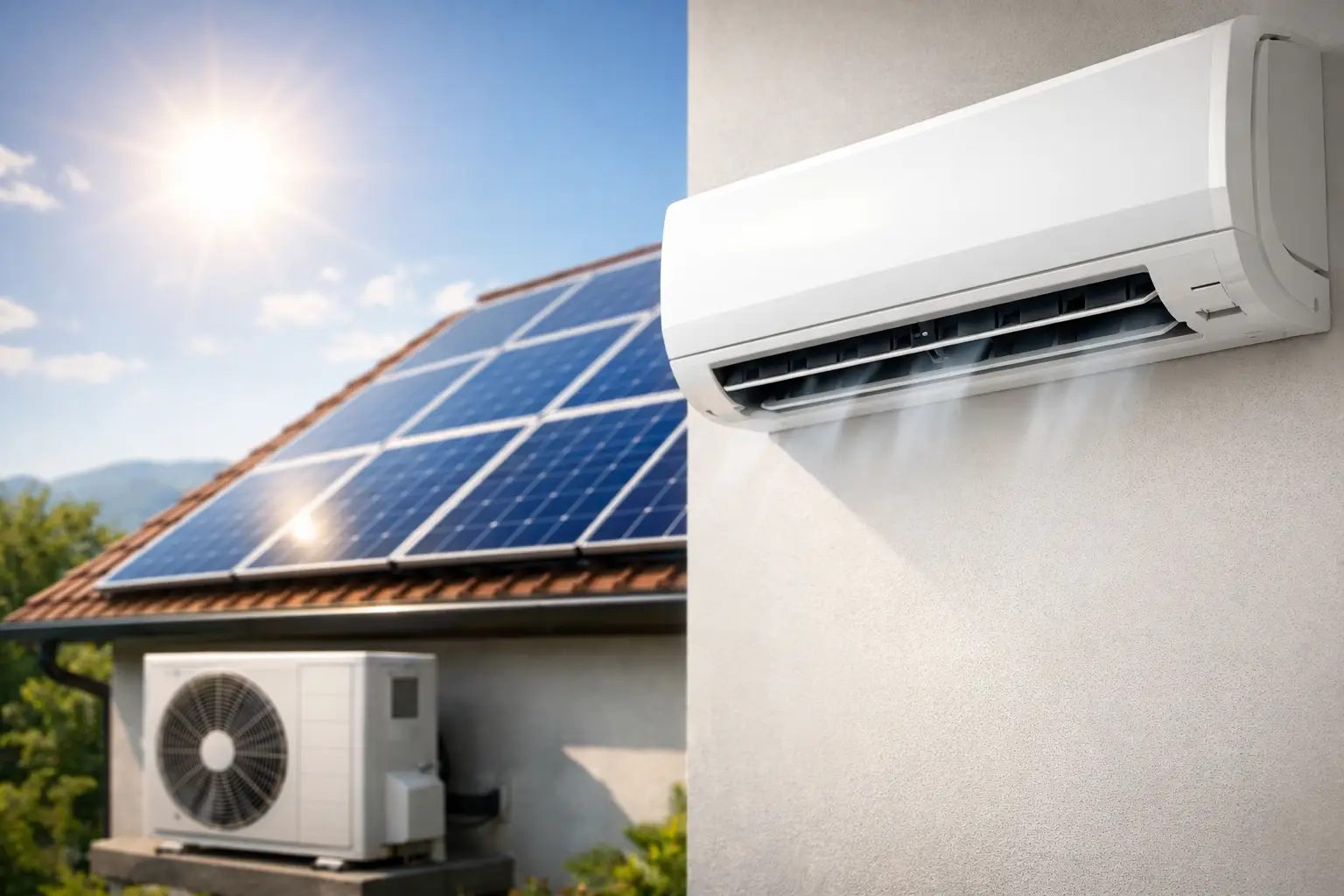
A hot 38°C afternoon is when solar looks most appealing: the sun is strong, your air conditioner is working hard, and your electricity bill can climb by the hour. So, can solar power run aircon? Yes. A correctly designed solar system can run your air conditioner during daylight, and a solar battery can extend that benefit into the evening. The right setup depends on your aircon’s energy use, when you cool your home, roof space, battery goals and how much grid backup you want.
For most Australian households, the practical aim is not to make the air conditioner run on solar alone every minute of every day. It is to use your own low-cost solar generation first, store surplus energy where it makes financial sense, and draw less expensive power from the grid when cooling demand peaks.
Can solar power run aircon during the day?
Yes. Solar panels produce electricity as sunlight reaches them, while an inverter converts that electricity into the power your home can use. If your panels are generating more than your home’s other appliances are using, that solar energy can run a split-system or ducted air conditioner directly.
This is particularly well suited to sunny summer days. Solar generation usually rises from mid-morning, peaks around the middle of the day and falls later in the afternoon. Cooling demand often follows a similar pattern, especially in homes that heat up through the day. Running the aircon earlier can also be smarter than waiting until rooms are uncomfortably hot. You can pre-cool the house while solar output is high, then reduce the load as the sun drops.
There is one important catch: panel output changes with weather, season, roof orientation and shade. Your aircon also does not draw the same amount of power all day. It uses more energy when first bringing a hot room down to temperature, then cycles to maintain it. A well-designed system accounts for those changing conditions rather than promising identical output every hour.
How much power does an air conditioner use?
Air conditioner capacity is commonly shown in kilowatts, but the cooling capacity on the unit is not the same as its electrical consumption. A 5 kW split system, for example, may provide 5 kW of cooling while using roughly 1 to 2 kW of electricity under normal conditions. Its actual draw can be higher or lower depending on the model, room temperature, insulation, thermostat setting and outdoor heat.
As a broad guide, a small bedroom split system may use around 0.5 to 1.5 kW while operating. A medium living-area split system may use around 1 to 2.5 kW. Larger ducted systems can use several kilowatts, particularly when multiple zones are cooling at once.
That difference matters when sizing solar. If your household has a 6.6 kW solar system, it does not mean there will always be 6.6 kW available for cooling. At that moment, the solar output may be reduced by cloud cover or late-afternoon sunlight, while your fridge, pool pump, oven, lighting and other appliances are already consuming power.
The most useful starting point is your actual usage data. Aircon specifications, electricity bills and smart monitoring can reveal when your home uses the most energy and how much solar is being exported. This allows a system designer to match generation and storage to your household rather than relying on a generic system size.
Solar panels, batteries and inverters all have a role
Solar panels are the source of daytime energy. More panel capacity can provide more electricity for cooling, but roof layout and your daytime consumption still matter. A home that exports a large amount of solar on clear days may have a strong opportunity to redirect that energy into air conditioning or a battery.
A battery stores excess solar for later. This can be valuable because many households need cooling most in the late afternoon and evening, after panel output has started to fall. With the right battery capacity and settings, stored solar can cover part of that evening aircon use, reduce peak grid imports and provide greater control over your energy costs.
The inverter is equally important. It must be able to supply enough power at one time for your air conditioner and other major loads. Battery capacity is measured in kilowatt-hours, which tells you how much energy can be stored. Battery output is measured in kilowatts, which tells you how much power it can deliver at once. A large-capacity battery with limited output may not support every high-demand appliance operating together.
For homes considering backup power, the design requires another layer of planning. Not every solar and battery system can run air conditioning during a blackout. Backup capability depends on the selected battery, inverter, switchboard configuration and which circuits are included. In some cases, essential circuits such as refrigeration, lights, internet and selected power points are prioritised over ducted air conditioning. In others, a suitably designed system may support selected split systems. The answer should be confirmed before installation, not assumed after it.
What system size is right for cooling your home?
There is no single solar-and-battery package that suits every air conditioner. A household using one efficient split system in the afternoon has very different needs from a family cooling a large, poorly insulated home with ducted air conditioning from midday until bedtime.
A tailored design considers four practical questions:
- How much electricity does your air conditioning use across a typical summer day?
- When do you usually cool the home: daytime, evenings, overnight or all three?
- How much usable roof area has good solar access?
- Do you want lower bills, blackout backup, reduced grid dependence, or a combination of these outcomes?
For daytime cooling, adding solar panel capacity may deliver the strongest result. For evening cooling, battery storage becomes more relevant. For overnight aircon, a battery can help, but the required storage can become substantial if the system runs for many hours. It may be more economical to combine a sensible battery size with energy-efficient cooling habits and retain the grid as support when needed.
Small commercial sites face similar decisions. A café, office, workshop or retail space may use significant cooling while the sun is out, making solar particularly well aligned with business hours. Load monitoring is valuable here, because refrigeration, machinery and lighting can change the available solar energy for air conditioning.
Ways to get more solar value from air conditioning
The cheapest kilowatt-hour is often the one you do not need to use. Improving the home’s thermal performance can reduce the solar system size needed to maintain comfort. Ceiling insulation, window coverings, draught sealing, external shading and sensible zoning all reduce the amount of heat your aircon has to remove.
Set the thermostat realistically. In summer, setting cooling around 24°C to 26°C is generally more efficient than trying to make the home feel cold. Clean filters and regular servicing also help the system perform as intended. If you have ducted air conditioning, only cool occupied zones where possible.
Smart controls can make solar self-consumption easier. Schedule cooling to begin before the house gets too hot, particularly when solar production is strong. If your energy monitoring shows excess generation at midday, this may be the ideal time to pre-cool living areas, run the pool pump or charge the battery. These choices can reduce exports that earn a modest feed-in credit and replace electricity you would otherwise buy at a higher retail rate.
Do rebates make solar and battery storage more achievable?
Government incentives and state-based programs can improve the upfront economics of eligible solar and battery installations, but the available support, eligibility rules and paperwork can change. The right approach is to assess the current incentives for your property, confirm product eligibility and ensure the installation meets all required standards.
Rebates should support a sound system design, not drive it. An undersized system can leave you disappointed on hot days, while an oversized battery may take longer to justify if your household does not have enough surplus solar or evening demand. A clear proposal should show expected generation, consumption assumptions, battery operation and the factors that could affect savings.
A better way to plan solar-powered cooling
Start with your real household behaviour. Consider the hottest months, not just an average electricity bill. Note how many air conditioners run at once, whether anyone is home during the day, and whether you want the system to help during outages. From there, a site assessment can identify roof suitability, shade, switchboard requirements and the most practical solar and battery configuration.
GridFree Solar designs integrated solar and battery systems around the way a property actually uses energy, while helping customers navigate installation requirements and available rebate processes. The goal is straightforward: use more of the power your roof generates and rely less on costly grid electricity when your home needs cooling most.
A well-sized system will not make the weather less fierce, but it can make a long Australian summer far less punishing on your power bill.