
Ninety unscheduled coal power outages rocked the grid last summer. If your current storage system left you in the dark, it’s time to rethink your strategy. For many Melbourne homeowners, upgrading to a lithium solar battery is the only way to guarantee energy security while the traditional grid falters.
It’s frustrating to watch your solar savings vanish because your old batteries can’t hold a charge like they used to. You’ve invested in solar to gain independence, not to remain at the mercy of rising peak-hour rates. We understand the frustration of declining performance and the confusion surrounding technical compatibility. You deserve a system that works as hard as you do.
This 2026 guide reveals how transitioning to modern Lithium Iron Phosphate technology slashes your power bills and triples your storage lifespan. You’ll discover how to secure an upfront discount of roughly 30 per cent through the federal Cheaper Home Batteries Program before the STC factor reduces in May. We’ll explain how to navigate the new Victorian income thresholds and ensure your system delivers total energy autonomy for over a decade.
Key Takeaways
- Understand why traditional gel and AGM batteries are obsolete and why a total system modernisation is essential for 2026 energy demands.
- Learn the critical role of the Battery Management System (BMS) in upgrading to a lithium solar battery to ensure your inverter and storage communicate perfectly.
- Discover how to slash round-trip energy losses from 20 per cent to under 5 per cent, significantly increasing the usable power harvested from your panels.
- Identify the specific federal rebates and point-of-sale discounts available to Melbourne homeowners to offset the initial cost of high-capacity lithium storage.
- Follow a professional four-step process from site audit to commissioning to guarantee a system sized perfectly for your home’s unique load profile.
Why Upgrading to a Lithium Solar Battery is Non-Negotiable in 2026
The Australian energy market has shifted. In 2026, relying on outdated storage technology is a financial liability. Upgrading to a lithium solar battery represents a total system modernisation rather than a simple component swap. It’s about integrating intelligent energy management into your home to combat grid volatility. Traditional lead-acid, gel, and AGM batteries are now obsolete. They lack the density and intelligence required for modern Melbourne households. Understanding how lithium-ion batteries work is the first step toward achieving genuine energy independence.
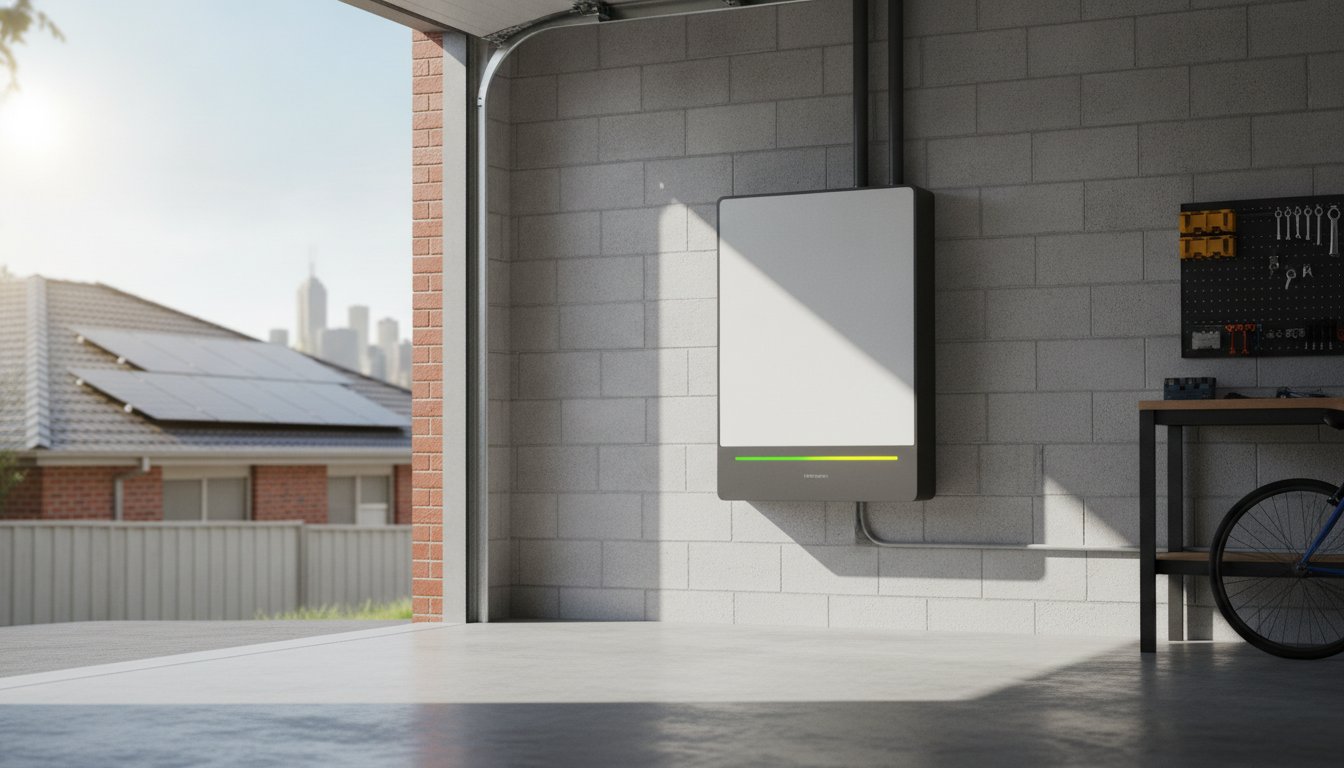
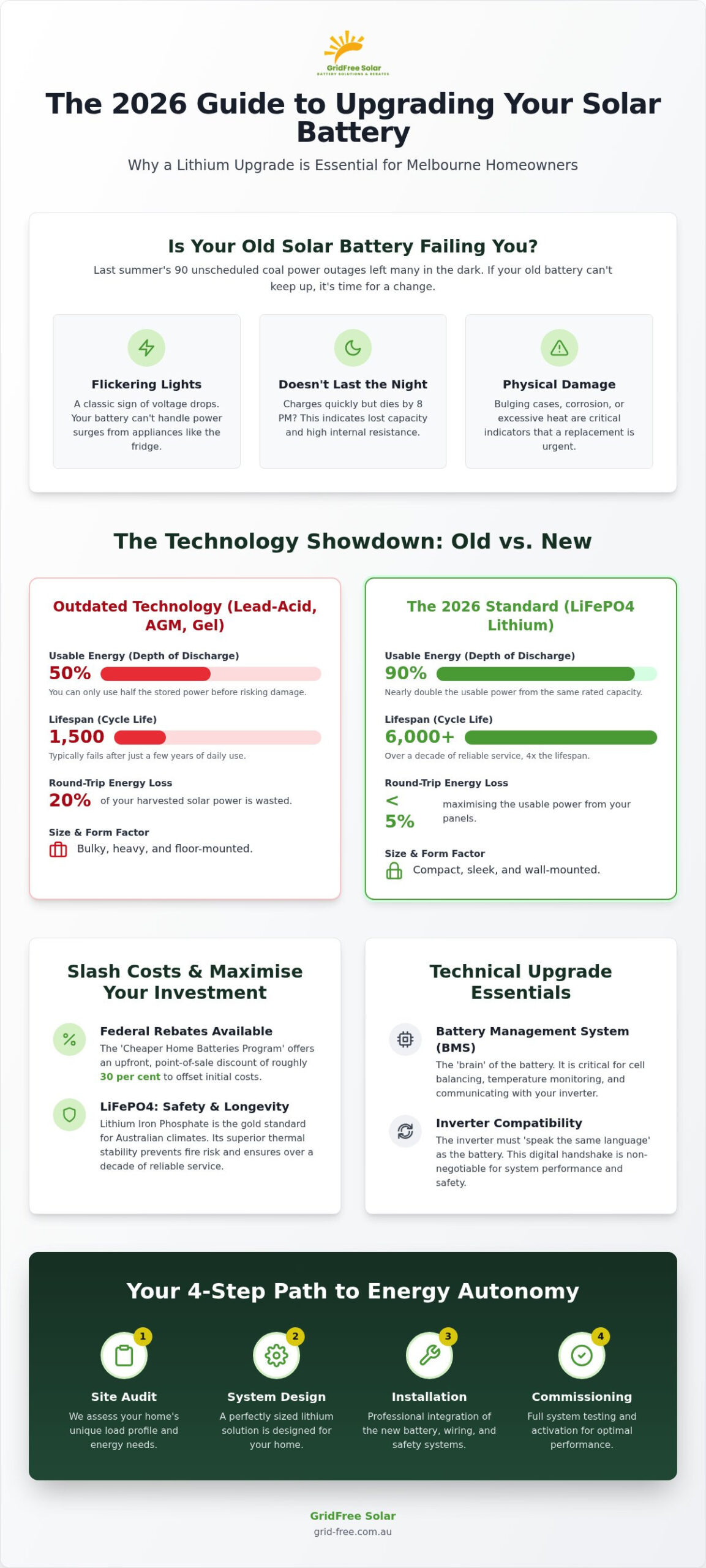
Lithium technology offers a massive advantage in Depth of Discharge (DoD). While old-school lead-acid batteries only allow you to use 50 per cent of their capacity before risking damage, lithium gives you 90 per cent usable energy. You get nearly double the power from the same rated capacity. Beyond performance, there’s the physical benefit. Lithium units are incredibly compact. They free up valuable room in your garage or utility area. A single wall-mounted lithium unit replaces a massive, heavy rack of lead-acid jars that once dominated your floor space.
Signs Your Current Solar Storage is Failing
Voltage drops are the most common warning sign. If your lights flicker when the fridge kicks in at night, your battery can no longer handle the surge. Rapid charging cycles are another red flag. Does your battery “fill up” in an hour but die by 8 PM? This indicates high internal resistance and lost capacity. Check for physical damage. Bulging cases, terminal corrosion, or excessive heat during discharge are critical indicators. Your system is screaming for a modern replacement.
The LiFePO4 Standard: Safety and Longevity
Lithium Iron Phosphate (LiFePO4) is the gold standard for Australian homes. It’s built for our unique climate. Melbourne heatwaves can destroy lesser chemistries, but LiFePO4 offers superior thermal stability. It won’t catch fire or degrade rapidly in a hot utility room. The cycle life data is undeniable. Lead-acid typically manages 1,500 cycles before failing. LiFePO4 delivers 6,000 cycles or more. This translates to over a decade of reliable service. It’s the only logical choice for a long-term return on investment.
Technical Compatibility: Will Your Existing System Support Lithium?
Think of your solar setup as a high-performance vehicle. You wouldn’t put a modern engine into a chassis without checking the transmission. Upgrading to a lithium solar battery follows the same logic. The Battery Management System (BMS) is the critical “brain” of the operation. It manages cell balancing, protects against over-discharge, and monitors temperature in real-time. If your existing hardware cannot communicate with the BMS, the system remains a collection of expensive, unusable parts.
Inverter synchronisation is where the technical heavy lifting occurs. Your inverter must speak the specific communication protocols of the lithium cells. Without this digital handshake, the inverter won’t know when to stop charging or how much power it can safely pull. This synchronisation prevents the “rapid cycling” issues common in older systems. We focus on ensuring your hardware is fully integrated before the first watt of power flows.
Charge profiles are another non-negotiable factor. Using a charger designed for lead-acid batteries on a lithium bank will void your warranty immediately. Lithium requires a precise constant current and constant voltage profile to maintain its decade-long lifespan. Your cables and fuses also need an upgrade. Lithium allows for significantly higher discharge rates. This means your wiring must handle a surge of power that would melt the fuses on a legacy lead-acid system.
The Inverter-Battery Handshake
Closed-loop communication is the gold standard for Melbourne homes. In this setup, the battery dictates the charging parameters to the inverter. Some legacy inverters can be “taught” these protocols through firmware updates. However, if your equipment is over eight years old, it may lack the processing power required. While you check your eligibility for Victorian battery rebates, consider the age of your entire array. Often, a total solar panel installation Melbourne upgrade is the most cost-effective way to secure a 10-year warranty on every component.
Upgrading Your Solar Regulator and Monitoring
Standard battery monitors often provide “drift” readings that become inaccurate over time. We install smart shunts to provide a definitive “fuel gauge” for your energy. These shunts measure every electron to ensure your mobile tracking is 100 per cent accurate. High-speed MPPT regulators are also essential. They maximise the faster charge acceptance of lithium, allowing your system to reach full capacity even on cloudy Melbourne days. You can organise a technical compatibility check with our team to identify exactly which components need a refresh.
Calculating ROI: Victorian Rebates and Lifetime Savings
Investing in energy storage is a strategic financial play. In 2026, the solar battery cost Australia homeowners face must be weighed against a decade of avoided peak-rate charges. Melbourne’s electricity prices are increasingly volatile, specifically during evening peaks when old systems fail. Upgrading to a lithium solar battery changes the math. You aren’t just buying hardware; you’re securing a high-efficiency asset with a round-trip efficiency of over 95 per cent. Compare this to legacy lead-acid systems that lose 20 per cent of their energy just through the process of charging and discharging. You harvest more power and waste less money.
The Victorian property market now places a premium on energy-independent homes. A modern lithium installation is a documented value-add for buyers wary of rising living costs. With the transition to all-electric households, a home capable of storing 10kWh to 20kWh of usable energy stands out in any Melbourne suburb. Your payback period is no longer a decade-long wait. Between efficiency gains and rising grid costs, most lithium upgrades now reach a neutral point significantly faster than their predecessors.
Navigating the Victorian Battery Rebate in 2026
Financial incentives have shifted. While the state-based interest-free loan program closed in 2025, the federal Cheaper Home Batteries Program provides a massive upfront discount. This point-of-sale reduction covers roughly 30 per cent of the system cost. It’s vital to check the latest Solar Victoria rebate information regarding income thresholds. As of July 1, 2026, the household income limit for combined solar and storage incentives reduced to $150,000. Our team at GridFree Solar manages the entire application process. We handle the technical documentation and rebate claims so you receive your discount without the administrative headache. You can find more detail in our Victorian battery rebate guide.
Virtual Power Plants (VPPs): Getting Paid to Store Energy
Your battery can earn its keep. Lithium’s high cycle life allows you to discharge energy back to the grid during peak demand without damaging the cells. This is the core of Virtual Power Plant (VPP) participation. Melbourne providers now offer significant credits for homeowners who allow small, controlled bursts of discharge to support grid stability. It’s a “set and forget” income stream. Because LiFePO4 batteries handle over 6,000 cycles, these frequent VPP events won’t compromise your 10-year warranty. You become a mini power station, generating revenue while the rest of the street pays peak prices.
The Professional Upgrade Process: Site Audit to Commissioning
Professional execution is the difference between a system that lasts 15 years and one that fails in three. While some DIY guides suggest you can swap batteries yourself, high-voltage residential systems require specialised handling. Upgrading to a lithium solar battery involves a meticulous five-step process to ensure safety and compliance with 2026 Victorian regulations. It begins with a comprehensive site audit. We evaluate your existing panel health and DC wiring to ensure the infrastructure can handle the increased current density of modern lithium cells.
Custom design follows. We don’t just sell you a box; we size the lithium bank to your actual household load profile. This includes a plan for the safe removal and eco-friendly recycling of your old lead-acid units. Lead-acid batteries contain hazardous materials that require certified disposal to prevent environmental damage. Once the site is clear, our CEC-accredited electricians perform the installation and BMS programming. This step is critical. We ensure the battery speaks the correct language to your inverter. Finally, we handle the grid approval and rebate finalisation, ensuring your point-of-sale discount is secured.
Sizing Your New Lithium Bank
You likely need fewer Amp-hours (Ah) of lithium than your old lead-acid system. Because lithium provides a 90 per cent Depth of Discharge, a smaller physical bank often delivers more usable energy. We also account for future loads. If you plan on installing an EV charger or a new multi-head split system air conditioner, we design for that growth now. Most modern lithium units are modular. You can start with a 5kWh or 10kWh block and add more storage later as your energy needs evolve.
Safety Standards and Certification
Safety is paramount. AS/NZS 5139 compliance is non-negotiable in 2026. This standard dictates where and how batteries can be installed to meet strict fire safety codes. In Victoria, every professional installation must be accompanied by a Certificate of Electrical Safety (COES). This document is your proof that the work meets all regulatory requirements and is essential for insurance purposes. High-performance energy storage solutions Melbourne demand expert calibration that DIY attempts simply cannot provide. Don’t risk your home’s safety with uncertified work. You can book your professional site audit with our Melbourne team today to start your transition.
Secure Your Energy Independence with GridFree Solar
Melbourne’s energy future is decentralised. GridFree Solar leads this transition by providing high-performance storage solutions tailored specifically for the Victorian climate. Upgrading to a lithium solar battery with our team ensures your home remains powered when the grid fails. We don’t settle for entry-level hardware. We only deploy Tier-1 lithium chemistries. These systems carry comprehensive 10-year Australian warranties, giving you peace of mind for the long haul. You’re investing in a future where high electricity bills are a distant memory.
Our local support is the cornerstone of our service. While larger retailers might leave you waiting in a phone queue, our Melbourne-based teams offer rapid response times. We understand that your energy storage is a critical utility. We treat it as such. The long-term financial benefits are clear. You secure lower operational costs and a higher property value while significantly reducing your household’s carbon footprint. It’s a strategic move for any savvy homeowner in 2026.
Melbourne’s Local Solar Experts
We possess deep knowledge of the Victorian grid and specific local council requirements across Melbourne. This expertise ensures your installation is compliant and efficient from day one. Our experience isn’t limited to residential settings. We recently completed a complex commercial solar installation Melbourne upgrade that successfully future-proofed a local business against 2026 price hikes. You gain direct access to our senior engineers, ensuring even the most complex retrofits are executed with precision.
Start Your Upgrade Journey Today
Taking the first step is simple. Book a no-obligation site assessment with our Melbourne specialists to evaluate your home’s potential. Our team handles the heavy lifting, from technical design to the final rebate claim. The current timeline for federal rebate approvals is efficient, often taking less than a month from application to installation. Don’t wait for the next unscheduled power outage or price increase. Take control of your energy future today and join the thousands of Victorians who have already secured their independence.
Future-Proof Your Melbourne Home Today
The window for securing maximum financial incentives is narrowing. With the federal STC factor reduction approaching in May and the household income threshold for rebates already tightened, the most profitable time to modernise your storage is now. Transitioning to LiFePO4 technology isn’t just about efficiency; it’s about ensuring your home remains resilient during summer grid instability.
By upgrading to a lithium solar battery, you move from a restrictive 50 per cent discharge limit to a robust 90 per cent usable capacity. This shift finally delivers the genuine energy independence you were promised when you first installed panels. GridFree Solar is a Victorian Solar Victoria Authorised Provider and employs only CEC Accredited Installers. We are also specialists in solar battery replacement Melbourne projects, ensuring your legacy tech is recycled responsibly and your new system is programmed for peak performance.
Don’t let another season of rising peak rates erode your household savings. Request your professional lithium upgrade quote from GridFree Solar today. We’re ready to help you take full control of your energy destiny.
Frequently Asked Questions
Can I just swap my lead-acid batteries for lithium without changing anything else?
You cannot simply swap the cells without technical verification. Lithium requires a specific charging profile that differs significantly from legacy lead-acid settings. Using an old charger will void your warranty and likely damage the new cells. Your inverter and Battery Management System must be able to communicate to ensure safe and efficient operation across the entire system.
How much does it cost to upgrade to a lithium solar battery in Melbourne in 2026?
Total investment depends on the storage capacity required and your home’s existing electrical infrastructure. Federal point-of-sale discounts now cover a significant portion of the retail price. Upgrading to a lithium solar battery is a strategic move that offsets its own cost by eliminating reliance on expensive peak-period grid electricity and maximising your solar self-consumption.
Will a lithium battery upgrade work with my old solar panels?
Your current solar panels are likely compatible if they are still performing to their rated specifications. The panels simply provide the raw energy; the inverter and regulator manage how that power reaches the battery bank. If your panels are over a decade old, we may recommend a health check to ensure they can provide the current required for rapid lithium charging.
What is the lifespan of a lithium solar battery compared to lead-acid?
Lithium batteries offer a lifespan of 10 to 15 years, which triples the durability of lead-acid alternatives. While lead-acid typically fails after 1,500 cycles, modern LiFePO4 units are rated for 6,000 cycles or more. This superior longevity makes lithium the most cost-effective solution over the life of your solar system because it eliminates frequent replacement costs.
Are lithium solar batteries safe to install inside my Melbourne home?
Yes, they are safe when installed by accredited professionals according to AS/NZS 5139 standards. We exclusively use Lithium Iron Phosphate (LiFePO4) chemistry. This is the gold standard for safety because it remains thermally stable even during extreme Melbourne heatwaves. Professional installation ensures all fire safety clearances and specific ventilation requirements are strictly met for your peace of mind.
How do I claim the Victorian battery rebate for my lithium upgrade?
The rebate is now applied as an upfront point-of-sale discount through the federal Cheaper Home Batteries Program. You don’t need to navigate complex government portals alone. We manage the entire application and technical documentation process for you. This ensures you secure the maximum available discount without the administrative burden or the risk of missing critical deadlines.
Do I need a new inverter when upgrading to lithium?
In many cases, a new hybrid inverter is required. Older string inverters lack the communication protocols needed to talk to a modern lithium Battery Management System. Upgrading to a lithium solar battery usually involves installing an intelligent inverter that can manage both your solar production and your battery storage simultaneously to ensure no energy is wasted during the day.
Can I add more lithium batteries to my system later on?
Yes, modularity is a core benefit of modern lithium technology. You can start with a smaller bank and add extra modules as your budget allows or as your energy needs increase. This is much easier than with lead-acid, where adding new batteries to an old bank causes premature failure. Modern lithium systems are designed to scale seamlessly with your household.