
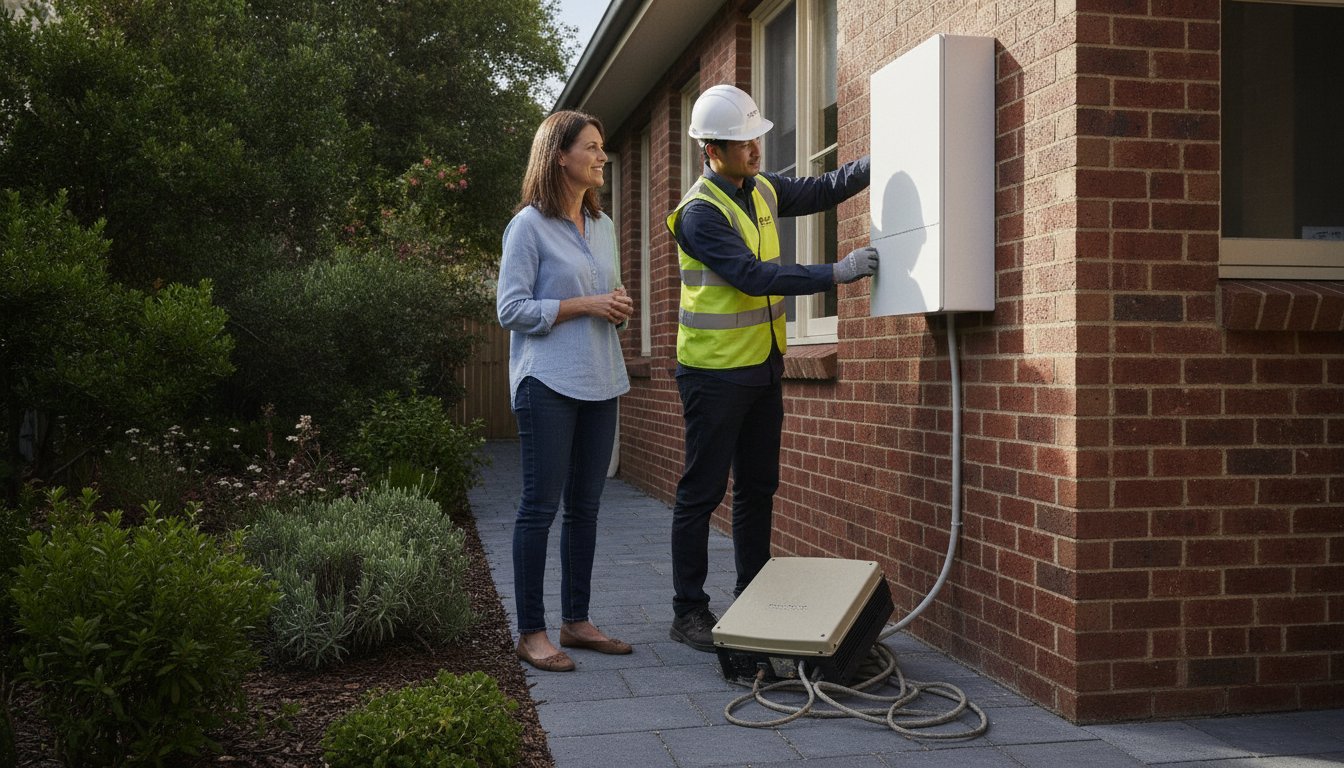
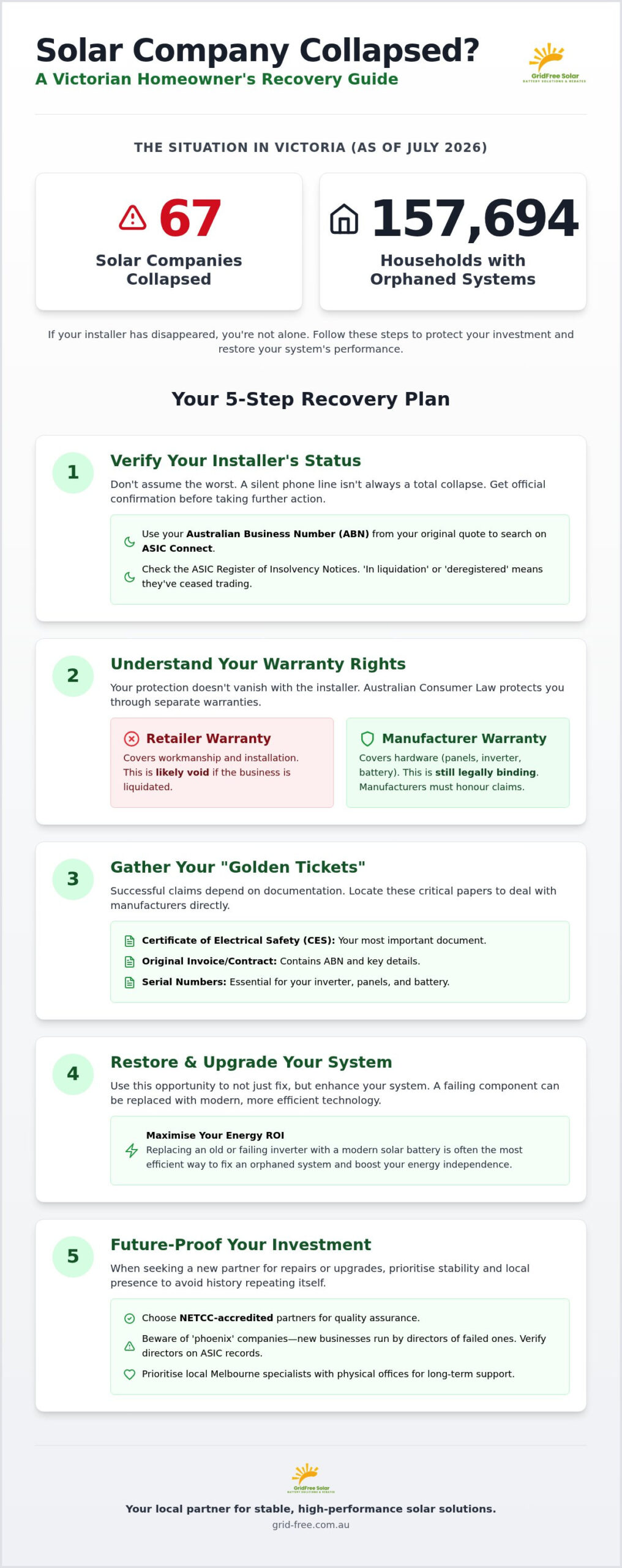
As of July 2026, 67 solar companies have collapsed across Victoria, leaving an estimated 157,694 households stranded with orphaned systems. It is a staggering figure that highlights the risk of choosing the wrong installer. If your original provider has disappeared, you likely feel frustrated by a failing inverter or confused about who is actually responsible for your equipment. Knowing exactly what to do if your solar company goes out of business Victoria is the only way to protect your investment and stop losing money on missed feed-in tariffs.
You deserve a system that works as hard as you do. We understand the stress of dealing with shonky workmanship and silent phone lines. This recovery guide provides the exact steps to confirm your installer’s business status, successfully claim manufacturer warranties, and restore your energy independence. We will explore how to navigate the 2026 Victorian rebate landscape and why a battery upgrade is often the smartest path to a fully optimised, high-performance system. It is time to move from uncertainty to total energy control with a stable, local specialist who understands the Victorian market.
Key Takeaways
- Verify your retailer’s official status via ASIC Connect. Use the ABN from your original quote to confirm liquidation before initiating formal warranty or recovery processes.
- Distinguish between retailer and manufacturer warranties. Even if the installer has vanished, component manufacturers are still legally bound to honour hardware claims for panels, inverters, and batteries.
- Discover exactly what to do if your solar company goes out of business Victoria to secure your investment and stop losing money on missed feed-in tariffs.
- Restore your system’s performance by upgrading failing components. A modern solar battery replacement is often the most efficient way to fix an orphaned system while maximising your energy ROI.
- Future-proof your energy security by choosing NETCC-accredited partners. Prioritise local Melbourne specialists with physical offices to ensure you have a stable point of contact for the long term.
Immediate Action: Confirming if Your Solar Retailer Has Liquidated
Panic is a natural response when your solar installer stops answering the phone. However, a silent line doesn’t always signal a total collapse. Before you assume the worst, you must verify the legal status of the business. The history of Solar power in Australia shows a volatile market where even established names can falter. With 67 Victorian solar companies already collapsed by July 2026, taking systematic steps to verify your retailer’s status is essential for your recovery plan.
Your first move is a search on ASIC Connect. Don’t rely on the business name alone; use the Australian Business Number (ABN) found on your original quote or invoice. This provides the most accurate data. Next, check the ASIC Register of Insolvency Notices for any recent Victorian filings. Understanding the specific terminology is vital for knowing what to do if your solar company goes out of business Victoria. If a company is ‘under administration’, there’s a chance it might be sold or restructured, meaning your warranty could still be serviced. If it is ‘deregistered’ or ‘in liquidation’, the entity has ceased to exist, and you must shift your focus to manufacturer claims.
Finding Your Original Solar Paperwork
Successful recovery depends entirely on your documentation. Your Certificate of Electrical Safety (CES) is the most critical document you own. It proves the installation was performed by a licensed professional and is required for any future warranty claims or Victorian rebate queries. If you’ve lost your original contract, check your emails for digital copies or contact Solar Victoria if your system was rebate-funded. You specifically need the installer’s accreditation number and the serial numbers for your inverter and battery. These numbers are your “golden tickets” when dealing with manufacturers directly.
Rebranding and ‘Phoenixing’ Red Flags
Be wary of ‘phoenix’ activity. This occurs when directors shut down a failing company only to start a new one under a different name to dodge their debts and warranty obligations. If you receive a call from a “new” company claiming to have taken over your old installer’s accounts, proceed with extreme caution. Cross-check the directors of the new entity against your old paperwork using ASIC records. Never sign a new contract or pay for “mandatory” inspections from these entities without independent verification. A reputable specialist will never pressure you into a snap decision following a retailer’s collapse. Focus on stability and proven local performance instead of slick rebranding efforts.
Understanding Your Warranty Rights When the Retailer is Gone
Don’t accept a dead system just because your installer has vanished. In Victoria, your solar investment is protected by multiple layers of warranty. The retailer warranty typically covers the workmanship of the installation. Since that business is liquidated, this specific protection usually evaporates. However, the manufacturer warranty covers the actual hardware: your panels, inverter, and battery storage. These global entities remain legally bound under Australian Consumer Law to ensure their products perform as promised. Knowing exactly what to do if your solar company goes out of business Victoria involves shifting your focus from the vanished middleman to these hardware manufacturers.
Manufacturer warranties often last 10 to 25 years. This is significantly longer than the standard five-year whole-of-system warranty mandated by Solar Victoria for rebate-funded systems. If your original retailer is gone, you have the right to bypass the middleman. Contacting the manufacturer directly is the most efficient way to trigger a claim. This process ensures that a faulty inverter or a degraded panel doesn’t turn your roof into a liability. It is a pragmatic, results-oriented approach to managing an orphaned system. For more detailed consumer advice, you can read about what to do if your solar company goes bust from leading advocacy groups.
Claiming on Inverter and Panel Warranties
Major brands like Fronius, SMA, or Sungrow maintain dedicated Australian support teams. You will need the serial numbers and installation dates found in your paperwork. While these manufacturers typically provide a replacement unit at no cost, they rarely cover the labour or transport fees. You will need a qualified Melbourne specialist to facilitate the hardware swap. If your system is failing, consulting with experts about a solar battery replacement in Melbourne can help you decide if a simple repair or a modern upgrade is more financially savvy.
The Role of Your Home Insurance
Your home insurance policy is often a hidden safety net for orphaned systems. If your inverter failed due to a power surge or a wild Melbourne storm, it may be covered under ‘electrical fusion’ or ‘storm damage’ clauses. This is often a faster route than a manufacturer claim. Ensure you document the failure with high-quality photos and a professional report from a CEC-accredited electrician. This evidence helps your insurer process the claim quickly. This is a critical step in knowing what to do if your solar company goes out of business Victoria, as it leverages existing policies to protect your energy ROI.
Victorian Resources for Orphaned Solar Owners
Navigating the aftermath of a retailer collapse requires more than just checking ASIC records. You must engage with local regulatory bodies to secure your rights. Knowing what to do if your solar company goes out of business Victoria involves leveraging the specific protections offered by state agencies. Consumer Affairs Victoria (CAV) is your primary contact for reporting shonky business practices. While they cannot always recover lost deposits from a liquidated entity, your report helps them track directors who may attempt to “phoenix” into new businesses in Melbourne.
Solar Victoria provides critical support if your system was installed under the Solar Homes Program. If your installation was part of the Victorian Battery Rebate scheme, they have a direct interest in ensuring your hardware meets safety standards. They can facilitate complaints and, in some cases, provide guidance on how to manage warranties when a retailer is no longer authorised. For technical safety concerns, Energy Safe Victoria (ESV) acts as the ultimate authority. They oversee the electrical safety of all Victorian installations and can investigate work that doesn’t meet the state’s rigorous standards.
The Energy and Water Ombudsman Victoria (EWOV) offers another layer of protection, though their jurisdiction is specific. They primarily handle disputes between consumers and energy retailers or distributors. If your orphaned system is causing billing errors or feed-in tariff issues, EWOV can intervene. However, they generally do not handle hardware warranty claims once an installer has ceased trading. Understanding these boundaries ensures you don’t waste time contacting the wrong department during a crisis.
Solar Victoria’s Safety and Quality Audits
Safety is non-negotiable. Solar Victoria conducts thousands of post-installation audits to ensure quality across the state. If your installer has disappeared and you suspect the workmanship is substandard, you can request a safety audit. This is particularly vital if you have noticed exposed wiring or unexpected system shutdowns. If an audit identifies your system as unsafe or non-compliant, you will receive a formal report. This document is a powerful tool when approaching manufacturers for hardware replacements or when filing insurance claims for faulty installation work.
Legal Recourse Through VCAT
The Victorian Civil and Administrative Tribunal (VCAT) is the standard path for resolving domestic building disputes. However, the reality of liquidation is harsh. If your solar company has officially folded, you become an ‘unsecured creditor’. In the hierarchy of debt recovery, consumers sit behind employees and the ATO. Chasing a bust company through VCAT often results in a hollow victory; you may win the case but receive no financial compensation. We recommend prioritising system restoration and battery upgrades with a stable partner rather than committing years to expensive, low-yield legal battles.
System Recovery: Upgrading Failing Components and Batteries
A non-functional system doesn’t mean your entire investment is landfill. Often, the panels on your roof are still generating power perfectly. The breakdown usually occurs at the inverter or the aging battery bank. When figuring out what to do if your solar company goes out of business Victoria, you should view this as a strategic pivot point. It’s an opportunity to strip out the low-quality components that likely led to your installer’s collapse and replace them with high-performance, intelligent hardware. Modern monitoring tools can now reveal performance gaps that shonky installers previously hid. This gives you total transparency over your energy production for the first time.
Compatibility is the primary concern for orphaned systems. You must ensure that new components communicate effectively with your existing PV array. A professional assessment can determine if your panels are still viable or if they require a string-level optimisation. Taking this proactive approach ensures you aren’t just patching a leak but are building a more resilient, future-proof energy powerhouse. Knowing what to do if your solar company goes out of business Victoria means moving beyond simple repairs toward a fully optimised energy solution.
Is it Time to Upgrade Your Storage?
Repairing an outdated, orphaned battery is often a case of throwing good money after bad. The ROI of a full solar battery upgrade in Melbourne far outweighs the cost of patching up 2018-era technology. Modern Lithium Iron Phosphate (LiFePO4) batteries offer superior safety and deeper discharge cycles compared to the cheaper alternatives used by fly-by-night retailers. By integrating a 2026-spec storage solution with your existing panels, you can finally achieve the grid independence you were promised. This transition ensures your ‘stranded’ PV array actually delivers on its financial potential.
Finding a Reliable ‘Adoption’ Partner
Many Melbourne installers refuse to touch orphaned systems due to liability risks. They don’t want to inherit someone else’s poor wiring. To fix this, you need a specialist willing to perform a ‘Whole System Health Check’. This audit identifies compliance issues before any new hardware is commissioned. As local experts, GridFree Solar specialises in rescuing and optimising these Victorian systems. We ensure new components are fully compatible with your orphaned panels, turning a liability back into an asset. If your storage is underperforming, a professional solar battery replacement in Melbourne is the fastest way to restore your system’s performance. Don’t let a bust retailer dictate your energy future; take control by upgrading to a system that actually works.
Future-Proofing: Choosing a Stable Solar Partner in 2026
Identifying what to do if your solar company goes out of business Victoria is a vital first step, but preventing a repeat performance is your long-term goal. The 2026 solar market rewards longevity over low-cost promises. You need a partner with a verifiable track record in the Melbourne region. A physical office in Victoria is non-negotiable. If an installer only lists a PO box, they lack the local infrastructure required to support your system for the next twenty years. High-authority specialists maintain a visible presence in the communities they serve.
Certification matters more than ever. The New Energy Tech Consumer Code (NETCC) is now the essential benchmark for reliability. It replaces older codes and provides a framework for ethical sales and technical excellence. Choosing a company that balances residential work with commercial solar solutions provides an extra layer of security. These businesses typically possess more robust balance sheets and deeper technical expertise. They are better equipped to weather market shifts, ensuring they’ll be there when you need a warranty claim or a system expansion in the next decade.
The GridFree Solar Difference
We specialise in the adoption and restoration of orphaned systems across Melbourne. Our team doesn’t just patch problems; we optimise for the future. By focusing on integrated solar and battery solutions, we ensure every component works in harmony to maximise your ROI. We handle the complex administrative landscape of Victorian rebates and Virtual Power Plant (VPP) eligibility for you. This takes the technical and bureaucratic burden off your shoulders. We are a stable, forward-thinking partner committed to the Victorian energy landscape for the long haul.
Next Steps to Restore Your Power
Your journey back to energy independence begins with a comprehensive system audit. This identifies the technical flaws that led to your original installer’s failure. Following the audit, we can facilitate a battery upgrade that delivers higher efficiency and greater reliability than your original hardware. It’s time to stop worrying about what to do if your solar company goes out of business Victoria and start building a relationship with a stable expert. Contact GridFree Solar today to reclaim your power, secure your home’s energy future, and turn your orphaned system into a high-performance asset.
Reclaim Your Energy Independence
An orphaned system isn’t a dead end; it’s a strategic chance to upgrade to a high-performance powerhouse. By verifying your installer’s status and targeting manufacturer warranties, you protect your initial investment. Transitioning to modern battery storage restores your ROI and provides the grid independence you were originally promised. Knowing exactly what to do if your solar company goes out of business Victoria ensures you move from a liability to an asset with confidence.
GridFree Solar acts as your stable hand in Melbourne. We are specialists in battery replacement and system recovery, helping you navigate complex 2026 Victorian rebate claims with ease. As local experts, we ensure your hardware meets the highest safety standards while maximising efficiency. Don’t let a vanished retailer compromise your savings. Rescue your orphaned solar system—book an expert Melbourne audit with GridFree Solar and get your energy production back on track. You have the power to fix this; let’s build a more resilient energy future together.
Frequently Asked Questions
Is my solar warranty still valid if the company is out of business?
Yes, your hardware warranties for panels, inverters, and batteries remain legally binding. While the retailer’s workmanship warranty disappears with the business, global manufacturers must honour their product guarantees under Australian Consumer Law. You’ll need to contact the manufacturer directly with your serial numbers. A new, qualified installer can then facilitate the physical replacement of any faulty components to restore your system’s performance.
Who is responsible for fixing my solar panels in Victoria now?
The responsibility for maintenance now falls to you as the homeowner. You must engage a Clean Energy Council (CEC) accredited specialist to service the system. These professionals can diagnose faults and handle manufacturer warranty claims on your behalf. Choosing a stable, local Melbourne partner ensures you have a reliable point of contact for future technical support and ongoing system optimisation.
Can I still claim the Victorian battery rebate if my original installer is gone?
Yes, orphaned system owners remain eligible for the Victorian battery rebate if they meet the 2026 program requirements. This includes the updated $150,000 household income threshold. By choosing an authorised Solar Victoria retailer, you can access these incentives to upgrade your storage. This is an excellent way to fix a failing system while significantly reducing your upfront costs through state-funded support.
How do I find out if my solar company has officially liquidated?
Search the ASIC Connect database using the company’s ABN found on your original paperwork. This provides the definitive legal status of the entity. Knowing what to do if your solar company goes out of business Victoria starts with confirming whether they are in liquidation or simply under administration. If they are deregistered, you should immediately pivot to manufacturer support and seek a new local service partner.
Will another solar company fix a system they didn’t install?
Many installers hesitate to touch third-party work, but specialists in system recovery will accept orphaned systems. A reputable provider will insist on a full system audit before starting any repairs. This ensures the existing wiring is safe and compliant with current Victorian standards. Once the health check is complete, they can integrate modern components or batteries to bring your system back to life.
What happens to my feed-in tariff if my system is broken and the installer is bust?
Your feed-in tariff payments cease the moment your system stops exporting energy to the grid. Energy retailers only pay for the power they receive. If your inverter is faulty and your installer is bust, you are losing money every daylight hour. Prioritising a hardware replacement is the only way to restart these credits and protect the long-term financial return of your solar investment.
Should I replace my entire solar system or just the faulty inverter?
It depends on the age and quality of your existing array. If your panels are performing well, replacing a failed inverter or adding a modern battery is the most cost-effective path. However, if your system is over 10 years old, a full upgrade might be smarter. This often qualifies you for the Solar Victoria rebate again, allowing for a total system overhaul with 2026 technology.
Can I join a Virtual Power Plant (VPP) in Victoria with an orphaned system?
You can join a Virtual Power Plant if your system uses smart-enabled, VPP-compatible hardware. Many orphaned systems require an inverter or battery upgrade to meet the strict communication protocols required by VPP operators. By installing a modern storage solution through a qualified Victorian specialist, you can unlock these additional revenue streams and participate in the state’s growing distributed energy network.