
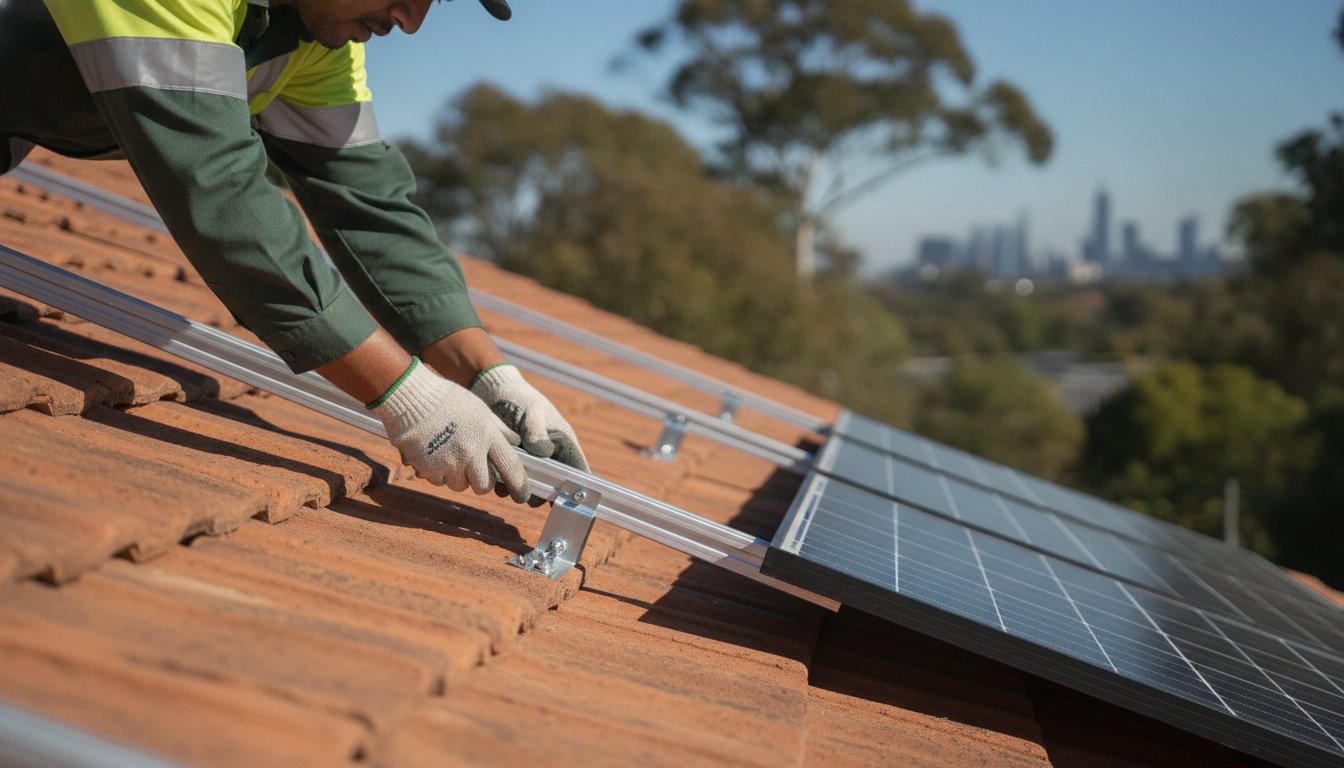
Your solar panels aren’t the biggest threat to your roof; it’s the person installing them. You’re right to worry about brittle terracotta tiles cracking or water damage from compromised seals. A single hairline fracture during a solar installation for tile roof Melbourne homes can lead to devastating internal leaks. It’s not just about the energy; it’s about protecting your biggest asset.
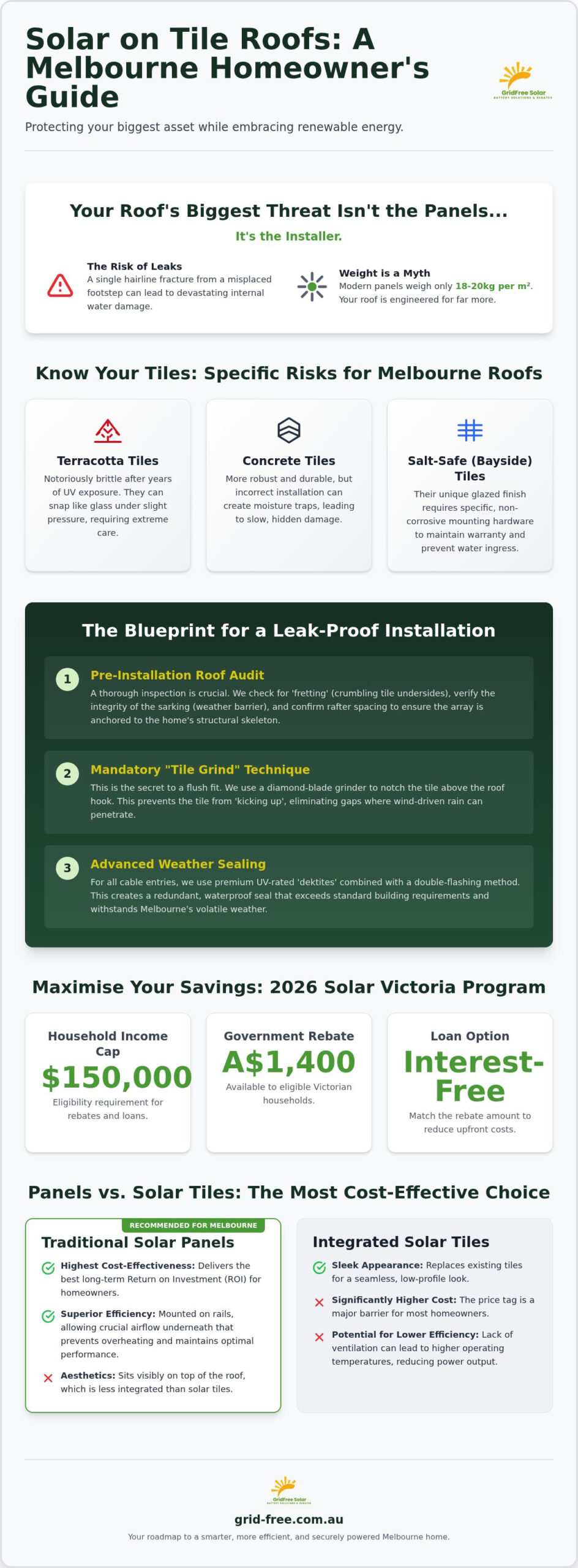
We’ve built this 2026 guide to show you exactly how high-efficiency systems can be installed without risking your roof’s integrity. You’ll discover why the latest tile-matching bracket technology is a non-negotiable for Victorian homes. We also clarify the updated Solar Victoria eligibility rules, including the $150,000 household income cap and the current A$1,400 rebate and interest-free loan options.
Stop choosing between renewable energy and a dry living room. We’ll compare traditional panels against expensive solar tiles and provide a technical checklist to ensure your installer uses the correct flashing systems. This is your roadmap to a smarter, more efficient, and securely powered Melbourne home.
Key Takeaways
- Learn why the precision “tile grind” technique is mandatory for a leak-proof finish. It ensures tiles sit flush and maintains a watertight seal against Melbourne’s volatile weather patterns.
- Secure your financial advantage by navigating the 2026 Solar Victoria rebate updates. We outline the A$150,000 income cap and the process for claiming your A$1,400 rebate and interest-free loan.
- Compare the long-term ROI of high-efficiency solar panels against integrated solar tiles. Discover why traditional panels remain the most cost-effective solution for Melbourne homeowners this year.
- Optimise your energy independence by bundling a battery upgrade with your solar installation for tile roof Melbourne. This strategy counters falling feed-in tariffs by prioritising self-consumption of your generated power.
- Identify the critical hardware differences between terracotta and concrete roof installations. Using the correct stainless steel hooks and specialised brackets prevents structural damage and avoids costly future repairs.
The Challenges of Solar Installation for Tile Roofs in Melbourne
Melbourne’s skyline is shifting. More homeowners are looking at their roofs as power plants. However, a solar installation for tile roof Melbourne projects requires a specialist eye. You aren’t just mounting hardware; you’re modifying a weather-shield that’s been baked in the sun for decades. Many fear the weight of an array will cause a structural collapse. This is a common myth. Modern solar systems weigh approximately 18 to 20kg per square metre. Your roof is engineered to handle far more than that. The real risk isn’t the weight; it’s the installer’s foot placement on aged tiles.
Terracotta vs. Concrete Tiles: What You Need to Know
Terracotta tiles, common in Melbourne’s leafy eastern suburbs, are notorious for their brittleness factor. After fifty years of UV exposure, they become like glass. They snap under the slightest pressure. Concrete tiles are more robust but require precision to prevent moisture traps. If you’re in a bayside area like Brighton or St Kilda, you likely have salt-safe tiles. These are designed to resist coastal erosion, but their unique glazed finish requires specific mounting hardware to maintain their warranty and structural integrity. Using the wrong brackets on these surfaces is a recipe for long-term water ingress.
Melbourne Weather and Solar Durability
Melbourne’s four seasons in one day isn’t just a local cliché. It’s a technical hurdle. Rapid temperature shifts cause thermal expansion in the racking systems. If your installer doesn’t account for this, the movement can cause tile chatter or grinding. In exposed areas like the Mornington Peninsula, wind load is the primary concern. High-quality racking acts as a dampener, securing the array against updrafts that could otherwise lift tiles. As of 2026, all Melbourne solar installations must adhere to AS/NZS 1170.2 standards, ensuring systems withstand regional wind speeds exceeding 150 kilometres per hour.
Defining the Technology
You must decide between traditional panels and integrated solar tiles. Traditional panels sit above the roof on a rail system. This allows for constant airflow, which is critical because efficiency drops as heat rises. You can read more about the technical mechanics of how solar panels work to understand this thermal relationship. Solar tiles replace the tile itself. While they look sleek, they often lack the ventilation of traditional arrays and come with a significantly higher price tag. Successful solar isn’t just about the glass on the roof; it’s about the engineering beneath it.
The Step-by-Step Process for a Leak-Proof Tile Roof Installation
Precision is the only thing standing between a high-performing solar array and a ceiling full of water damage. A professional solar installation for tile roof Melbourne projects doesn’t just bolt panels to the surface. It integrates them into the structural anatomy of your home. The process must be methodical. Every tile moved is a potential entry point for Melbourne’s heavy winter rains. Success depends on technical hardware choices and a commitment to the ’tile grind’ technique that most budget installers ignore.
Phase 1: The Pre-Installation Roof Audit
We start by identifying existing vulnerabilities. Older Melbourne homes often suffer from ‘fretting’, where the underside of terracotta tiles begins to crumble. We check the sarking, that blue foil layer beneath your tiles, to ensure it provides a secondary weather barrier. If your sarking is compromised, the installation won’t proceed until a solution is found. We also verify rafter spacing. Your solar array must be anchored directly into the timber rafters, not just the battens. This ensures the weight is distributed across the home’s skeleton rather than resting on brittle tiles.
Phase 2: Mounting and Sealing Techniques
The ’tile grind’ is our secret weapon against leaks. We use diamond-blade grinders to notch the underside of the tile sitting directly above the roof hook. This allows the tile to sit perfectly flush. Without this step, the tile ‘kicks up’, creating a gap where wind-driven rain can bypass your roof’s primary seal. For cable entries, we use UV-rated ‘dektites’ and a double-flashing method. This creates a redundant waterproof seal that exceeds standard building requirements. If you want to ensure your home meets the strict eligibility criteria for the Victorian Solar Homes Program, these technical details are mandatory.
Hardware selection is equally critical. We exclusively use stainless steel roof hooks. Galvanised steel can corrode over time, especially in Melbourne’s salt-heavy bayside air. These hooks support a rail-based mounting system. The rails act as a bridge, transferring the 18kg per square metre load of the panels directly to the rafters. We always carry a stock of matching spare tiles to every job. If a tile shows even a hairline fracture during the process, it’s replaced immediately. If you are ready to secure your energy future, you can request a professional roof assessment to see if your tiles are solar-ready.
This systematic approach ensures the integrity of your roof remains untouched. We don’t just install panels; we preserve your home’s structural health while unlocking its energy potential.
Aesthetics and Performance: Panels vs. Solar Tiles
Choosing between traditional solar panels and integrated solar tiles is often a battle between the wallet and the ego. Solar tiles, or shingles, offer a seamless look that mimics a standard roofline. However, for a high-performance solar installation for tile roof Melbourne homeowners usually find that traditional panels win on every measurable metric. Performance is the primary driver here. Traditional panels sit on rails, allowing air to circulate underneath. This cooling effect is vital. Solar tiles are flush with the roof, causing heat to build up and efficiency to plummet during those scorching 40-degree January days.
Melbourne’s overcast winters also favour traditional technology. High-efficiency monocrystalline panels are engineered to capture diffuse light more effectively than many integrated tile products. If you are researching specific brands, the Clean Energy Council consumer guides provide a vetted list of approved modules that meet Australian standards. Maintenance is another often-ignored factor. If a single solar tile in a string fails, you may have to dismantle a significant portion of your roof to replace it. With a panel system, a single module can be swapped out in under thirty minutes without touching the surrounding tiles.
The ROI Gap: Calculating Your Melbourne Payback Period
The financial disparity is stark. A typical 6.6kW panel system in Melbourne costs between A$5,000 and A$6,000 after the federal STC discount. In contrast, a solar tile system of the same capacity can easily exceed A$20,000. While a standard 6.6kW panel system costs between A$5,000 and A$6,000 after discounts, integrated solar tiles typically command a price premium of 300% or more per kilowatt-peak. This pushes the payback period from five years out to nearly fifteen. Leveraging the Victorian battery rebate can significantly accelerate your ROI for panel-based systems, making the transition to energy independence much more viable.
Visual Appeal for Heritage and Modern Melbourne Homes
Modern aesthetics have evolved. You no longer need to settle for bulky silver frames and blue cells. ‘All-black’ panels use black backsheets and frames to blend perfectly with dark concrete or charcoal terracotta tiles. This creates a sleek, low-profile finish that satisfies most architectural requirements. In heritage-listed areas like Hawthorn or Camberwell, council regulations often dictate that solar arrays must be minimally visible from the street. We achieve this by using internal cable runs through the ceiling cavity and colour-matched conduits. This ensures your solar installation for tile roof Melbourne project respects the character of your home while delivering maximum power output.
Maximising Your ROI with the Victorian Solar Homes Program
Capturing government support is the fastest way to slash your payback period. In 2026, the Victorian Solar Homes Program remains a cornerstone for residential energy upgrades. However, the rules have tightened. As of July 1, 2026, the combined household taxable income cap is A$150,000. If you qualify, you can access a rebate of up to A$1,400 plus an interest-free loan of another A$1,400. This capital injection is crucial for a solar installation for tile roof Melbourne projects. The labour-intensive nature of terracotta and concrete tile work often carries a premium. These funds effectively neutralise that additional cost.
You cannot hire just any electrician for this work. To claim these incentives, your provider must be a Solar Victoria authorised retailer. This ensures the company adheres to strict safety and consumer protection standards. The application process is digital but rigorous. You must secure your rebate eligibility number before any work begins on your roof. Getting the paperwork wrong can delay your installation by weeks or even forfeit your funding entirely. Precision in the office is just as important as precision on the tools.
Claiming the Battery Rebate in Melbourne
2026 is officially the year of the battery for Victorian households. With average minimum feed-in tariffs now sitting at 0.8c/kWh, exporting power to the grid is no longer a viable financial strategy. You need to store what you harvest. When planning a solar installation for tile roof Melbourne systems, the integration of a battery is the definitive move for 2026. It allows you to bypass grid export limits and power your home through the evening peak. For a deep dive into the financial mechanics of storage, see our Solar Battery Cost Australia 2026 guide.
Avoiding ‘Solar Cowboys’ in the Victorian Market
The Victorian market is still plagued by “solar cowboys” chasing quick turnovers. Watch for red flags. A company that provides a quote without a physical site visit is a major risk. They cannot assess the condition of your tiles or the integrity of your rafters from a satellite image. They’ll likely use generic racking that won’t stand up to Melbourne’s wind loads. Insist on a ‘Certificate of Electrical Safety’ upon completion. This document is your only proof for insurance purposes that the system is up to code. Local Melbourne installers offer a level of accountability that national retailers cannot match. We understand the specific council requirements for heritage zones and the unique structural needs of aged terracotta.
Don’t leave your investment to chance. Secure your Solar Victoria rebate and book a professional site audit today.
Why GridFree Solar is the Preferred Choice for Melbourne Tile Roofs
GridFree Solar isn’t just another retailer; we are specialists in the technical nuances of the Melbourne skyline. A successful solar installation for tile roof Melbourne homes requires more than just basic electrical knowledge. It demands roofing mastery. We back our workmanship with a strict ‘No-Crack’ guarantee. If we damage a tile during the installation process, we replace it immediately at no cost to you. Our team understands that your roof is your property’s first line of defence against the elements. We treat every terracotta and concrete tile with the surgical precision it deserves.
We specialise in high-performance solar panel installation Melbourne wide. From the heritage-protected streets of Hawthorn to the expanding new estates in Tarneit, our approach remains uncompromising. We provide a complete end-to-end service. This includes managing the complex Solar Victoria rebate application and the final commissioning of your smart energy system. You don’t have to navigate the bureaucracy alone. We ensure your paperwork is approved the first time so you can start saving faster.
Local Expertise, Professional Results
Our installers are Clean Energy Council (CEC) accredited and locally based. They know Melbourne’s volatile weather. We exclusively use high-wind-rated racking systems to ensure your solar array stays secure during a fierce Bass Strait gale. Whether your home features 1950s terracotta or modern concrete tiles, we use specialised, tile-matching brackets that maintain structural integrity. We have seen the aftermath of “cheap” installs where tiles chatter, grind, and eventually leak. We refuse to cut those corners. Our success stories span everything from complex heritage restorations to sleek modern concrete tile projects.
Ready to Switch to Solar?
Your energy future depends on intelligent storage. As a specialist in energy storage solutions Melbourne, we design systems where the battery and panels work in perfect synergy. This is particularly critical for tile roofs where mounting space and weight distribution must be perfectly balanced. We optimise every square centimetre of your roof for maximum yield. Every quote we provide includes a comprehensive roof integrity check. We identify potential issues before they become expensive catastrophes. Don’t risk your home’s safety with a generalist installer for your solar installation for tile roof Melbourne project. Organise your free Melbourne tile roof solar assessment today!
Secure Your Energy Independence with Precision Engineering
Your home’s structural integrity is too valuable to risk with a generic mounting approach. We’ve established that a successful solar installation for tile roof Melbourne homeowners requires a combination of technical ’tile grind’ mastery and high-performance hardware. By securing your system in 2026, you lock in the current A$1,400 Solar Victoria rebate while ensuring your brittle terracotta or concrete tiles remain watertight for decades to come.
GridFree Solar provides the local expertise needed to navigate complex Victorian regulations and fragile roof profiles. As a Victorian Solar Homes Program Authorised Retailer with CEC Accredited Installers, we specialise in the delicate engineering required for Melbourne’s unique suburbs. We take the complexity out of the transition, allowing you to focus on the immediate savings of a high-efficiency array. Take the first step toward a smarter, more resilient home today.
Get your obligation-free tile roof solar quote from GridFree Solar and join the thousands of Victorians already powering their futures with confidence.
Frequently Asked Questions
Will installing solar panels on my tile roof cause leaks?
No, a professional solar installation for tile roof Melbourne homes will not cause leaks if the installer uses a diamond-blade ’tile grind’ and high-quality flashing. These techniques ensure tiles sit perfectly flush and cable entries are double-sealed with UV-rated dektites. We focus on maintaining the roof’s structural integrity by anchoring hardware directly into the timber rafters; this prevents the tiles from bearing the load and shifting over time.
Can you install solar on old terracotta tiles?
Yes, but aged terracotta requires a specialist touch. These tiles become brittle after decades of Melbourne UV exposure; they can snap like glass if walked on incorrectly. Our team uses specific tile-matching brackets and a ‘No-Crack’ guarantee to protect your roof’s integrity. We conduct a thorough pre-installation audit to check for ‘fretting’ and existing fractures; this ensures the substrate is strong enough to support the new array securely.
How many tiles are typically broken during a solar installation?
Zero is the professional standard, but we always carry a stock of matching spare tiles to every site. Even with expert care, existing hairline fractures in older terracotta can expand during the mounting process. We identify and replace these immediately to maintain your roof’s watertight seal. If an installer doesn’t arrive with spares, it’s a major red flag for the long-term safety of your Melbourne home.
Do solar panels on tile roofs require special mounting brackets?
Yes, specific stainless steel roof hooks are mandatory for a secure and flush finish. These brackets are designed to snake around the tile’s profile and anchor directly into the timber rafters. We avoid galvanised steel because it can corrode in Melbourne’s salt-heavy bayside air. Using the correct brackets allows the tiles to sit flush after a precision grind; this prevents ‘kick-up’ gaps that would otherwise allow wind-driven rain to enter.
Are solar roof tiles better than traditional solar panels for Melbourne homes?
No, traditional panels remain the superior choice for both ROI and performance in 2026. While solar tiles offer a sleek profile, they lack the ventilation of rail-mounted panels; this causes them to lose efficiency as they heat up. The financial gap is also significant. A 6.6kW traditional system costs between A$5,000 and A$6,000 after rebates, while solar tiles can cost three times that amount; this pushes your payback period out by a decade.
Does the Victorian solar rebate cover installation on tile roofs?
Yes, the Victorian Solar Homes Program fully covers tile roof installations for eligible households. As of July 2026, you can access a rebate of up to A$1,400 plus an interest-free loan of the same amount. Your combined household income must be under A$150,000 to qualify. We manage the application process for you; this ensures you secure your funding before the solar installation for tile roof Melbourne project begins on-site.
How much extra does it cost to install solar on a tile roof vs. a tin roof?
Expect a modest labour premium because tile roofs require more precision than corrugated iron. Installers must manually lift, grind, and replace individual tiles to secure the mounting hooks. This process is more time-consuming than drilling into a tin roof; however, the cost difference is often offset by the Victorian government incentives. We provide a transparent breakdown in our quotes; this ensures you see exactly where the labour is allocated for your safety.
What happens if a tile under my solar panel cracks in the future?
A professional installation should prevent future cracking by distributing weight across the rafters rather than the tiles. If a tile does fail, the specific panel above it must be temporarily removed to allow access for the replacement. This highlights why choosing an installer with a ‘No-Crack’ guarantee is vital. We use high-wind-rated racking to prevent ’tile chatter’; this minimises the vibration and friction that usually cause tiles to crack over time.