
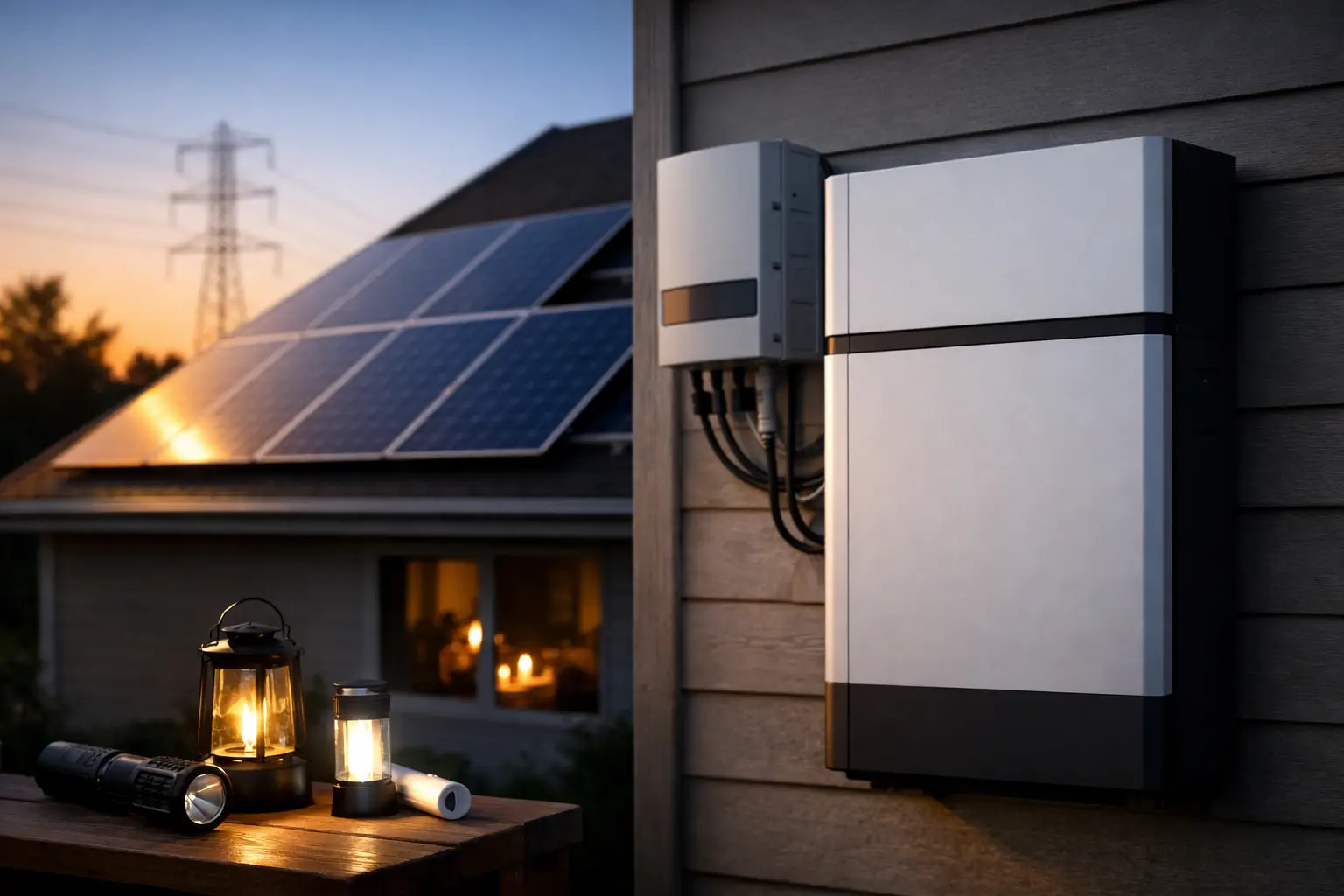
When the power goes out on a hot afternoon or during a storm, solar panels alone will not necessarily keep your home running. A properly designed solar battery for blackouts can. The difference comes down to whether your system has backup capability, how much energy is stored, and which circuits are connected when the grid is unavailable.
For Australian households and small businesses, battery backup is no longer only about convenience. It can protect refrigeration, communications, lighting, security and essential equipment when the grid is down, while helping you use more of the solar energy your roof produces every day.
Why solar panels usually switch off in a blackout
Most standard solar systems are grid-connected. When a blackout occurs, the inverter automatically shuts down as a safety measure. This prevents solar electricity from flowing into the network while lines may be under repair, protecting electrical workers and emergency crews.
That means a home can have panels producing plenty of sunshine-powered energy on the roof, yet still have no power at the powerpoint. It is a common and understandable frustration.
A battery system with a compatible hybrid inverter or backup gateway changes this arrangement. It can safely separate your property from the grid, create its own stable supply, and use stored battery energy to power selected circuits. Depending on the system design and weather conditions, solar can also continue charging the battery and supporting your loads during daylight hours.
What a solar battery for blackouts can power
Backup power does not have to mean every appliance in the property runs as normal. In fact, designing for essential loads is often the most practical and cost-effective approach.
An essential backup circuit commonly covers the fridge and freezer, lights, internet modem, selected powerpoints, garage door, security system and a few kitchen appliances. It can also support a home office, allowing you to keep working during an outage, or important business equipment such as EFTPOS, lighting and communications in a small commercial setting.
High-demand appliances require more planning. Ducted air conditioning, electric hot water, pool pumps, ovens, induction cooktops and EV charging can drain a battery quickly. Some larger battery systems can support these loads, but the right answer depends on your energy use, the battery’s output rating and the type of backup you expect.
The key distinction is between battery capacity and battery power. Capacity, measured in kilowatt-hours (kWh), indicates how much energy the battery stores. Power, measured in kilowatts (kW), indicates how much electricity it can deliver at one time. A battery may hold enough energy for many hours, but it still needs sufficient power output to start and run appliances with higher demand.
Essential backup versus whole-home backup
Essential backup is suited to households that want reliable basics during an outage without paying to cover every electrical load. It is the most common choice and can provide excellent resilience at a sensible investment level.
Whole-home backup is designed to keep more of the property operational, potentially including larger appliances. It requires careful load assessment and usually a larger battery, more capable inverter equipment and well-considered energy management. It can be worthwhile for homes with medical equipment, remote properties, frequent outages or businesses where downtime carries a real cost.
Neither approach is automatically better. The best system is the one that matches the way you live or operate, rather than one that looks impressive on a specification sheet.
How much battery storage do you need?
Battery sizing starts with a simple question: what must keep running, and for how long? A household wanting to cover a fridge, lights, internet and a few powerpoints overnight has a very different requirement from a business needing refrigeration and communications through a full day of interrupted supply.
A system in the 10 to 15 kWh range can be a strong starting point for many homes with essential-load backup, particularly when paired with a well-sized solar system. However, no single size suits every property. Your actual consumption, solar generation, tariff structure, blackout history and future plans all matter.
Consider the loads that run continuously, such as fridges, networking equipment and security systems, as well as the short bursts from kettles, microwaves or pumps. Also consider seasonal changes. A battery that feels generous in mild weather may be under greater pressure during summer heatwaves, when refrigeration and cooling demand rise.
For businesses, the calculation should include the cost of disruption. If a blackout stops trade, affects stock or prevents staff from processing payments, the value of backup extends beyond saved electricity bills.
Solar charging makes a major difference
A battery begins a blackout with only the energy it has stored. If the outage happens early in the morning after a high-use evening, its available charge may be lower than expected. This is why smart settings and system design matter.
Many battery systems can reserve a chosen portion of stored energy for backup. Rather than discharging to the lowest level each night to maximise bill savings, the system can hold, for example, a backup reserve that remains available if the grid fails. The ideal reserve depends on local outage risk and how much you value emergency power compared with day-to-day savings.
When the sun is shining, compatible backup systems can use solar production to run your home and recharge the battery while the grid remains off. This can extend backup duration substantially. On cloudy days, or during overnight outages, you will need to manage usage more carefully.
Questions to ask before installing battery backup
Not every battery installation includes blackout protection as standard. Before accepting a quote, ask clearly whether the proposed system will provide backup power during a grid outage, which circuits will be backed up, and whether solar will continue to operate while islanded from the grid.
You should also ask about the battery’s usable capacity, continuous and peak power output, warranty terms, monitoring features and upgrade options. A lower-priced battery may still be a good option, but only if its backup capability and performance suit your needs.
Installation details matter too. Your switchboard may require upgrades, and the backup circuit needs to be safely planned by qualified electricians. The system should comply with relevant Australian standards and distributor requirements. A professional site assessment identifies these factors before installation day, rather than treating them as expensive surprises later.
For properties affected by frequent outages, ask how the system behaves during an extended blackout. Can you monitor battery level from your mobile? Can loads be managed remotely? Is there an option to add more storage later? These are practical questions that affect long-term value.
Backup power and bill savings can work together
A battery is often assessed only as blackout insurance, but it can deliver value every day. It stores excess solar generation that might otherwise be exported to the grid at a comparatively low feed-in tariff. You can then use that stored energy in the evening, when household demand is high and grid electricity costs more.
Smart monitoring helps you see when solar is generated, exported, stored and used. It also makes it easier to adjust habits, such as running major appliances during strong solar production rather than after sunset.
Some eligible systems may also participate in a virtual power plant. VPP programs can offer credits or other financial benefits for making a portion of battery capacity available to help support the grid. The details vary between programs, and participation should never compromise the level of backup reserve you need for your property. Read the terms carefully before enrolling.
Available government incentives and battery rebates can improve the upfront economics, although eligibility, funding levels and requirements can change. Having the paperwork, compliance checks and product requirements handled correctly is just as valuable as choosing the equipment itself.
A system designed around real life
The strongest battery solution is not simply the largest system you can buy. It is a system designed around your roof, electricity use, critical appliances, future needs and budget. A growing family, an upcoming EV purchase, a home business or plans for electric heating can all affect the right design.
At GridFree Solar, the aim is to make those decisions straightforward: assess your energy profile, explain the trade-offs in plain language, design the backup you need and support the installation, rebate process and ongoing monitoring.
A blackout does not have to leave your home or business in the dark. With the right battery, backup configuration and a clear plan for essential loads, you can turn the solar energy on your roof into practical power when it matters most.