
Last Updated: November 11, 2026
Quick Summary
Off-grid solar maintenance means routinely inspecting, cleaning and testing your array, battery bank, charge controller, inverter and wiring so the system keeps producing and storing power without grid support. Check your monitoring daily, clean panels seasonally and book an annual inspection with a CEC-accredited technician.
- Record state of charge at sunset and sunrise daily, which takes about two minutes.
- Compare monthly output to last month and the same month last year to spot unexplained drops.
- Clean panels early morning or late afternoon with soft tools, plain water and no high-pressure blaster.
- Top up flooded lead-acid batteries with distilled water only, never tap water.
- Book a CEC-accredited technician for live electrical work, battery replacement and inverter faults.
Table of Contents
- Why Off-Grid Solar Maintenance Is Different From Grid-Tied Care
- Your Off-Grid Solar System Maintenance Checklist
- How to Clean Solar Panels Without Damaging Them
- Off-Grid Solar Battery Maintenance and State-of-Charge Monitoring
- Inspecting the Inverter, Charge Controller and Wiring
- Off-Grid Solar System Troubleshooting: Reading the Warning Signs
- When to Book a CEC-Accredited Technician
- Frequently Asked Questions
Why Off-Grid Solar Maintenance Is Different From Grid-Tied Care
An off-grid solar system has no backup from the grid. If a battery bank drops too low or a charge controller fails, the lights go out.
Grid-tied owners can ignore a dirty array for months. The grid covers the shortfall. An off-grid solar system cannot.
Off-grid solar maintenance is the routine inspection, cleaning and testing of every part of a stand-alone solar system so it keeps producing and storing power without grid support.
Here is the core difference:
- No safety net. A grid-tied home leans on the network. An off-grid home leans on its own battery bank.
- Battery stress is higher. Deep daily cycling wears cells faster than shallow grid-tied cycling.
- Faults matter more. A loose connection that a grid-tied system shrugs off can cut power to an off-grid home.
Want to understand how your system was built in the first place? Read our off grid solar system design guide.
Your Off-Grid Solar System Maintenance Checklist
A practical off-grid solar system maintenance checklist splits into daily, monthly, seasonal and annual work. Daily tasks take seconds and catch problems early. Annual tasks need tools, time and sometimes a licensed technician. Use this cadence as your baseline and adjust it to your equipment manual.
| Task | How Often | Who Does It | Time Needed |
|---|---|---|---|
| Glance at monitoring app or display | Daily | Owner | 1 minute |
| Record state of charge at sunset and sunrise | Daily | Owner | 2 minutes |
| Review output against recent weeks | Monthly | Owner | 5 minutes |
| Visual check of panels and array | Monthly | Owner | 10 minutes |
| Battery terminal and connection visual check | Monthly | Owner | 5 minutes |
| Panel cleaning | Seasonal | Owner or technician | 1-2 hours |
| Shade trimming and mounting check | Seasonal | Owner or technician | 30 minutes |
| Battery terminal torque and connection check | Every 6 months | Technician | 30 minutes |
| Inverter and charge controller inspection | Annually | Technician | 1 hour |
| Full electrical inspection and torque check | Annually | CEC-accredited technician | 1-2 hours |
Daily checks
Open your monitoring app or read the system display. Confirm the system is producing during daylight and that the battery is charging. Note the state of charge at sunset and again at sunrise. Two minutes a day builds the trend line you will rely on when something drifts.
Monthly checks
Monthly work is about spotting change. Compare this month’s system output to last month’s and to the same month last year. Look for a drop that weather alone does not explain. Then walk the array: check for dust and debris, new shading from trees, cracked glass or loose mounting hardware. Inspect battery terminals for corrosion or looseness and note any fault alerts. Write the date, the reading and anything unusual in a simple performance log.
Seasonal checks
Clean the array and trim anything that shades it before summer and again before winter, when daylight hours shorten and every kilowatt counts. Check that mounting hardware is tight and that panels have not shifted. Confirm the battery area is ventilated and clear of debris.
Annual checks
Annual checks go deeper and belong with a technician. They test charge controller settings against the battery manufacturer’s specification, inspect the inverter for fault history and heat damage, check wiring and torque on connections, and review battery health. This is also the time to plan replacement of ageing parts and to review your maintenance records against warranty terms.
Watch out: a checklist is only useful if the readings are recorded, because without a log you cannot tell a seasonal dip from a failing component.
How to Clean Solar Panels Without Damaging Them
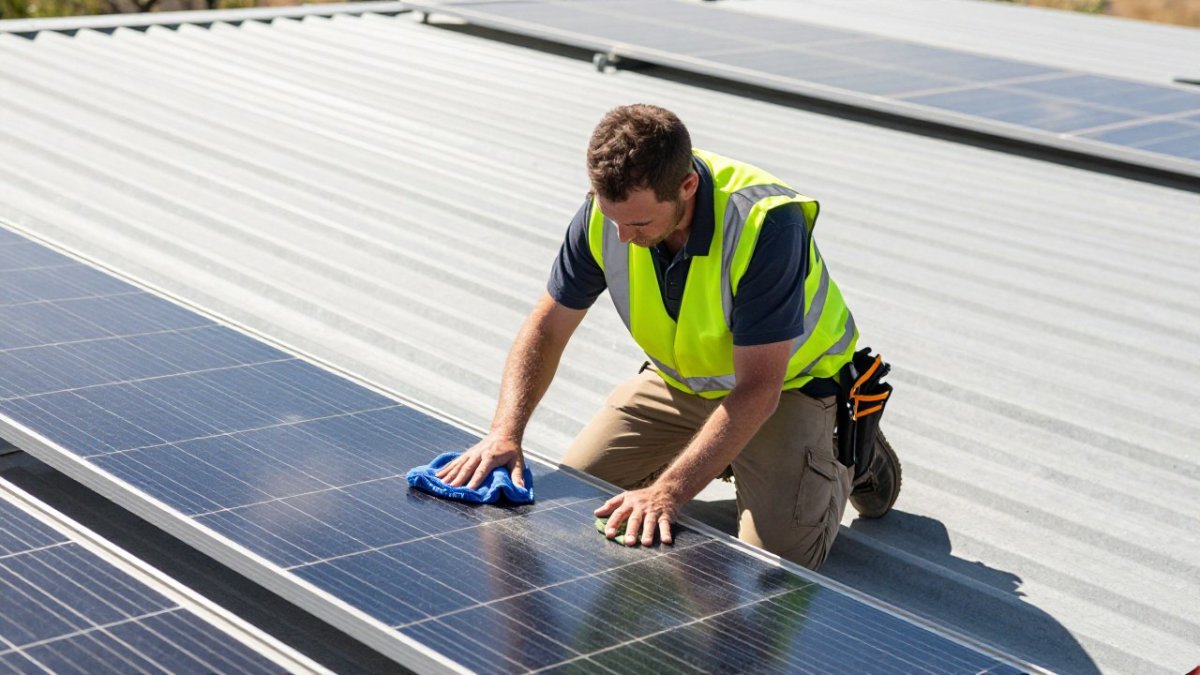
Clean solar panels safely with soft tools, plain water and cool conditions. Never use abrasive pads, harsh chemicals or a high-pressure blaster, which can scratch the glass or force water past the seals.
Follow these steps:
- Pick the right time. Clean early morning or late afternoon when panels are cool. Cold glass resists thermal shock.
- Switch off if your manual says so. Some systems ask you to isolate the array first.
- Rinse first. A garden hose lifts loose dust and debris before you touch the surface.
- Use a soft brush or squeegee. A long-handled soft brush keeps your feet on the ground.
- Work top to bottom. Rinse each section as you go.
- Skip harsh soaps. Plain water handles most dust. Stubborn marks need a mild, panel-safe cleaner only.
- Stay safe. Never walk on a roof without proper fall protection.
For a full walkthrough, see our guide on how to clean solar panels for maximum efficiency.
Off-Grid Solar Battery Maintenance and State-of-Charge Monitoring
Battery care is the heart of off-grid solar maintenance. Your solar battery bank is the most expensive part of the system and the easiest to damage through neglect. The right routine depends on the chemistry in your bank, so identify it before you touch anything. Once you’ve identified your battery chemistry, keep an eye on how inverter behavior affects charging and discharging, and Miles Off Grid can help you trace issues before they put the bank at risk.
State-of-charge monitoring that means something
Check the state of charge regularly. Most monitoring apps show it live, but a single reading tells you little. Watch the trend across several days. A healthy bank should recover to full charge on a sunny day and hold a reasonable depth of discharge overnight.
Record three numbers in your log: the state of charge at sunset, the state of charge at sunrise, and the lowest voltage or state-of-charge reading overnight. Those three figures separate a weak bank from a heavy load or a poor charging day.
Watch for these warning signs:
- Slow charging. The bank takes far longer to reach full charge than it used to.
- Fast draining. Appliances pull the battery charge down quicker than normal.
- Swollen casing or odd smells. Stop using the battery and call a technician.
- Loose or corroded terminals. These cause heat and wasted power.
Lead-acid banks
Flooded lead-acid batteries need the most hands-on care. Check electrolyte levels regularly and top up with distilled water only, never tap water. Keep the terminals clean and lightly protected against corrosion, and keep the battery area ventilated because charging produces hydrogen gas.
Watch out: overfilling a flooded cell or equalising a sealed battery can cause acid spills, gassing or permanent damage, so confirm the chemistry and the manufacturer’s instructions before any water or equalisation work.
Lithium banks
Lithium batteries need less physical maintenance but are less forgiving of incorrect settings. They must stay within the charge and discharge voltage limits set by the manufacturer, and they rely on a battery management system to balance cells and protect against overcharge and deep discharge. Keep the battery area within the manufacturer’s temperature range, because both extreme heat and charging below freezing can damage lithium cells. Never open a lithium battery casing or attempt cell-level work; that is technician territory.
What owners should and should not do
Owners can safely check state of charge, inspect terminals visually, keep the area clean and ventilated, and log readings. Anything involving opening a battery, adjusting charge settings, testing individual cells or handling a swollen or leaking unit should go to a qualified technician. Keep a solar battery maintenance checklist on hand so nothing gets missed.

Inspecting the Inverter, Charge Controller and Wiring
The inverter and charge controller turn raw solar production into usable power. Inspect them at least once a year, and any time your monitoring app shows odd readings.
Start with the charge controller. Confirm its settings match your battery type and that it is logging charge correctly.
Then check the inverter. Look for fault lights, unusual noise or excess heat. Clear dust from vents so it can breathe.
Wiring and mounting hardware deserve a close look:
- Loose connections. These cause voltage drop and heat. A technician should torque them to spec.
- Frayed or sun-damaged cable. Replace any cable with cracked insulation.
- Rusted or loose mounting hardware. Tighten or replace brackets before panels shift.
- Water ingress. Check junction boxes and conduit for moisture.
Electrical inspection is not a DIY job beyond the visual check. Leave live testing to a licensed professional.
Off-Grid Solar System Troubleshooting: Reading the Warning Signs
Off-grid solar system troubleshooting starts with your monitoring data. The system usually tells you something is wrong before it fails. Your job is to read the signs early.
Match the symptom to the likely cause:
| Symptom | Likely Cause | First Step |
|---|---|---|
| Output drops on clear days | Dust, debris or new shading | Clean panels, check for shade |
| Battery never reaches full charge | Weak panel output or failing cells | Review charge logs, test battery |
| Inverter fault alerts | Overload or overheating | Reduce load, clear vents |
| Flickering power | Loose wiring or connections | Book an electrical inspection |
| Fast battery drain | Failing battery or heavy load | Check appliances, test battery |
Load management matters here. Running the washing machine, dishwasher and clothes dryer at once can push peak demand past what the system supplies. Spread heavy appliances across daylight hours when solar production is highest.
Tempted to fix it yourself? Read our guide on the risks of DIY solar panel repairs first. Some faults are dangerous to touch.
When to Book a CEC-Accredited Technician
Book a CEC-accredited technician for any live electrical work, battery replacement, inverter faults or an annual inspection you cannot do safely yourself.
Call a professional when you see:
- Battery swelling, leaking or strange smells.
- Persistent inverter or controller fault alerts.
- Any burning smell or scorch marks.
- Damage after a storm.
- A system that keeps cutting out.
Working at height, live DC wiring and lithium battery handling all carry real risk. See what solar energy system maintenance services involve before you book.
Off-grid solar maintenance rewards consistency. A few minutes each month, a proper clean each season and one annual professional inspection keep your system reliable for years.
Frequently Asked Questions
How often should you maintain an off-grid solar system?
Check your system monthly through its monitoring app and give the panels and battery bank a visual inspection. Clean panels every three to six months, or more often if you live near dust, salt or heavy pollen. Book a full professional service annually, including a licensed electrical inspection of the inverter, charge controller and wiring. Systems in remote or hard-to-reach locations may need more frequent checks because faults go unnoticed longer.
How do you maintain batteries in an off-grid solar system?
Off-grid solar battery maintenance starts with the state of charge. Keep lithium batteries between roughly 20% and 90% where the manufacturer allows, and avoid deep discharges that shorten battery lifespan. Check terminals for corrosion, confirm the battery bank is ventilated and kept within the temperature range in the manual, and review charge controller settings each season. Log voltage and capacity readings so you can spot a slow decline before it becomes a failure.
How can you tell if an off-grid solar system is not working properly?
Watch for fault alerts on the inverter or charge controller, a battery that no longer reaches full charge, appliances cutting out earlier in the evening, or output that drops on clear days. Compare daily electricity generation against your performance log; a sustained fall of 20% or more usually points to shading, dirty panels, a loose connection or a failing component. Any burning smell, discoloured wiring or tripped breaker needs a technician immediately.
Can you maintain an off-grid solar system yourself?
You can safely handle panel cleaning, visual inspections, monitoring checks and keeping a performance log. Leave anything involving the inverter, charge controller settings, battery bank wiring or roof access to a CEC-accredited installer. Electrical work on solar and battery systems should be done by a licensed electrician, and DIY work can affect warranties and insurance cover.
