Table of Contents
- Why Clean Solar Panels Matter for Your Energy Output
- How to Clean Solar Panels: A Step-by-Step Process
- Solar Panel Cleaning Frequency: When to Schedule a Clean
- Best Tools for Cleaning Solar Panels (and What to Avoid)
- Professional Solar Panel Cleaning Cost vs DIY
- Your Solar Panel Maintenance Checklist
- Frequently Asked Questions
Last Updated: September 29, 2026
Why Clean Solar Panels Matter for Your Energy Output
Dirty solar panels can quietly drain your savings. Dust, bird droppings and pollen build up on the glass, blocking sunlight before it ever reaches the cells. When that happens, your system produces less power, and your bills creep back up.
This guide from GridFree Solar covers how to clean solar panels for maximum efficiency, safely and without damaging your system.
Solar panels are photovoltaic modules that turn sunlight into electricity. Anything sitting on the glass cuts the light reaching the cells underneath. Soiling is the industry term for that layer of dirt, and it causes real efficiency loss over time.
What most guides miss is that the type of dirt matters. Fine dust blocks light evenly. Bird droppings and tree sap create hot spots, where one small patch gets hotter than the rest of the panel.
- Dust and pollen: common after dry spells
- Bird droppings: acidic and stubborn, best removed quickly
- Salt spray: a coastal problem that leaves a film
- Fallen leaves: shade small areas for hours
A dirty array also ages faster. Heat builds up unevenly, and that stress adds up over the life of the system.
How to Clean Solar Panels: A Step-by-Step Process
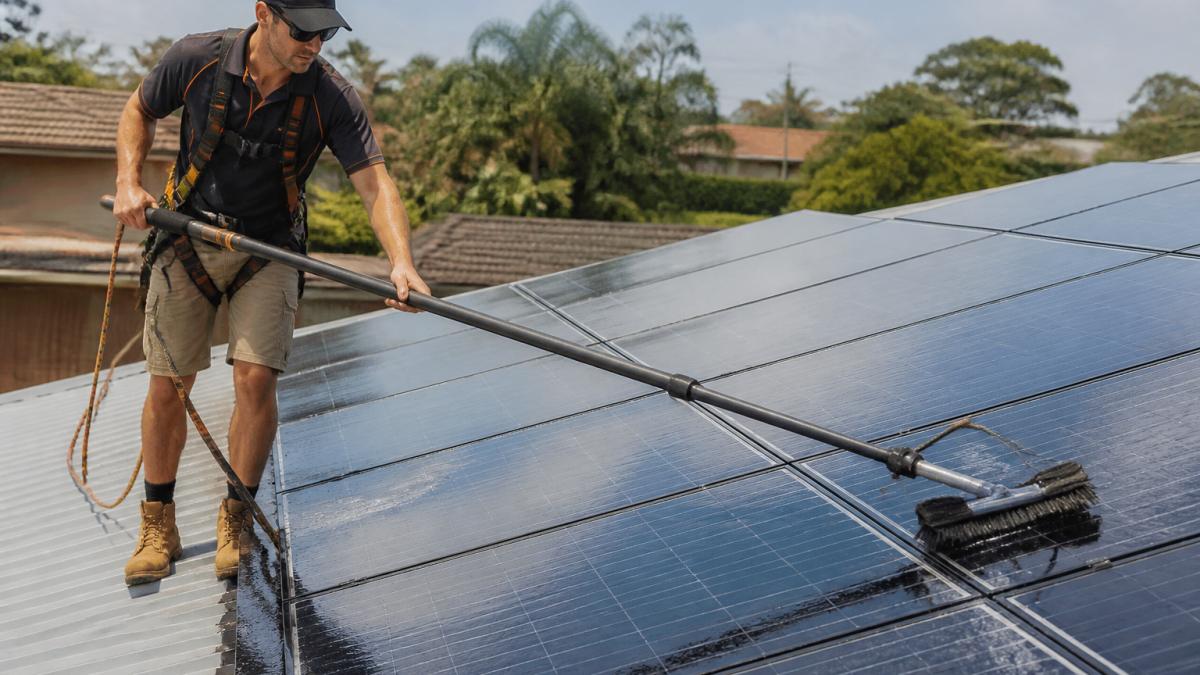
Cleaning solar panels is a simple job when you plan it properly. Most homeowners can do it in under an hour on a single-storey roof. The key is to work gently, use the right water, and never rush.
Safety Precautions and Equipment You Need
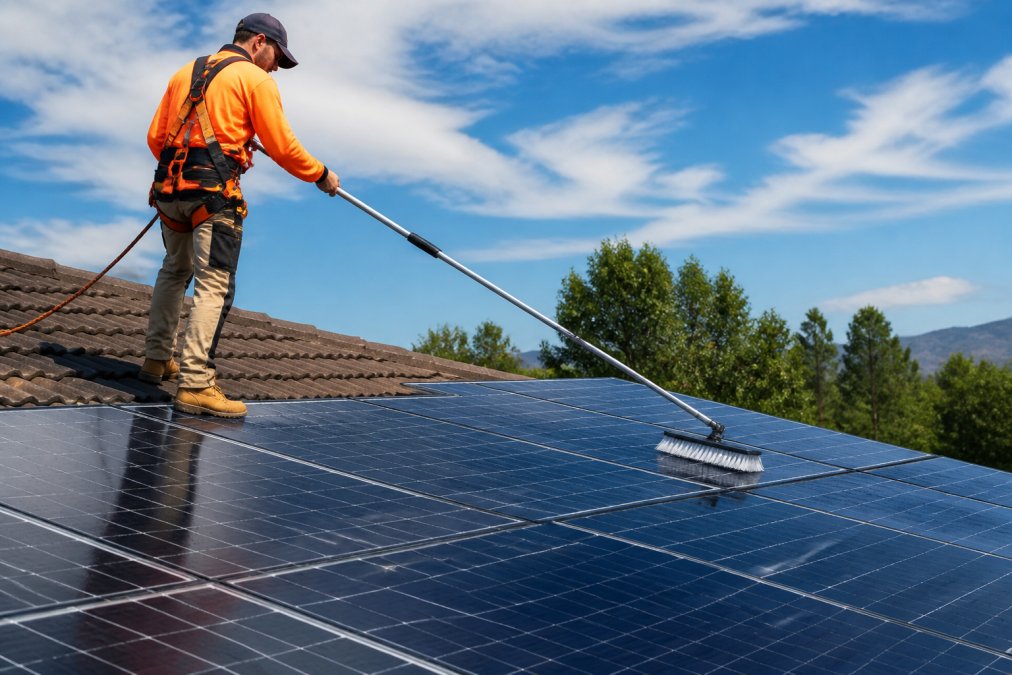
Safety comes first, every time. Working at heights is the biggest risk, and a fall from a roof can be fatal. If your roof is steep, high or hard to reach, book a professional instead.
Before you start, gather the right gear:
- A safety harness anchored to a rated point
- Non-slip shoes with good grip
- A soft-bristle brush on an extension pole
- A garden hose with a gentle spray nozzle
- A squeegee with a soft rubber blade
- Demineralised water for the final rinse
Turn the system off at the isolator before you begin. Never walk on the panels themselves. Step on the roof frame or tiles beside them.
Never clean panels that are hot from full sun. Cold water on hot glass causes thermal shock, and that can crack the panel. Clean early in the morning instead.
Rinsing, Wiping and Drying Without Damage
Start by rinsing the whole array with plain water. This lifts loose dust before you touch the glass. Rinsing first stops you dragging grit across the surface.
Why Water Quality Matters More Than Most Guides Admit
This is the part almost every cleaning guide skips. In many regions, particularly inland areas and parts of South Australia, Western Australia and the Northern Territory, mains water is hard, meaning it carries high levels of dissolved calcium and magnesium. When that water evaporates off hot glass, it leaves a chalky white film of calcium carbonate. That film is not just cosmetic.
- Use demineralised or deionised water for the final rinse, always
- If you must use tap water, never let it air-dry in full sun, squeegee it off immediately
- For tanks, a basic inline filter or a water softener cartridge on the hose helps
- If you already have mineral spotting, a diluted white vinegar wipe (one part vinegar to ten parts water) can lift light deposits, followed by a demineralised rinse
If you live in a hard-water area, a final demineralised rinse is not optional. It is the single cheapest thing you can do to protect long-term yield.
What Never to Do
Avoid abrasive materials, scouring pads and any high-pressure cleaner. A pressure washer can force water past the seals and into the wiring, and the force itself can flex the glass and seed micro-cracks. Even a “gentle” pressure setting is riskier than a hose and brush. Never use a hard brush, steel wool, or a dry cloth on dusty glass, you are effectively sanding the surface.
Rinse first, wash gently, and finish with demineralised water. The final rinse is what separates a clean array from a spotted one.
Solar Panel Cleaning Frequency: When to Schedule a Clean
Most homes need a clean every six to twelve months. That said, your location and surroundings change the answer. There is no single schedule that fits every roof.
A maintenance schedule should track your local conditions:
- Bushfire season: ash and dust settle fast, so check monthly
- Pollen season: a light clean after the worst weeks
- Coastal homes: salt spray builds up, so clean more often
- Near farms or main roads: dust and debris need frequent attention
Compare your output on a sunny day to the same week last year. A slow, steady fall usually points to soiling rather than a fault.
Best Tools for Cleaning Solar Panels (and What to Avoid)
The best tools for cleaning solar panels are simple and soft. You do not need anything fancy, and you should never use anything harsh. What matters is understanding why each tool is safe or unsafe, because the damage from the wrong tool is often invisible until it is expensive.
| Tool | Use It? | Why |
|---|---|---|
| Soft-bristle brush | Yes | Lifts dirt without scratching glass |
| Squeegee | Yes | Removes streaks and residue |
| Mild detergent | Yes | Breaks down grime safely |
| Demineralised water | Yes | Prevents mineral spots |
| High-pressure cleaner | No | Forces water past seals and can seed micro-cracks |
| Abrasive pads | No | Scratch the glass surface |
| Hard brushes | No | Can cause micro-cracks |
| Dry cloth or duster | No | Drags grit across glass like sandpaper |
The Micro-Cracking Problem Nobody Talks About
Micro-cracks are tiny fractures in a solar cell. They are often invisible to the eye, but they grow over time and reduce energy yield. Rough cleaning is one of the main causes, and so is walking on the panels, which flexes the glass and the cells beneath it.
Never walk on solar panels, even to reach a stubborn spot. Use an extension pole from the roof surface beside them, or call a professional with the right access equipment.
Tools That Look Safe but Are Not
A few items catch homeowners out:
- Pressure washers on a “fan” setting. The force still flexes the glass and drives water into the frame seals. Water ingress corrodes the junction box and can void your warranty.
- Household glass cleaner. Ammonia-based sprays can attack the anti-reflective coating on modern panels, which is what helps them absorb more light in the first place.
- Brooms and stiff yard brushes. The bristles are hard enough to leave fine scratches that trap dust and make the next clean harder.
- Metal scrapers or blades. Obvious, but worth stating, they scratch the glass permanently.
What to Look For in a Brush
If you are buying a brush specifically for panels, look for soft, split-tip nylon bristles and a pole long enough that you never need to lean over the array. Split tips hold water and lift dirt more gently than a flat-cut brush. Avoid anything marketed as a “scrub” brush, that word usually signals stiffness.
Gentle beats powerful. A soft brush, plain water and a demineralised final rinse protect your panels better than any strong equipment, and they protect your warranty too.
Professional Solar Panel Cleaning Cost vs DIY
Professional solar panel cleaning cost depends on your roof, system size and location. Most providers quote per job rather than a flat rate, so ask for a written quote before booking.
Go professional when:
- Your roof is steep, tiled or double-storey
- Your panels show heavy soiling or bird activity
- You want the job covered by insurance and done to standard
- You are not confident working at heights
Your Solar Panel Maintenance Checklist
A solar panel maintenance checklist keeps your system in good shape all year. Run through it each season, and note anything unusual.
- Check energy output against last month’s inverter data
- Look for shade from new growth or debris
- Inspect panels for cracks, hotspots or loose mounts
- Rinse and clean when soiling is visible
- Confirm the isolator and wiring look sound
- Book a professional inspection every few years
Frequently Asked Questions
What is the most efficient way to clean solar panels?
The most efficient method is to rinse the panels with demineralised water first, then gently scrub with a soft-bristle brush on an extension pole, and finish with a squeegee to prevent streaks. Clean early morning or late afternoon when panels are cool to avoid thermal shock. Turn off the system before you start, and never use a high-pressure cleaner, which can force water past seals and cause micro-cracks.
What should you never use to clean solar panels?
Avoid abrasive materials like scouring pads, steel wool and harsh chemical cleaners. Never use a high-pressure cleaner, as the force can damage photovoltaic modules and void warranties. Skip dishwashing liquids with added fragrances or grit, and never pour cold water on hot panels, because thermal shock can crack the glass. Stick to demineralised water, a mild detergent and non-abrasive tools.
How often should solar panels be cleaned in dusty environments?
In dusty or high-pollen areas, clean your solar array every two to three months. If you live near farmland, a main road or in a region prone to dust storms, check monthly for soiling and bird droppings. In coastal areas, salt spray builds up quickly and warrants a clean every two to three months. Monitor inverter data for efficiency loss to guide your solar panel cleaning frequency.
Does cleaning your solar panels improve efficiency?
Yes. Soiling from dust, pollen and bird droppings blocks sunlight and reduces energy output. Regular cleaning restores performance and protects system longevity. Check your inverter data for unexplained drops in energy yield, which often signal a dirty array. Cleaning also lets you spot micro-cracks, loose wiring or roof damage early, before they become expensive problems.