
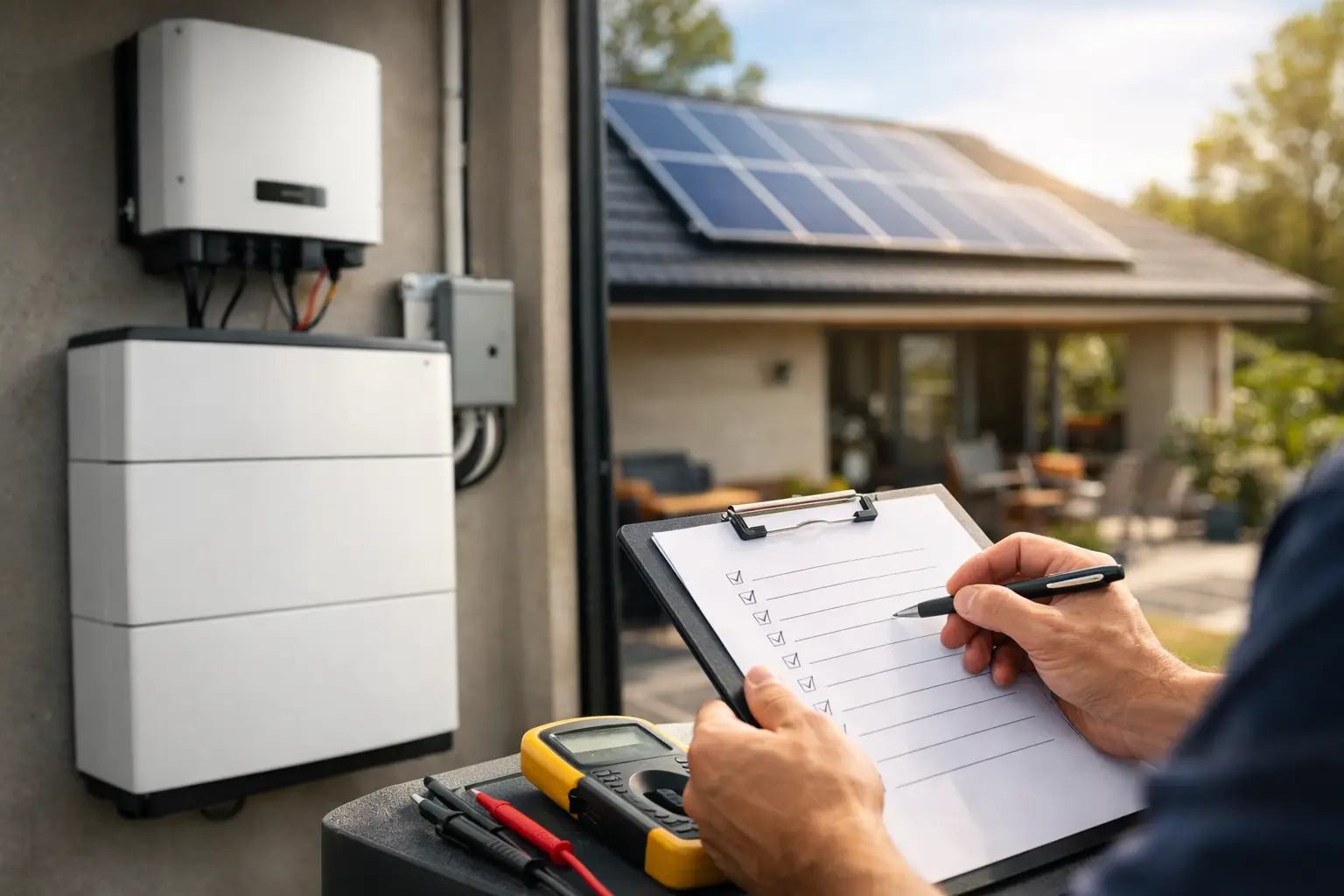
Your battery should be the dependable part of your energy system: storing surplus solar during the day, reducing expensive evening grid use and keeping selected circuits running during an outage. A practical solar battery maintenance checklist helps protect that investment without asking you to become an electrician.
Most modern home batteries are low-maintenance, particularly lithium-ion systems. That does not mean set-and-forget. Regular monitoring, a clear installation area and prompt attention to alerts can prevent small issues from affecting your savings, backup power or warranty support.
Your solar battery maintenance checklist
The right maintenance routine depends on your battery type, age, location and whether it is used for backup power, time-of-use savings or a virtual power plant. Start with the manufacturer’s instructions, then use these checks to stay on top of everyday performance.
Check your monitoring app every month
Your monitoring app is the simplest way to see whether the battery is doing the job it was designed for. Once a month, look at how much solar energy is being stored, when the battery is discharging and how much electricity you are still buying from the grid in the evening.
You do not need to inspect every graph. Look for meaningful changes: a battery that is no longer charging on sunny days, an unexpected drop in usable capacity, repeated error messages or grid imports that seem higher than usual. A few cloudy weeks can change results, so compare similar periods rather than reacting to one poor day.
If your system participates in a VPP, charging and discharging may not always follow your usual household pattern. Check your VPP settings and plan conditions before assuming there is a fault.
Keep the battery area clear, clean and ventilated
Battery equipment needs a safe, accessible space. Check that boxes, gardening tools, stored furniture, cobwebs and other clutter have not built up around the battery, inverter or switchboard. Do not cover vents or add an enclosure unless it has been specifically designed and approved for the equipment.
For outdoor systems, inspect the area after severe weather. Look for standing water, storm damage, loose protective covers, pests or vegetation that has grown too close. For garage installations, keep chemicals, fuels and flammable materials well away from battery equipment.
Wipe external surfaces gently with a dry or lightly damp cloth if dust has accumulated. Never spray the battery, inverter or isolators with water, and do not use solvents or high-pressure cleaning equipment. The goal is a tidy, dry installation area, not hands-on servicing.
Check for warning lights, messages and unusual behaviour
A green or normal-status indicator is reassuring, but a red light, fault code, alarm or persistent notification deserves attention. Take a screenshot of the app message and note the time it appeared. This gives your installer or manufacturer support team useful information if they need to investigate.
Also pay attention to physical signs that fall outside normal operation. These include unusual smells, heat that seems excessive, clicking or buzzing that is new, visible corrosion, cracked casings or moisture around electrical equipment. Do not remove covers, touch wiring or attempt a reset unless your installer has clearly instructed you to do so.
If there is smoke, a burning smell, visible damage or immediate safety concern, keep people away from the area and contact emergency services where required. Then follow the emergency information supplied with your system. Battery safety is never a DIY job.
Review your battery settings twice a year
A battery can be operating perfectly while its settings no longer suit your household. Review them before summer and winter, or after a major change such as buying an electric vehicle, installing a pool pump, changing electricity retailers or adding new solar panels.
Check the backup reserve level first. A higher reserve leaves more power available for a blackout, but reduces the capacity available each day to cut your bill. A lower reserve can improve daily savings, although there may be less energy left when the grid goes down. There is no single best setting: it depends on how often your area experiences outages and how much backup matters to your household or business.
If your system has scheduled charging, tariff optimisation or export controls, make sure those settings still align with your electricity plan. A professional review can be worthwhile when tariffs change, because the value of charging from the grid overnight versus storing solar can shift significantly.
Test backup operation as recommended
If your battery includes backup or blackout protection, arrange a controlled test according to the manufacturer’s guidance and your installer’s advice. Confirm which circuits are backed up and what appliances can run at the same time. Many homeowners assume the entire property will operate normally during an outage, but backup capacity is often designed for essential loads such as lights, refrigeration, internet, selected power points and medical equipment.
Avoid testing by switching equipment off at random or opening the switchboard. A qualified technician can confirm that the changeover equipment, battery reserve and backed-up circuits are operating correctly. This is especially valuable before storm season or if you rely on the system to keep a small business operating.
What not to do with a solar battery
Modern batteries have built-in battery management systems that control charging, temperature and safety functions. Trying to improve performance by adjusting internal settings or opening the unit can create a hazard and may affect warranty coverage.
Avoid these common mistakes:
- Do not open battery or inverter covers, interfere with cables or reset electrical protection devices without professional direction.
- Do not store paint, petrol, gas bottles, pool chemicals or other flammable products near the installation.
- Do not block airflow with cupboards, bins, tarps or improvised weather covers.
- Do not ignore recurring app alerts, even if the system appears to be producing power.
- Do not assume a solar panel clean will fix a battery issue. Generation and storage performance are related, but they are not the same fault.
When to book professional solar battery maintenance
A visual check and app review are useful owner tasks. Electrical testing, firmware updates, wiring inspections and repairs should be completed by qualified solar and battery professionals. A scheduled service may include checking system logs, isolators, cable connections, communication equipment, ventilation clearances and actual battery performance against expected operation.
Book support sooner if your battery repeatedly fails to charge or discharge, drops offline, shows a fault code, has been exposed to flooding or physical damage, or is performing noticeably differently with no clear weather or usage explanation. It is also sensible to arrange a review before a warranty period ends. A documented inspection can identify issues while manufacturer support may still apply.
For older systems, a professional assessment can clarify whether a battery upgrade would deliver better value than repair. Battery technology, tariff structures and household demand all change over time. Adding capacity, replacing an ageing battery or improving backup design may make sense, but only after reviewing your real energy data rather than relying on a generic estimate.
Make maintenance part of your energy savings plan
The best time to check your battery is when you check your power bill. Compare your usage, solar exports and battery activity over the same period, then ask a simple question: is the system still reducing the grid energy you expected it to reduce? This connects maintenance to the outcome that matters – lower electricity costs and more control over your power.
Keep installation documents, warranty details, service records and screenshots of faults in one place. It makes troubleshooting faster and gives you a clearer picture of the system’s long-term performance. GridFree Solar customers can also use performance monitoring and aftercare support to turn data into practical next steps, rather than guessing at what an alert means.
A clean, monitored and professionally supported battery is more likely to be ready when your solar generation is strong, tariffs are high or the grid is unavailable. Set a recurring reminder today, then let your system keep doing the hard work of powering more of your property on your terms.