
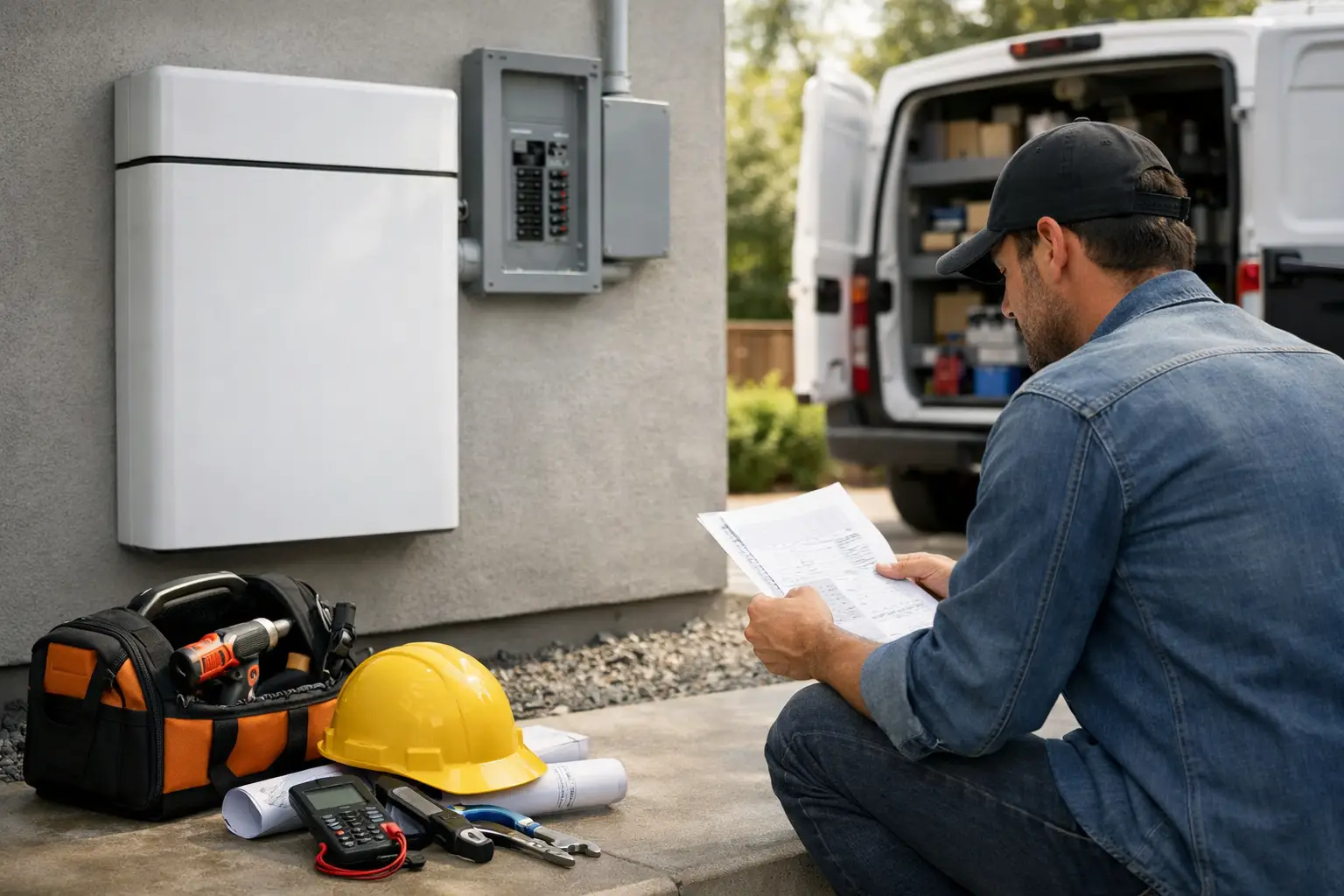
A home battery can turn surplus solar power into lower evening bills and practical backup during an outage. Knowing how to prepare for battery installation before your installer arrives helps the project move faster, avoids unexpected costs and ensures the system is designed around the way your property actually uses energy.
Battery installation is not simply a matter of mounting a unit on a wall. Your installer needs to assess the solar system, switchboard, available space, network requirements and the circuits you want to keep running if the grid goes down. A little preparation gives you clearer answers, a more accurate quote and a battery system that delivers value for years.
Start with your energy goals
The right battery size and configuration depend on what you want it to achieve. Some households want to store solar energy for use after sunset and reduce what they buy from the grid. Others are focused on backup power for essential appliances, while some want to join a virtual power plant, or VPP, to access available incentives and support the grid when needed.
Before your consultation, consider when your household uses the most electricity. If your solar exports heavily in the middle of the day but your family is home in the evening, battery storage can shift more of that generation into useful power. If you run a small business, think about daytime loads, refrigeration, computers, machinery or security systems that cannot easily be interrupted.
It also helps to decide how much backup you expect. Keeping the fridge, lights, internet and a few power points operating is very different from running ducted air conditioning, an electric hot water system and every appliance in the home. Larger backup capability can require more battery capacity, a more capable inverter and changes to the switchboard. There is no one-size-fits-all answer, but being clear about priorities lets your installer design for the outcomes that matter most.
Gather your power bills and solar details
Your recent electricity bills provide a useful starting point. Ideally, have 12 months of bills available so seasonal changes are visible. Summer cooling, winter heating, pool pumps and business trading hours can all affect your consumption. Bills show how much electricity you buy from the grid, while solar monitoring can reveal how much generation you currently export.
If you already have solar, collect any paperwork you have for the existing system. This may include the panel and inverter brand, model numbers, system size, installation date and warranty details. A battery can often be added to an existing solar setup, but the best approach depends on the age and compatibility of the inverter.
In some cases, an AC-coupled battery can work alongside the current solar inverter. In others, replacing or adding a hybrid inverter may provide better control and future expansion options. Your installer should explain the trade-off clearly, including upfront cost, efficiency, warranty arrangements and whether the system can support backup power during a blackout.
Choose a practical battery location
Battery placement affects safety, performance, installation cost and day-to-day convenience. Most residential batteries are installed on an exterior wall, in a garage or another compliant, protected area with sufficient clearance. The location must meet applicable Australian standards and the manufacturer’s installation requirements.
Walk around your property before the site visit and identify likely locations near the switchboard or existing solar equipment. Shorter cable runs can reduce labour and materials, although the nearest spot is not always the most suitable. The area needs to be accessible for installation and future servicing, while staying clear of high-traffic zones, escape paths, windows, doors and heat sources.
Avoid assuming that a tight corner, under-stair area or enclosed cupboard will be acceptable. Batteries need suitable ventilation and prescribed clearances. Direct afternoon sun can also affect performance, so shading or a more protected location may be recommended. Your installer will confirm what is compliant, but providing clear access and discussing your preferred locations early prevents delays.
If the battery is going on an external wall, check whether there are garden beds, taps, bins, outdoor furniture or stored items that need to be moved. For garage installations, make sure there is space to work safely and that vehicles will not obstruct the unit once it is installed.
Prepare the switchboard and electrical access
Your switchboard is central to the battery installation. It connects your solar, battery, meter and household circuits, and it may need upgrades to accommodate new protection devices, backup equipment or energy monitoring hardware.
Clear the area around the switchboard before the installation day. Remove stored tools, pot plants, shelves or anything that restricts safe access. If your switchboard is inside a locked garage, behind a gate or in a tenancy area, ensure the installer can enter easily at the arranged time.
Older switchboards may need additional work before a battery can be connected. That does not mean a battery is off the table. It simply means the quote should account for bringing the electrical installation to current requirements. A proper site assessment is the best way to identify this upfront rather than discovering it halfway through the job.
For small commercial premises, access can be more complex. Let the installer know about shared switchboards, restricted work hours, building management approval, loading docks or any site induction requirements. Planning these details early helps minimise disruption to staff and customers.
Plan your blackout backup circuits
A battery does not automatically power every circuit in your property during a grid outage. Grid-connected systems must disconnect safely from the network during a blackout. To provide backup, the system needs a dedicated backup arrangement that supplies selected circuits or, in some designs, a larger portion of the property.
Decide which appliances are genuinely essential. For most homes, this may include the refrigerator, selected lighting, internet modem, television, some kitchen power points and a garage door. For a business, priority loads could include lighting, EFTPOS, communications, security, refrigeration or critical equipment.
High-demand appliances need careful consideration. Electric ovens, large air conditioners, pool pumps, electric vehicle chargers and electric hot water systems can drain a battery quickly or exceed the backup system’s output limit. You may choose to exclude them during outages, manage them through smart controls or invest in a larger system. The best option depends on your budget and how much independence you need.
Make a simple note of the circuits and appliances you want covered. Your installer can then confirm what is practical and explain how the system will behave when the grid is unavailable.
Check approvals, rebates and network requirements
Battery projects can involve more than the physical installation. Depending on your state, battery size, existing solar system and chosen program, there may be eligibility rules, network applications, metering changes or rebate paperwork to manage.
Do not make equipment purchases based solely on an advertised incentive. Rebate availability, technical criteria and program deadlines can change. Your installer should confirm whether your property and selected equipment are eligible before work begins, and explain any conditions attached to VPP participation or finance arrangements.
If you are part of a strata scheme, live in a townhouse or operate from a leased commercial site, seek written approval where required. Landlords, body corporates and building managers may have rules about external equipment, common property, wall penetrations and electrical works. Getting approval early is far easier than rescheduling an installation crew.
Get your home ready for installation day
Most battery installations require access to the switchboard, inverter, meter and battery location. Keep pets inside or arrange for them to be elsewhere, particularly if tradespeople need to move between the front of the property, side access and backyard. Park vehicles away from the work area and keep pathways clear.
There may be a short planned power interruption while electrical work is completed. Charge mobiles, plan around work-from-home commitments and avoid scheduling anything that relies on uninterrupted power. If you have medical equipment or other critical electrical needs, tell the installer before the installation date so appropriate arrangements can be discussed.
After commissioning, ask for a clear handover. You should understand how to use the monitoring app, what normal charging and discharging looks like, how backup operates, and who to contact if an alert appears. Monitoring is where the long-term value becomes visible: it shows solar generation, household consumption, battery behaviour and the energy you are avoiding buying from the grid.
A well-prepared installation is the first step towards a system that works quietly in the background, storing more of your solar and giving you greater control when power prices rise. With the right design, compliant installation and ongoing support, a home battery becomes a practical energy asset rather than another complicated piece of technology.