
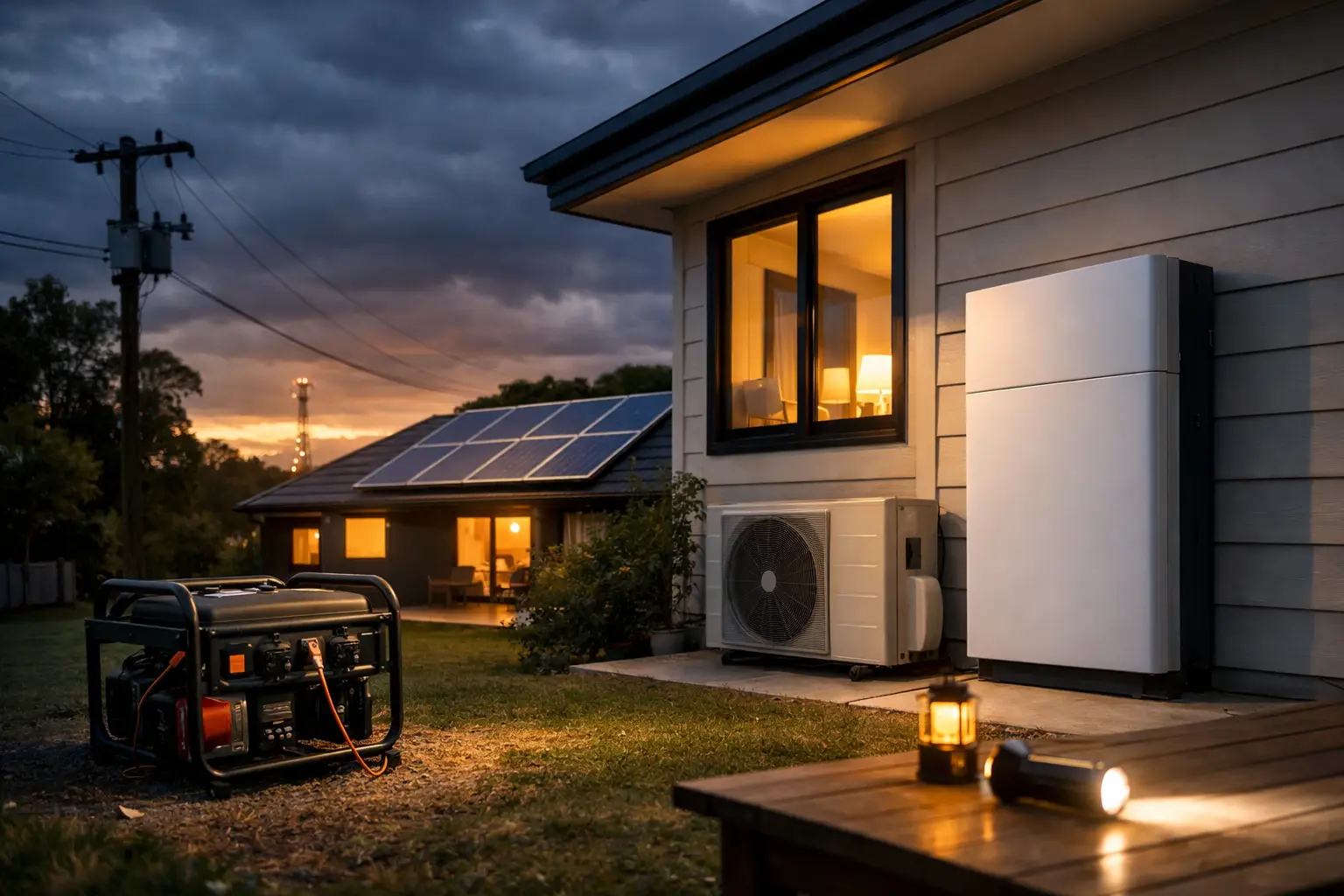
A blackout changes the value of electricity in seconds. The fridge starts warming, the Wi-Fi drops out, garage doors may not operate, and a home office or small business can come to a standstill. The right power outage backup solutions keep the essentials running without relying on an extension lead, a noisy generator or guesswork when the grid goes down.
For most Australian households, solar battery storage is now the most practical path to reliable backup power. But the best setup depends on what you need to protect, how long outages usually last in your area and whether your existing solar system can support a battery upgrade.
What backup power should keep running?
Backup power is not always designed to run every appliance in a property. A well-designed system starts with the loads that matter most during an outage: refrigeration, lighting, internet, selected power points, security systems, medical equipment and a few charging outlets.
For some homes, that is enough. For others, particularly where outages are frequent or where someone works from home, the priority may also include a home office, electric gate, pool equipment, selected air conditioning or a bore pump. Small businesses may need point-of-sale systems, communications equipment, refrigeration, security and critical machinery protected.
This is why a battery should be sized around real energy use rather than a headline capacity figure alone. A system with a large battery but limited backup output may not run the appliances you expect. Equally, a high-output battery may be unnecessary if you only need essential circuits covered overnight.
The main power outage backup solutions
Solar battery storage with blackout protection
A solar battery stores excess solar generation for use after sunset, during peak tariff periods or when the grid fails. When paired with compatible backup hardware, it can automatically supply nominated circuits during a blackout.
This is the strongest long-term option for properties with solar, because it does more than sit idle waiting for an emergency. It can reduce grid purchases every day by using more of the energy generated on your roof. During daylight outages, compatible systems can also continue charging from solar, helping extend backup time beyond the energy stored overnight.
There is an important distinction here: not every battery provides backup power. Some systems are installed for bill savings only and switch off when the grid goes down. Ask specifically whether the proposed design includes blackout backup, which circuits are protected and whether solar can recharge the battery during an outage.
Hybrid solar and battery systems
A hybrid system combines solar generation, battery storage and an inverter designed to manage both. It is a sensible option for a new solar installation or a property replacing an older inverter.
The benefit is an integrated design from the start. Your system can be planned around daytime solar production, evening consumption, electricity tariffs and backup requirements. It also avoids trying to make mismatched equipment work together later.
For households with an existing solar system that is still performing well, a battery retrofit may be more economical. Compatibility needs to be checked carefully, especially where the current inverter, switchboard or meter arrangement is older.
Stand-alone generators
Generators remain useful for remote sites, long-duration outages and certain commercial operations with high power demands. A petrol, diesel or LPG generator can provide substantial output, and a correctly installed automatic changeover setup can supply selected loads when the grid fails.
The trade-offs are fuel storage, maintenance, noise, emissions and manual handling for portable units. Generators also need safe installation and operation. They must never feed electricity back into the grid, as this can create a serious hazard for network workers and damage equipment.
A generator can complement a battery where extended outages are a genuine concern. The battery handles short interruptions quietly and automatically, while the generator is a reserve option for prolonged events. For many metro and suburban properties, however, a solar battery offers more everyday value.
Uninterruptible power supplies
A UPS is a small backup unit designed for electronics such as computers, modems, servers and security equipment. It provides immediate power for a short period, preventing devices from shutting down during brief interruptions.
It is useful protection for a home office or business network, but it is not a whole-home backup solution. A UPS will not reliably run household refrigeration, lighting circuits or larger appliances for hours.
Battery backup: capacity and power are different
Two battery figures matter when comparing options: usable capacity and power output. Usable capacity, measured in kilowatt-hours (kWh), indicates how much energy the battery can store. Power output, measured in kilowatts (kW), indicates how much electricity it can deliver at one time.
A 10 kWh battery may keep low-demand essentials going for many hours, but the runtime falls quickly if you add high-consumption appliances. Kettles, ovens, electric hot water systems, ducted air conditioning and EV charging can drain a battery rapidly. That does not make battery backup inadequate. It means the system needs sensible load management.
As a guide, a household that wants refrigeration, lights, internet, televisions and a few power points protected may suit a smaller essential-load backup design. A family seeking broader coverage, overnight air conditioning or support through longer local outages may need more storage, higher backup output or both.
A site assessment should examine your usage profile rather than simply applying a one-size-fits-all battery size. The right answer can differ significantly between two homes with the same number of occupants.
Choose between essential backup and whole-home backup
Essential backup, sometimes called partial-home backup, supplies a dedicated group of circuits when the grid is unavailable. It is generally the more cost-effective approach because it focuses battery energy on what you actually need. In a blackout, you may use marked power points for the fridge, modem, lighting and charging while high-draw appliances remain off.
Whole-home backup is designed to supply most or all household circuits. It offers greater convenience, but it requires more careful system design. The battery, inverter and switchboard need sufficient capacity to handle starting loads and simultaneous appliance use.
Whole-home backup does not mean every appliance should run at once. Smart energy habits still matter. Avoiding heavy loads during an outage gives your battery more time to cover the essentials and allows solar generation to replenish stored energy during the day.
How long will battery backup last?
There is no honest single-hour answer. Runtime depends on battery size, battery state of charge when the outage starts, the appliances operating, weather conditions and whether the system can recharge from solar.
Consider a battery with 13 kWh of usable energy. At an average backup load of 500 watts, it could theoretically supply power for roughly 26 hours. At 2 kW, that same stored energy could be used in around six and a half hours. Real-world results vary due to system settings, battery reserves and changing household demand.
This is where monitoring adds value. A quality energy management platform shows solar production, battery level, household consumption and grid imports in clear terms. Over time, it helps you see which appliances create the biggest demand and how to adjust your usage for longer backup coverage.
Installation, safety and compliance matter
Backup power is not a plug-and-play purchase. It involves electrical protection, switchboard work, grid connection requirements and equipment compatibility. A properly installed system isolates your property from the network during an outage, then reconnects safely when grid power returns.
For solar batteries, installation quality also affects performance, warranty support and future upgrade options. The design should account for battery location, ventilation requirements, weather exposure, cable runs, fire safety clearances and access for servicing.
GridFree Solar approaches battery systems as complete energy solutions, including system design, certified installation, monitoring and help navigating relevant rebate and compliance requirements. That support matters because the financial case for a battery is stronger when the system is configured correctly from day one.
Rebate support can change the numbers
Available incentives can reduce the upfront cost of eligible solar and battery upgrades, although programs, criteria and funding levels can change. The practical question is not simply whether a rebate exists. It is whether your property, chosen equipment and installation timing meet the current requirements.
A good provider will explain the likely savings clearly, handle the required paperwork where applicable and show you the expected outcome with and without available incentives. Avoid relying on vague promises about rebates or battery payback periods. Your proposal should set out equipment, usable capacity, backup capability, warranty terms and estimated bill savings in plain language.
Questions to ask before choosing a system
Before committing to a backup solution, ask whether the battery provides automatic blackout backup, which circuits will stay live and whether solar can recharge it during an outage. Confirm the usable battery capacity, continuous backup output and any limits on high-starting-load appliances.
Also ask how the system will work with your current solar panels, whether the switchboard needs upgrading and what monitoring is included. For businesses, clarify whether the proposed design protects critical operations or simply provides limited backup to selected outlets.
Finally, look beyond the equipment brochure. The installer should be able to explain the design in relation to your property, answer questions about warranties and provide a clear plan for ongoing support.
A blackout may be unpredictable, but your response to one does not need to be. The best backup system is the one designed around the way you live or operate, delivering useful savings on ordinary days and dependable power when the grid cannot.