
A hot afternoon, the air conditioner running, and another expensive power bill is often the moment homeowners start looking beyond solar panels alone. This hybrid solar system guide explains how solar and battery storage work together, what they can realistically save, and how to choose a system that suits the way your property uses energy.
A hybrid system is designed for households and small businesses that want more control. Rather than exporting every unused kilowatt-hour to the grid for a modest feed-in tariff, you can store surplus solar energy and use it later, when electricity prices are often higher.
What is a hybrid solar system?
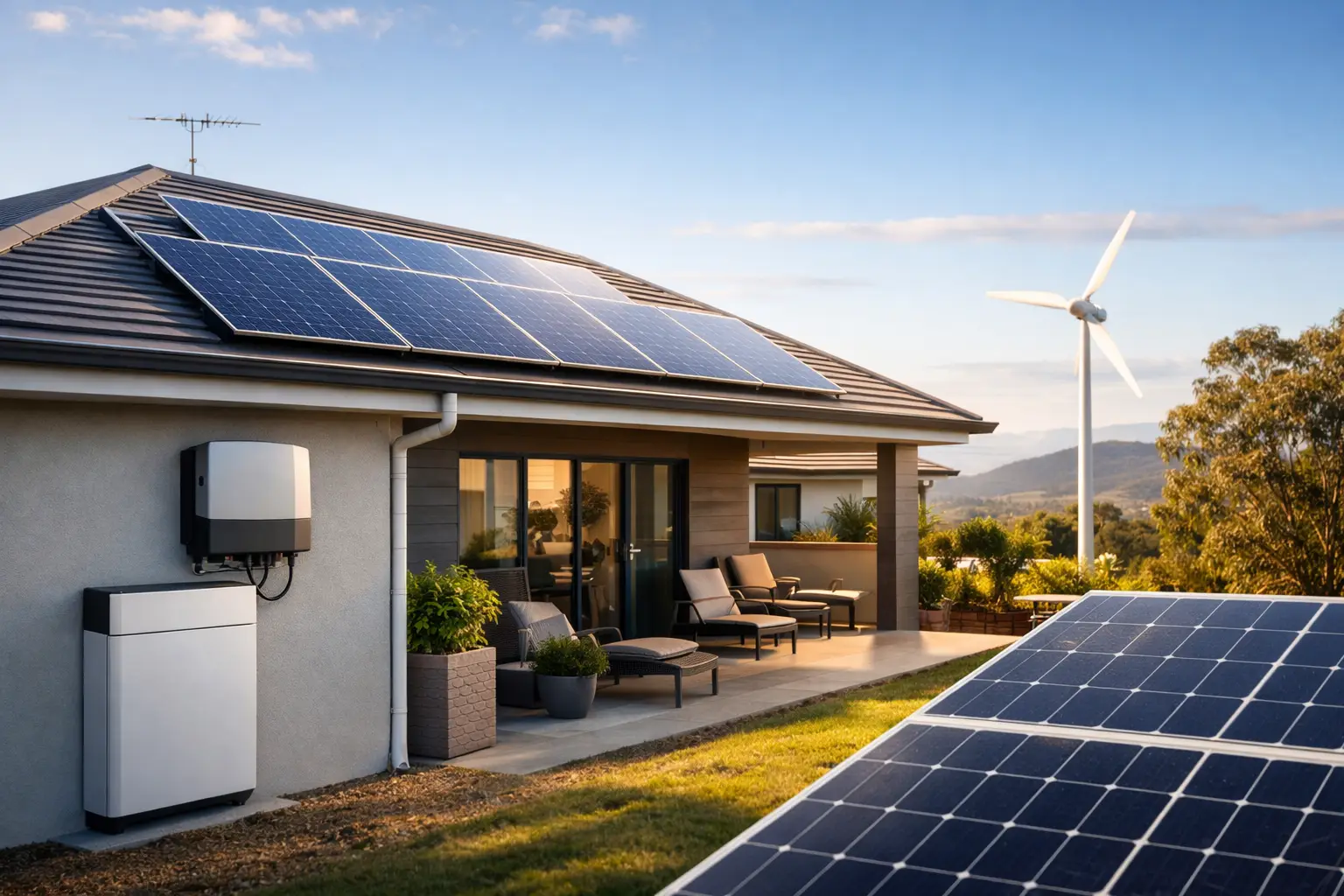
A hybrid solar system combines solar panels, a battery and a hybrid inverter. During daylight hours, your panels generate electricity for the property first. Any excess can charge the battery, then flow to the grid if the battery is full. After sunset, stored energy can power your home before you need to buy electricity from the grid.
The inverter is the system’s traffic controller. It converts solar electricity into power your appliances can use, manages battery charging and discharging, and draws from or exports to the grid when required. Smart monitoring gives you visibility of this activity through an app, so you can see production, household consumption, battery level and grid imports.
This differs from a standard grid-connected solar system, where unused solar generation is generally exported straight away. It also differs from a fully off-grid system. A hybrid system remains connected to the grid, which provides flexibility during extended cloudy periods or unusually high energy use.
For many Australian properties, that middle ground makes practical financial sense: lower grid purchases, stored backup energy where configured, and no need to oversize a system simply to cover every possible weather event.
Why add a battery to solar?
Solar panels work hardest in the middle of the day. Many households, however, use the most electricity in the morning and evening, when people are cooking, heating or cooling rooms, washing clothes and charging devices. Without a battery, a significant share of daytime generation may be exported while you later purchase electricity at retail rates.
A battery shifts some of that solar energy into the hours when it is more valuable to you. The result can be higher solar self-consumption and less reliance on the grid. The exact benefit depends on your electricity tariff, export rate, household load profile, system size and battery capacity.
Battery storage can also provide resilience. Not every hybrid system automatically powers a home during a blackout. Backup capability depends on the inverter, battery, switchboard design and the backup circuits selected. Some systems can support essential loads such as lights, selected power points, the fridge, internet and garage door. Others may be designed for broader whole-home backup, subject to the property’s electrical demand and system specifications.
That distinction matters. If blackout protection is a priority, raise it during system design rather than assuming it is included.
Hybrid solar system guide: choosing the right size
The best system is not necessarily the largest system. It is the one that matches your roof, electricity use, budget and goals.
Start with your bills. A full year of electricity data is ideal because it shows seasonal changes in heating, cooling and consumption. A household with a pool, electric hot water, ducted air conditioning or an electric vehicle will have a very different load profile from a smaller home where everyone is out during the day.
Solar panel capacity is measured in kilowatts, while battery storage is measured in kilowatt-hours. Panels determine how much energy you can generate; the battery determines how much surplus energy you can retain for later. A larger battery is not automatically better if your solar array rarely generates enough excess energy to fill it, or if your overnight consumption is modest.
A considered design also looks at battery power output, not just storage capacity. Capacity tells you how much energy the battery holds. Power output affects how many appliances it can run at once. A battery may store plenty of energy but still have limits when several high-demand appliances operate together.
Your installer should assess roof orientation, shading, usable roof area, switchboard condition, phase supply, current electricity plan and likely future changes. It is worth planning for an electric vehicle, pool equipment, electric cooking or a future battery upgrade if those are on the horizon. Designing with expansion in mind can avoid unnecessary rework later.
Understanding savings, tariffs and payback
Hybrid solar can reduce electricity costs, but credible savings estimates should be based on your circumstances rather than a generic promise. Electricity retailers set different usage and feed-in rates, and tariffs may include flat, time-of-use or demand-based charges.
Time-of-use pricing can make battery storage particularly valuable. If grid electricity costs more in the evening, stored solar may offset purchases during that higher-priced period. Conversely, if your household already uses most solar generation during the day, the additional value of a battery may be lower.
A battery can also be programmed to respond to tariff periods, within the limits of its settings and your energy plan. Some households choose to charge from solar only. Others may benefit from charging during low-cost off-peak periods and using energy when rates rise. This requires careful modelling, particularly where battery cycle limits and electricity plan conditions apply.
Payback is influenced by system cost, available incentives, energy usage and future electricity prices. It should be treated as a forecast, not a guarantee. The stronger question is whether the system improves your long-term energy position while delivering the backup capability and control you value.
Rebates and compliance are part of the job
Solar incentives can make a meaningful difference to upfront cost, but eligibility and value vary by location, system type and current program rules. Small-scale technology certificates may apply to eligible solar installations, while battery incentives and state-based programs can change over time.
The paperwork is not an afterthought. Correct product eligibility, accredited installation, system documentation and compliance requirements all matter. A quality provider should explain which incentives may apply, manage the relevant administration where possible, and give you a clear view of the quoted price and expected outcomes.
For small commercial sites, the assessment should also consider operating hours and daytime load. Businesses that consume substantial electricity while solar is generating may prioritise panel capacity first, then add storage to reduce evening imports, manage demand or provide selected backup.
What to look for in equipment and installation
A hybrid system is a long-term electrical asset, so equipment quality and installation standards should carry more weight than a headline price. Look for appropriately certified products, clear manufacturer warranties, an experienced installation team and a documented commissioning process.
Ask how the system will be monitored and who will support you if an alert appears in the app. Monitoring is useful only when there is a practical path to diagnosing faults, checking performance and resolving issues. You should also receive clear information about battery operating conditions, warranty terms, emergency shutdown arrangements and any maintenance recommendations.
Battery location needs planning too. Australian installation rules, clearances, ventilation considerations and access requirements can affect where equipment can be safely installed. The garage is common, but it is not the only option. A site inspection should identify a compliant location that protects the equipment without creating inconvenience for the household.
Is a hybrid system right for you?
A hybrid setup is often a strong fit if you have solar or are planning solar, use most energy outside peak sunlight hours, receive a low feed-in tariff, or want greater protection from grid outages. It can also suit households preparing for electrification, especially where an electric vehicle or electric heating will increase future consumption.
It may be less compelling if you have very low electricity use, a heavily shaded roof, or most of your consumption already occurs during the middle of the day. In those cases, a solar-only system, efficiency upgrades or a smaller battery may offer better value.
The right decision starts with real consumption data and an honest discussion about priorities. GridFree Solar designs integrated solar and battery systems around how each property operates, including rebate support, compliant installation and ongoing monitoring. A system should make your energy simpler to manage, not give you another technical project to worry about.
The most useful next step is to gather your recent electricity bills and think about what matters most: lower bills, backup power, greater independence, or preparation for an all-electric home. Those answers will shape a hybrid system that works hard long after the installation day.