
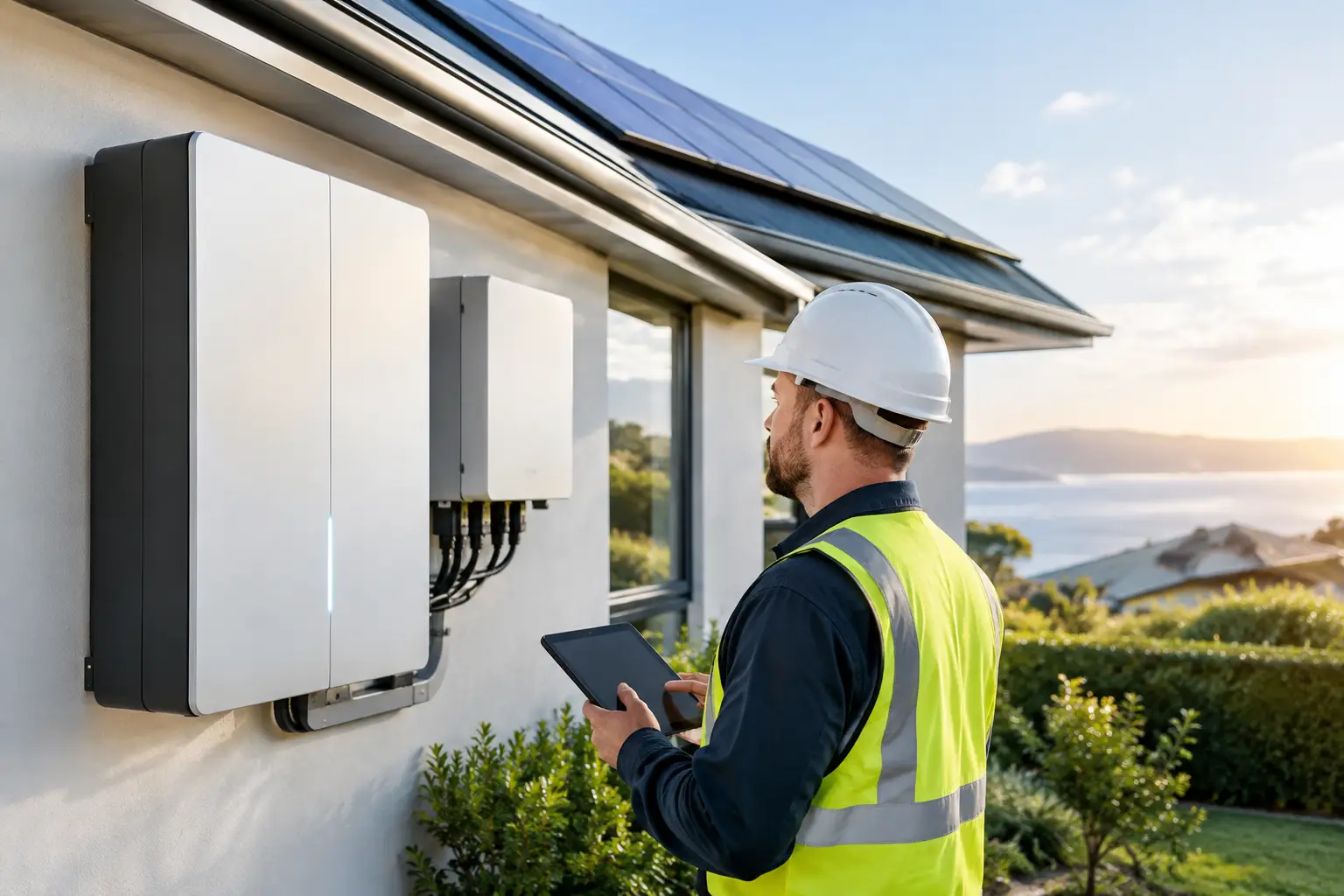
A home battery is designed to give you more control over your energy: store surplus solar, cover evening demand and keep essential appliances running during an outage. Battery fire prevention is part of making that investment work safely for years, not a reason to avoid battery storage altogether. The key is choosing suitable equipment, having it designed and installed correctly, and knowing what normal operation looks like.
Battery incidents receive attention because they can be serious, but they are not an inevitable part of owning a solar battery. Modern systems include multiple layers of protection. The real risk rises when a battery is poorly located, damaged, incorrectly installed or connected to unsuitable equipment.
What causes a home battery fire?
Most household battery systems use lithium-ion cells. They store a large amount of energy in a compact enclosure, which is excellent for usable storage capacity but means heat management and electrical protection matter.
A fire can occur when a cell is physically damaged, exposed to excessive heat, affected by a manufacturing fault or subjected to an electrical fault. In rare cases, this can trigger thermal runaway, where heat from one failing cell affects neighbouring cells. Battery manufacturers address this risk through cell design, thermal controls, fuses, monitoring and protective shutdowns.
The practical point for homeowners is straightforward: safety starts long before the battery is switched on. It begins with system design, equipment selection and a site inspection that considers your property, not just the advertised battery capacity.
Battery fire prevention starts with professional design
A battery should never be treated as an appliance that can simply be placed wherever there is spare wall space. Its location affects safety, performance, access for servicing and lifespan.
A qualified installer will assess ventilation, shade, clearances, flood exposure, access routes and proximity to doors, windows, switchboards and combustible materials. Australian requirements and manufacturer instructions guide these decisions. The best location differs between properties. A shaded external wall may suit one home, while a protected garage position with the required clearances may be appropriate for another.
Heat is a major consideration in Australian conditions. Batteries operate within specified temperature ranges, and repeated exposure to extreme heat can reduce performance and place unnecessary stress on components. A well-designed installation avoids direct afternoon sun where possible and does not place equipment beside heat sources or in an enclosed, unventilated space.
The electrical side matters just as much. Correct cable sizing, compliant isolation, surge protection where required, secure connections and compatible inverter settings all help prevent faults. This is why the lowest upfront quote is not always the best value. A battery system is a long-term electrical asset, and installation quality protects both its safety and return on investment.
Choose equipment with proven safeguards
Not all batteries are built or supported in the same way. A suitable system should be approved for use in Australia, compatible with the solar inverter and backed by a clear local warranty and technical support pathway.
Look for batteries that include a battery management system. This continuously monitors cell voltage, temperature and current, then limits charging or discharging, or shuts the battery down, when readings fall outside safe operating limits. The system should also provide visible fault notifications through an app, monitoring portal or inverter display.
Chemistry can be relevant too. Many residential batteries use lithium iron phosphate cells, often called LFP, which are widely valued for their thermal stability and long cycle life. That does not remove the need for correct design and installation. It does, however, form one part of a sensible risk-management approach.
Installation quality is a safety feature, not an add-on
Your installer should be appropriately accredited and licensed for the work being completed. They should also provide system documentation, explain the shutdown procedure and leave the site tidy, labelled and ready for safe operation.
A proper handover is more valuable than a quick demonstration of the monitoring app. You should know where the battery and solar isolators are, what the normal status lights mean, how backup power behaves during an outage and who to contact if the system reports a fault. You should not need to diagnose battery settings yourself, but you should be able to recognise when something is not normal.
For homes combining older solar with a new battery, compatibility needs careful attention. Some upgrades work through an AC-coupled battery, while others involve a hybrid inverter or replacement inverter. Neither approach is automatically safer or better. The right choice depends on your existing equipment, energy use, backup requirements and the condition of the original solar installation.
Everyday habits that reduce risk
Once professionally installed, a battery usually needs very little hands-on attention. The most useful safety habits are simple and practical.
Keep the area around the battery clear. Do not stack boxes, paint tins, garden chemicals, petrol containers or household rubbish against it. If the battery is in a garage, avoid turning the surrounding space into storage. Clear access helps airflow, makes inspections easier and gives emergency services room if they ever need it.
Check the monitoring app from time to time, particularly after a storm, blackout or electrical work at the property. A temporary alert may clear automatically, but repeated warnings, unexplained shutdowns or a major drop in battery performance deserve a call to your installer or manufacturer support team.
Protect the equipment from physical impact. This is especially relevant for garage installations near vehicles, bikes, tools and sporting equipment. If a battery enclosure, cable or conduit is cracked, loose, dented or wet after flooding, do not continue operating it as normal. Arrange an inspection.
Do not modify the battery system or add unapproved electrical equipment. A battery, inverter, backup switchboard and solar array work as one managed system. Unauthorised changes can affect compliance, warranty coverage and safe operation.
Warning signs that need action
Modern batteries may make quiet fan noise or show changing lights as they charge and discharge. Those signs can be normal. What is not normal is a burning smell, smoke, hissing, swelling, discolouration, persistent error messages, excessive heat at the enclosure or a battery that repeatedly switches off without an obvious grid event.
If you notice smoke, flames or signs of overheating, move people away from the area and call Triple Zero (000). Do not attempt to open the battery enclosure. If it is safe to do so and you have been shown how, isolate the system according to the shutdown instructions provided at handover. Then follow the direction of emergency services.
For a non-urgent fault alert, contact your installer promptly. Avoid resetting breakers repeatedly or trying to force the battery back online. A qualified technician can review monitoring data, inspect the equipment and determine whether the issue is related to the battery, inverter, solar system or grid supply.
Maintenance, monitoring and warranty support
Home batteries are low-maintenance, not no-maintenance. The best approach is planned oversight rather than constant checking. Remote monitoring can identify irregular charging behaviour, communication faults and performance changes before they become a bigger inconvenience.
Your maintenance needs will depend on the manufacturer, installation environment and whether the system supports backup power or virtual power plant participation. Keep warranty documents, commissioning records and contact details in an accessible place. If your household’s electricity use changes significantly – perhaps you add an EV charger, pool equipment or a home office – it is also worth reviewing battery settings and system capacity.
At GridFree Solar, battery design is considered alongside solar production, household demand, backup priorities and installation conditions. That gives homeowners a system sized for useful savings and built around safe, reliable operation rather than a one-size-fits-all package.
A safer battery is also a better investment
The same decisions that support battery fire prevention also protect system performance: quality equipment, a compliant installation, sensible location, clear monitoring and responsive aftercare. Cutting corners can create avoidable risk, while a properly designed system gives you confidence to use more of your own solar power.
Choose a provider that can explain the safety decisions behind the quote, not just the battery capacity and price. That conversation is where dependable energy independence begins.