
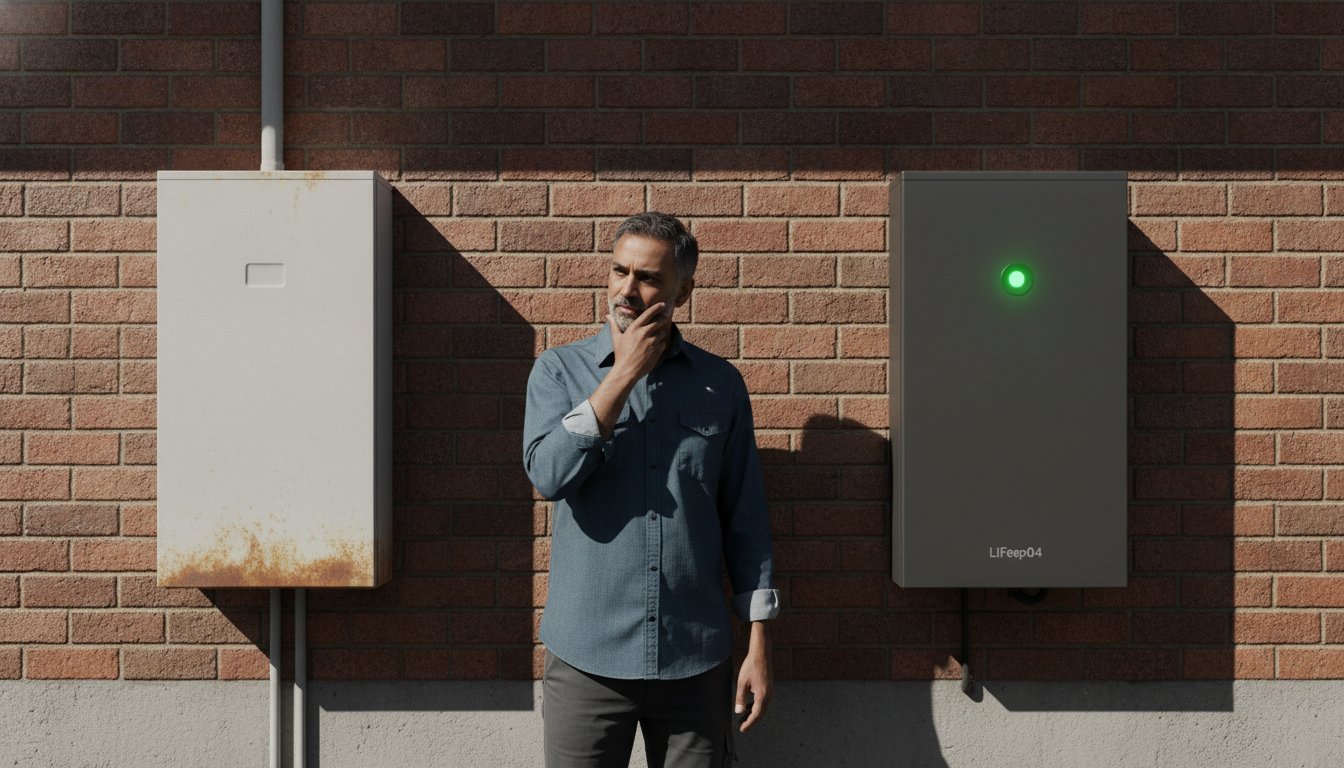
Your ageing solar battery might be costing you more than a brand-new system. While it feels logical to just add a module, the financial reality for 2026 suggests that a full replacement often delivers a faster payback period through superior efficiency and massive federal incentives. With Melbourne electricity prices averaging 26c/kWh, relying on a degraded unit that dies by 9 PM is a financial drain you can no longer afford.
The debate of whether to upgrade vs replace solar battery storage comes down to technical compatibility and the new federal rebate of approximately $252 per usable kWh. You deserve a system that actually powers your home office through a blackout. We will show you how to master the technical math and stack these incentives with Virtual Power Plant credits to slash your energy bills toward zero.
This guide analyses the critical shift from state to federal support and explains why modern LiFePO4 technology makes your old inverter a potential liability. You will learn to navigate the financial formulas to decide if your current setup is worth saving or if it is time to scrap the old tech for total grid independence.
Key Takeaways
- Maximise your financial returns by stacking the federal rebate with high-yield VPP credits available in Melbourne.
- Solve the upgrade vs replace solar battery dilemma by auditing your existing inverter for modern high-voltage compatibility.
- Identify the five technical warning signs that indicate your current storage unit has shifted from an asset to a liability.
- Navigate the 2026 Victorian eligibility changes, including the revised $150,000 household income threshold for incentive programs.
- Ensure a seamless transition through professional decommissioning and recycling of your legacy battery hardware.
The 2026 Energy Crossroads: Why Your Old Battery Setup is Costing You
Melbourne’s energy market has hit a breaking point in July 2026. With average electricity prices sitting at 26c/kWh and feed-in tariffs plummeting to as low as 0c/kWh, the financial logic for home storage has shifted permanently. You can’t rely on the grid for affordable peak power anymore. Storing your own solar energy is the only viable way to avoid these soaring costs. This reality forces a difficult choice for early adopters: the upgrade vs replace solar battery dilemma. Adding more capacity to an ageing system might seem cheaper upfront, but it often locks you into obsolete technology that can’t keep up with modern demands.
Signs Your Current Battery is a ‘Sunk Cost’
Your old battery might be a silent drain on your finances. Capacity fade is the most obvious culprit. If your 10kWh unit now only manages to power your home until 8 PM, it has likely degraded to 5kWh or less. Technical understanding of how battery energy storage systems work reveals that lithium-ion cells from the 2018 era simply don’t have the cycle life or thermal stability of modern LiFePO4 units.
Legacy systems also struggle with Virtual Power Plant (VPP) integration. Most Melbourne VPP providers now require high-speed response times and specific software protocols that older inverters don’t support. If you can’t join a VPP, you’re missing out on annual credits ranging from $150 to $600. Maintaining an out-of-warranty unit is a high-risk gamble. One component failure could result in a total loss of the system with no recourse, leaving you with a heavy, useless box on your wall.
The 2026 Victorian Storage Landscape
The administrative environment in Victoria has changed significantly as of July 2026. Solar Victoria has revised the Solar Homes Program, lowering the combined household income threshold to $150,000. If your income is near this limit, acting now is vital before you’re locked out of state-level support entirely. This threshold change means many households that previously qualified for interest-free loans must now rely strictly on federal incentives.
Federal incentives have become the primary drivers for adoption. The current federal rebate provides approximately $252 per usable kWh. This is applied as an upfront discount, making the net cost of a new 10kWh system significantly more attractive than a piecemeal upgrade. Waiting another year is a costly mistake; these rebates are scheduled to decrease every six months. New safety standards from the 2026 Notice to Market also mean that older “Frankenstein” upgrades might not meet current compliance. Replacing your system ensures you’re protected by the latest hardware standards and maximum financial subsidies.
Upgrade vs Replace: Decoding the Technical Complexity
Don’t build a “Frankenstein” battery system. Mixing different brands or chemistries creates communication errors between Battery Management Systems (BMS), leading to accelerated degradation and safety risks. When deciding between an upgrade vs replace solar battery plan, technical harmony is your priority. Legacy batteries using Nickel Manganese Cobalt (NMC) chemistry don’t play well with modern Lithium Iron Phosphate (LiFePO4) units. Attempting to bridge these generations often results in a system that operates at the speed of its weakest, oldest cell.
The Solar Victoria Approved Product List serves as the definitive register of safe, rebate-eligible hardware. If your proposed hardware isn’t on this list, it won’t qualify for federal incentives. Chemistry matters for more than just performance; it affects your home insurance. LiFePO4 is the 2026 industry standard because of its superior thermal stability. Insurance providers are increasingly scrutinising residential storage types, making a full shift to LiFePO4 a savvy move for long-term risk management. Since the Victorian solar battery loan program is now closed to new applicants, the focus has shifted toward high-efficiency replacements that maximise the current federal rebate.
Option 1: Upgrading Your Existing Setup
Upgrading is viable if your current system is modular. Brands like Sungrow or Tesla allow for additional units, provided your inverter has the spare capacity to manage the increased throughput. If your inverter is more than seven years old, it likely lacks the intelligence to handle modern high-voltage modules. In these cases, an inverter upgrade is mandatory to ensure the new storage integrates with your energy storage solutions Melbourne setup. This path keeps your initial investment alive but may limit your future VPP participation if the hardware protocols are outdated.
Option 2: The Full System Replacement
Replacing the entire stack is often the cleaner financial choice. You move from fragmented components to a unified system covered by a single manufacturer warranty. This eliminates the “finger-pointing” between different brands if a fault occurs. A full replacement allows you to transition to an all-in-one solar panel and battery package Melbourne, ensuring peak round-trip efficiency. You gain the latest “islanding” technology for blackout protection, which older systems often lack. If you are unsure which path suits your roofline, you can request a technical audit from our Melbourne specialist team to verify your current hardware’s health.
The Financial Stack: Victorian Loans and VPP Credits in 2026
The financial landscape for Melbourne storage has undergone a radical transformation. As of July 2026, the Victorian interest-free battery loan program has closed to new applicants, forcing a pivot toward the Federal Cheaper Home Batteries Program. This federal rebate provides approximately $252 per usable kWh of capacity as an upfront discount. When weighing the upgrade vs replace solar battery decision, this federal support often makes a full replacement more financially viable than a modular upgrade that may not qualify for the same level of subsidy. You must act while these tiered rebates are at their peak, as they are scheduled to decrease every six months.
Eligibility has tightened across the board. The Solar Homes Program income threshold was reduced to $150,000 per year on July 1, 2026. If your household sits above this bracket, your financial strategy must shift toward aggressive self-consumption and Virtual Power Plant (VPP) participation. Solar Victoria’s battery buyers guide confirms that while state loans are restricted, the synergy between federal rebates and VPP credits creates a powerful “Net Zero” financing model. Your monthly savings on the 26c/kWh grid rate, combined with VPP earnings, can frequently exceed the instalment of a private green loan.
Virtual Power Plants (VPPs) in Melbourne
2026 is the year VPPs became essential for Victorian grid stability. Melbourne now hosts eleven active VPP providers. These companies offer sign-up bonuses that act as an immediate cash injection to offset your replacement costs, a detail many homeowners overlook. You can expect annual earnings between $150 and $600 just for allowing the grid to tap into your spare capacity during peak events. GridFree ensures your new hardware is VPP-ready, preventing the technical “lock-out” common with older, non-compliant systems.
Federal STCs and State Incentives
Small-scale Technology Certificates (STCs) remain a vital part of the financial stack. These are not just for panels. When you install a new battery system, you are future-proofing your STC-eligible assets. Maximising your solar battery cost Australia efficiency requires stacking these federal certificates with the $252/kWh rebate. This 2026-27 funding pool represents the most aggressive support available, but it is a finite resource. Immediate action is the only way to lock in these rates before the next scheduled rebate reduction.
Your Decision Framework: 5 Signs It’s Time to Replace vs Upgrade
Stop guessing and start auditing. The choice between an upgrade vs replace solar battery system often hinges on five technical triggers that determine your long-term ROI. If your current unit is approaching its 10-year performance guarantee, you’re on borrowed time. Performance usually drops off a cliff after this milestone. You aren’t just losing capacity; you’re losing the security of a manufacturer-backed safety net. Replacing at this stage isn’t an expense. It’s a strategic move to reset your warranty clock.
Evaluate your inverter’s brain. Is it truly “Battery Ready”? Many older units lack the DC input headroom to manage modern high-voltage modules. If you’ve recently added an Electric Vehicle or upgraded to whole-house reverse-cycle air conditioning, your night-time usage has likely outpaced your original storage design. Round-trip efficiency is the final clincher. Older systems can lose up to 20% of stored power to heat during the conversion process. Modern LiFePO4 units cut this waste in half, ensuring more of your free solar power actually reaches your appliances instead of vanishing as thermal loss.
The ‘Upgrade’ Checklist
Upgrading is the smart financial play if your hardware is less than four years old. Stick with the upgrade path if your existing brand supports simple plug-and-play module expansion. This allows you to scale up your storage without the cost of a full decommissioning. You must ensure your current inverter has the spare capacity to handle the increased DC input before purchasing extra modules. If your system is modular and modern, adding capacity is a fast, cost-effective way to achieve grid independence.
The ‘Replace’ Checklist
Replacement is mandatory for “orphaned” brands that no longer have Australian support offices. If your system relies on lead-acid or early-generation lithium chemistry, it is a technical dead end. Scrapping the old unit allows you to tap into current solar battery replacement Melbourne incentives that didn’t exist three years ago. You gain a fresh 10-year warranty and a system built for 2026 grid demands. Don’t risk a DIY assessment. Book a professional system health check with our Melbourne engineers to confirm your best path forward.
The GridFree Advantage: Seamless Battery Transitions in Melbourne
Melbourne homeowners face a complex technical transition. Choosing between an upgrade vs replace solar battery strategy requires more than just buying a unit off a shelf. It demands a partner who understands the Victorian regulatory environment. GridFree Solar is a Solar Victoria Authorised Retailer. We don’t just supply hardware; we engineer a transition that protects your investment. We handle the bureaucratic heavy lifting, managing your Solar Victoria paperwork and federal rebate applications from start to finish. This ensures you receive every cent of the available incentives without the administrative headache.
Our 2026 ‘Clean Swap’ program is designed for maximum efficiency. GridFree Solar provides a comprehensive service that includes the decommissioning of your legacy system, ethical recycling of old cells, and the installation of a high-performance LiFePO4 replacement. Every design we produce is custom. We optimise your Melbourne ROI by matching battery capacity to your specific export patterns and VPP opportunities. We don’t just sell boxes. We build grid-independent homes. Our team ensures that your new storage system integrates perfectly with your existing solar array to maximise self-consumption during those expensive Melbourne evening peaks.
Specialised Battery Decommissioning
Old lithium units are hazardous waste. GridFree Solar ensures safe removal according to strict Victorian EPA guidelines. This isn’t just about safety; it’s about legal compliance. If you are also managing a commercial solar installation Melbourne, we can integrate your residential and business energy strategies into a unified portfolio. We also verify that your home switchboard is 2026-compliant. High-speed charging requires robust electrical infrastructure. We ensure your home is ready for the next decade of energy evolution. Our technicians handle the physical removal and transport of old units, so you never have to worry about the environmental footprint of your legacy hardware.
Book Your Site Assessment Today
Don’t wait for the winter peak. Electricity rates are highest when your solar production is lowest. Our 3-step process is simple. First, we conduct a remote data audit. Second, we perform an on-site technical inspection. Third, we deliver a bespoke upgrade vs replace solar battery report tailored to your budget. Acting now secures your spot in the 2026 rebate queue. It ensures your home office stays powered through the next grid event. We take the guesswork out of the financial maths. You receive a clear, data-backed recommendation on whether to expand or replace. Contact our Melbourne team today for a performance audit of your current setup and start your journey toward total energy independence.
Secure Your Melbourne Energy Future Today
The 2026 energy landscape leaves no room for hesitation. Every night your degraded battery fails to last until dawn is a night you are losing money to 26c/kWh grid rates. The choice between an upgrade vs replace solar battery system is now a clear financial calculation. Replacement allows you to reset your warranty, adopt superior LiFePO4 safety, and capture the $252/kWh federal rebate before it decreases again. Modular upgrades are a fast fix, but a full swap ensures your home is ready for the Virtual Power Plant era.
GridFree Solar makes this transition effortless. We are a Solar Victoria Authorised Retailer and specialists in high-performance LiFePO4 upgrades. Our team provides comprehensive Melbourne-based site assessments to verify your hardware health and manage all the complex paperwork for you. You deserve a system that provides blackout protection and total grid independence without the technical headaches.
Claim Your 2026 Victorian Battery Upgrade with GridFree Solar
Take control of your power bills now. Your path to a smarter, more efficient home is just one assessment away.
Frequently Asked Questions
Is the Victorian solar battery rebate still available in 2026?
No, the Victorian state-level battery loan program is closed to new applications as of July 2026. Homeowners now primarily access the Federal Cheaper Home Batteries Program. This federal initiative provides a rebate of approximately $252 per usable kWh of battery capacity. The discount is applied upfront by your installer, significantly reducing the initial investment required for modern energy storage.
Can I add a Tesla Powerwall to my existing solar system?
Yes, you can add a Tesla Powerwall to almost any existing setup because it is an AC-coupled system. This allows the battery to work independently of your solar inverter, making it a popular choice for those deciding to upgrade vs replace solar battery configurations. It is an efficient way to expand storage capacity without needing to overhaul your entire solar panel array.
How much does it cost to replace an old solar battery in Melbourne?
The average cost for a fully installed 10-13kWh solar battery system in Melbourne ranges between $9,000 and $15,000 before incentives. Once the federal rebate is applied, most Victorian households see a net cost between $3,500 and $12,000. Prices depend on the specific chemistry chosen and the complexity of your home’s electrical switchboard requirements. A professional site audit is the only way to get a fixed quote.
What are the income limits for the Victorian interest-free battery loan?
The Victorian interest-free battery loan program is no longer accepting new applications in 2026. However, for the associated Solar Homes Program, the combined household income threshold was reduced to $150,000 per year on July 1, 2026. This tighter eligibility criteria means more families are now looking toward federal rebates and Virtual Power Plant earnings to fund their battery transitions.
Is it worth upgrading my battery if I’m planning to join a VPP?
Yes, but only if your hardware is compatible with modern Virtual Power Plant software. Joining a VPP in Melbourne can earn you between $150 and $600 annually through grid credits and sign-up bonuses. If your current battery is a legacy model that lacks high-speed communication protocols, replacing it with a VPP-ready unit is often the most profitable long-term strategy.
How do I safely dispose of my old solar battery in Victoria?
You must dispose of old lithium batteries through an authorised decommissioning specialist to comply with Victorian EPA guidelines. These units are hazardous waste and require specific handling to prevent fires and environmental contamination. Professional installers manage the removal and transport of legacy units to recycling centres where materials like lithium, cobalt, and copper are recovered for reuse.
Will a new battery work with my 10-year-old solar panels?
Yes, a new battery will function perfectly with older panels, provided you use the correct integration method. An AC-coupled battery can be installed alongside your existing system without changing your panels or inverter. Alternatively, you can replace your old inverter with a modern hybrid model. This setup allows your 10-year-old panels to charge the new battery while improving overall system efficiency.
How long does the Solar Victoria loan application process take?
While the battery-specific loan is closed, general Solar Victoria rebate approvals typically take between two and four weeks. Ensuring your documentation is perfect before submission is the best way to avoid delays. Authorised retailers handle the bulk of this administrative work, leading to faster approvals and allowing you to schedule your installation before the next scheduled federal rebate reduction.