
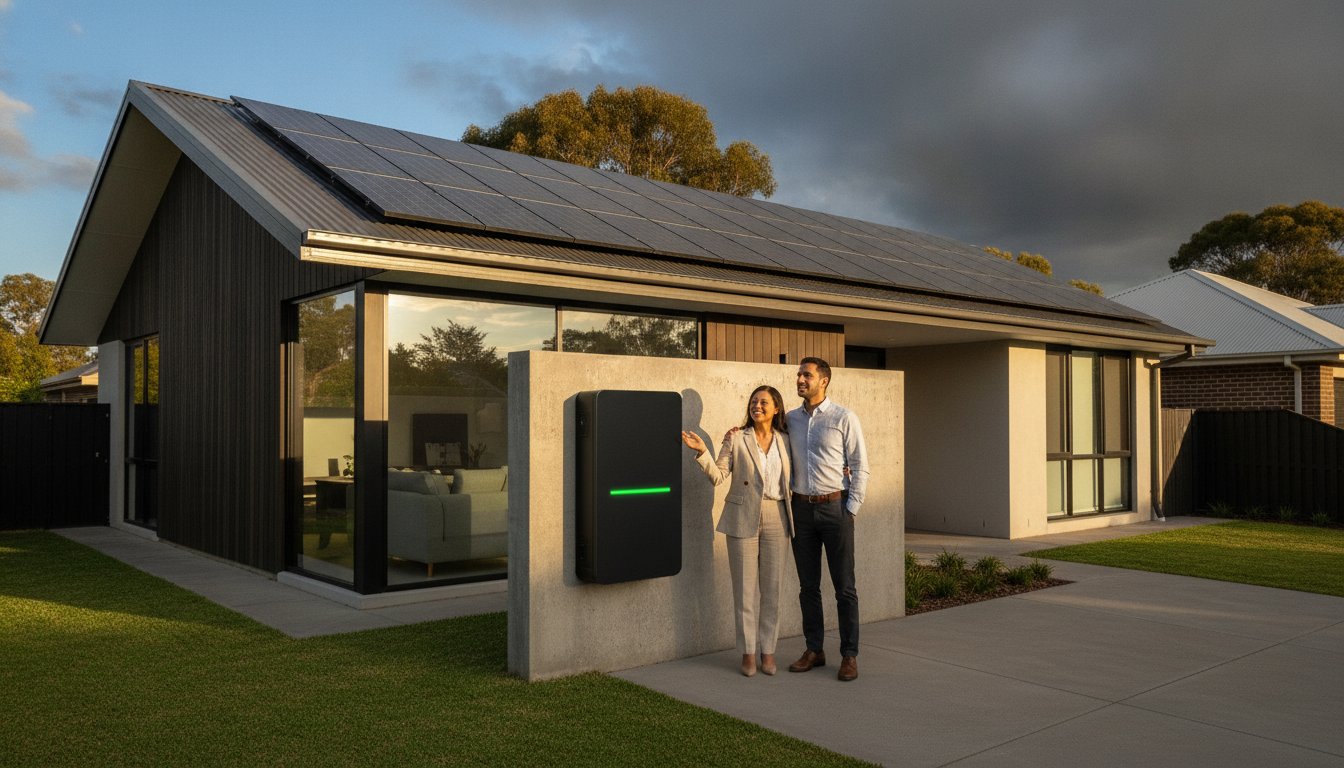
Exporting your solar energy to the Victorian grid in 2026 is effectively giving away your money for nothing. With feed-in tariffs at record lows, your rooftop investment is underperforming while retail electricity prices continue to surge. It’s time to stop subsidising the retailers. A strategic solar battery upgrade Melbourne allows you to capture every watt you generate. This isn’t just about saving a few dollars. It’s about securing 100% grid independence and ensuring your home stays powered when Melbourne’s notorious storms take down the local lines.
You’ve likely felt the frustration of watching your solar export credits shrink to almost nothing on your latest statement. We agree that navigating the shift from state to federal incentives while worrying about inverter compatibility is a massive headache. This article promises to cut through the noise and show you exactly how to reclaim your energy future. You will get a detailed ROI case study, a breakdown of the new $150,000 income threshold for rebates, and a guide to securing federal battery discounts worth up to $3,300.
Key Takeaways
- Stop losing money to low feed-in tariffs by learning why storage is now the only way to maximise your rooftop investment in Victoria.
- Discover why a solar battery upgrade Melbourne using AC coupling is the most efficient way to modernise an older system without a full overhaul.
- Navigate the transition from state to federal incentives and find out if you still qualify for discounts under the updated $150,000 household income cap.
- Analyse the financial logic of modern storage through a Bayside property analysis that demonstrates a massive reduction in grid reliance.
- Ensure your home remains powered during storm-related blackouts by understanding the specific technical requirements for local grid independence.
The State of Melbourne Energy: Why 2026 is the Year for a Battery Upgrade
The era of passive solar is over. In 2026, a solar battery upgrade Melbourne isn’t just a minor addition; it’s a fundamental system evolution. We define this upgrade as the strategic integration of advanced home energy storage systems into your existing photovoltaic (PV) array. For years, Victorian households relied on generous feed-in tariffs to offset their costs. Those days are dead. With export rates at historic lows and retail prices climbing, your solar panels are likely generating value that you never actually see. You’re effectively donating power to the retailers. Storage is the only logical solution to reclaim that lost revenue.
Melbourne’s climate creates unique pressures on our aging grid. We face extreme energy demand peaks during bone-chilling winter nights and blistering summer heatwaves. Without storage, you’re forced to buy back power at peak rates exactly when you need it most. Waiting for “cheaper” technology is a losing strategy in 2026. The savings you lose this year by staying grid-dependent will far outweigh any marginal drop in future hardware costs. The time for decisive action is now.
The 2026 Energy Landscape in Victoria
Retail electricity prices in Victoria remain volatile. Market fluctuations and network constraints often lead to “solar soaking” events where the grid simply cannot accept your excess energy. This localized congestion means your system might be throttled just when it’s performing best. Modern energy independence for Melbourne residents is now a necessity, not an option. By capturing your own electrons, you bypass the instability of the Victorian energy market and the physical limitations of the local distribution network.
Solving the Underperformance of Older Systems
Many Melbourne homes are still running solar-only setups or first-generation batteries that no longer hold a meaningful charge. If your quarterly bills are still hitting $800 despite having panels on the roof, your system is underperforming. It’s vital to recognise the signs of a failing setup. You should know when to replace solar battery units or upgrade your inverter to handle modern loads.
The focus has shifted entirely from “selling power” to “saving power.” In 2026, the goal is 100% self-consumption. Every kilowatt-hour you store is a kilowatt-hour you don’t have to buy at a premium. An upgrade ensures your system is optimized for the current economic reality, turning an underperforming asset into a high-yield powerhouse.
Technical Pathways: Retrofitting vs Full System Overhauls
Choosing the right technical path for your solar battery upgrade Melbourne is a decision between immediate convenience and long term peak efficiency. You don’t necessarily need to scrap your entire existing setup to enjoy the benefits of modern storage. Most Melbourne homeowners face a fork in the road: do you bolt a battery onto your current system, or is it time to retire the old gear for a high performance hybrid solution? The answer depends on the age of your inverter and your specific energy goals for 2026.
Modern LiFePO4 (Lithium Iron Phosphate) batteries are remarkably versatile. These 2026 units are designed to communicate with legacy solar panels seamlessly. Whether your rooftop contains older 250W modules or the latest high efficiency panels, the storage tech acts as the intelligent brain of the operation. It manages the flow regardless of the hardware generating the electrons.
AC Coupling: The Retrofit King
AC coupling is the undisputed champion for retrofitting. This method allows you to add storage without touching your existing solar inverter or voiding your current panel warranties. AC-coupled batteries, such as the Powerwall 3, integrate directly into your home’s main switchboard. They’re the ideal choice for Melbourne properties with solar systems installed before 2020. You keep your existing feed-in tariff setup while gaining the ability to store excess power for night time use. It’s fast. It’s non-invasive. It works. This pathway is perfect for those who want the security of a battery without the cost of a full system redesign.
Hybrid Inverters and DC Integration
If your solar inverter is approaching the end of its ten year life cycle, a full overhaul is the smarter financial move. Swapping your old unit for a modern hybrid inverter allows for DC coupling. This is where the real magic happens. By charging the battery directly from the panels via DC-to-DC transfer, you eliminate the energy losses associated with multiple conversions. This can boost your overall system efficiency by up to 7%.
Before you commit, check Victoria’s Rebates and the ROI to see how a full system upgrade stacks up against a simple retrofit. For a deeper dive into the technical specifications of modern units, see our 2026 guide to maximising your Melbourne energy storage. If you’re unsure which path fits your roof, you can request a professional storage assessment to clarify your options.

Financial Logic: Victoria’s Rebates and the ROI of Modern Storage
The math has changed. In 2020, solar ROI relied heavily on the grid buying your excess power through high feed-in tariffs. In 2026, that model is broken. Low export rates and soaring retail prices mean your solar battery upgrade Melbourne is now the primary driver of financial performance. We focus on the “Self-Consumption Ratio.” This is the percentage of your generated energy you actually use within your home. Without a battery, most Melbourne households hover around 30% efficiency. With modern storage, you hit 80% or higher. That jump represents hundreds of dollars in quarterly savings that stay in your pocket rather than the retailer’s.
Your investment isn’t just about avoiding costs. It’s about asset optimisation. A battery allows you to shift your energy usage patterns without changing your lifestyle. In the wider Victorian market, energy-efficient upgrades are also becoming a key factor in property valuation, with Ollie James Real Estate highlighting that self-sufficiency is a major asset for modern homes. You capture free power at noon and deploy it at 7 pm when rates are at their peak, which dramatically shortens the time it takes for the system to pay for itself.
Navigating the Victorian Battery Rebate in 2026
The incentive landscape has shifted significantly since the original state-run battery rebate closed in 2025. Today, the federal Cheaper Home Batteries Program provides the heavy lifting. You can secure a discount of up to $3,300 based on a rate of $336 per kWh of usable capacity. It’s a massive upfront saving that makes high-end tech accessible. You must act fast; starting 1 July 2026, the combined household income cap for the solar panel rebate drops to $150,000. It’s essential to consult Solar Victoria’s official rebate information to verify your standing before the rules tighten. You can often combine these incentives with federal Small-scale Technology Certificates (STCs) for a significant total reduction. Always check the list of eligible batteries for Victorian rebate approval to ensure your hardware qualifies for these subsidies.
Virtual Power Plants (VPP): The ROI Accelerator
A battery isn’t just a bucket for power. It’s a digital asset. By joining a Virtual Power Plant, Melbourne residents can “rent out” their battery capacity to help stabilise the grid during peak demand. The retailer pays you for this access through direct credits or higher feed-in rates during discharge events. It’s a passive income stream that turns your storage unit into a proactive revenue generator. VPP participation can reduce payback periods by up to 2 years. Combined with the direct savings on your bill, the financial logic for an upgrade in 2026 is undeniable. You’re no longer just a consumer; you’re a participant in a smarter, more profitable energy market.
Case Study: Transforming a Bayside Property into a Net-Zero Powerhouse
A typical family in Melbourne’s Bayside suburbs recently faced a common dilemma. They had a quality 6.6kW solar array, yet their quarterly electricity bills remained stubbornly high at $800. Despite the panels performing well during the day, most of their generation occurred while the house was empty. They were exporting power for cents and buying it back for dollars. A solar battery upgrade Melbourne was the only way to bridge this financial gap. By storing their daytime harvest, they aimed to eliminate peak-hour charges and secure reliable backup power for the region’s frequent storm-related outages.
The Assessment: Identifying the Storage Gap
We began by analysing the household’s interval data. This granular look at their consumption patterns revealed a massive energy spike between 6 pm and 10 pm. A standard 10kWh unit would have been insufficient for their heavy winter heating loads. We recommended a 13.5kWh system to ensure they remained off-grid even during Melbourne’s greyest months. This strategic sizing ensures the system isn’t just a summer accessory. It’s a year-round workhorse. Understanding the longevity of this investment is crucial. You can verify the expected performance and durability over time in our 2026 Australian lifespan guide.
The Installation and Post-Upgrade Performance
The transition was seamless. Our team completed the physical installation in a single day. We handled the complex Victorian grid-connection approvals to ensure immediate activation. We calibrated the system to prioritise self-consumption during the day while maintaining a 20% reserve for emergency backup. This ensures that even if a storm knocks out the local transformer at midnight, the lights, fridge, and essential circuits stay active. The data confirms that their previous solar-only setup was leaving nearly 70% of its potential value on the table.
The results were transformative. Their “Daily Solar Curve” shifted from a wasteful export peak to a self-contained cycle of independence. In the first winter following the solar battery upgrade Melbourne, their grid reliance plummeted by 90%. They no longer fear the local blackouts that often hit the Bayside coast during the wilder months. Their home is now a net-zero powerhouse. It is independent, resilient, and financially optimised. If you’re tired of high bills despite having solar panels, book your Bayside storage assessment today.
Executing Your Upgrade: The GridFree Professional Advantage
GridFree Solar is Melbourne’s definitive specialist in storage retrofitting. While generalist installers focus on high-volume panel sales, we master the technical nuances of a solar battery upgrade Melbourne. Our team understands that every existing system has its own quirks. We don’t offer generic solutions. We provide precision-engineered upgrades that turn aging arrays into modern powerhouses. We back every installation with the GridFree Guarantee. This commitment ensures your storage system meets strict performance benchmarks for its entire operational life. You aren’t just buying hardware; you’re investing in a decade of guaranteed reliability.
Why Local Melbourne Expertise Matters
Victorian grid regulations are among the most stringent in the country. Successfully integrating a battery requires a deep understanding of the specific protocols used by United Energy, CitiPower, Powercor, Jemena, and AusNet. Each distributor has unique requirements for solar smoothing and export control. We navigate this technical red tape on your behalf. Our specialists handle every aspect of the paperwork, from initial grid applications to final rebate claims. We ensure you capture every available cent from the federal Cheaper Home Batteries Program. We only use Tier 1, VPP-ready hardware. This ensures your system is technically capable of participating in lucrative energy trading schemes as they evolve in Victoria.
Your Next Steps to Energy Sovereignty
Achieving total energy independence is a streamlined process with the right partner. It begins with a comprehensive data audit. We don’t rely on estimates. We analyse your actual interval data to determine the exact storage capacity your household requires to survive a Melbourne winter. To get started, simply organise your last four quarterly bills and take a photo of your current inverter’s compliance plate. This information allows us to build a precise ROI model tailored to your specific roof and usage patterns.
The window for maximum financial support is narrowing. With the new $150,000 household income cap for solar panel rebates taking effect on 1 July 2026, the time to act is now. Secure your solar battery upgrade Melbourne before the current funding round closes or eligibility rules tighten further. Take command of your energy future today. Stop paying for the grid’s inefficiency and start harvesting your own independence.
Take Command of Your Energy Future
The window for maximising your solar investment is closing. You’ve seen the data. Low feed-in tariffs in Victoria have rendered traditional solar-only systems obsolete. By choosing a strategic solar battery upgrade Melbourne, you stop being a victim of retail price hikes and start owning your generation. Whether you opt for a seamless AC-coupled retrofit or a high-performance hybrid overhaul, the financial logic remains ironclad. You gain blackout protection, VPP revenue potential, and a massive reduction in grid reliance.
GridFree Solar is a Victorian Government Authorised Solar Retailer. We are the local specialists in AC-coupled retrofits for older systems. We don’t guess; we provide data-backed ROI guarantees for every Melbourne homeowner we partner with. Don’t let your rooftop harvest go to waste for another season. The tech is ready. The rebates are active. Your home’s independence is just one consultation away.
Get Your Custom Melbourne Battery Upgrade Quote Today and lock in your 2026 savings while the federal incentives are at their peak. It’s time to build the resilient, cost-effective home you deserve.
Frequently Asked Questions
Is a solar battery upgrade worth it in Melbourne in 2026?
Absolutely. With Victorian feed-in tariffs reaching record lows, exporting power is no longer a profitable strategy. A solar battery upgrade Melbourne allows you to store your own generation and avoid paying peak retail rates. It’s the only way to achieve a high self-consumption ratio. Given the current energy market volatility, the security of local storage far outweighs the cost of total grid dependence.
Can I add a battery to my existing solar system if it was installed 5 years ago?
You certainly can. Systems installed around 2021 are prime candidates for AC-coupled retrofitting. This method integrates the battery into your home’s switchboard without requiring changes to your existing panels or inverter. It’s a non-invasive way to modernise your setup. You keep your original warranties intact while gaining the ability to store energy for night-time use and essential blackout protection.
What is the best solar battery for Melbourne’s climate?
Lithium Iron Phosphate (LiFePO4) technology is the gold standard for Melbourne’s variable climate. These units handle the thermal stress of summer heatwaves and cold winter nights better than older chemistries. Look for a battery with a high depth of discharge and a robust thermal management system. We prioritise VPP-ready hardware that offers high efficiency and long-term reliability in specific Victorian conditions.
How much does the Victorian battery rebate save me on an upgrade?
While the original state-run battery rebate closed in May 2025, the Federal Cheaper Home Batteries Program now provides significant savings. Eligible households can receive a discount of up to $3,300, calculated at $336 per kWh of usable capacity. This upfront reduction makes high-capacity storage far more affordable. Note that the Victorian solar panel rebate still exists, offering up to $1,400 for eligible owner-occupiers.
Do I need to change my solar panels to upgrade my battery?
No, your existing panels are usually perfectly compatible with a modern battery upgrade. The battery system acts as an intelligent storage layer that works regardless of your panel brand or age. If your panels are still performing well, there is no technical need to replace them. We simply install a battery inverter or an AC-coupled unit to manage the energy flow from your roof.
How long will a modern solar battery last in Australian conditions?
Most high-quality lithium batteries installed in 2026 are rated for 10 to 15 years of daily use. They are typically warrantied for 6,000 to 10,000 cycles at a high depth of discharge. To maximise this lifespan, ensure your battery is installed in a cool, well-ventilated area away from direct sunlight. Modern battery management systems do the heavy lifting by protecting the cells from extreme temperatures.
Will a battery upgrade provide power during a Melbourne blackout?
Yes, provided your system includes a backup gateway or islanding capability. Not all batteries provide automatic backup, so it is vital to specify this requirement during your solar battery upgrade Melbourne assessment. A correctly configured system will isolate your home from the grid during a fault. This ensures your essential circuits, like the fridge and lights, remain powered during Melbourne’s frequent storm-related outages.
What is a Virtual Power Plant (VPP) and should I join one in Victoria?
A VPP is a network of home batteries that work together to support the grid during peak demand. Joining one in Victoria is highly recommended as it provides an additional revenue stream. The retailer pays you for access to your stored energy when the grid is under pressure. This passive income accelerates your ROI and helps stabilise the local network for the entire Melbourne community.