
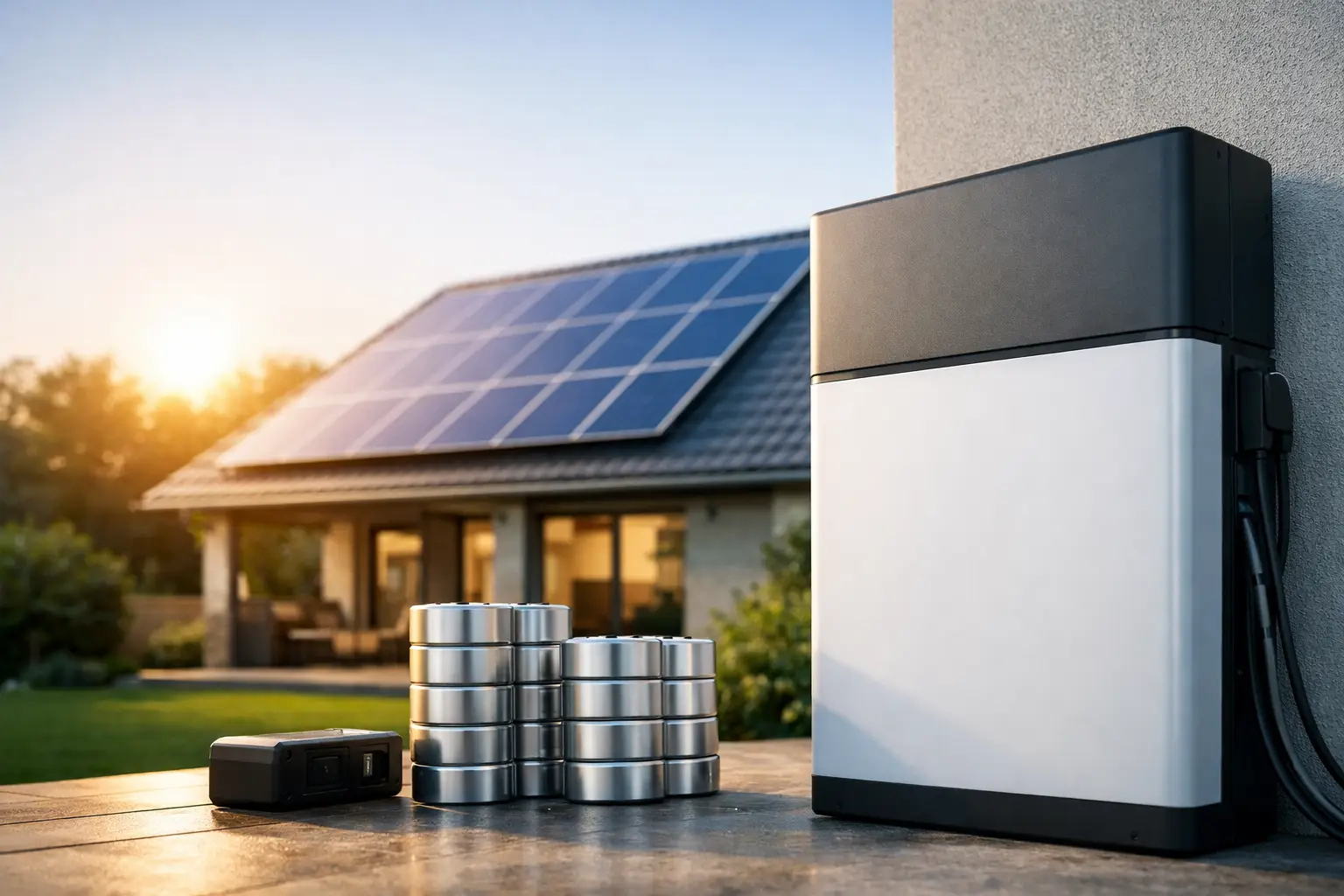
A home with solar can produce plenty of power at midday, then buy electricity back from the grid as soon as the sun drops. A battery changes that pattern – but only when it is sized around your household’s real energy habits. If you are asking, “what size battery do I need?”, the answer is not simply the biggest system your budget allows. It is the capacity that captures enough surplus solar, covers the right evening loads and delivers a worthwhile return.
For many Australian homes, a battery in the 10 to 15 kWh range is a practical starting point. However, a household with high evening use, electric heating or cooling, an EV, or significant backup expectations may benefit from 20 kWh or more. The right result comes from looking at your consumption data, solar production, electricity tariff and the appliances you want running during an outage.
Start with the energy you use after solar production falls
Battery capacity is measured in kilowatt-hours (kWh). This tells you how much energy the battery can store. It is different from kilowatts (kW), which describe how much power the battery can supply at one time.
The most useful figure for battery sizing is usually your electricity use from late afternoon through to the following morning. If your household uses 12 kWh during those hours and has enough unused solar generation to charge a battery during the day, a battery with around 10 to 13 kWh of usable capacity may be a sensible match.
“Usable” capacity matters. Batteries are not generally operated from completely full to completely empty, because reserve capacity helps protect battery life and may be required for blackout backup. A battery marketed at 13 kWh may provide slightly less energy for daily use. A quality proposal should clearly show the usable capacity, not only the headline figure.
Your electricity bills offer a starting point, but interval data gives a much clearer picture. Smart meter data can show when you import from and export to the grid, often in 30-minute intervals. This reveals whether a battery would be charging from genuine solar surplus and how much evening demand it could cover.
What size battery do I need for backup power?
Backup power is often the deciding factor, particularly for households that work from home, rely on medical equipment, or simply want greater resilience during grid outages. However, full-home backup and essential-load backup are very different designs.
A battery can keep selected essential circuits operating, such as lights, the fridge, internet, selected power points and perhaps a garage door. This approach keeps battery size and installation cost under control while protecting the things most households need. A 10 to 15 kWh battery can often support essential loads overnight, depending on how those loads are used.
Running the entire house during an outage requires more capacity and, just as importantly, more output power. Large appliances can draw substantial power when they start or operate. Ducted air conditioning, electric ovens, pool pumps, electric hot water systems and multiple appliances used at once can quickly exceed the battery’s power rating, even if plenty of stored energy remains.
For extended outage protection, solar recharge capacity also matters. A battery may carry a household through one evening, but it needs enough solar production the next day to recharge while still serving daytime loads. Oversizing a battery beyond what the panels can regularly refill can leave stored capacity underused for much of the year.
Match capacity to your solar exports
A battery works best when there is solar energy available to charge it. If your system exports 3 to 5 kWh most days, fitting a 20 kWh battery may not be the most cost-effective first move. You would either need to import off-peak grid power to fill it, add more solar panels where suitable, or accept that much of the battery capacity will sit empty.
Conversely, a home that exports 15 kWh or more on sunny days may have a strong case for a larger battery, especially when export rates are low and evening retail electricity prices are high. The value lies in using your own solar power later instead of selling it cheaply and purchasing energy back at a higher rate.
Seasonality deserves attention too. Summer production may make a battery look easy to fill, while winter cloud cover and shorter days reduce available solar energy. A well-designed system considers annual patterns rather than promising the same performance every day.
Consider your tariff, not just your total bill
Two homes with identical annual electricity use can need different battery sizes because their tariffs and routines are different. Time-of-use tariffs can make stored solar especially valuable when peak rates apply in the evening. A battery can charge during the day and reduce purchases during the most expensive periods.
Some households also use batteries to charge from the grid during low-cost overnight periods, then use that energy during a peak window. This can improve savings, but it depends on tariff rules, battery settings and whether the price difference justifies battery cycling.
Virtual power plant participation may also affect the financial case. A VPP can provide credits or other benefits in exchange for allowing the battery to support the wider grid at selected times. It can be worthwhile, but customers should understand how much control they retain, the export limits involved and how backup reserves are protected.
A practical guide to common battery sizes
There is no one-size-fits-all battery, but the following ranges help set realistic expectations.
- 5 to 8 kWh can suit a small household with modest evening consumption, limited solar exports or a focus on covering a few essentials.
- 10 to 15 kWh is a common range for family homes that want to shift solar into the evening, lower grid imports and maintain selected essential loads during outages.
- 16 to 25 kWh can be appropriate for larger homes, high electricity use, substantial solar exports, electric appliances or stronger backup requirements.
- More than 25 kWh may suit large properties and small commercial sites with high daily demand, multi-day resilience goals or significant equipment loads. It needs careful design to ensure the solar system can charge it effectively.
The battery’s power rating should be assessed alongside these figures. A 13 kWh battery with a 5 kW output can run many normal household loads, but it may not comfortably handle several heavy appliances at once. Your installer should map expected loads and explain what will happen if demand exceeds the battery’s output limit.
Avoid the sizing mistakes that cost households later
The most common mistake is choosing capacity based only on a neighbour’s system or a single monthly bill. Consumption patterns vary sharply between homes, especially where one property has gas cooking and hot water while another is fully electric.
Another is assuming every battery provides blackout power as standard. Some batteries require additional backup hardware, while others only support selected circuits. Ask exactly what remains powered during a grid outage, how quickly backup activates and whether solar can continue recharging the battery while the grid is down.
It is also wise to plan for likely changes. An EV, a new pool, a growing family, switching from gas to electric appliances, or working from home more often can all increase electricity demand. A modular battery that can be expanded later may be a better choice than paying for excess capacity before you need it.
Finally, do not assess the battery separately from the solar system. Panel size, inverter capacity, roof orientation, shading, export limits and battery compatibility all influence the outcome. Battery upgrades can be an excellent option for existing solar households, but the current system needs to be checked before selecting storage.
Get a design based on your property, not a rule of thumb
The strongest battery recommendation is based on actual meter data and a conversation about how you live or operate your business. It should show expected solar charging, likely grid imports, battery cycling, backup arrangements, projected savings and the assumptions behind each figure. It should also account for available government incentives and the paperwork required to access them.
At GridFree Solar, this process is designed to make a complex choice clear: assess your energy profile, design the right solar and battery combination, manage compliant installation and support system performance after commissioning. The goal is not to sell the largest battery. It is to build a system that gives you greater control over energy costs and confidence when the grid is less reliable.
A well-sized battery should feel useful on ordinary evenings, not just impressive on a specification sheet. Start with the power you waste, the energy you buy after sunset and the comfort you want during an outage – then choose storage that earns its place every day.