Picture a home that keeps the lights on during a blackout, runs its appliances from stored solar energy overnight, and doesn’t rely on the grid connection at all. That is the practical appeal behind the question, what is off grid solar power? For many Australian property owners, it represents energy independence, protection from rising power prices, and far more control over how electricity is generated and used.
Off-grid solar power is a standalone energy system that generates electricity from solar panels, stores that energy in batteries, and supplies power to a property without any connection to the electricity grid. Unlike a standard grid-connected solar setup, there is no safety net from the network when solar production drops or battery storage runs low. The system has to do the full job on its own, every day of the year.
What is off grid solar power and how does it work?
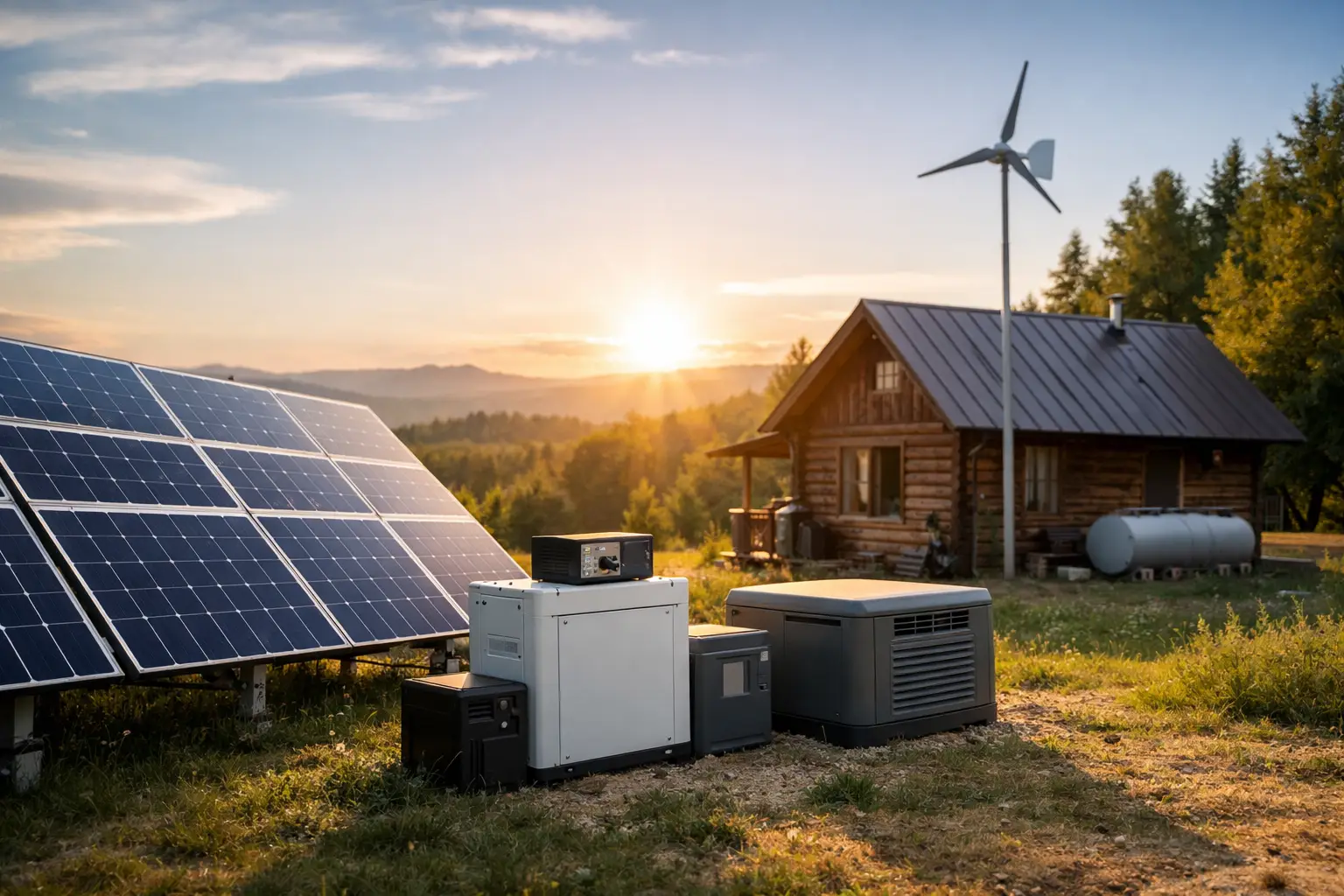
At its core, an off-grid solar system has four main parts: solar panels, battery storage, an inverter, and usually a backup generator. During the day, the panels produce electricity. That power is used by the property first, and any surplus charges the battery. When the sun goes down or cloud cover reduces generation, the battery supplies stored energy to keep the property running.
The inverter converts the solar and battery power into usable electricity for lights, appliances, equipment, and air conditioning. In many systems, smart controls also monitor energy production and battery state of charge so the system can prioritise essential loads and manage performance efficiently.
Because there is no grid connection to fall back on, off-grid design is all about balance. The solar array has to generate enough energy across different seasons, and the battery has to store enough for overnight use and poor weather. That is why system sizing matters far more in an off-grid setup than in a typical suburban solar installation.
Off-grid vs grid-connected solar
A standard grid-connected solar system is designed to reduce bills. It powers your property when the sun is shining and exports excess energy to the grid. If your panels are not producing enough, the grid fills the gap. It is cost-effective, but it still leaves you dependent on the network.
Off-grid solar is different. It is designed for full energy self-sufficiency. You do not import electricity from the grid, and you do not export electricity to it either. That independence can be a major advantage for remote properties where connecting power lines would be expensive, or for owners who want maximum resilience and control.
There is a trade-off, though. Off-grid systems are more complex and usually more expensive upfront because they need larger battery capacity, careful load planning, and often a backup generator for extended low-solar periods. For many homes in built-up suburbs, a battery-backed grid-connected system can deliver most of the same resilience benefits without the full cost and design constraints of going completely off-grid.
Why Australians consider going off-grid
The reasons are usually practical rather than ideological. Some properties are too far from existing infrastructure, making a grid connection costly or unrealistic. In those cases, off-grid solar can be the smarter long-term option.
For other households and small businesses, the appeal is greater control. Electricity prices keep moving in one direction, and feed-in tariffs rarely reward exported solar the way many people expect. If you can generate and store your own energy, you avoid buying as much power at peak retail rates.
Reliability also matters. Storms, bushfire risks, and local outages can disrupt supply when people least need the inconvenience. An off-grid system, if designed properly, can keep critical loads operating even when the broader network is down because it does not depend on it in the first place.
What does an off-grid system need to power?
This is where the real planning starts. Off-grid solar is not just about how many panels fit on a roof. It starts with how much electricity the property uses, when that energy is used, and which appliances are non-negotiable.
A modest off-grid system for a small home or shed will look very different from one designed for a family house with ducted air conditioning, electric hot water, a pool pump, and a home office running all day. Small commercial sites add another layer again, especially if refrigeration, machinery, or extended trading hours are involved.
The key is load analysis. You need to know daily consumption in kilowatt-hours, peak demand, and seasonal variations. A system that works well in summer may struggle in winter if heating loads rise and solar production drops. Good system design accounts for those changes before installation, not after the first cloudy week.
Batteries are the heart of off-grid performance
If solar panels are the generator, the battery is the engine room. In an off-grid setup, battery storage is what allows solar energy collected during the day to be used at night or during poor weather. That is why battery quality, usable capacity, cycle life, and monitoring capability matter so much.
The cheapest battery is rarely the best value. What matters is whether it can reliably support your real-world energy usage over many years. Performance guarantees, warranty terms, temperature tolerance, and integration with the inverter all affect long-term results.
This is also where many people underestimate their needs. It is easy to focus on daily solar generation and forget that storage has to carry the property through evenings, early mornings, and consecutive cloudy days. Undersized battery systems can lead to frustration, generator dependence, or forced lifestyle compromises.
Is off-grid solar power worth it?
It depends on the property and the goal.
For remote homes, farms, workshops, and small business sites where connecting to the grid would cost tens of thousands of dollars, off-grid solar often makes strong financial sense. Instead of paying for poles, wires, and ongoing network charges, you invest in your own energy infrastructure.
For suburban households that already have a reliable grid connection, the answer is more nuanced. Going fully off-grid is possible, but it is not always the most cost-effective path. In many cases, a grid-connected solar and battery system gives you lower bills, backup capability, and energy flexibility without requiring the oversized generation and storage that full independence demands.
That does not make off-grid a bad choice. It simply means the right answer comes down to usage patterns, site conditions, budget, and tolerance for energy management. A good installer will tell you when off-grid is the right fit and when a hybrid system may deliver better value.
Common misconceptions about what is off grid solar power
One common assumption is that off-grid means zero maintenance. In reality, these systems need ongoing attention, even if much of it is handled through smart monitoring and professional servicing. Batteries, inverters, backup generators, and system settings all need to work together properly.
Another misconception is that bigger is always better. Oversizing can improve resilience, but it also increases upfront cost. The best system is not the largest one possible. It is the one that is engineered around your actual loads, local conditions, and future plans.
There is also a belief that off-grid solar automatically eliminates every bill. While you avoid electricity retailers, you still need to budget for equipment replacement over time, maintenance, and potentially generator fuel as part of a sensible backup strategy.
What to look for in an off-grid solar provider
This is not a commodity purchase. Off-grid performance depends heavily on system design, battery integration, installation quality, and aftercare. A provider should be able to explain expected production, battery autonomy, backup plans, and how the system will cope in winter or extended poor weather.
They should also make the process easier, not harder. That means clear advice, certified installation, compliance support, transparent product warranties, and realistic performance expectations. If battery storage is central to the system, the provider needs genuine expertise in battery-led design rather than treating storage as an add-on.
For Australian homeowners and business owners, practical support matters just as much as hardware. Whether it is navigating rebates where applicable, setting up monitoring, or planning for future upgrades, the value is in the complete solution.
Off-grid solar power is ultimately about control. It gives you the ability to generate, store, and use your own electricity on your own property, with far less exposure to network disruptions and rising tariffs. But the strongest outcomes come from getting the design right from the beginning. If you are considering energy independence, start with a proper assessment of your usage, your site, and how much certainty you want from your power system over the next decade.