Table of Contents
- What Solar Export Eligibility Means
- Victoria Solar Export Limits: Fixed and Flexible Options
- Solar Grid Connection Approval in Victoria
- Flexible Solar Exports in Victoria: How They Work
- Solar Inverter Compliance and Network Requirements
- Solar Victoria Rebate Eligibility and Export Benefits
- Your Eligibility Checklist and Next Steps
- Frequently Asked Questions
Last Updated: October 12, 2026
What Solar Export Eligibility Means
Solar export eligibility is your home’s ability to send surplus electricity back to the grid and earn credits or payments. When your panels generate more power than you use, the extra energy flows to the network instead of being wasted. Not every home qualifies, and rules vary by location and system type.
Eligibility directly affects your financial returns, adding hundreds of dollars annually to your savings. It depends on your inverter type, your distributor’s rules, your property’s grid connection, and whether your system meets compliance standards.
At GridFree Solar, we help homeowners navigate these requirements. Most modern systems qualify, but you need to know the rules that apply to your situation before installation.
Victoria Solar Export Limits: Fixed and Flexible Options
Your distributor sets an export limit, the maximum kilowatts your system can send back to the grid at any moment. This limit protects the network from voltage issues when too much power flows in at once.
Victoria offers two main export limit types:
Fixed export limits cap your export at a set kilowatt level regardless of grid conditions, commonly 5 kW, 10 kW, or higher. Once you hit that limit, surplus power stops flowing to the grid. It’s straightforward but inflexible, capping your earnings even when grid demand is high.
Flexible (dynamic) export limits adjust in real-time: your limit rises when the grid needs power and drops when it’s congested.
Some homes qualify for zero export arrangements, meaning no electricity flows back to the grid, typically properties in areas with severe network constraints. Zero export still makes financial sense with battery storage, since you can store surplus energy and use it during peak pricing periods.
Your distributor determines which option applies to your address. This decision happens during the grid connection approval process, not after installation.
Solar Grid Connection Approval in Victoria
Connecting your system to the grid requires formal approval from your electricity distributor. This mandatory step checks whether your system meets safety standards and won’t damage the network.
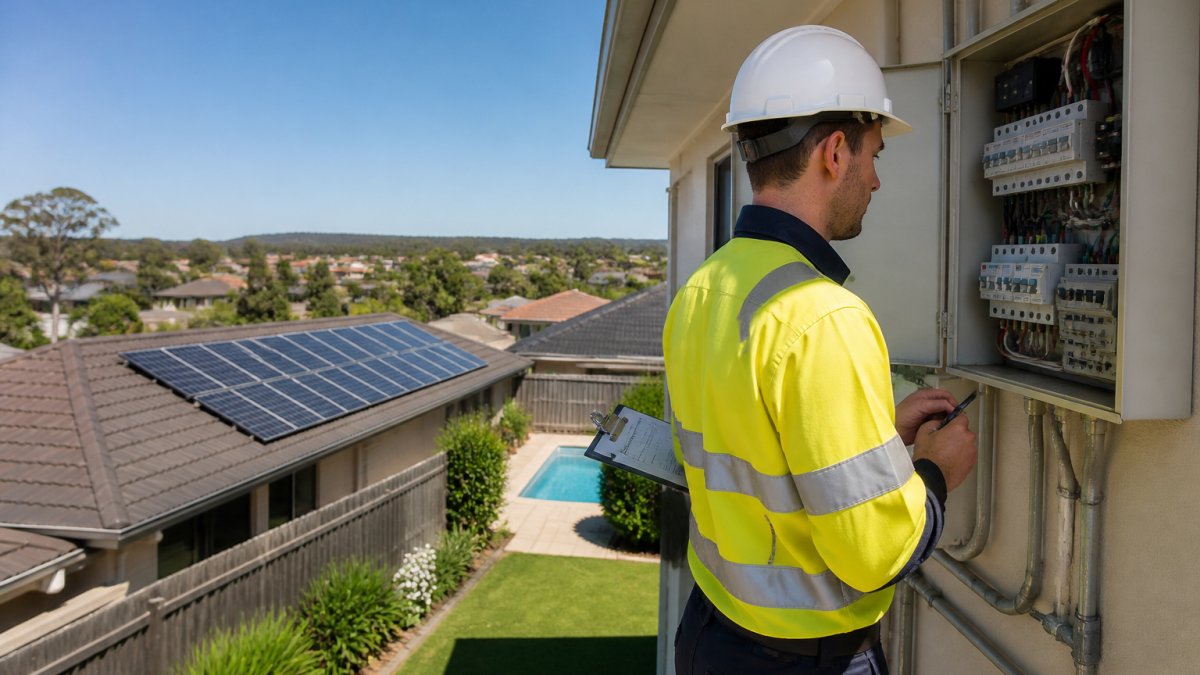
The approval timeline typically takes 4-8 weeks, depending on your distributor’s workload and whether your system needs special conditions. Your installer handles most paperwork, but you should understand the process.
Here’s what the process involves:
- Your installer submits an application with your system specifications to your distributor
- The distributor’s engineers review your inverter model, system size, and property details
- They check whether grid constraints affect your address
- They determine your export limit (fixed, flexible, or zero)
- They issue a connection approval letter with conditions
- Your installer completes final work and arranges a safety inspection
- The distributor connects your system and activates export capability
Common approval conditions include:
- Your inverter must comply with Australian Standard AS/NZS 5139:2019
- You must install specific protection devices
- Export may be limited during certain hours
- Your system may require remote monitoring capability
Delays often happen when distributors request more information about your inverter or your property sits in a congested network area. CEC-accredited installers speed this up because they know exactly what documentation each distributor requires.
Flexible Solar Exports in Victoria: How They Work
Flexible export lets your inverter adjust how much power it sends to the grid based on real-time signals from your distributor.
How it works in practice:
Your inverter receives control signals from the distributor’s system, usually via the internet or a dedicated communication line. When the grid has spare capacity, the signal allows higher export; when demand peaks, it reduces your limit. Your system responds automatically within milliseconds.
The financial benefit is significant. During peak export periods (typically 6-8 pm), flexible systems export at full capacity and earn premium rates, while fixed-limit systems hit their cap and waste the extra power.
The requirement: Your inverter must support this functionality, and not all do. Your installer confirms compatibility during approval. If your inverter doesn’t support flexible export but your distributor offers it, you’d need to upgrade to access the benefit.
Flexible export is becoming standard in Victoria because it manages grid congestion while letting homeowners earn more, but it’s only available where distributors have invested in the necessary control infrastructure.
Solar Inverter Compliance and Network Requirements
Your inverter is the device the distributor actually assesses. Panels generate DC power; the inverter converts it to AC and decides, moment by moment, how much is allowed onto the grid.
The standards that apply
- AS/NZS 4777.2 is the grid connection standard for inverter energy systems. It sets the electrical performance, anti-islanding protection, power quality limits, and the demand response modes an inverter must support. An inverter that is not certified to AS/NZS 4777.2 cannot be connected to the grid in most circumstances.
- AS/NZS 5139 covers the safety of battery energy storage systems and their installation. It becomes relevant when you add a battery, and it interacts with the inverter’s configuration.
- AS/NZS 3000 (the Wiring Rules) governs the electrical installation itself, including switchboard, cabling, and protection devices.
- State and distributor requirements sit on top of these standards. A distributor can impose conditions that go beyond the minimum, such as requiring remote monitoring, specific protection settings, or a particular demand response mode.
The approved inverter list is the practical gate
Most distributors maintain a list of inverter models they will accept, often aligned with the Clean Energy Council’s approved products list. If your inverter isn’t on the relevant list, the application is typically rejected or returned for substitution, adding weeks to the project.
Export limiting is a configuration, not just a feature
An export-limited system uses the inverter, sometimes with a separate export limiting device or current transformer at the connection point, to hold export at or below a set level. The distributor specifies the limit and method.
Phase configuration and balance
Single-phase connections are the norm for most homes. Three-phase connections allow larger systems and better balance, and some distributors apply different export limits depending on phase type.
What this means in practice
- Confirm the inverter model is on your distributor’s approved list before you sign a contract.
- Confirm the inverter supports the demand response mode your distributor requires for flexible export, if flexible export is available at your address.
- Confirm the export limiting method the distributor will accept, and that the installer will configure and document it.
- Keep the compliance documentation, because it is often requested at inspection and at activation.
A cheap uncertified inverter is not a saving. If it is not on the approved list or cannot be configured to the distributor’s export limit, the connection application can be refused, and replacing the inverter after installation is far more expensive than choosing a compliant model first.
Clean Energy Council approved inverter list
Australian standards for grid-connected inverter systems
Solar Victoria Rebate Eligibility and Export Benefits
Rebates and export eligibility are two separate tests. A rebate reduces your upfront cost; export eligibility determines whether your distributor will let your system send power to the grid.
Federal incentives that apply to export systems
The Small-scale Renewable Energy Scheme (SRES) issues Small-scale Technology Certificates (STCs) for eligible systems.
Victorian programs to verify directly
State-level rebate programs change between funding rounds, so the only reliable source is the Solar Victoria website and your installer’s current program documentation. When a program is open, the typical eligibility pattern is:
- The property is your primary place of residence and you are the owner-occupier, or you have written landlord consent.
- Your combined household income falls under the threshold set for that round.
- The property has not previously received the same rebate (one rebate per property, and often one per household).
- The system is installed by a Solar Victoria-authorised installer and uses products on the approved list.
- You complete the required pre-installation steps, such as a solar training module or an obligation-free quote through the program portal, before signing a contract.
Battery programs follow a similar structure but add conditions such as a minimum usable capacity, an approved inverter or battery model, and connection to an eligible solar system.
How rebate status affects export eligibility
It mostly does not. Your distributor approves export based on the inverter, system size, phase configuration, and local network capacity, not on whether you received a rebate.
Export benefits depend on your retailer, not the rebate
Your feed-in tariff is set by the retailer you sign with, within Victorian feed-in tariff arrangements. Rates vary by retailer, plan, and time of day, and some plans pay more during the evening peak.
Rebate eligibility and export eligibility are separate approvals. Confirm current Solar Victoria criteria on the official site, and confirm your export limit with your distributor, before you commit to a system size.
Solar Victoria current rebate programs and eligibility
Clean Energy Regulator small-scale renewable energy scheme
Your Eligibility Checklist and Next Steps
Use this checklist to assess your export eligibility before contacting an installer:
| Requirement | Your Status | Notes |
|---|---|---|
| Property in Victoria | Yes / No | Export rules vary by state |
| Grid-connected electricity supply | Yes / No | Off-grid homes can’t export |
| Roof space or ground space for panels | Yes / No | Minimum 10 m² typically needed |
| Roof structurally sound | Yes / No | Older roofs may need repairs first |
| Willing to upgrade electrical switchboard if needed | Yes / No | Some properties need upgrades |
| No major shading on roof (afternoon sun) | Yes / No / Partial | Shading reduces export potential |
| Interested in battery storage | Yes / No | Batteries maximize returns |
| Owner or have landlord written approval | Yes / No | Landlords must consent to installation |
Your next steps:
-
Get a site assessment. A CEC-accredited installer visits your home, checks your roof, electrical system, and grid connection point. This assessment is usually free or low-cost.
-
Request a formal quote. The installer designs a system matching your roof space and energy goals, then provides pricing and estimated annual export earnings.
-
Apply for grid connection approval. Your installer submits your system details to your distributor. You’ll learn your export limit and any special conditions within 4-8 weeks.
-
Review your energy retailer options. Ask your installer which retailers offer the best export rates in your area. Some retailers pay more for evening exports, others offer flat rates.
-
Arrange installation and activation. Once approval arrives, your installer completes the work, arranges a safety inspection, and your distributor activates export capability.
GridFree Solar handles steps 1-5 for you. Our CEC-accredited team knows the specific requirements for each Victorian distributor, so your approval process moves quickly and your system is optimised for maximum export earnings from day one.
Understanding your solar export eligibility removes the guesswork from your solar investment. The rules are clear, the process is straightforward, and most homes qualify. What matters is expert guidance from an accredited installer who knows your distributor’s requirements and can design a system that maximises your returns.
Our team handles technical compliance, distributor approvals, and retailer selection so you can focus on lower electricity bills and energy independence. Connect Now to get your free site assessment and find out exactly what your home can earn through solar export.
Frequently Asked Questions
What are the solar export eligibility requirements in Victoria?
To export surplus electricity in Victoria, your solar system must be grid-connected, comply with AS/NZS 5139:2019 and AS/NZS 3000 standards, have an approved inverter, and meet your distribution network operator’s capacity requirements. Your property must be eligible for a solar connection, and you need formal approval from your electricity distributor before exporting. Eligibility depends on your network zone, system size, and whether you have battery storage.
How can I check the solar export limit for my property?
Contact your local electricity distributor directly to request your export limit. They assess network capacity constraints and determine whether you can export at a fixed limit (typically 5 kW for single-phase connections), zero export, or a flexible dynamic limit. You’ll need your property address and National Metering Identifier (NMI). Your distributor provides this information during the grid connection approval process.
Do I need approval before exporting solar power to the grid?
Yes. You must obtain formal approval from your electricity distributor before your solar system can export to the grid. This involves submitting a connection application that includes system specifications, inverter details, and site information. The distributor assesses network capacity and either approves your export limit, restricts it, or requires dynamic export control equipment. Installation cannot proceed until approval is granted.
Does having a solar battery affect my export eligibility?
Battery storage can affect your export eligibility and limit. Some distributors require dynamic export limiting equipment if you have both solar and battery storage to prevent overloading the network. However, batteries increase self-consumption of solar energy, which may reduce the amount you export. Check with your distributor about specific requirements for battery-equipped systems, as policies vary across Victoria’s network zones.