
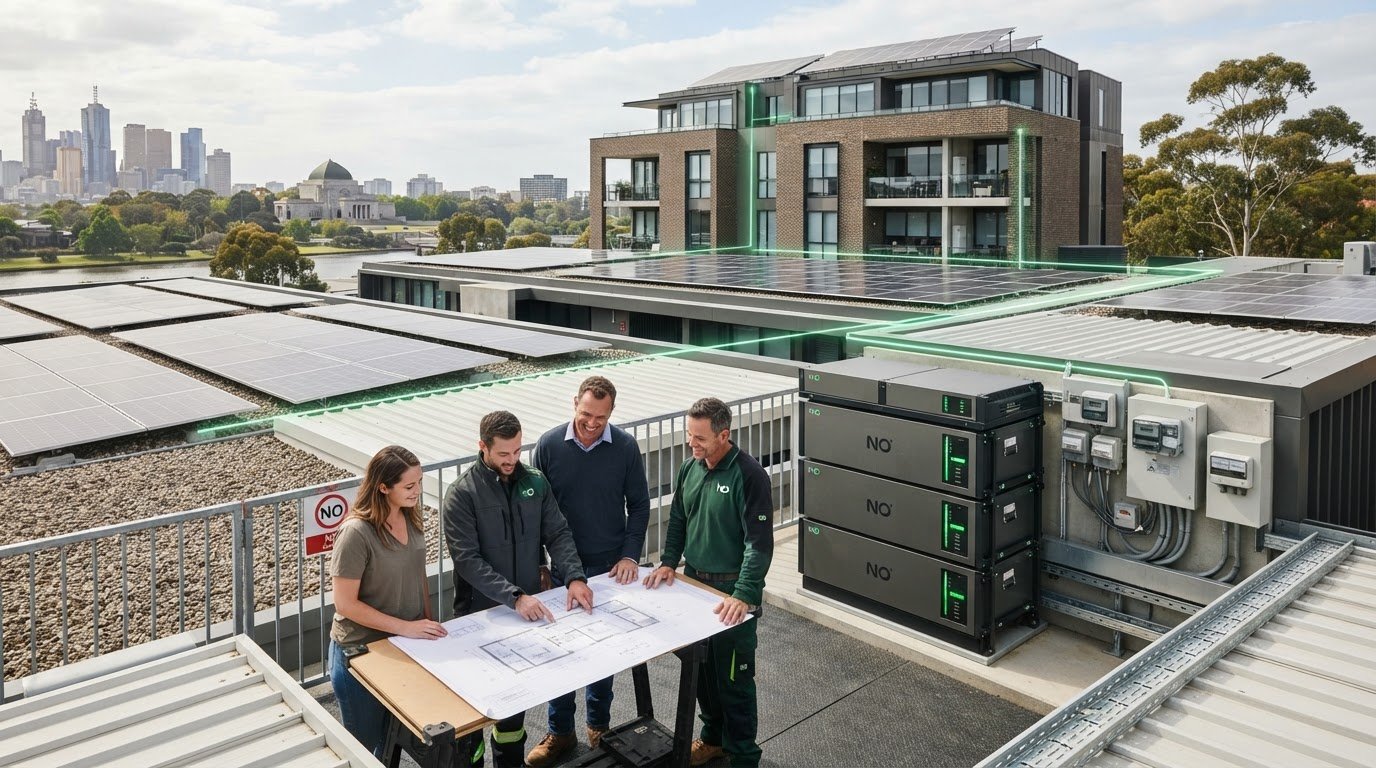
For a Melbourne strata building, the best battery may not be the biggest one or a separate system for every apartment. A solar battery for strata properties Melbourne owners can use depends on the building’s layout, electrical capacity and Owners Corporation decisions. Start with the site and how energy could be shared, not a battery brochure.
It’s understandable if the options feel unclear. A shared system may suit some buildings, while individual apartment systems can bring different technical and governance challenges. Owners also need a fair way to allocate stored energy, clear project responsibilities and an accurate picture of approvals and rebate rules.
This guide explains shared and individual arrangements, the decisions an Owners Corporation should work through and the factors that shape feasibility. It also covers electrical capacity, rebate eligibility and the steps from building assessment to professional installation. GridFree Solar provides solar and battery installation in Melbourne, with planning shaped around the building and its energy needs.
Key Takeaways
- Assess a solar battery for strata properties Melbourne buildings can use against the building’s energy needs, existing solar and electrical layout.
- Compare shared and individual systems by ownership, the loads they serve, metering and what the site can support.
- Prepare building and energy information before the Owners Corporation discussion to make decisions more focused.
- Approvals and rebate eligibility depend on the proposal and current requirements, so include both in project planning.
- Project-specific design can shape a practical path from site assessment to solar and battery installation.
Why a solar battery for a Melbourne strata property needs a building-first plan
A strata battery project involves more than choosing storage capacity. It requires a plan for how stored electricity could fit the building’s energy use, ownership arrangements and electrical layout. Start with the property: identify the available solar generation, where electricity is used and how the relevant circuits are connected.
A building-first approach keeps expectations realistic. A battery may store surplus solar generation for later use or be designed to support selected shared loads. These are possible aims, not guaranteed outcomes. Results depend on the site design, when electricity is used and how stored energy is managed or shared. Batteries are one type of grid energy storage systems, but a strata installation also needs to work with the building’s infrastructure.
What changes when the property is an apartment building?
Apartment buildings combine private lots with common property and shared services. The boundaries and arrangements vary, so this is a planning distinction, not legal advice. A battery serving shared lighting, lifts or other common loads raises different questions from a system intended to serve an individual apartment.
Switchboards, meters, cable routes and suitable equipment space all shape what may be practical. Owners corporations may focus on shared costs and common-area energy use; strata managers may prioritise coordination and building records; apartment owners may focus on household bills or how energy is allocated. Backup during an outage can also matter, but it depends on the system design and the circuits it supports.
Which strata buildings should investigate battery storage?
Some building features make an initial assessment more useful, but don’t prove that a battery will be technically or financially suitable. Existing rooftop solar shows that generation is already part of the building’s energy setup. Common-area loads can provide a starting point for understanding when and where electricity is used.
Before discussing a proposal, gather available solar system details, electricity bills for shared services, switchboard information, meter arrangements and building plans. Missing records don’t rule out a project; they show what may need to be established during an assessment.
- Apartment blocks: Shared services, rooftop generation and the layout of meters and switchboards can influence system design.
- Townhouse developments: Separate roofs, meters or electrical layouts may make one building-wide approach unsuitable, or call for a different assessment.
- Buildings without existing solar: Consider how solar generation and storage could work together, rather than treating the battery as a standalone decision.
Melbourne’s apartment blocks and townhouse developments differ in age, layout and energy use. Treat these features as prompts for a site-specific review, not a shortcut to a yes-or-no answer. A clear picture of the building’s needs gives the Owners Corporation a stronger basis for discussion.
How a solar battery system fits into a Melbourne strata building
A strata battery works within the building’s electrical system, not in isolation. Solar panels generate electricity that can serve active loads first. If generation exceeds immediate use, a suitably designed system can store some surplus in a battery for later, such as after sunset when shared lighting or other services are operating.
Where the stored energy goes matters. A system connected to common services may support selected building loads. An arrangement intended to serve apartments must account for how electricity reaches and is measured at individual lots. These outcomes are not interchangeable. For a solar battery for strata properties Melbourne buildings need a design based on existing solar, metering, usage patterns, site conditions and electrical infrastructure.
Don’t assume storage will keep the whole building powered during an outage. Backup depends on the system design and the circuits selected for backup. The assessment should identify what the proposed system can serve and what remains outside its scope.
What a site and electrical assessment needs to establish
An assessment brings the building’s records together with on-site conditions. Useful information includes existing solar and inverter details, meter arrangements, switchboard information and available building plans. The proposed battery location also needs to be assessed, including access for installation and conditions at the site.
This review helps establish whether the electrical arrangement can support the proposed design and whether work or design changes may be needed. Applicable safety requirements must inform the plan. A qualified project assessment determines technical feasibility; a site visit or a set of plans alone does not prove that a particular configuration will work.
How energy use and metering shape system design
Consumption data helps show when electricity is used and which loads could make sense to serve. Start with available bills or usage records for common-area services, then distinguish those loads from apartment consumption where relevant. The battery’s role should reflect the building’s actual demand profile, not an assumed daily pattern.
Metering affects how energy flows and how its use can be measured or allocated. A battery connected to common services may be accounted for differently from a shared arrangement designed to benefit multiple apartments. Include the metering setup and proposed allocation approach in the design discussion from the outset.
- Existing solar: Record system and inverter details to inform how storage might integrate.
- Building loads: Identify which shared services operate during the day and evening.
- Metering: Map how common services and apartments are measured before settling on an energy-sharing approach.
For broader context on current Australian assistance, the Australian government solar battery rebates page outlines available rebate information. Eligibility is separate from technical suitability. A project-specific solar and battery installation assessment can bring site conditions and energy requirements into one design discussion.
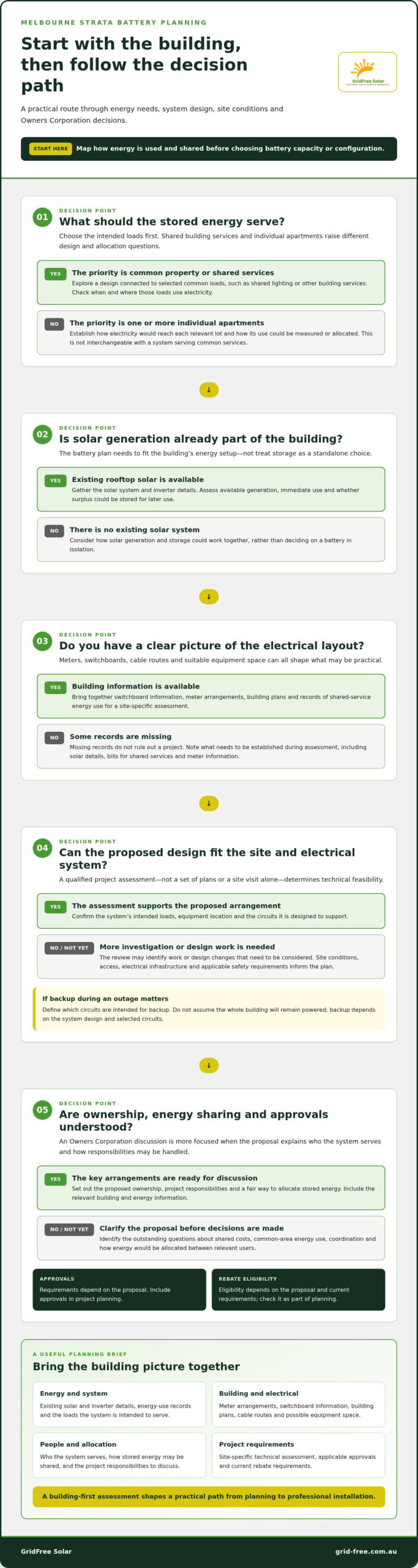
Shared or individual solar batteries: compare strata options before deciding
There’s no single best battery arrangement for every strata building. The decision depends on what the Owners Corporation wants the system to do, how the electrical infrastructure is configured and how energy use would be measured. Compare the options against the same practical criteria before discussing a preference.
Shared building system
- Ownership and governance: The system is managed as a building-level project. The Owners Corporation needs to consider responsibilities for operation, access and ongoing decisions.
- Loads served: It may be designed for selected common services or for a shared arrangement intended to distribute energy to apartments.
- Metering: Existing meters and electrical connections shape how energy flows and how any allocation could be recorded.
- Site requirements: The design depends on suitable shared infrastructure and a practical location for equipment.
Individual apartment systems
- Ownership and governance: Each system may follow an individual apartment owner’s decision, while proposed work can still involve common property or shared infrastructure.
- Loads served: The intended benefit is generally centred on an individual apartment’s electricity use, subject to the building’s electrical arrangement.
- Metering: Separate meters may help distinguish household use, but connections and metering still need assessment.
- Site requirements: Space, access, lot boundaries and electrical capacity can affect whether separate installations are practical.
When a shared battery arrangement may suit the building
A shared option may be worth investigating where existing shared solar and common-area loads support a clear building-level objective. The Owners Corporation should consider who will oversee the system, how access and operation will be managed and how responsibilities will be handled over time. Feasibility and energy allocation depend on the specific electrical and metering setup, not simply the number of apartments.
When individual apartment systems may be more practical
Individual systems may better suit residents with different energy needs or who want to make decisions on separate timelines. That flexibility doesn’t remove building constraints. Lot boundaries, common property, available space and electrical connections all need careful assessment. Don’t assume installation is feasible before considering the building and relevant approvals.
For a solar battery for strata properties Melbourne owners are weighing up, use the comparison to clarify priorities rather than declare a winner too early. A central system may better match shared objectives; individual arrangements may better reflect separate household needs. Financial outcomes depend on the final design, energy use, applicable tariffs and current program rules. Discuss the preferred loads, ownership approach and energy-allocation questions before moving to project planning.
Melbourne strata battery checklist: approvals, rebates and project readiness
A clear process helps an Owners Corporation move from interest to an informed decision. For a solar battery for strata properties Melbourne buildings are considering, separate known building facts from questions that need technical or program advice. Approval pathways can depend on ownership boundaries, the proposed works and current Victorian requirements, so don’t treat one building’s process as a rule for another.
Work through these steps in order:
- Gather building information. Collect available solar system details, common-area energy records, meter and switchboard information, building plans and notes on potential equipment locations.
- Define the objective. Identify whether the proposal is intended to store solar generation, support selected common services or explore an arrangement that could serve apartments.
- Request a technical assessment. Use the building information to assess electrical conditions, possible configurations and site constraints that could affect the design.
- Check approvals and programs. Map the proposed work against relevant ownership boundaries and current Victorian requirements. Review program rules separately from technical feasibility.
- Prepare the Owners Corporation discussion. Present the options, trade-offs, responsibilities and outstanding questions before seeking a decision.
Prepare an Owners Corporation decision pack
Make the discussion practical. Summarise the building’s energy objectives, existing solar and known electrical information, then compare shared and individual options without assuming either will suit. Record potential loads, metering questions, site constraints and items that need assessment.
Include proposed responsibilities for approvals, installation coordination and ongoing system management. A clear list of decision points helps owners distinguish what they can decide now from what depends on technical findings. It also gives the strata manager a useful record for the next stage of discussion.
Check Victorian program and compliance requirements
Program rules can change. Review current Solar Victoria information for the Solar for Apartments program and relevant battery conditions before including a rebate in project planning. Don’t assume a building or household qualifies, or that an incentive will apply to every system arrangement.
Separately, verify current electrical safety, building and Owners Corporation requirements for the proposed works. The approval process may differ depending on whether equipment affects common property, private lots or both. Keep dated notes of the guidance used so the decision pack reflects current information rather than an old summary or a rule from a different project.
For broader program context, consult this Victorian battery rebate guide, then review the relevant official program details before making decisions. GridFree Solar supports project-specific solar and battery planning and installation. Discuss your strata solar and battery project as a next step towards an assessed design.
Plan a Melbourne strata solar battery project with GridFree Solar
Once the building’s objectives and key questions are clear, turn them into a project-specific plan. GridFree Solar provides solar and battery installation in Melbourne, with planning shaped around the site, existing electrical arrangements and the building’s intended energy use. Consider the system as part of the whole property rather than selecting equipment before the project requirements are understood.
For a solar battery for strata properties Melbourne owners are considering, an initial discussion doesn’t need every technical answer. It needs enough information to identify the building’s priorities, outline the options and clarify what a site and electrical assessment must resolve.
What to bring to an initial strata project discussion
Gather the records the building already has. Recent common-area energy information, existing solar details and available electrical plans can help frame the project. Add a short summary of the building’s goals, likely stakeholders and any Owners Corporation decisions or discussions so far.
Note practical constraints too, such as limited access to an equipment area, uncertainty about meter arrangements or questions about which shared services the system should support. Identify missing information early so the project discussion can separate known facts from items that need assessment.
- Energy and solar records: Bring available common-area usage information and details of existing solar equipment.
- Building context: Include relevant plans, known electrical information and potential site constraints.
- Decision history: Summarise the Owners Corporation’s objectives, stakeholders and previous decisions.
- Open questions: Note which system arrangement, energy allocation or project responsibility needs further consideration.
Move from building goals to an installation plan
With the building information in hand, GridFree Solar can translate project requirements into site-specific solar and battery planning and professional installation. The design needs to respond to the property’s conditions and intended loads. A plan focused on common services, for example, may need a different configuration from one intended to distribute energy across apartments. Establish feasibility and design requirements through project assessment, not assumptions based on building type or size.
Where solar is part of the proposal, Melbourne solar panel installation guidance provides related system context. For the storage component, Melbourne energy storage solutions can help frame broader planning considerations. GridFree Solar also helps customers navigate and claim available solar and battery rebates, with eligibility subject to current program rules and the project’s circumstances.
Bring your building’s records, goals and outstanding questions into the next conversation. Discuss your Melbourne strata solar and battery project with GridFree Solar to begin shaping a plan around the property’s requirements.
Turn your strata energy goals into a clear next step
A productive project begins with a shared understanding of what the building wants to achieve. Before moving ahead, give owners a chance to consider which outcomes matter most, what information is still needed and how the proposed system could fit the property. That alignment can make technical and governance discussions more focused.
For a solar battery for strata properties Melbourne owners are considering, ground the decision in the building’s actual requirements. A suitable plan should allow for site findings and current program rules rather than relying on assumptions about system performance or rebate eligibility.
GridFree Solar supports solar and battery planning and installation, including guidance on available rebate processes. Start planning your strata solar and battery system with a project conversation shaped around your building’s goals and conditions.
With clear priorities and a practical assessment, your Owners Corporation can move forward with confidence.
Frequently Asked Questions
Can a strata building in Melbourne install a shared solar battery?
Yes, a shared battery can be installed if the building’s electrical design, site conditions and project arrangements support it. For a solar battery for strata properties Melbourne owners are considering, start by identifying which loads the system should serve, such as common-area lighting or other shared services. A qualified assessment can establish whether a shared setup is feasible and what design or building decisions are needed.
Is there a Victorian battery rebate for strata properties?
Victorian support for apartments and federal battery incentives are separate programs, and eligibility depends on current rules. Solar Victoria’s Solar for Apartments Round 3 had a closing date of 30 April 2026, unless funding ran out earlier, so it is not an open application round as at October 2026. Solar Victoria’s interest-free battery loan is also closed to new applications in 2026. Check current official program updates before budgeting.
Can one solar battery supply power to every apartment during an outage?
Not automatically. A battery can provide backup only where the system is designed for outage operation and the relevant circuits are connected and selected for backup. Supplying every apartment would require the electrical arrangement and system design to support those loads, including their combined demand. Ask the project team to define exactly which circuits would remain powered and under what conditions, rather than assuming a shared battery means whole-building backup.
Does a strata battery need to be connected to solar panels?
No, a battery can be designed to charge from sources other than solar, including the electricity grid, depending on the system configuration. In a strata project, consider whether that arrangement suits the building’s objectives and operating costs. If rooftop solar already exists, its inverter and electrical connections affect integration. If it doesn’t, assess solar and storage together so the proposed charging approach matches the building’s use and infrastructure.
How is the cost of a shared strata battery divided between owners?
There isn’t one universal allocation method. The Owners Corporation needs to consider the project’s ownership and funding arrangements, which lots or shared services benefit, and how ongoing responsibilities will be handled. A system intended only for common-area loads raises different allocation questions from one designed to benefit apartments. Owners should resolve the proposed approach through the appropriate strata decision-making process and obtain relevant financial or governance advice before committing funds.
What information is needed to assess a solar battery for an apartment building?
Start with available electricity bills or usage records, preferably covering different seasons, plus details of existing solar equipment and the inverter. Gather building plans, meter and switchboard information, and notes about proposed battery locations and access. Specify the intended loads, such as shared lighting, and list unanswered questions. These records give an assessor a clearer starting point; a site and electrical review may still be needed to establish design requirements.