
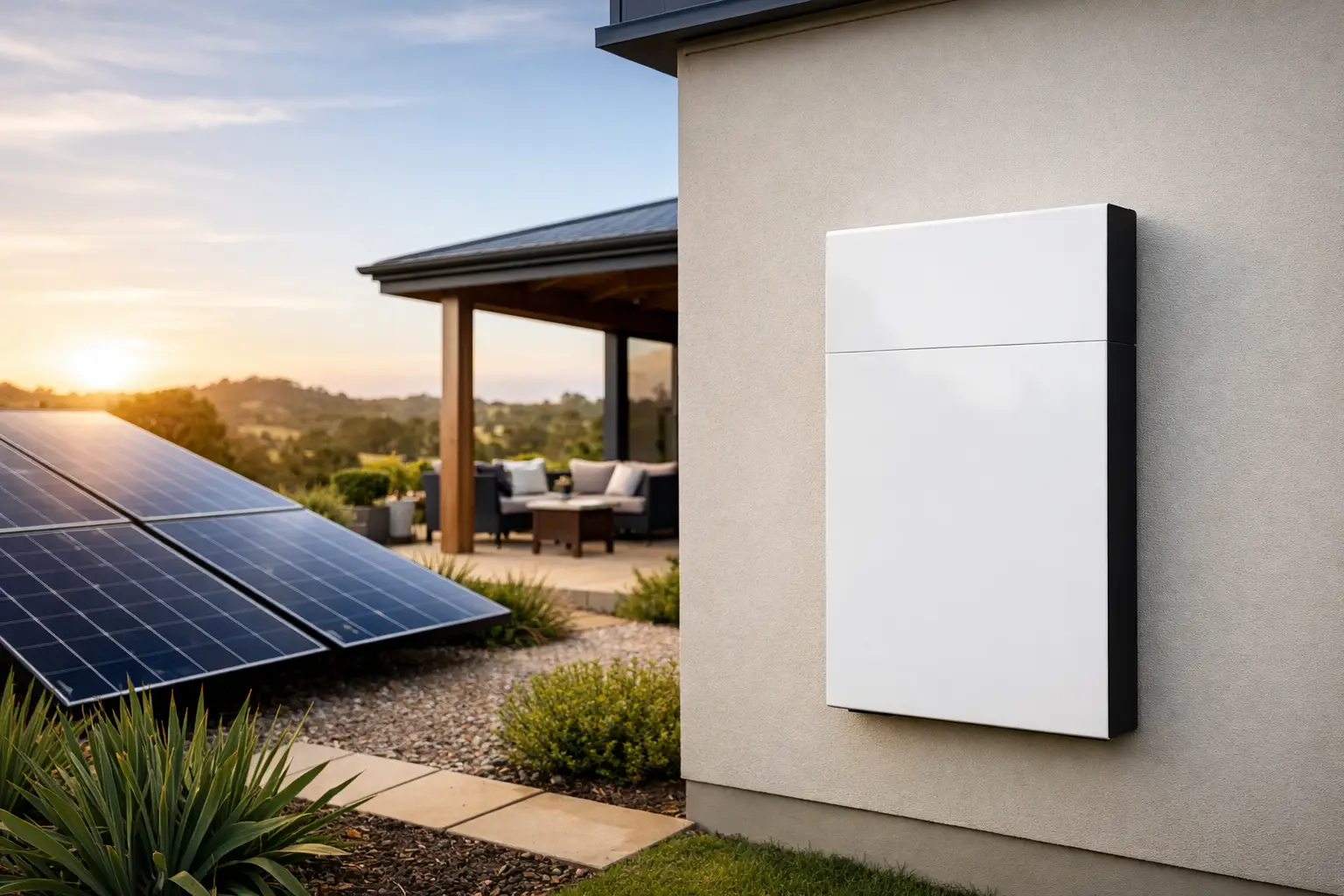
A battery becomes valuable at about 6 pm, when solar production falls, dinner is cooking and electricity prices often climb. This Tesla Powerwall review Australia looks at whether Tesla’s well-known home battery can turn surplus daytime solar into meaningful bill savings, backup protection and greater control over your energy.
For the right household, a Powerwall can be a high-performing part of a complete solar system. It is not automatically the best-value choice for every property, though. Your solar output, evening usage, electricity plan, backup expectations and available rebates matter far more than the logo on the battery.
Tesla Powerwall review Australia: the practical verdict
Tesla Powerwall is a premium, integrated battery option for households that want smart energy management, strong monitoring and the potential to keep selected or whole-home circuits operating during a blackout. It is particularly compelling for homes with a healthy amount of excess solar generation and substantial usage after sunset.
The headline appeal is simple: instead of exporting solar energy for a relatively low feed-in tariff, you store it and use it later when grid electricity costs more. A properly designed system can also charge from solar, respond to electricity tariffs and, where suitable, participate in a virtual power plant (VPP).
Tesla’s app is one of the strongest reasons people consider Powerwall. It gives homeowners a clear view of solar generation, home consumption, battery charge, grid imports and exports. That visibility helps turn a battery from an expensive box on the wall into an active part of how the household manages energy.
There are trade-offs. Tesla Powerwall is a premium product, and installed pricing can be higher than some competing batteries with similar usable capacity. It also needs to be designed around the property’s switchboard, solar inverter arrangement, electrical load and desired backup setup. A low price that excludes switchboard works, backup hardware or compliance upgrades is not a like-for-like comparison.
What you get from a Powerwall system
Powerwall systems sold in Australia have typically offered around 13.5 kWh of usable storage per battery, although the model, power output and installation configuration should be confirmed in a current proposal. Capacity tells you how much energy the battery stores. Power output tells you how much it can deliver at one time – a crucial distinction when several appliances are running together.
For a typical solar household, 13.5 kWh can cover much of the evening and overnight load. If the home runs ducted air conditioning, electric heating, an induction cooktop, pool equipment, EV charging or multiple large appliances at once, the battery may drain faster or reach its power limit. This does not make Powerwall unsuitable. It means the design conversation needs to be honest about how the property is actually used.
A Tesla Powerwall installation can support several valuable outcomes:
- Solar self-consumption, so more of your own generation is used at home rather than exported.
- Backup power during outages, subject to the selected backup configuration and load requirements.
- Tariff optimisation, including charging and discharging around time-of-use electricity prices where appropriate.
- Detailed monitoring through the Tesla app.
- VPP participation for eligible customers who are comfortable sharing some battery capacity in exchange for programme benefits.
Backup is often misunderstood. A battery does not necessarily mean every appliance can run indefinitely in a blackout. The result depends on the backup gateway, battery model, solar configuration, available stored energy and the loads you choose to support. Refrigeration, lights, internet, selected power points and a garage door are common priorities. Whole-home backup can be possible in some designs, but high-demand appliances need careful assessment.
How much does Tesla Powerwall cost in Australia?
There is no responsible single figure for a Tesla Powerwall installed price. Costs vary by battery model, location, electrical works, backup requirements, access, switchboard condition, solar integration and whether the system is being installed with new panels or added to an existing array.
A meaningful quote should separate the battery equipment, installation, backup hardware, switchboard upgrades and any metering or compliance works. It should also explain whether incentives have already been deducted. This makes it easier to compare proposals and prevents a cheap headline figure becoming a more expensive project later.
Rebates and incentives can materially improve the economics, but eligibility changes by programme and state. National battery incentives, state schemes, retailer offers and VPP credits may apply depending on your location and system design. They also come with requirements. An experienced installer should assess eligibility, explain the conditions in plain language and manage the paperwork rather than leaving you to interpret technical rules yourself.
The best way to judge value is not to ask, “How many years until it pays itself off?” in isolation. Ask how much solar you currently export, what you pay for electricity in the evening, whether you expect future tariff changes, and how much resilience is worth to your household. A family working from home during outages may value backup differently from a property that rarely experiences interruptions.
Savings depend on your usage, not just battery size
A Powerwall earns its keep by avoiding grid purchases. If your household exports plenty of solar during the day and buys it back at night at a much higher rate, the opportunity is clear. If most of your daytime solar is already consumed by appliances, or you are home using power while the system is generating, the additional benefit from storage may be lower.
Consumption patterns matter as much as solar production. A household with a 6.6 kW solar system, modest daytime use and heavy evening demand may see strong battery utilisation. A home with low overall electricity use may struggle to cycle a large battery often enough to justify the investment. Likewise, an EV can change the equation. Charging mainly in the middle of the day may use surplus solar directly, while charging overnight may increase the value of tariff-aware battery management.
Season matters too. Summer solar generation can fill a battery easily, while shorter winter days may leave less surplus energy available. A good assessment uses actual interval data where possible, not a generic savings promise. Your electricity bill and smart-meter data reveal the pattern that should drive the system size.
Powerwall versus other home batteries
Tesla remains a strong contender because it combines recognisable hardware, refined monitoring, a substantial storage capacity and established backup capability. For homeowners who want a straightforward, app-led experience, it has genuine appeal.
However, it should be compared against alternatives on more than capacity. Consider usable storage, continuous and peak power, warranty terms, ability to expand, backup performance, compatibility with your existing solar inverter, VPP options and the quality of the installation partner. A battery with a slightly lower sticker price is not necessarily better if it offers less useful power, a weaker warranty or a poor fit with your existing equipment.
The installer matters as much as the battery brand. Batteries involve high-voltage equipment, grid connection rules, fire and placement considerations, switchboard integration and commissioning. The system should be installed by qualified, accredited professionals and supported after installation. Monitoring is useful only if someone can help when the data shows an issue.
Who should consider a Tesla Powerwall?
Powerwall is worth serious consideration if you already have solar and regularly export energy, face high evening electricity costs or want dependable backup for essential loads. It can also suit new solar customers who want one integrated system designed for long-term self-sufficiency rather than adding a battery later.
It may be less compelling if your electricity use is very low, your solar system rarely produces surplus energy, or your main goal is the quickest possible payback with no interest in backup or monitoring. In those cases, improving solar capacity, shifting appliance use to daylight hours or selecting a different battery size may provide a better outcome.
For small businesses, the decision is more operational. A battery can reduce peak grid exposure, use onsite solar after business hours and provide limited continuity during interruptions. But business load profiles differ sharply, so sizing should be based on interval data and critical equipment rather than a residential rule of thumb.
The questions to ask before you proceed
Before choosing Powerwall, ask whether the proposal shows expected solar generation, battery cycling and grid imports after installation. Confirm what will be backed up in an outage, whether your current switchboard needs upgrades, how the battery integrates with your existing solar equipment and what warranty and aftercare support are included.
Also ask how rebates have been calculated and whether joining a VPP is optional. A VPP can improve returns for some households, but it may allow the programme to call on part of your stored energy at certain times. That arrangement should suit your comfort level and backup priorities.
At GridFree Solar, the aim is to make those decisions practical: assess the property, design around real energy use, handle eligible rebate requirements and install a system that performs as promised.
A Tesla Powerwall is not a one-size-fits-all answer to rising power bills. But when it is paired with the right solar system, tariff and backup plan, it can give your home something more useful than a lower bill: the ability to decide when and how you use the energy you generate.