
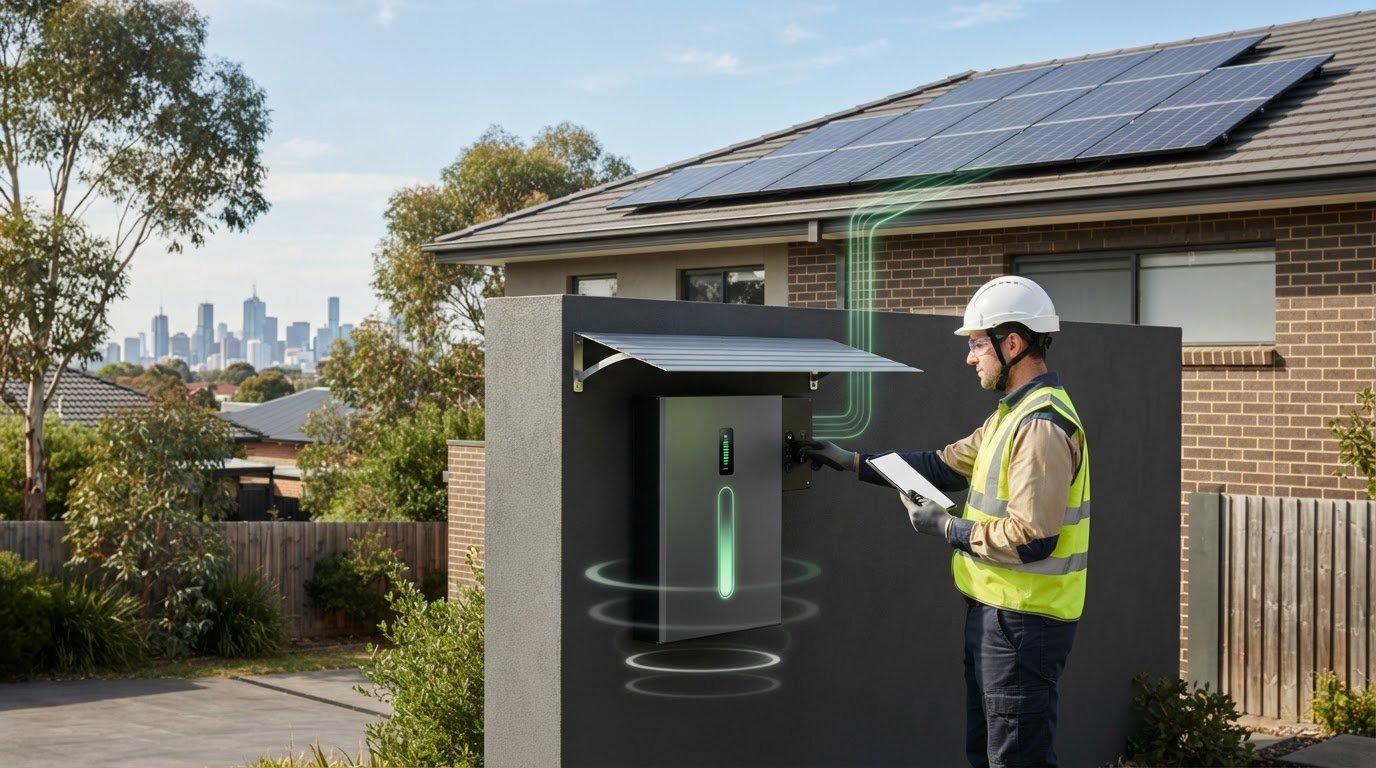
A solar battery losing capacity doesn’t automatically mean it’s failing. Understanding solar battery lifespan and degradation starts with distinguishing gradual, expected capacity fade from a fault that needs attention.
Conflicting lifespan claims can be frustrating, especially when warranty terms focus on years, cycle counts or capacity-retention figures that are hard to compare. If your battery stores less energy than it once did, that change alone doesn’t show whether it’s ageing normally or underperforming.
This guide explains what affects battery lifespan, how degradation changes usable capacity and which signs may point to a fault rather than normal wear. You’ll learn how to compare warranty terms, monitor performance and avoid unnecessary stress from factors such as heat and deep discharging. We’ll also cover when to keep monitoring, seek a professional assessment or consider an upgrade or replacement. For Melbourne owners, these checks can help make conversations about a system’s next steps more informed.
Key Takeaways
- Solar battery lifespan describes useful service, while degradation is gradual capacity change. Neither means storage stays unchanged.
- Compare warranties by checking retained capacity, cycle information and how performance is measured, not just the warranty duration.
- Make monitoring more meaningful by establishing a baseline and comparing similar periods and household conditions.
- Before seeking an assessment, gather monitoring history, system configuration details and warranty conditions.
- Use the evidence to decide whether to keep monitoring, review system settings or explore a battery upgrade or replacement.
Solar battery lifespan and degradation: what the terms really mean
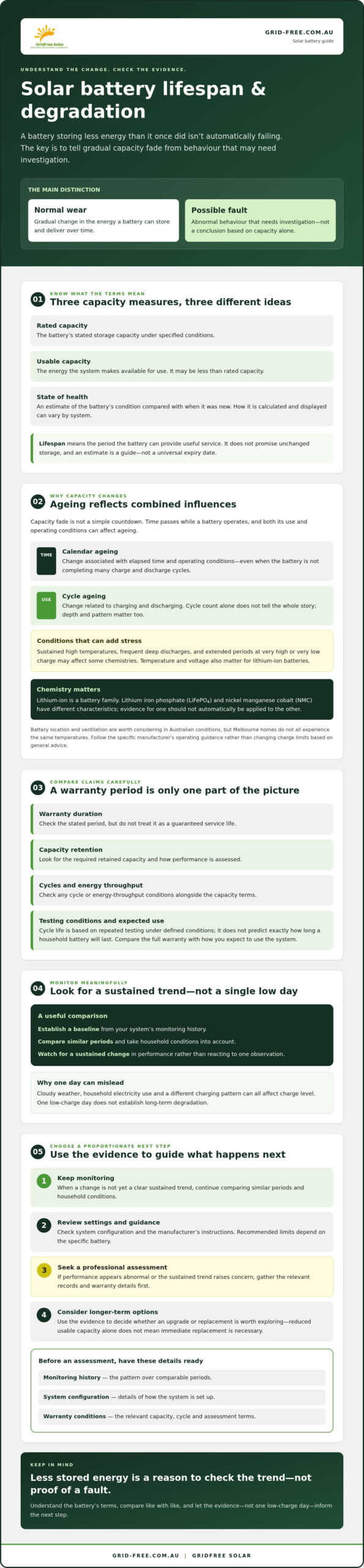
A battery’s lifespan is the period it can provide useful service, not a promise that it will store the same amount of energy throughout its life. Solar battery lifespan and degradation depend on the battery’s chemistry, operating conditions, usage and system setup. Treat any lifespan estimate as a guide, not a universal expiry date.
Degradation is the gradual change in a battery’s ability to store and deliver energy. As rechargeable batteries are charged and discharged over time, their performance can change. Rechargeable battery explains the basic technology behind energy storage in a home solar system.
- Rated capacity is the battery’s stated storage capacity under specified conditions.
- Usable capacity is the energy the system makes available for use. It may be less than the rated capacity.
- State of health is an estimate of the battery’s condition compared with when it was new. How it’s calculated and displayed can vary by system.
Normal capacity fade is a gradual decline in the energy a battery can store and deliver. A fault is a problem that causes abnormal behaviour and needs investigation. Reduced usable capacity alone doesn’t confirm a fault or mean immediate replacement is necessary.
What does solar battery degradation mean in everyday use?
If usable capacity falls, less stored energy may be available to power your property when solar generation is low. But daily performance also depends on household electricity use and solar generation. A cloudy day, a change in demand or a different charging pattern can affect the battery’s charge level. One low-charge day doesn’t establish long-term degradation. Look for a sustained trend across comparable periods instead.
Lifespan, cycle life and warranty: three different measures
Calendar ageing describes change associated with elapsed time and operating conditions, even when the battery isn’t completing many charge and discharge cycles. Cycle life is based on testing how a battery performs over repeated cycles under defined conditions. It isn’t a countdown that predicts exactly how long a particular household battery will last.
A warranty is a separate measure. Its duration, capacity-retention conditions and other limits depend on the manufacturer and model. Check the warranty document for the required retained capacity, how it’s assessed, and any cycle or energy-throughput conditions. Compare the full terms with your expected use rather than treating the warranty period as a guaranteed service life.
What causes solar battery capacity to decline over time?
Capacity fade usually reflects several influences, not one simple countdown. Calendar ageing is change associated with elapsed time and operating conditions. Cycle ageing relates to charging and discharging. A system can experience both: time passes while the battery cycles, and the depth and pattern of those cycles can affect wear.
Temperature and voltage also matter for lithium-ion batteries. Battery University’s What Causes Li-ion to Die? explains how conditions such as heat and voltage stress can contribute to ageing. Battery degradation reflects the combined effects of time, temperature and operating stress, with the impact depending on the battery’s chemistry and use.
How temperature, charging and cycling influence battery ageing
Cycle count alone doesn’t tell the whole story. Two batteries with similar cycle totals may age differently if one regularly operates in hotter conditions or experiences deeper discharges. Sustained high temperatures can accelerate ageing, while frequent deep discharges or extended periods at very high or low charge may add stress for some chemistries. This relationship between discharge depth and cell health applies across many battery applications; resources from UK Mobility Batteries, for example, highlight how daily charging routines and duty cycles determine overall lifespan in electric wheelchairs and mobility scooters.
Australian conditions make battery location and ventilation worth considering, but Melbourne homes don’t all experience the same temperatures. Don’t change charge limits based on general advice alone. Check the manufacturer’s instructions and system settings, as recommended limits depend on the specific battery.
Does battery chemistry change expected degradation?
Lithium-ion is a battery family, not one uniform chemistry. Lithium iron phosphate (LiFePO4) and nickel manganese cobalt (NMC) have different characteristics, so performance evidence for one shouldn’t automatically be applied to the other. Chemistry can inform a comparison, but it can’t predict an individual battery’s lifespan on its own.
Consider chemistry alongside the model’s warranty conditions, operating guidance, installation environment and actual use. A well-managed battery may perform differently from another of the same chemistry operating under greater heat or cycling stress. A headline lifespan estimate needs this context.
If monitoring shows a persistent, unexplained change, check the system settings and manufacturer guidance before adjusting how the battery operates. A qualified assessment can help distinguish expected ageing from a configuration or component issue. Melbourne owners considering their next steps can explore battery upgrade and replacement options with GridFree Solar.
How to compare solar battery lifespan claims and degradation data
Headline lifespan figures can sound comparable while describing different things. To assess solar battery lifespan and degradation, compare the evidence behind each claim: warranty conditions, test assumptions and how capacity is measured. Manufacturer terms vary by model, so check the current warranty document for the exact battery you’re considering, rather than relying on a figure from another model or an older brochure.
| What to compare | What to check | Why it matters |
|---|---|---|
| Warranty term | How long the warranty applies and when it begins. | A time period alone doesn’t tell you what performance is covered. |
| Retained-capacity condition | Any stated minimum capacity at a specified point, and how capacity is tested. | It shows the condition attached to a capacity-related warranty remedy. |
| Cycle or throughput limits | Any maximum cycles or total energy throughput, and how these interact with the term. | Usage may reach a limit before the stated warranty period ends. |
| Measurement basis | Whether figures refer to rated or usable capacity, and the test conditions used. | Different definitions can make headline figures misleading to compare. |
Which battery warranty details should owners compare?
Read the full warranty, including exclusions, installation requirements and the claims process. Keep the original document with your system’s commissioning records. These details help clarify which conditions apply if performance changes and what evidence the manufacturer may request.
State of health is an estimate of a battery’s current condition relative to its original condition. Its calculation and display can vary by system, so check what the monitoring platform actually measures. Depth of discharge describes how much of the battery’s available energy is used in a discharge. Neither measure, on its own, predicts how many years the battery will last.
Why published lifespan figures are not direct promises
Published results may come from controlled tests with defined temperatures, charge patterns and discharge depths. Household use in Melbourne can differ because solar generation, energy demand, battery settings and installation conditions all affect real-world operation. Check the test basis and assumptions before comparing figures. If they aren’t explained, treat the claim cautiously and consult the manufacturer’s documentation.
An expected service-life estimate is not the same as a warranty-backed remedy. The warranty sets out specific conditions and processes; an estimate describes anticipated performance, not a guaranteed outcome. For a broader ownership comparison, including financial considerations, see this Australian solar battery cost and ROI guide.
How to monitor degradation and help protect battery performance
Use a consistent process before deciding your solar battery is losing capacity unusually quickly. Monitoring software may not show a direct degradation figure, so build a picture from performance over time. Compare like with like: a change in solar generation, household demand or system configuration can affect how much energy the battery stores and supplies.
- Establish a baseline. Save available monitoring data and note how the system performs under typical conditions.
- Review trends. Look for persistent changes across comparable periods, rather than drawing conclusions from one app reading or electricity bill.
- Check system settings. Confirm the battery is operating according to manufacturer guidance and note any recent setting changes.
- Seek an assessment. If a change continues or seems unusual, have the monitoring history and system configuration reviewed.
Which performance information should you record?
Keep a simple record of the information your monitoring platform provides, such as energy charged and discharged, stored energy available and system alerts. Add context by noting changes in household routines or electricity use, solar generation, and system settings. This helps distinguish a lasting performance trend from a temporary change in conditions.
A single low-charge reading isn’t a diagnosis. One bill isn’t enough to confirm battery degradation either, because bills reflect household consumption, solar generation and electricity imports as well as battery performance. Compare similar seasons or periods where practical, and record relevant differences rather than assuming conditions were identical.
What owner actions can support battery longevity?
Follow the battery manufacturer’s instructions for operating settings and installation conditions. Keep the area around the system consistent with its ventilation requirements, and don’t obstruct airflow. Before changing charge controls or other settings, check the approved guidance or seek qualified advice. General tips may not suit every battery model.
These steps can help you avoid operating outside specified conditions, but no single habit can prevent or reverse normal capacity fade. If monitoring suggests a persistent issue, review the Melbourne battery replacement guide to understand when an expert review may be useful.
Want help making sense of your battery’s performance history? Discuss battery upgrade or replacement options with GridFree Solar. Reviewing the system’s history can help distinguish expected ageing from a system or component issue before you consider an upgrade or replacement.
When solar battery degradation calls for an expert assessment
Reduced capacity alone doesn’t mean your battery needs immediate replacement. It may reflect expected ageing, changed household use or a system issue. An assessment can help identify which explanation fits before you commit to an upgrade or replacement.
Consider arranging a review if performance has changed consistently, the difference remains after accounting for household demand and solar generation, or your battery displays a warning or shuts down unexpectedly. Take manufacturer-noted safety concerns seriously and follow the guidance for your specific system. Don’t open or modify the battery yourself.
When should you seek a professional battery assessment?
Prepare information that can make an assessment more useful:
- Battery make, model and installation details.
- Monitoring history showing the change you’ve noticed.
- System configuration, including any changes to solar or battery equipment.
- Warranty documents, commissioning records and any alerts or error messages.
An installer may review the performance history, system configuration and warranty conditions to help distinguish normal capacity fade from a component or settings issue. For property owners in South Australia seeking an expert evaluation of their system, regional specialists like Bright Earth Solar provide dedicated solar and battery support. If the system is under warranty, check its claims process and requirements before authorising work that could affect coverage.
How to decide between monitoring, upgrading and replacing
The right next step depends on the battery’s condition and what your household needs from it. If performance is stable and still meets your needs, continued monitoring may be reasonable. If the cause of a sustained change isn’t clear, an assessment can guide the decision. Replacement may be worth considering if the battery no longer provides useful storage or a confirmed issue makes continued operation unsuitable.
An upgrade isn’t automatically straightforward. Check compatibility with your existing solar equipment and system configuration before choosing additional or replacement storage. Compare options with your actual energy needs and applicable warranty terms, rather than deciding based on age or one capacity reading alone.
For broader planning around how storage fits into a household energy system, explore the Melbourne energy storage solutions guide. It can help put battery decisions in the context of your wider setup.
GridFree Solar provides battery upgrade and replacement services, including for Melbourne owners considering their next step after an assessment. Discuss battery upgrade or replacement options to explore what may suit your system.
Make your next battery decision with confidence
Understanding solar battery lifespan and degradation helps you respond to performance changes with evidence, not assumptions. Capacity fade can be part of normal ageing, while a sustained or unusual change may need assessment. Monitoring trends alongside household use, system settings and warranty conditions gives you a clearer basis for deciding what to do next.
One low reading isn’t a replacement verdict. Check the system information, then weigh its current performance against your household’s needs. If the picture remains unclear, an assessment can help identify whether to keep monitoring, explore an upgrade or consider replacement.
GridFree Solar provides battery upgrade and replacement services, residential and commercial solar and battery installation, and help navigating applicable rebates. Discuss your solar battery upgrade or replacement with GridFree Solar and take a considered next step for your system.
Frequently Asked Questions
How long does a solar battery last in Australia?
Most solar batteries in Australia are estimated to provide useful service for around 10 to 15 years, but this isn’t a fixed expiry date. Battery chemistry, temperature, cycling, installation conditions and usage all influence performance over time. A battery in Melbourne may experience different operating conditions from one elsewhere, and individual homes vary too. Check the model’s warranty and monitor actual performance rather than treating a lifespan estimate as a guarantee.
What does solar battery degradation mean?
Solar battery degradation is the gradual change in how much energy a battery can store and deliver as it ages. It can reduce the usable energy available to your property, but it doesn’t automatically indicate a fault. The solar battery lifespan and degradation figures you see depend on how performance is measured and the conditions behind the estimate. Compare like-for-like information, including usable capacity and the manufacturer’s warranty terms.
Is it normal for a solar battery to lose capacity over time?
Yes, gradual capacity loss is a normal part of battery ageing. Calendar ageing and repeated charging and discharging can both contribute, while operating conditions influence how quickly performance changes. A slow decline over time is different from a sudden drop or unexpected shutdown, which may need investigation. In Melbourne, compare battery performance across similar periods and consider changes in household electricity use and solar generation before concluding that capacity has fallen.
Can hot weather shorten a solar battery’s lifespan?
Sustained high temperatures can contribute to faster ageing in lithium-ion batteries. The effect depends on the battery and its operating conditions, so there isn’t one temperature rule that applies to every home or model. Melbourne properties can have different battery locations and ventilation conditions. Follow the manufacturer’s guidance for installation and operation, and don’t change charge settings based on general advice without checking what’s recommended for your system.
How can I tell whether my solar battery is degrading?
Look for a consistent change in performance over time, such as less stored energy being available under comparable conditions. Check your monitoring system for energy charged and discharged, alerts and any displayed state-of-health information. Some apps don’t provide a direct degradation figure. One low-charge day or electricity bill isn’t enough to diagnose battery health, as solar generation and household demand also affect results. Keep records and compare similar periods.
Does solar battery degradation mean I need to replace it?
No. Reduced capacity alone doesn’t prove that immediate replacement is necessary. First check whether household usage, solar generation or system settings have changed, then review performance trends and warranty conditions. If a sustained decline remains unexplained, or the battery shows warnings or shuts down unexpectedly, arrange a professional assessment. An installer can review monitoring history and system configuration to help determine whether continued monitoring, an upgrade or replacement is appropriate.
Do solar battery warranties guarantee the battery will keep all its capacity?
No. A warranty doesn’t usually mean the battery will retain all its original capacity throughout the warranty period. The specific document explains what coverage applies, including any capacity-retention condition, cycle or energy-throughput limits, exclusions and claims requirements. Terms vary between manufacturers and models, so check the current warranty for your battery rather than relying on a headline warranty duration. Keep the document and commissioning records for reference.