
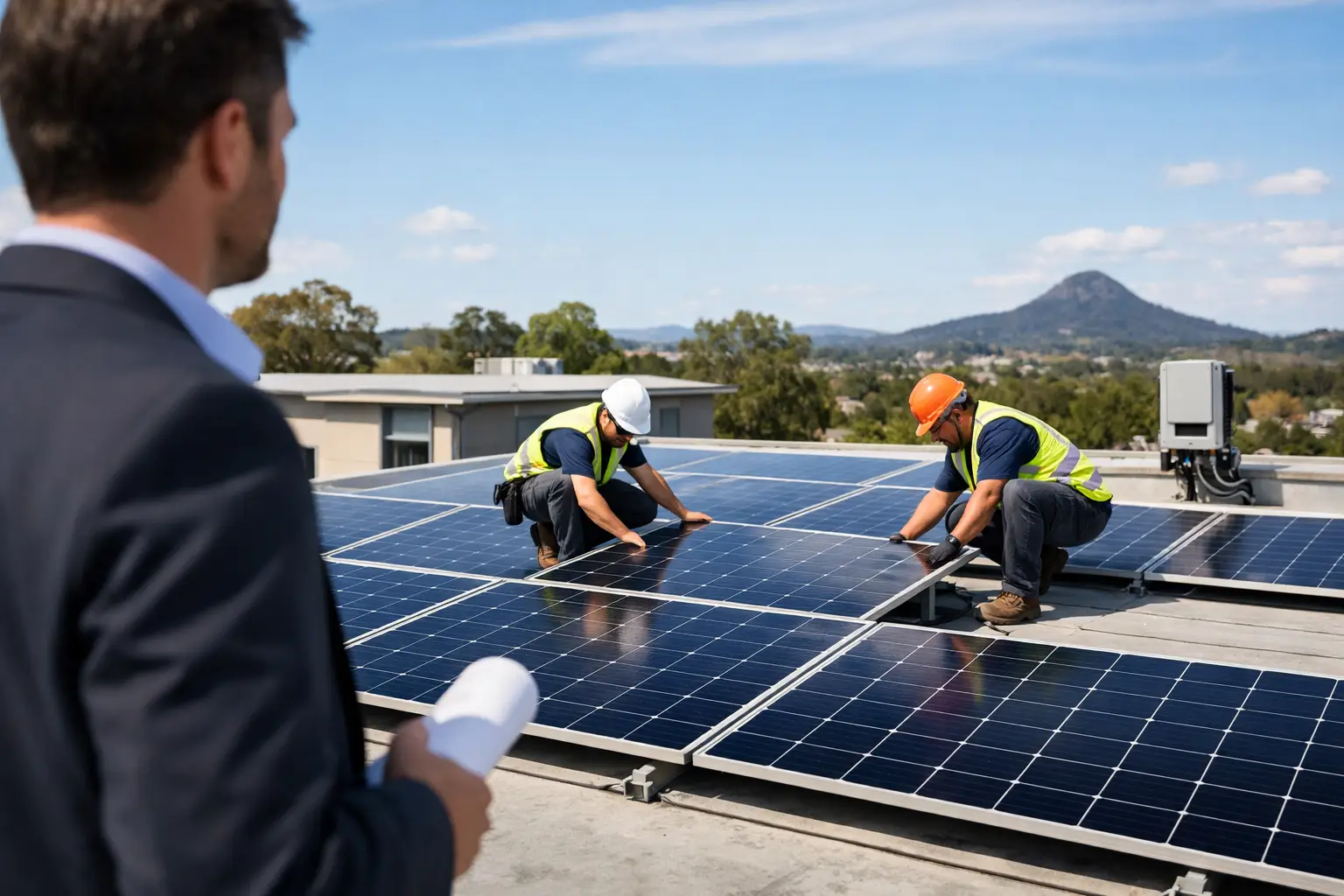
A café that opens before sunrise, a workshop running machinery through the afternoon, or an office cooling down in summer all share the same challenge: electricity costs arrive whether trade is strong or slow. This small business solar installation guide explains how to turn your roof, daytime energy use and available incentives into a practical plan for lower bills and greater energy control.
Solar is not a one-size-fits-all purchase. The best system is the one designed around how your business operates, what it pays for power, how much roof space is genuinely usable and whether backup power or battery storage will add value. Getting those decisions right before installation protects your return for years.
Start with your business energy profile
Your power bill is the starting point, not the panel count. Review at least 12 months of electricity bills so seasonal demand is visible. A small retailer may use most of its electricity during trading hours, while a hospitality venue may have early-morning peaks and a refrigeration load that runs around the clock. A business with high daytime consumption can often use solar generation directly, reducing the amount of electricity bought from the grid.
Look beyond total kilowatt-hours. Demand charges, time-of-use tariffs and the gap between daytime and evening use can materially change the value of a proposed system. If your consumption rises sharply after solar production falls away, a battery may deserve closer consideration. If most energy is used between roughly 9 am and 4 pm, solar panels alone may deliver a strong first step.
A quality assessment should also account for planned changes. New air conditioning, refrigeration, EV charging, extended trading hours or additional machinery can alter the right system size. Designing only for last year’s bills may leave a growing business underpowered.
Assess the site before choosing equipment
A roof can look suitable from the street and still present installation constraints. Its orientation, pitch, shading, condition and available area all matter. North-facing panels generally produce strongly across the day in Australia, but east- and west-facing arrays can be valuable where a business has meaningful morning or late-afternoon demand. The aim is to match generation with use, not simply chase the highest midday output figure.
Shade from neighbouring buildings, trees, vents and air-conditioning equipment needs careful assessment. Even partial shading can affect performance if the system design does not address it properly. Roof access, safety requirements, switchboard capacity and cable routes must also be inspected on site.
For leased premises, involve the landlord early. You may need written approval for roof works, access rights for maintenance and clarity on what happens to the system when the lease ends. Longer leases or clear make-good arrangements make the investment easier to justify.
Choose a system size based on self-consumption
Oversizing a system without a plan can reduce its financial value. Exported solar energy earns a feed-in tariff, but that rate is often much lower than the retail price of electricity your business avoids buying. In most cases, the strongest savings come from self-consumption – using solar power on site as it is generated.
A reputable installer should model expected production, consumption and exports rather than promising a generic saving. Ask to see the assumptions behind the proposal, including your electricity tariff, shading allowance, projected annual generation and any expected degradation over time. Solar output varies with weather and operating conditions, so forecasts should be realistic rather than overly polished.
There is also a strategic case for allowing some room to grow. A business planning to add an electric vehicle fleet, more daytime equipment or battery storage may benefit from an array that accommodates those changes. The right balance depends on budget, roof capacity and the expected timing of those upgrades.
When battery storage makes commercial sense
A battery stores surplus solar energy for use later, rather than sending all of it to the grid. For many small businesses, that means using more of the energy generated on site during the evening, early morning or peak-price periods. It can also provide backup capability when configured with compatible equipment.
Battery value depends on your load profile. A business that closes at 3 pm and has minimal overnight demand may receive less financial benefit than one with refrigeration, security systems, evening trade or high after-hours consumption. Batteries are also not automatically whole-site backup systems. The backup load, switchboard configuration and battery capacity need to be designed intentionally.
For example, a business may choose to keep essential circuits operating during an outage – selected lighting, internet, EFTPOS equipment, refrigeration or a security system – rather than attempt to power every appliance. This approach can improve resilience while keeping system cost proportionate.
Smart monitoring is another important part of the decision. It shows what your site generates, consumes, imports and exports, helping staff identify opportunities to shift flexible loads into solar hours. Depending on the equipment, tariff and local program availability, a battery may also be capable of participating in a virtual power plant. Participation can create an additional value stream, but it should be considered carefully because program rules, credits and access to stored energy vary.
Understand rebates, approvals and grid connection
Government incentives can significantly reduce the upfront cost of eligible solar installations, but the rules, values and eligibility requirements can change. Small-scale technology certificates may apply to eligible solar systems, while state-based programs, finance options or battery incentives may be available at different times. A proposal should clearly separate the system price, estimated incentive value and any conditions attached to it.
For small commercial projects, the administrative work is just as important as the equipment. Your installer should manage the required paperwork, organise network applications and ensure the installation meets applicable Australian standards. Grid connection approval may place limits on export capacity, particularly in areas with a high concentration of solar. A larger panel array may still be possible, but export controls or a battery strategy could be required.
Do not assume every system will export at the same level, or that an advertised rebate applies automatically. Ask who is responsible for the paperwork, whether the quoted price includes it and what happens if the network imposes different connection conditions. Clear answers now prevent unpleasant variations later.
What to expect from a professional installation
A proper solar installation begins with an on-site assessment and a written design, not a sales script. The proposal should identify panel and inverter models, system size, expected output, roof layout, warranty details and any battery or backup scope. It should also explain what is excluded, such as switchboard upgrades, roof repairs, metering work or civil works.
Installation day should be planned around safety and continuity of operations. There may be a temporary power interruption while electrical work is completed, so businesses should schedule around critical trading periods where possible. After installation, commissioning confirms that the system is operating correctly and that monitoring is connected.
Before signing off, make sure you receive system documentation, product warranties, electrical certificates and instructions for the monitoring platform. You should know who to contact if an alert appears, output seems lower than expected or your business changes its operating hours. Solar is designed to be low maintenance, but visibility and aftercare remain valuable.
Compare proposals on value, not just price
The cheapest quote can become expensive if it leaves out engineering, compliance, monitoring support or the electrical upgrades your site requires. At the same time, the most expensive system is not automatically the best match. Compare like for like: usable panel capacity, inverter capability, battery capacity, backup design, installation scope, warranties and estimated self-consumption.
Ask each provider how they calculated your savings. A credible answer will connect the system design to your bills and usage pattern, while acknowledging variables such as future electricity prices, weather and operational changes. Be cautious of claims that suggest guaranteed savings without reviewing your consumption data.
GridFree Solar approaches small commercial systems as integrated energy solutions, combining solar, battery options, rebate assistance and performance monitoring so business owners are not left to coordinate the technical and administrative details themselves.
Plan for performance after installation
Your investment keeps working best when the business uses the energy it produces. Where practical, schedule flexible loads during solar hours: run dishwashers, charge equipment, pre-cool premises or complete production tasks when generation is high. These small operational changes can lift self-consumption without adding hardware.
Check monitoring regularly, especially through the first few months. It helps confirm that actual performance broadly aligns with the design and highlights unusual changes early. Keep panels reasonably clear of heavy debris where safe to do so, and arrange professional checks if you notice faults, persistent alerts or new shading from tree growth.
The most useful outcome is not simply a lower bill. It is a business with clearer control over its energy costs, a plan for outages and a system that can adapt as electricity use changes. Start with accurate consumption data, insist on a design that reflects how you trade, and let the numbers determine the right solar and battery solution.