
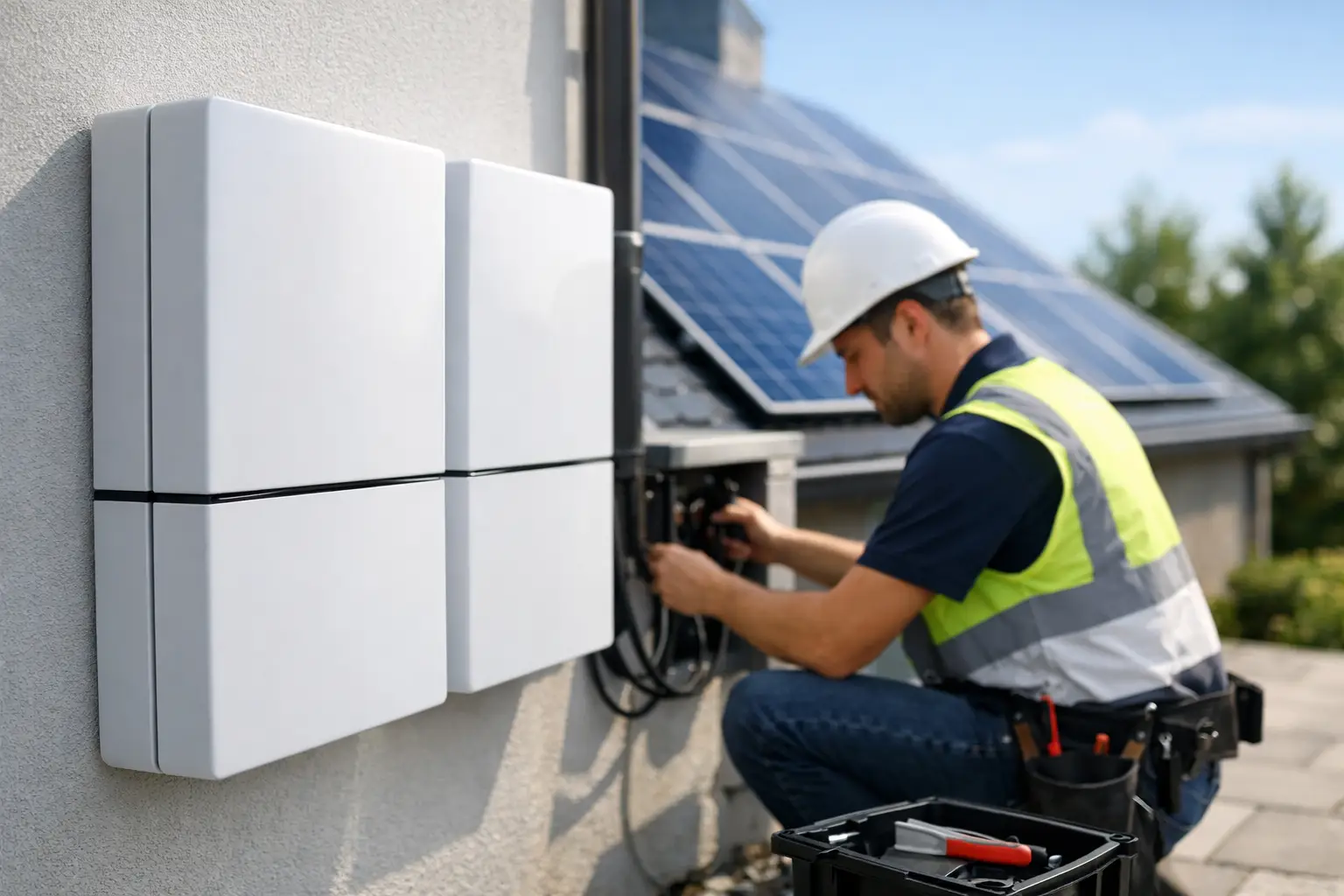
When your solar system is sending cheap daytime power back to the grid for a modest feed-in tariff, while you buy it back at peak rates after sunset, the maths starts to look lopsided. That is exactly why solar battery installation has moved from a nice-to-have upgrade to a serious energy decision for Australian homes and small businesses. A well-designed battery system lets you keep more of the power you generate, reduce reliance on the grid and add backup capability where it matters.
The key is getting the installation right. Battery storage is not a one-size-fits-all product, and the wrong battery, poor sizing or rushed installation can undermine the savings you expected.
What solar battery installation actually involves
Solar battery installation is more than mounting a battery on a wall and turning it on. It starts with understanding how your property uses energy across the day, how much solar you already generate or plan to generate, and what outcome matters most to you. For some households, the priority is lower power bills. For others, it is backup power during outages, more energy independence or the ability to participate in a virtual power plant.
From there, the system design needs to match your switchboard, tariff structure, inverter setup and available installation space. Some properties suit an AC-coupled battery added to an existing solar system. Others are better served by a hybrid inverter and an integrated solar-plus-battery design from the outset. There is no universal answer, which is why proper site assessment matters.
A quality installer will also factor in compliance, product compatibility, battery chemistry, monitoring setup and future expansion. If you might add an EV charger later, increase household loads or move to all-electric appliances, that should be part of the conversation now, not after the battery is already undersized.
Why more Australians are adding battery storage
Power prices have changed the conversation. Many customers are no longer asking whether batteries are technically possible. They are asking whether storing their own energy can deliver a stronger return than exporting it.
In many cases, the answer is yes, but it depends on your usage pattern. If your home is empty all day and your biggest consumption happens in the evening, a battery can capture solar that would otherwise be exported and use it when grid electricity is most expensive. That shifts more of your energy use to your own generation.
For small businesses, the logic can be just as strong. Daytime operations already align well with solar production, but battery storage can still help manage late trading hours, refrigeration loads, demand peaks or resilience needs. If continuity matters, battery backup can add practical value beyond bill reduction alone.
There is also the control factor. Many property owners are tired of feeling exposed to tariff changes, rising supply charges and uncertain network conditions. Battery storage does not remove the grid entirely for most sites, but it can reduce your dependence on it in a meaningful way.
How to size a solar battery installation properly
The best battery size is not always the biggest one. Oversizing can stretch payback unnecessarily, while undersizing may leave savings on the table and reduce the benefit of backup power.
A proper sizing process looks at your interval usage data, not just your total quarterly bill. That shows when you consume electricity, not only how much. If you use most of your power after 5 pm, battery storage is likely to do more work for you than it would for a household that already self-consumes most of its solar during the day.
Your solar production matters too. A battery needs surplus solar to charge effectively. If your existing array is small, shaded or underperforming, adding storage without reviewing generation can limit results. In some cases, a solar upgrade and battery installation together deliver the best outcome.
Backup expectations also influence size. Running a few essential circuits during an outage is very different from attempting whole-home backup. Refrigeration, lighting, internet and a few general power outlets are usually manageable. Ducted air conditioning, pool pumps and high-load appliances can change the equation quickly.
Cost, rebates and return on investment
Battery pricing varies based on usable capacity, brand, inverter requirements, backup functionality and installation complexity. There is no honest flat-rate answer that suits every property. Homes with older switchboards, limited mounting options or compatibility issues can require more electrical work than newer builds.
That said, focusing only on upfront price can be misleading. The better question is what value the system delivers over time. A cheaper battery with lower usable capacity, shorter warranty coverage or weak monitoring may not offer the strongest long-term result.
Rebates and incentives can materially improve affordability, but they can also create confusion. Eligibility, documentation and timing requirements differ, and missing a compliance step can delay or reduce the benefit. This is where experienced support matters. A provider that handles the paperwork, product approvals and installation standards properly can remove a major headache and help you capture the incentives available to you.
Return on investment depends on several moving parts: your electricity rates, feed-in tariff, daily usage pattern, battery cycle rate and whether backup or VPP income forms part of the value equation. Some customers are driven by strict payback. Others are willing to accept a longer payback in exchange for backup security and more control over their energy.
Choosing the right battery and installer
The battery brand matters, but the installer matters just as much. Even premium equipment can disappoint if it is badly designed, poorly integrated or unsupported after commissioning.
Look for an installer who can explain why a specific battery suits your property rather than simply recommending the same model every time. Product warranties, cycle life, usable capacity and app functionality are all relevant, but so are practical details such as service support, replacement pathways and compatibility with your current or planned solar system.
Installation standards should be non-negotiable. That includes accredited installers, compliant electrical work, safe battery placement and clear commissioning procedures. Monitoring should also be part of the package. If you cannot see what your battery is charging, discharging and saving, it becomes harder to know whether the system is performing as promised.
A trustworthy provider will be direct about trade-offs. For example, not every battery offers full-home backup. Not every home is suited to blackout protection without extra backup circuitry. And not every customer benefits equally from joining a VPP. Clear advice beats inflated claims every time.
Solar battery installation for existing solar systems
Many customers already have solar and want to add storage later. That is often possible, but compatibility needs to be checked carefully.
The first question is whether your current inverter can support a battery or whether an AC-coupled battery is the better fit. The second is whether your existing solar array is producing enough excess energy to justify storage. If your exports are already low because daytime consumption is high, the battery may do less work than expected.
System age also matters. If your solar system is older, it may be worth reviewing panel performance, inverter condition and warranty status before adding a battery. Sometimes a staged upgrade makes more sense than trying to force new technology onto an ageing setup.
For this reason, the best installers do not treat battery storage as a simple add-on. They look at the whole energy system and build around how the property actually works.
What a smooth installation process should look like
A professional solar battery installation process should feel clear from the start. You should know what is being installed, why it has been recommended, what savings or backup outcomes are realistic, and what the timeline looks like.
It usually begins with consultation and site assessment, followed by system design, quotation and rebate or incentive guidance. Once approved, the installer coordinates equipment, scheduling, compliance requirements and commissioning. After installation, monitoring is set up so you can track performance and understand how the battery is operating day to day.
The aftercare piece is often overlooked, but it matters. Battery storage is a long-term asset. You want support if settings need adjustment, if monitoring flags an issue or if you plan future upgrades. This is where a service-led provider stands apart from a basic supply-and-fit operator.
For homeowners and businesses that want one team to manage system design, certified installation, rebates and ongoing support, GridFree Solar’s battery-led approach makes practical sense.
Is now the right time?
If you already have solar, rising evening bills and a decent amount of exported energy, now may be a very sensible time to look at battery storage. If you are installing solar for the first time, planning the battery as part of the wider system often delivers a cleaner and more future-ready result.
The right decision comes down to your usage, your budget and what you want the system to do. Some customers want the shortest payback possible. Others want resilience, smarter energy control and less exposure to the grid. Both are valid.
A good battery system should make your property work harder for you after the sun goes down. When the design is right, the installation is compliant and the support is there from day one, solar battery storage stops being a complicated upgrade and starts becoming a very practical one.