
Table of Contents
- What Determines if a Solar Battery Is Worth It for Your Home
- How Solar Batteries Work and What They Actually Do
- Solar Battery Cost vs Savings: The Real Numbers
- Understanding Your Solar Battery Payback Period
- Solar Battery Rebates and Incentives Available in 2026
- Longevity, Degradation, and Maintenance: What to Expect
- Grid-Tied vs Off-Grid: Which Setup Makes Sense
- Final Verdict: Questions to Ask Before You Buy
- Frequently Asked Questions
Last Updated: September 5, 2026
What Determines if a Solar Battery Is Worth It for Your Home
A solar battery is worth it when your main goal is cutting evening grid reliance, protecting yourself from rising electricity prices, or earning export credits during peak windows. The honest answer depends on three variables: your usage profile, your tariff structure, and the upfront cost relative to your payback period.
At GridFree Solar, we provide expert solar panel and battery storage installation services designed to help Australian homeowners achieve smarter energy management and significant cost savings. The difference between a battery that pays for itself and one that sits idle almost always comes down to how much energy you use after dark. If you are home during the day, a battery may never pay off.
The key metric is self-consumption. A battery lets you store cheap daytime solar and use it at night instead of buying from the grid. Most households export a large share of their solar generation at a low feed-in tariff, then buy that same energy back later at a much higher rate.
How Solar Batteries Work and What They Actually Do
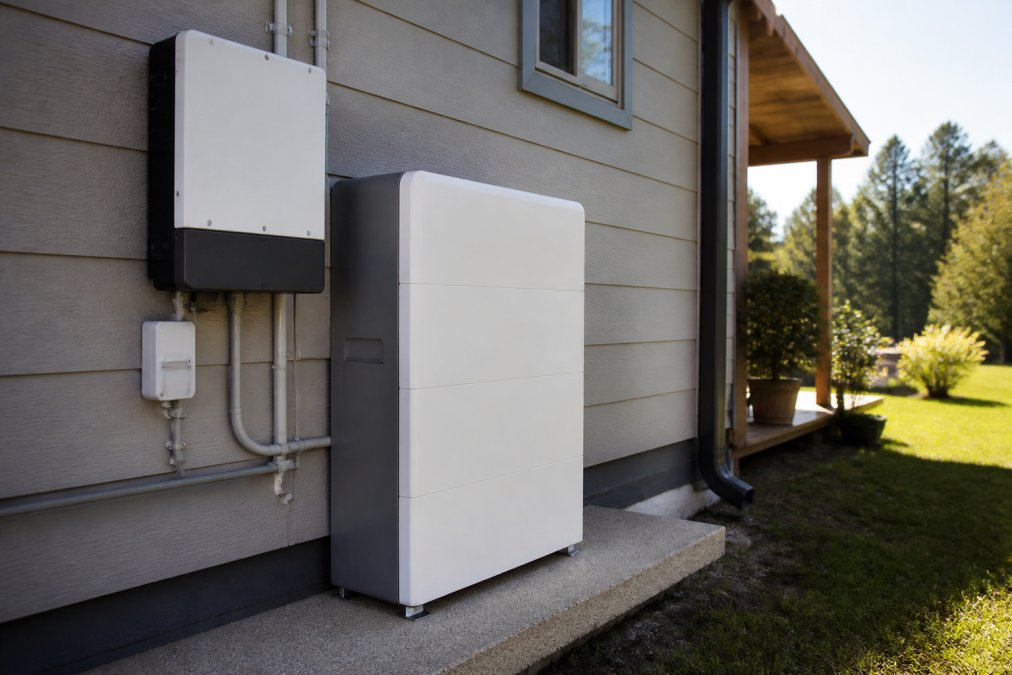
A solar battery stores excess electricity your panels generate during daylight hours for use when the sun goes down. The system pairs a lithium-ion battery with a solar inverter, which manages the flow of energy between your panels, the battery, and your home.
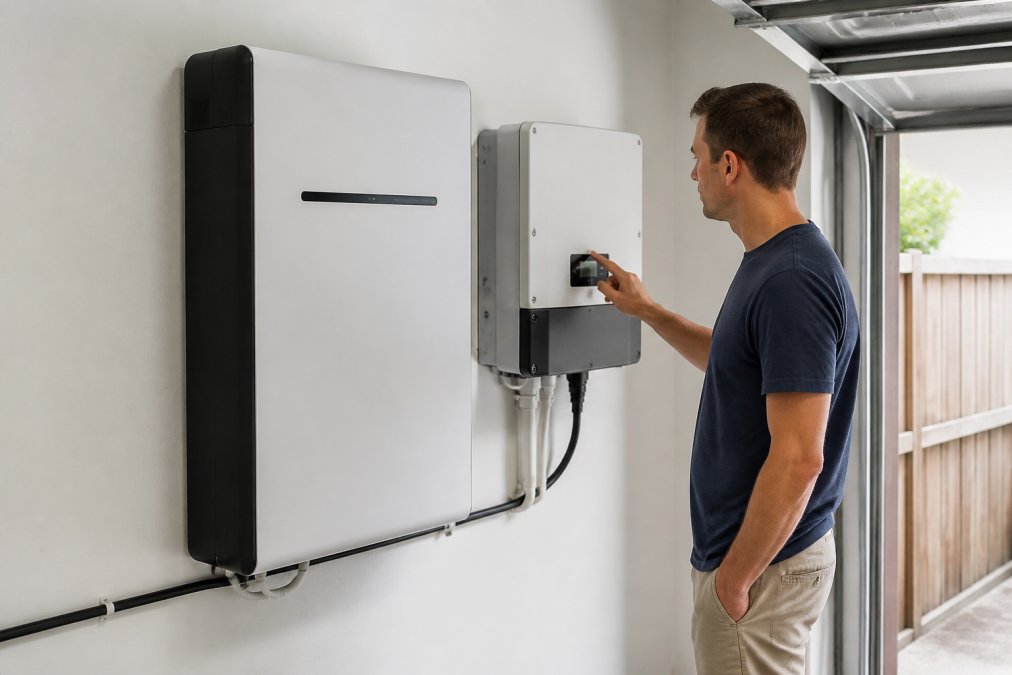
The real value appears during peak demand periods in the early evening, when electricity rates are highest. Rather than drawing from the grid at peak prices, your home runs off stored solar energy.
Batteries also provide backup power during outages, though a standard grid-tied system will not run your whole house. You need a hybrid inverter and careful system sizing to power essential circuits during a blackout.
Solar Battery Cost vs Savings: The Real Numbers
The financial case for a solar battery is a straightforward comparison: what you pay upfront versus what you save on electricity bills each year.
What You Will Actually Pay in 2026
Installation costs vary by brand, capacity, and the complexity of your existing solar setup. For current pricing, please connect with GridFree Solar.
The Savings Side: A Worked Example
Consider a typical household in South East Queensland on a time-of-use tariff. Their solar exports during the day earn a feed-in tariff of around 5-8 cents per kWh. In the evening peak window (4pm-8pm), they pay roughly 30-40 cents per kWh. If this household uses 10 kWh from the battery each evening, they avoid buying 10 kWh at, say, 35 cents, a saving of $3.50 per day, or about $1,277 per year.
Against a $12,000 installed cost, that works out to a payback period of roughly 9.4 years. But if the same household uses 18 kWh nightly, the annual saving jumps to around $2,300, and payback drops to just over 5 years.
Tariff Structures: Where the Real Leverage Sits
Your tariff structure determines whether a battery makes financial sense. Homes on a flat rate tariff benefit less, because the gap between what you earn exporting solar and what you pay for grid power is smaller.
The most favourable structures for battery owners are:
- Time-of-use tariffs with steep peak rates, Retailers such as Origin, AGL, and EnergyAustralia offer plans where peak rates exceed 40 cents per kWh in some states, making load shifting highly valuable.
- Demand tariffs, If your network charges based on your highest 30-minute usage window each month, a battery can shave that peak and reduce both your energy charge and demand charge.
- Low feed-in tariffs, When your retailer pays only 3-5 cents per kWh for exports, storing that energy for your own use is almost always better than sending it to the grid.
The Export Arbitrage Opportunity
Some plans now offer higher export rates during specific evening windows, which changes the calculation again. In Victoria, certain retailers offer solar soak-up rates of 10-12 cents per kWh between 10am and 3pm, while others have introduced evening export credits for batteries that discharge into the grid during peak demand. If your retailer offers a generous evening feed-in tariff, you may earn more by exporting stored energy than by using it yourself.
| Scenario | Best Strategy | Battery Payback Impact |
|---|---|---|
| Low evening usage (under 5 kWh) | Export solar, skip battery | Slow or negative |
| High evening usage (10+ kWh), time-of-use tariff | Store solar, avoid peak rates | Fastest payback (5-7 years) |
| Generous evening feed-in tariff (10+ cents) | Export during peak window | Moderate payback (7-9 years) |
| Demand tariff structure | Shave peak demand with battery | Value beyond energy savings |
| Frequent outages | Battery for backup | Value beyond savings |
The Hidden Cost: Opportunity Cost of Your Solar Export
One factor most guides miss: every kWh you store in a battery is a kWh you did not export at the daytime feed-in rate. If your feed-in tariff is 8 cents and you store 10 kWh daily, you forgo 80 cents in export income. That reduces your net saving from $3.50 to $2.70 per day in the example above. Always calculate your net position: (avoided peak purchase) minus (forgone export income) equals your true daily benefit.
Before you buy, ask your installer for a written estimate that shows both your avoided grid purchases AND your forgone export income. A reputable installer will show you the net figure, not just the gross saving.
Understanding Your Solar Battery Payback Period
Payback period is the time it takes for your electricity bill savings to equal what you spent on the battery. A typical Australian household installing a battery today can expect a payback period anywhere from 5 to 12 years, depending heavily on the factors above.
State-by-State Payback Reality
Payback periods vary significantly across the country because of differences in network charges, retail competition, and state incentive programs:
| State | Typical Payback Range | Key Drivers |
|---|---|---|
| New South Wales | 6-10 years | High network charges, competitive retail market, no state battery rebate (as of 2026) |
| Victoria | 5-9 years | State rebate reduces upfront cost, time-of-use tariffs widely available |
| Queensland | 5-8 years | High solar irradiance, generous solar soak-up rates in some regions |
| South Australia | 4-7 years | Highest electricity prices nationally, strong VPP participation |
| Western Australia | 7-12 years | Lower retail rates, limited time-of-use options on the main grid |
| Tasmania | 8-12 years | Lower electricity prices, smaller evening peak spread |
These ranges assume a 10-13.5 kWh battery installed with an existing solar array. They shorten by 1-2 years if you qualify for a state rebate or loan.
The Rising Price Factor Most Guides Ignore
Most payback calculations assume your electricity price stays flat over the battery’s life. That assumption is wrong. Australian electricity prices have risen at an average annual rate of roughly 5-7% over the past decade. If your peak rate rises 5% annually, a battery that saves you $1,500 in year one will save you over $1,900 in year ten, and your actual payback period shortens by 1-2 years.
You are not just buying stored energy; you are buying a hedge against future price increases.
How Your Usage Profile Changes the Payback Math
Your usage profile is the single biggest lever on payback. A household that uses 30% of its energy at night will see a very different result from one that uses 70% at night.
To estimate your own payback, track your evening kilowatt-hour usage for a week. Multiply that by your peak rate to find your daily saving potential, then divide the battery cost by that figure.
The Four-Question Payback Test
Before you accept any payback estimate, ask yourself these four questions:
- What is my actual evening load (4pm-10pm)? Not your total daily usage, just the evening window. Most people overestimate this by 30-50%.
- What is the gap between my feed-in tariff and my peak purchase rate? If the gap is under 20 cents per kWh, your payback will stretch beyond 10 years.
- Does my state offer a rebate or interest-free loan? A $3,000 rebate on a $12,000 system shortens payback by roughly 25%.
- Will my electricity prices rise faster than inflation? If yes, your real payback is shorter than the nominal calculation suggests.
The Degradation-Adjusted Payback Model
A more honest payback calculation accounts for battery degradation. A typical LFP battery retains about 80% of its original capacity after 10 years. That means your year-one saving of $1,500 might drop to $1,200 by year ten. Over a 10-year period, the degradation-adjusted payback is roughly 10-15% longer than a simple calculation suggests.
Most installers do not show you this adjusted figure. Ask for it.
Beware of payback estimates that assume your battery will operate at full capacity for its entire rated life. Every battery degrades. A quote that ignores degradation is either naive or deliberately optimistic.
Solar Battery Rebates and Incentives Available in 2026
Australian homeowners can access several incentives that reduce the upfront cost of a solar battery. The federal Small-scale Renewable Energy Scheme provides certificates for solar panels, though its direct application to batteries is more limited. State-level programs, such as the Cheaper Home Batteries Program, offer rebates and loans specifically for battery storage.
A solar battery rebate can cut thousands of dollars off your installation cost, which directly shortens your payback period. The exact amounts change frequently and vary by state, so check current figures against official program documentation before you budget.
Clean Energy Council battery accreditation guidance maintains the accreditation standards for installers and equipment, which is worth verifying when choosing a provider. GridFree Solar’s CEC-accredited installers handle the rebate paperwork as part of the installation process.
Longevity, Degradation, and Maintenance: What to Expect
A quality lithium-ion solar battery is rated for thousands of cycles, with many premium units offering 8,000 cycles or more. Cycle life refers to one full charge and discharge, so a battery cycled daily could last well over a decade.
Degradation is the gradual loss of capacity over time. Most batteries retain around 80% of their original capacity after a decade of use. Depth of discharge matters too: batteries last longer when you avoid draining them completely.
Maintenance is minimal for modern batteries. There are no moving parts, and the main task is monitoring performance through the system’s app. Installation quality matters more than ongoing upkeep, which is why compliance with AS/NZS 5139:2019 is worth confirming with your installer.
Grid-Tied vs Off-Grid: Which Setup Makes Sense
A grid-tied system with a battery is the right choice for most Australian homeowners. You keep the grid as a backup, export surplus solar, and use the battery for evening load shifting and outage protection.
Full off-grid systems require much larger battery capacity and solar arrays, because you must cover every kilowatt-hour you use, including winter weeks with low solar generation. The cost of that redundancy is significant.
The practical difference comes down to how you value energy independence. A grid-tied battery cuts your grid reliance substantially while keeping a safety net.
Final Verdict: Questions to Ask Before You Buy
A solar battery is worth it if you use significant energy in the evening, pay time-of-use rates, or want backup protection during outages.
Before you commit, ask these questions:
- How many kilowatt-hours do I use between 4pm and 10pm on a typical day?
- What is my current feed-in tariff, and what rate do I pay for peak evening electricity?
- Does my state offer a rebate or loan that reduces the upfront cost?
- What is the battery’s cycle life and expected degradation over 10 years?
- Will the system cover my essential circuits during an outage?
GridFree Solar’s CEC-accredited installers provide expert rebate guidance and design systems around your actual usage profile, not a template. Every installation complies with AS/NZS 5139:2019 and AS/NZS 3000 standards, with a Certificate of Electrical Safety issued on completion. Australian Energy Regulator guidance on electricity tariffs can help you understand your current tariff structure before you start.
Frequently Asked Questions
What are the main downsides of installing a solar battery?
The main downsides are the upfront cost, the payback period, and battery degradation over time. A typical lithium-ion battery loses capacity with each cycle, so it will not perform like new after a decade. If your feed-in tariff is high or you use most of your solar power during the day, a battery may take longer to pay for itself. Installation also requires wall space and compliance with Australian standards.
How long will a 10kWh solar battery last during a power outage?
A fully charged 10kWh battery will run essential appliances for roughly 10 to 24 hours, depending on what you power. A fridge uses about 1.5kWh per day, lights and Wi-Fi about 0.5kWh, so a 10kWh battery covers these basics comfortably for a full day. Running air conditioning or an electric heater will drain it much faster, so prioritise which circuits you back up.
Will solar battery prices drop further in 2026?
Prices have trended downward as lithium-ion manufacturing scales up, but 2026 prices also depend on global supply chains and demand. Rather than waiting for a future price drop, calculate what you currently export to the grid and what you pay for evening power. Government incentives like the Cheaper Home Batteries Program can also shorten your payback period now.
How do feed-in tariffs impact the return on investment for batteries?
Feed-in tariffs determine what you earn for exporting solar power. If your retailer pays a high rate of 10 to 15 cents per kilowatt-hour, a battery competes with that income: storing power instead of exporting it must save you more than you would have earned. With low feed-in tariffs of 3 to 5 cents, a battery becomes more attractive because every kilowatt-hour you store replaces expensive evening grid power.
The decision comes down to your evening energy habits and your tariff, not the marketing hype. Get the rebate figures for your state, track your usage for a week, and run the payback calculation before you buy. GridFree Solar pairs CEC-approved batteries with smart monitoring so you can see your savings in real time, and our team handles the rebate paperwork from start to finish. Get started with GridFree Solar and find out whether a battery makes sense for your home.
This article was written using GrandRanker