

Table of Contents
- What is a Solar Feed-in Tariff?
- How Solar Feed-in Tariffs Work
- Current Minimum Feed-in Tariff Rates
- Time-Varying Feed-in Tariff Explained
- Flat Rate vs. Time-Varying Tariffs: Which Suits Your Home?
- How to Reduce Electricity Bills in Victoria
- Eligibility Requirements for Solar Exports
- Battery Storage and Feed-in Tariff Returns
- Frequently Asked Questions
Last Updated: August 25, 2026
What is a Solar Feed-in Tariff?
Asolar feed-in tariff is the payment rate you receive from your electricity retailer when your solar system exports excess power back to the grid. Rather than letting surplus energy go unused, you’re compensated for each kilowatt-hour (kWh) you send to the network. This transforms your rooftop from a cost-saving tool into a modest income stream.
The concept emerged from a straightforward economic principle: if your system generates more power than your home consumes, that electricity has value to the grid. Retailers need that power to supply other customers, particularly during peak demand periods. By establishing a feed-in tariff, governments and energy markets created an incentive for households to invest in solar while supporting grid stability.
Feed-in tariffs vary significantly depending on your retailer, the time of day you export, and whether you’re enrolled in a flat-rate or time-varying scheme. Understanding these differences determines how much you’ll actually earn from your solar investment. GridFree Solar helps homeowners navigate these options to maximise their returns, ensuring your system is configured to capture the highest available rates based on your household’s usage patterns.
How Solar Feed-in Tariffs Work
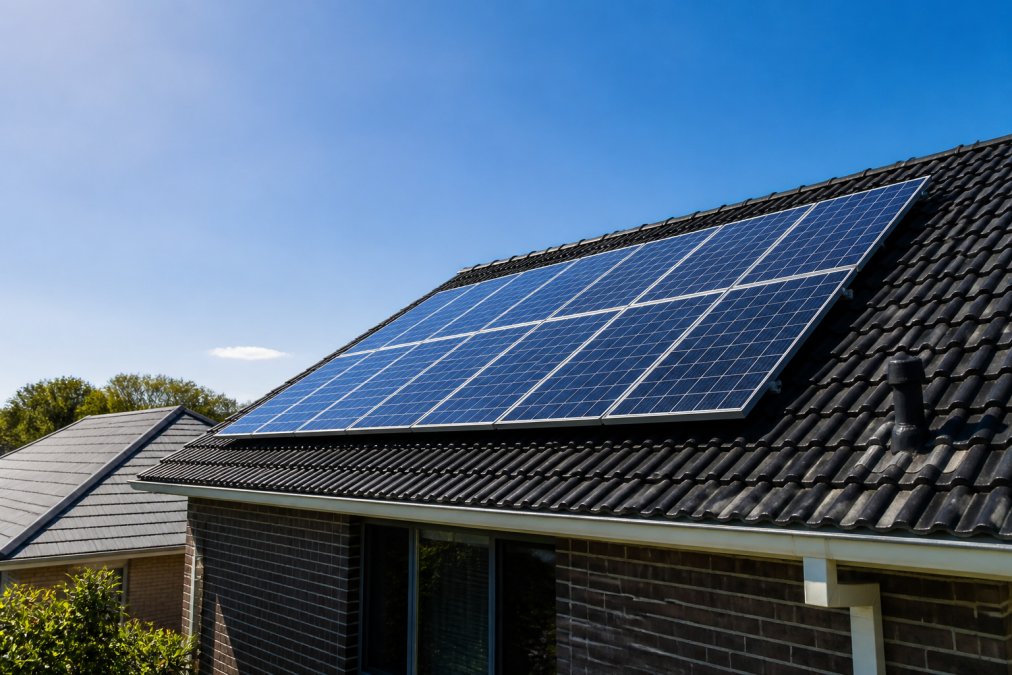
Your solar feed-in tariff operates through a straightforward mechanism: your inverter measures the electricity flowing from your panels to the grid, your meter records this export data, and your retailer pays you according to the agreed rate. The process happens automatically, no manual tracking or paperwork required beyond your initial setup.
Here’s the practical flow. During daylight hours, your solar panels generate electricity. Your home consumes what it needs immediately. Any surplus flows backward through your meter to the grid. Smart meters (or interval meters) capture this export in real time, recording exactly how many kilowatt-hours left your property and when. Your retailer then applies your feed-in tariff rate to calculate your credit.
The timing of your exports matters enormously. If you export during peak demand periods (typically late afternoon and early evening when households are cooking and heating), retailers value that power more highly. Conversely, midday exports when solar generation peaks across many systems simultaneously command lower rates because supply is abundant. This is why time-varying tariffs exist, they reward you more generously for exporting when the grid needs it most.
Your electricity bill reflects this two-way flow. Instead of paying only for imported power, you’ll see credits applied for exported power. Some retailers combine these into a net calculation; others show them separately. GridFree Solar’s team explains your specific bill structure during the installation process, ensuring you understand exactly how your tariff translates to monthly savings or credits.
Current Minimum Feed-in Tariff Rates
Retailers in the region are required to offer a minimum feed-in tariff rate, which sets a floor below which they cannot pay. This minimum protects households from unreasonably low compensation and ensures the solar investment remains worthwhile. However, many retailers offer rates well above this minimum, particularly during peak export periods.
Rates fluctuate based on wholesale electricity prices, network costs, and retailer competition. As of 2026, minimum rates typically range between 8-10 cents per kilowatt-hour for flat-rate exports, though time-varying tariffs often reach 15 cents per kWh or higher during peak demand windows. Some retailers now offer bonus schemes where you earn additional credits for exporting during specific hours or avoiding grid consumption during peak periods.
The variation between retailers is substantial. Shopping around between providers can increase your annual feed-in credits by hundreds of dollars. GridFree Solar provides guidance on comparing retailer offers, helping you identify which provider’s tariff structure best suits your household’s generation and consumption profile. This isn’t a one-time decision, you can switch retailers annually to capture better rates as the market evolves.
Time-Varying Feed-in Tariff Explained
Atime-varying feed-in tariff adjusts your payment rate based on the time of day you export electricity. Rather than receiving a single flat rate regardless of when power leaves your system, you’re paid more during high-demand periods and less during low-demand periods. This structure aligns household incentives with grid needs, rewarding you for exporting when the network is under pressure.
Most time-varying tariffs operate on a simple two-tier or three-tier structure. Peak periods (typically 4 PM to 9 PM, though this varies by retailer) offer the highest rates, often 15 cents per kWh or above. Off-peak periods (typically 9 PM to 7 AM) offer lower rates, sometimes 5-7 cents per kWh. Shoulder periods (mid-morning and early afternoon) fall somewhere in between at 10-12 cents per kWh.
The financial benefit depends entirely on when your household generates surplus power. If your solar system produces heavily during peak hours, perhaps because your roof faces west and captures afternoon sun, time-varying tariffs are significantly more lucrative. Conversely, if your generation peaks at midday when rates are low, a flat-rate tariff might serve you better. GridFree Solar’s energy assessment identifies your system’s generation profile and recommends the tariff structure that maximises your returns.
Flat Rate vs. Time-Varying Tariffs: Which Suits Your Home?
Choosing between a flat rate and time-varying tariff requires understanding your household’s solar generation pattern and export timing. Neither option is universally superior, the right choice depends entirely on your circumstances.
Flat-rate tariffs offer simplicity and predictability. You receive the same payment per kilowatt-hour regardless of when you export. This appeals to households that can’t easily shift their consumption patterns or those with battery storage that allows flexible export timing. If your lifestyle or work schedule is fixed, flat rates eliminate the complexity of tracking peak windows.
Time-varying tariffs reward strategic behaviour. Households that can shift consumption toward off-peak periods, use battery storage to time exports strategically, or naturally generate surplus during peak hours benefit significantly. The higher peak rates often translate to greater annual earnings compared to flat-rate equivalents, provided your export pattern aligns with peak windows.
To decide, ask yourself three questions: When does my solar system generate surplus power? Can I shift major electricity consumption (heating, hot water, charging devices) to off-peak periods? Do I have or plan to install battery storage? If your generation peaks during retailer peak windows and you can adjust consumption patterns, time-varying tariffs will earn you substantially more. If your generation is steady throughout the day and your consumption patterns are fixed, flat rates offer better value without the mental overhead.
GridFree Solar’s team conducts a detailed analysis of your roof orientation, shading patterns, and household consumption to recommend the tariff structure that maximises your financial returns. This assessment is part of our standard consultation process.
How to Reduce Electricity Bills in Victoria
Beyond feed-in tariffs, several strategies work together to minimise your electricity costs. The most effective approach combines solar generation, battery storage, consumption timing, and retailer selection into a coordinated system.
Optimise consumption timing. Shift energy-intensive activities, running the dishwasher, charging devices, heating water, toward times when your solar system generates surplus power or when time-varying tariffs offer off-peak rates. This simple behavioural change can reduce grid imports by 20-30% without any equipment investment.
Install battery storage strategically. A home battery stores midday solar generation for use during peak-rate evening hours, dramatically increasing the value of your solar investment. Rather than exporting valuable afternoon power at low rates, you store it and either use it yourself or export it during peak windows at premium rates. The GridFree Solar battery systems allow for earning by exporting during peak hours (6-8 PM), transforming battery storage into a revenue generator rather than a pure cost-saving tool.
use government rebates and schemes. The Small-scale Renewable Energy Scheme (SRES) provides upfront discounts on solar systems, while the Cheaper Home Batteries Program offers rebates on battery storage installation (cleanenergyregulator.gov.au). These schemes reduce your capital outlay significantly, shortening the payback period in many cases.
Choose the right retailer and tariff. As mentioned, shopping between retailers can unlock hundreds of dollars in additional annual credits. Time-varying tariffs consistently outperform flat rates for households with flexible consumption patterns or battery storage.
Monitor and adjust regularly. Your optimal tariff structure may change as your household circumstances evolve, children leave home, you install battery storage, or your work schedule shifts. Annual reviews ensure you’re capturing the best available rates.
Eligibility Requirements for Solar Exports
Not all solar systems are eligible to export power to the grid, and understanding these requirements prevents costly mistakes or installation delays. Eligibility depends on your grid connection type, meter configuration, electrical standards compliance, and retailer requirements.
Grid connection and meter type. Your home must be connected to the main electricity grid and have a meter capable of measuring bidirectional power flow. Standard analog meters cannot record exports; you’ll need either a smart meter or an interval meter that captures export data. Most modern installations include these automatically, but older properties may require a meter upgrade.
Electrical safety compliance. Your solar system must comply with Australian electrical standards AS/NZS 3000 (the Wiring Rules) and AS/NZS 5139:2019 (the grid connection standard) (standards.org.au). GridFree Solar’s CEC-accredited installers ensure full compliance, obtaining your Certificate of Electrical Safety (CES) as proof. Non-compliant installations cannot legally export power and may void your insurance.
Inverter and system specifications. Your inverter must support grid export and meet anti-islanding requirements, safety features that prevent your system from supplying power to the grid during outages. All modern inverters include these, but older systems may not. GridFree Solar’s assessment identifies any equipment upgrades needed before export eligibility is confirmed.
Retailer approval. Your electricity retailer must formally approve your system for export before you begin receiving feed-in credits. This typically involves providing your installer’s details, system specifications, and CES. GridFree Solar manages this process on your behalf, liaising with your retailer to activate export payments.
System size limits. Most retailers cap export eligibility at systems up to 10 kW (approximately 25-30 solar panels). Larger systems may face restrictions or require negotiated export agreements. GridFree Solar advises on size optimisation to maximise performance while staying within standard export limits.
Battery Storage and Feed-in Tariff Returns
Battery storage fundamentally changes how feed-in tariffs work in your favour. Rather than accepting whatever rate the grid offers at the moment your panels generate surplus, battery storage lets you time your exports strategically to capture premium rates.
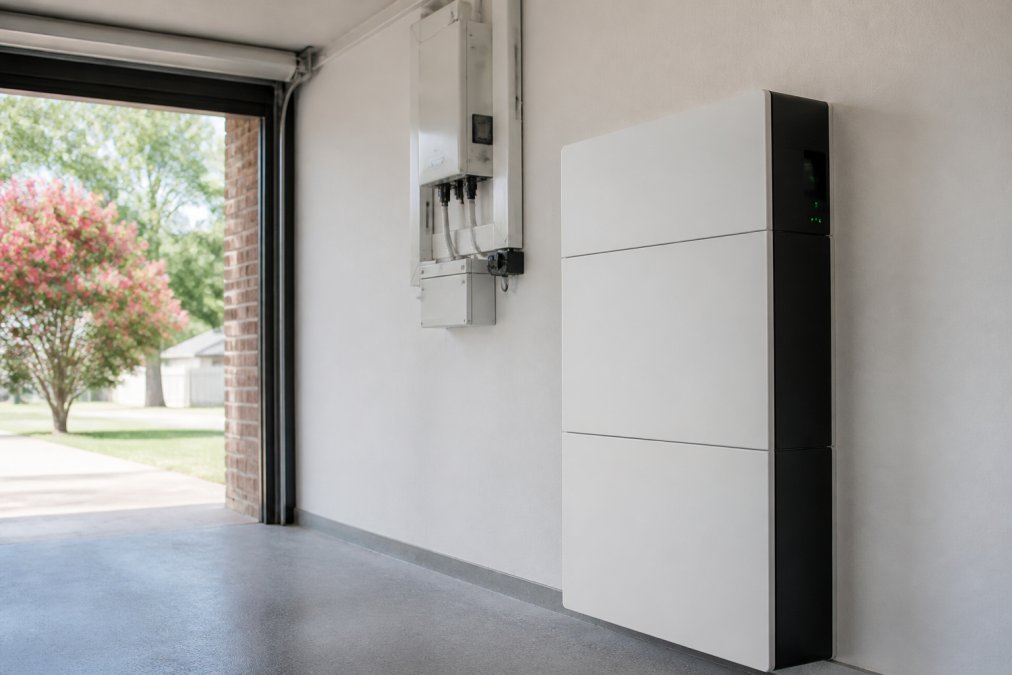
Here’s the economic shift. Without battery storage, your midday solar generation exports at low rates (8-10 cents per kWh) because supply is abundant. With battery storage, you hold that same power until peak evening hours (6-8 PM) and export at premium rates (15 cents per kWh or higher). This 50-90% rate increase dramatically improves your return on investment.
GridFree Solar’s battery systems are configured to optimise this arbitrage automatically. The system learns your household’s consumption patterns, predicts solar generation based on weather forecasts, and decides whether to store power for later export or use it immediately. This intelligent management removes the guesswork from battery operation.
The financial returns are tangible. A typical household with a 10 kWh battery system can generate additional feed-in credits by timing exports to peak-rate windows. Combined with the $1 daily bonus GridFree Solar offers for avoiding grid consumption during peak hours, battery storage transforms from a cost item into a revenue generator.
Battery systems also provide resilience benefits. During grid outages, your battery supplies essential loads, keeping lights, refrigeration, and communication devices operational. This insurance value, protection against blackouts, adds to the economic case, even before accounting for feed-in tariff earnings.
Navigating feed-in tariffs and maximising your solar returns requires understanding your specific household’s generation profile, consumption patterns, and retailer options. The difference between an optimised system and a standard installation can amount to thousands of dollars over the system’s 25-year lifespan. GridFree Solar’s CEC-accredited team conducts detailed energy assessments, recommends the tariff structure that suits your circumstances, and manages the entire process from design through activation of feed-in payments. Connect Now to schedule a consultation and discover how much your household could earn from solar exports.
Frequently Asked Questions
What is the difference between flat rate and time-varying solar feed-in tariffs?
A flat rate pays the same amount per kilowatt-hour for all exported electricity, regardless of time of day. Time-varying rates change throughout the day, typically paying more during peak demand periods (such as 6-8pm when households use most energy). Time-varying tariffs reward you for exporting when the grid needs power most, potentially earning 15¢/kWh or more during peak hours, but paying less off-peak. Flat rates offer simplicity and predictability; time-varying rates offer higher returns if your solar system can export during peak times.
Does adding a battery affect my solar feed-in tariff eligibility?
Adding battery storage does not disqualify you from receiving a feed-in tariff. However, battery systems affect your tariff strategy. With a battery, you can store excess solar energy during the day and export it during peak-rate periods (6-8pm) to maximise earnings. Some retailers offer bonus schemes for battery owners, such as $1 daily payments for avoiding grid use during peak hours. Smart metering is often required to track battery exports separately, so confirm your retailer’s requirements before installation.
How long does it take to recoup the cost of a solar system through feed-in tariff earnings?
Payback depends on system size, your export rate, and how much excess energy you generate. Most households with grid-connected solar systems see returns over 5-10 years through a combination of reduced electricity purchases and feed-in tariff credits. Feed-in tariff earnings alone typically account for 10-20% of total savings; the majority comes from using your own solar generation instead of buying grid power. Adding battery storage can accelerate returns by allowing you to export during higher-paying peak periods and reduce peak-hour grid purchases.
Are solar feed-in tariffs worth it for homes with shaded roofs or limited export capacity?
Feed-in tariffs are most valuable if your system generates significant excess energy to export. Homes with shaded roofs or limited solar capacity may generate less surplus, reducing tariff earnings. However, you still benefit from reduced electricity bills by consuming your own solar generation. A professional assessment of your roof orientation, shading, and system capacity is essential, many homes with partial shade can still benefit from optimally positioned panels. Battery storage can also help smaller systems maximise value by storing energy for peak-rate export periods.
This article was written using GrandRanker