Table of Contents
- What Drives Up Electricity Bills in Victorian Homes
- How to Read Your Energy Bill
- Compare Electricity Plans in Victoria to Find a Better Rate
- Victorian Energy Upgrades Program: Free and Subsidised Improvements
- Victorian Energy Concessions and Rebates You May Be Missing
- Solar PV and Battery Storage: The Fastest Way to Reduce Electricity Bills in Victoria
- Practical Energy-Saving Tips That Actually Reduce Electricity Bills
- Summary: How to Reduce Electricity Bills in Victoria
- Frequently Asked Questions
Last Updated: August 10, 2026
What Drives Up Electricity Bills in Victorian Homes
Victorian households face high power bills due to climate demands, older homes with poor insulation, and predictable consumption patterns. The biggest offenders are heating and cooling systems, electric water heating, standby power, inefficient appliances, and peak tariff exposure. Understanding which applies to your home is the first step to reducing costs.
How to Read Your Energy Bill
Reading your energy bill correctly is essential to reducing electricity costs. Focus on your daily average consumption in kilowatt-hours (kWh), which gives you a comparable baseline across billing cycles. Also note your supply charge, a fixed daily fee separate from usage charges.
Understanding Kilowatt-Hours and Billing Cycles
A kilowatt-hour represents the energy used by a one-kilowatt appliance running for one hour. Your bill typically covers 90 days (quarterly) or 30 days (monthly). Rising daily averages quarter on quarter signal a change in your home: a new appliance, behaviour change, or deteriorating system.
Peak Demand Charges and Time-of-Use Pricing
Time-of-use (TOU) pricing charges different rates depending on the time of day. Peak periods (typically late afternoon and early evening) carry the highest rates; off-peak periods (overnight and weekends) carry lower rates. According to the Australian Energy Regulator’s consumer guidance, shifting discretionary loads like dishwashing and laundry to off-peak hours can cut costs without reducing consumption.
Download three months of interval data from your retailer’s app before switching plans. This shows your actual half-hourly consumption pattern and lets you calculate whether a TOU plan would save money based on your real behaviour.
Compare Electricity Plans in Victoria to Find a Better Rate
Victoria’s retail electricity market is fully contestable. Most households stay on their existing plan far longer than necessary, missing significant savings.
Victorian Default Offer and How It Affects Your Bill
The Victorian Default Offer (VDO) is a regulated reference price set by the Essential Services Commission of Victoria. It acts as a safety net but is not necessarily the cheapest option. Retailers display prices as a percentage above or below the VDO, making comparison straightforward.
Use Energy Compare, Victoria’s government-run comparison service to compare plans across all licensed retailers using standardised consumption assumptions.
Load Shifting and Off-Peak Tariffs
Load shifting means moving discretionary electricity use to off-peak periods when rates are lower. Match your tariff structure to your household’s actual usage pattern. A household home during the day may benefit differently from TOU pricing than one where everyone is out until 6pm. A flat-rate tariff may serve you better if your usage pattern doesn’t align with off-peak windows.
Victorian Energy Upgrades Program: Free and Subsidised Improvements
The Victorian Energy Upgrades (VEU) program offers free or heavily discounted energy-efficient products through accredited providers in exchange for energy certificates generated by reducing household electricity consumption.
Common upgrades include LED lighting, draught-proofing, insulation, heat pump hot water systems, efficient showerheads, and reverse cycle air conditioning. According to the Victorian Government’s official VEU program page, the program has delivered millions of upgrades across the state.
These upgrades stack: a household taking draught-proofing, LED lighting and a heat pump hot water system in the same year sees compounding reductions in electricity consumption.
Only use VEU-accredited providers for subsidised upgrades. Unaccredited operators may offer “free” products that don’t qualify, leaving you without the expected subsidy and potentially with substandard installation.
Victorian Energy Concessions and Rebates You May Be Missing
Victoria offers concessions and rebates for eligible households, with uptake lower than it should be.
The Energy Bill Relief Fund provides bill credits to eligible households. The Power Saving Bonus rewards households who actively compare and consider switching plans. The Utility Relief Grant Scheme assists households experiencing difficulty paying energy bills. The Concession Card Holder Discount provides ongoing reductions for eligible concession card holders.
| Concession / Rebate | Who It’s For | How to Access |
|---|---|---|
| Energy Bill Relief Fund | Eligible households | Applied via retailer |
| Power Saving Bonus | All Victorian households (when active) | Via Energy Compare tool |
| Utility Relief Grant Scheme | Households in financial hardship | Apply via your retailer |
| Concession Card Holder Discount | Concession card holders | Confirm with your retailer |
| Victorian Energy Upgrades | All Victorian households | Via accredited providers |
Check the Victorian Government’s official energy concessions page regularly for new rounds of assistance.
Solar PV and Battery Storage: The Fastest Way to Reduce Electricity Bills in Victoria
For Victorian homeowners with suitable roofs, solar photovoltaic systems represent the most significant structural change to reduce electricity bills. Solar panels generate electricity during daylight hours, reducing grid purchases at retail rates.
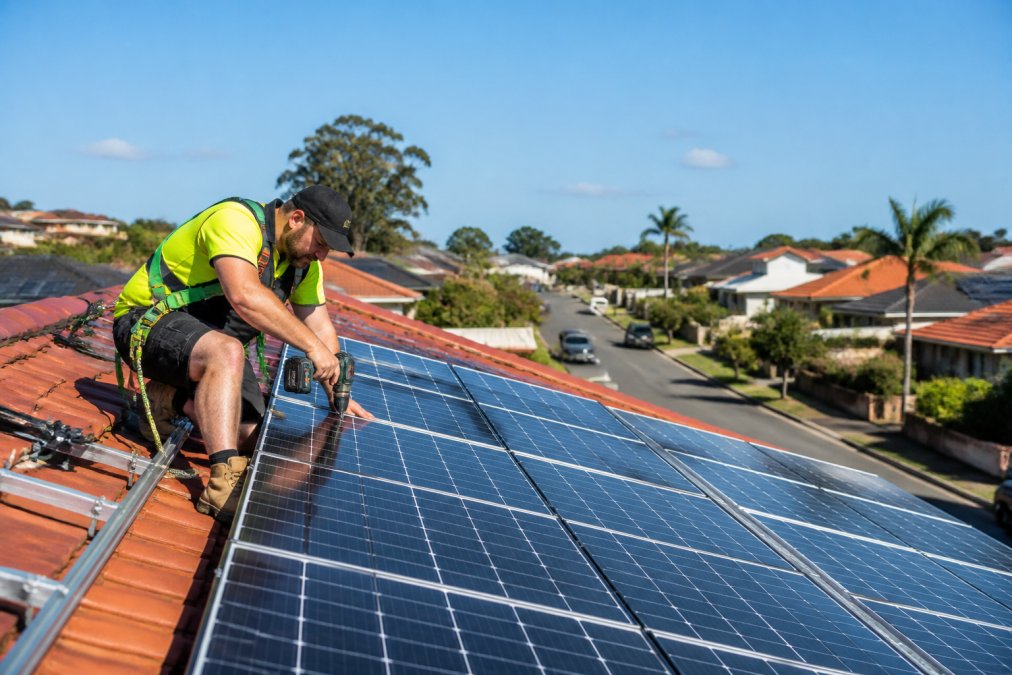
System value depends on self-consumption, how much generated electricity you use directly. Electricity consumed directly displaces grid electricity you’d otherwise pay for. Electricity exported to the grid earns a feed-in tariff, but rates are generally lower than retail import rates.
How Solar Works With Victoria’s Midday Power Saver Program
Victoria’s Midday Power Saver program offers free grid charging between 11am and 2pm, when solar generation is peak and grid demand is lowest. For solar households, running high-consumption appliances during this window maximises self-consumption. The $1 daily bonus for avoiding grid use during peak hours (typically late afternoon and evening) incentivises behaviour shift.
Battery Storage and Evening Export Rates
Battery storage extends self-consumption into the evening by capturing daytime generation for evening use. Victoria’s export rate of 15¢/kWh for power exported between 6pm and 8pm makes the evening export window more valuable. GridFree Solar installs CEC-approved battery systems compliant with AS/NZS 5139:2019, the Australian standard for battery energy storage system installation.
Battery storage earns value through three mechanisms: avoiding peak grid imports, capturing midday solar generation for evening use, and exporting at higher evening rates.
Practical Energy-Saving Tips That Actually Reduce Electricity Bills
Behavioural and operational changes deliver meaningful reductions without capital outlay.
Heating, Cooling and Insulation
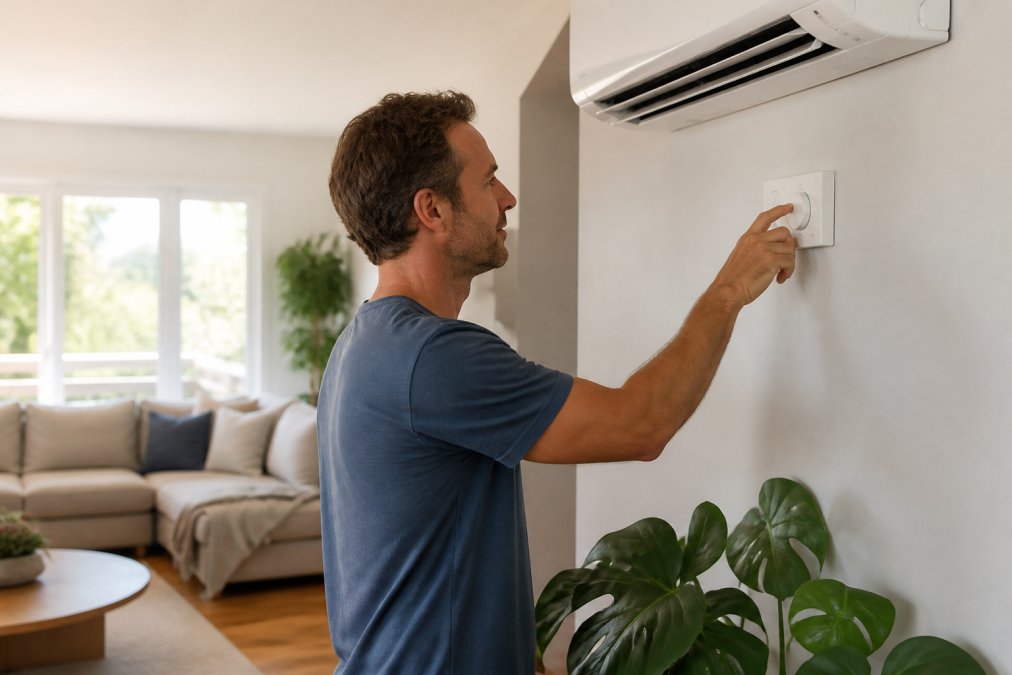
Heating and cooling offers the most gain. Set your thermostat correctly: each degree above 20°C for heating or below 26°C for cooling adds meaningfully to consumption. Insulation and draught proofing reduce the rate conditioned air escapes. Ceiling insulation is highest priority; draught proofing around doors, windows and exhaust fans is lower cost and incremental.
The Your Home technical manual from the Australian Government provides detailed guidance on insulation R-values and draught-proofing techniques for different Victorian climate zones. Reverse cycle air conditioning is significantly more efficient than resistive electric heating.
Appliance Efficiency and Standby Power
The energy rating label on appliances is a direct proxy for ongoing electricity costs. A 2-star fridge consumes substantially more kilowatt-hours annually than a 4-star equivalent. Over an appliance’s life, energy cost differences often exceed the price premium of more efficient models.
Standby power is common: televisions, gaming consoles, set-top boxes, phone chargers and smart home devices draw power continuously. Switching off at the powerpoint eliminates this draw. Smart powerboards with individual switching make this practical for entertainment systems.
Energy-Saving Hacks for Victorian Renters
Renters can’t install solar or upgrade insulation, but can control what they use without landlord permission. Portable draught excluders, thermal curtains, plug-in smart powerboards with energy monitoring, and hot water temperature checks (ask your property manager to set it to 60°C) all help. Renters have full access to Victoria’s competitive electricity market and can compare plans just as homeowners can.
Victorian renters can request their property’s energy rating disclosure from their real estate agent before signing a lease. Properties with poor energy ratings cost more to heat and cool.
Many retailers now offer apps or in-home displays showing near-real-time usage data. Using these tools creates the feedback loop that makes behaviour change stick.
Summary: How to Reduce Electricity Bills in Victoria
| Action | Effort | Impact | Cost |
|---|---|---|---|
| Compare electricity plans | Low | High | Free |
| Claim available concessions | Low | Medium | Free |
| VEU program upgrades | Low | Medium-High | Free/subsidised |
| Draught proofing | Low-Medium | Medium | Low |
| Thermostat discipline | Low | Medium | Free |
| Standby power reduction | Low | Low-Medium | Free |
| Solar PV installation | High | Very High | Capital required |
| Battery storage | High | High | Capital required |
| Insulation upgrade | Medium | High | Low-Medium |
The most effective approach combines quick wins (plan comparison, concessions, standby reduction) with medium-term improvements (VEU upgrades, draught proofing) and long-term investments (solar, battery storage) where appropriate.
High electricity bills in Victoria are a real problem, but not inevitable. A competitive retail market, government upgrade programs, available concessions and maturing solar and battery technology provide more tools than ever. GridFree Solar specialises in solar and battery installation, offering CEC-accredited installation, full compliance with AS/NZS 5139:2019 and AS/NZS 3000, and hands-on guidance through available rebates including the Small-scale Renewable Energy Scheme and the Cheaper Home Batteries Program. If you’re ready to make the most significant structural change available to reduce electricity bills in your Victorian home, connect now and get a system designed for your specific roof, usage pattern and budget.
Frequently Asked Questions
What runs up electricity bills the most in a Victorian home?
Heating and cooling account for the largest share of household energy use in Victoria, often 40% or more of total electricity consumption. Reverse cycle air conditioning running on inefficient settings, electric hot water systems, and appliances left on standby all contribute significantly. Older appliances with poor energy rating labels and poor insulation that forces heating and cooling systems to work harder are also common culprits. Reviewing your energy bill’s usage breakdown is the fastest way to identify where your kilowatt-hours are going.
How can I access the Victorian Energy Upgrades (VEU) program?
The Victorian Energy Upgrades program is administered by the Essential Services Commission. Eligible Victorian households can access subsidised or free energy-efficient products and upgrades, including draught proofing, ceiling insulation, and efficient heating systems, through accredited providers. You do not need to apply directly; instead, you engage an accredited VEU provider who arranges the upgrade and claims the certificates on your behalf. Check the Victorian Government’s Energy website or contact an accredited installer to confirm which upgrades your property qualifies for.
Does the Victorian Default Offer (VDO) affect my electricity bill?
Yes. The Victorian Default Offer is a regulated electricity price set by the Essential Services Commission, designed to give households a fair reference point when comparing electricity plans. If you have never switched retailers or have not reviewed your plan recently, you may be on a rate higher than the VDO. Comparing your current plan against the VDO on the Victorian Energy Compare website can reveal whether switching retailers or negotiating a better rate would reduce your electricity bills.
What is the Victorian Midday Power Saver program and how does it help solar households?
The Victorian Midday Power Saver program rewards households for shifting electricity consumption to the middle of the day, typically 11am to 2pm, when solar generation is at its peak across the grid. Solar households benefit most because they can run dishwashers, washing machines, and pool pumps during this window using their own generated power rather than drawing from the grid. Some participating retailers also offer free grid charging during these hours, which is particularly valuable for households with battery storage systems.
Are there government rebates available for Victorian households to install solar or batteries?
Victorian households can access rebates through several schemes. The Solar Homes Program has offered rebates for solar panel installation. The Cheaper Home Batteries Program, announced at the federal level, aims to reduce battery storage costs. At the federal level, the Small-scale Renewable Energy Scheme provides Small-scale Technology Certificates that reduce the upfront cost of solar installations. An accredited CEC installer can calculate exactly which rebates and certificates apply to your property and system size.
What energy concessions are available for Victorian households on low incomes?
The Victorian Government offers several concessions to help eligible households manage utility costs. The Winter Energy Concession and the Annual Electricity Concession provide direct bill reductions for holders of eligible concession cards, including Pensioner Concession Cards and Health Care Cards. The Utility Relief Grant Scheme assists households facing hardship. Eligibility is checked through your retailer or the Department of Families, Fairness and Housing. Contact your electricity retailer directly to ensure any concessions you qualify for are applied to your account.
Does turning off lights really save electricity?
Switching off lights does reduce electricity consumption, but the savings depend on the type of globe. Replacing old halogen or incandescent globes with LED lighting first makes the biggest difference, as LEDs use up to 75% less energy for the same output. Once you have LEDs installed, turning them off when leaving a room still contributes to lower kilowatt-hour usage over a billing cycle, though the impact is smaller than addressing heating, cooling, and hot water systems, which are the dominant drivers of household energy use.
This article was written using GrandRanker