
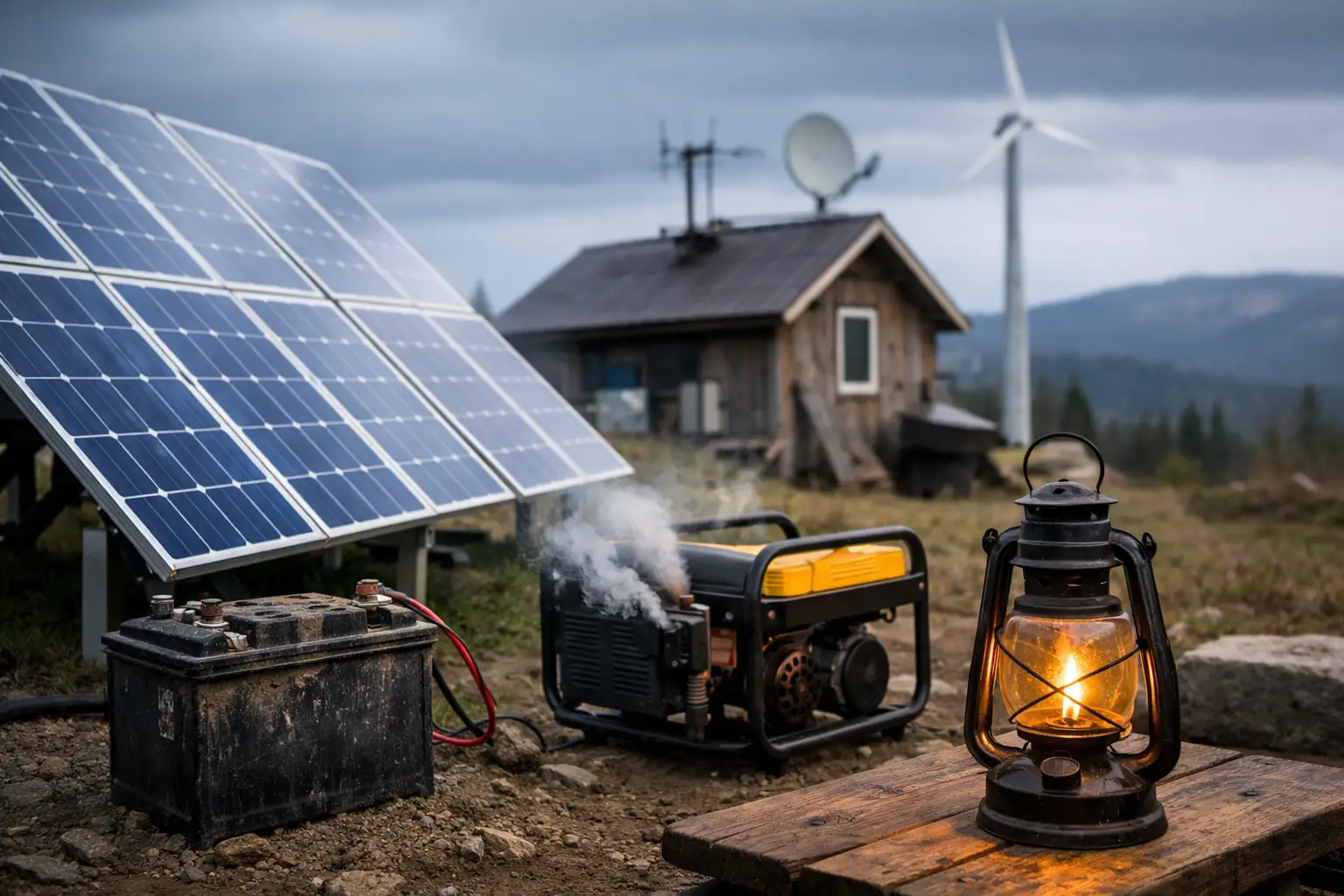
A lot of Australians start with the same thought: if power prices keep climbing, why not just cut the cord completely? It sounds appealing, but the disadvantages of off-grid solar system setups become very real once you look past the idea of total independence and into the day-to-day demands of keeping a home or business powered reliably.
For some regional properties, going off-grid makes perfect sense. If a grid connection is unavailable or extremely expensive, a standalone system can be the practical choice. But for suburban homes and small commercial sites, off-grid is often less about freedom and more about accepting a different set of costs, risks and responsibilities.
Why the disadvantages of off-grid solar system matter
An off-grid solar system has to do everything the network usually handles for you. That means generating enough solar, storing enough energy in batteries, managing peak demand, and covering poor weather without support from the grid. If one part of the system is undersized, the whole property feels it.
This is where many buyers get caught. They compare off-grid solar with a standard grid-connected solar setup and assume the only difference is adding batteries. In reality, a true off-grid system needs much more planning, more hardware, and more margin for error. That extra complexity changes the economics.
1. The upfront cost is far higher
The biggest drawback is simple: off-grid systems are expensive to build properly.
A grid-connected solar and battery setup can still lean on the network when needed. An off-grid system cannot. It needs enough panel capacity to charge batteries consistently, enough battery storage to carry overnight loads, and often enough backup generation to protect against extended cloudy periods or unusually high consumption.
That pushes up the cost of panels, batteries, inverters, switchgear and installation. It also increases the design work needed to make sure the system performs year-round, not just in ideal summer conditions. For households focused mainly on reducing bills, this level of spend often stretches the payback period well beyond what a well-designed grid-connected system would achieve.
2. Battery storage becomes non-negotiable
When people imagine solar independence, they usually picture panels on the roof doing the heavy lifting. In practice, batteries do much of the hard work in an off-grid system.
Without substantial battery storage, your property only has reliable power when the sun is shining. That is not realistic for most homes, and it is even less practical for businesses with refrigeration, equipment, lighting or extended operating hours. The battery bank has to be sized around your real usage patterns, not your best intentions.
This creates two issues. First, batteries add major cost. Second, batteries have a service life. Even high-quality battery systems will eventually need replacement, and that replacement needs to be factored into the long-term cost of ownership. Energy independence sounds attractive, but it is not maintenance-free independence.
3. Winter and bad weather can expose system limits
Solar output is not constant across the year. Shorter winter days, cloud cover and storms can reduce generation sharply, especially when energy use rises because of heating, hot water demand or increased indoor activity.
That seasonal gap is one of the most overlooked disadvantages of off-grid solar system design. A system that feels generous in summer can become tight in winter. To avoid running short, the system usually has to be oversized for the hardest months, which means paying for capacity you may not fully use for much of the year.
If the system is not oversized enough, the result is behavioural compromise. You may need to delay appliance use, reduce heating or rely on a backup generator. That is workable for some property owners, but it is very different from the always-available power most people are used to.
4. Backup generators are often still part of the plan
Many people see off-grid as a way to leave fossil fuels behind entirely. In reality, backup generators are common in standalone systems because they provide insurance when batteries run low or weather conditions drag on.
That does not mean off-grid is a poor environmental choice. It does mean total self-sufficiency is often less clean and less simple than expected. A generator adds fuel costs, servicing requirements, noise considerations and another piece of equipment that has to work exactly when you need it most.
For businesses or households with critical loads, backup generation may be essential rather than optional. If your cool room, communications, water pumps or security systems cannot go down, redundancy matters. But once you add generator support, the idea of a fully solar-powered property becomes more complicated.
5. Load management becomes your responsibility
On the grid, most people do not think twice about turning on the air con, dishwasher, kettle and pool pump in the same window. Off-grid changes that.
Because your energy supply is finite, usage habits matter more. High-demand appliances can drain batteries quickly or place strain on inverters if too many loads hit at once. A properly engineered system helps, but good design does not remove the need for smart consumption.
That lifestyle adjustment is manageable for some customers and frustrating for others. If you want the convenience of using power without checking the weather, battery state or daily load profile, off-grid may feel restrictive. This is particularly relevant for growing families, home businesses or small commercial operators with variable demand.
6. Maintenance and monitoring matter more than most expect
Grid electricity is largely invisible. When it works, you do not think about it. Off-grid systems need more active attention.
Batteries, inverters, generators and monitoring platforms all need to operate together. If a component fails, there is no grid support stepping in automatically. That means system health, software alerts, warranty support and scheduled maintenance become more important.
For remote properties, service response times can also affect how much risk you carry. A quality installer and aftercare plan make a major difference here. This is one reason many property owners find that a battery-backed grid-connected setup gives them a better balance of resilience and simplicity.
7. Off-grid is not always the best financial decision
This is the point that matters most for many households and business owners. Off-grid can be the right technical answer, but not the right financial one.
If you already have access to the network, staying connected while adding solar and battery storage often delivers a stronger return. You can use your solar during the day, store excess energy for the evening, keep backup support during outages depending on system design, and avoid the full cost of building for worst-case off-grid conditions.
In many cases, the smarter move is not absolute disconnection. It is reducing grid dependence as far as practical while keeping the network as a safety net. That approach can lower bills, improve resilience and reduce wasted exported solar energy without requiring you to overinvest in battery capacity and backup infrastructure.
When off-grid does make sense
Despite the downsides, off-grid is still a smart solution in the right setting. If your property is remote and the cost of a new grid connection is extremely high, the numbers can swing in favour of standalone power. The same applies to certain agricultural, rural or specialised commercial sites where energy self-sufficiency has clear operational value.
The key is honest design. An off-grid system should be based on real usage data, seasonal conditions and realistic backup planning. Cutting corners to make the budget look better at the start usually creates a more expensive problem later.
A better question to ask
Instead of asking, “Should I go off-grid?” the better question is, “What level of energy independence gives me the best result?”
For many Australians, the answer sits between full grid reliance and full disconnection. A tailored solar and battery system can reduce bills, give you more control over when you use your own power, and provide meaningful backup capability without taking on all the disadvantages of off-grid solar system ownership.
That middle ground is often where the strongest value sits. If you want lower power costs and more energy security, the goal is not chasing independence at any price. It is building a system that fits your property, your usage and the way you actually live or run your business. GridFree Solar helps customers make that call with clear system design, practical battery advice and a focus on long-term performance rather than guesswork.