
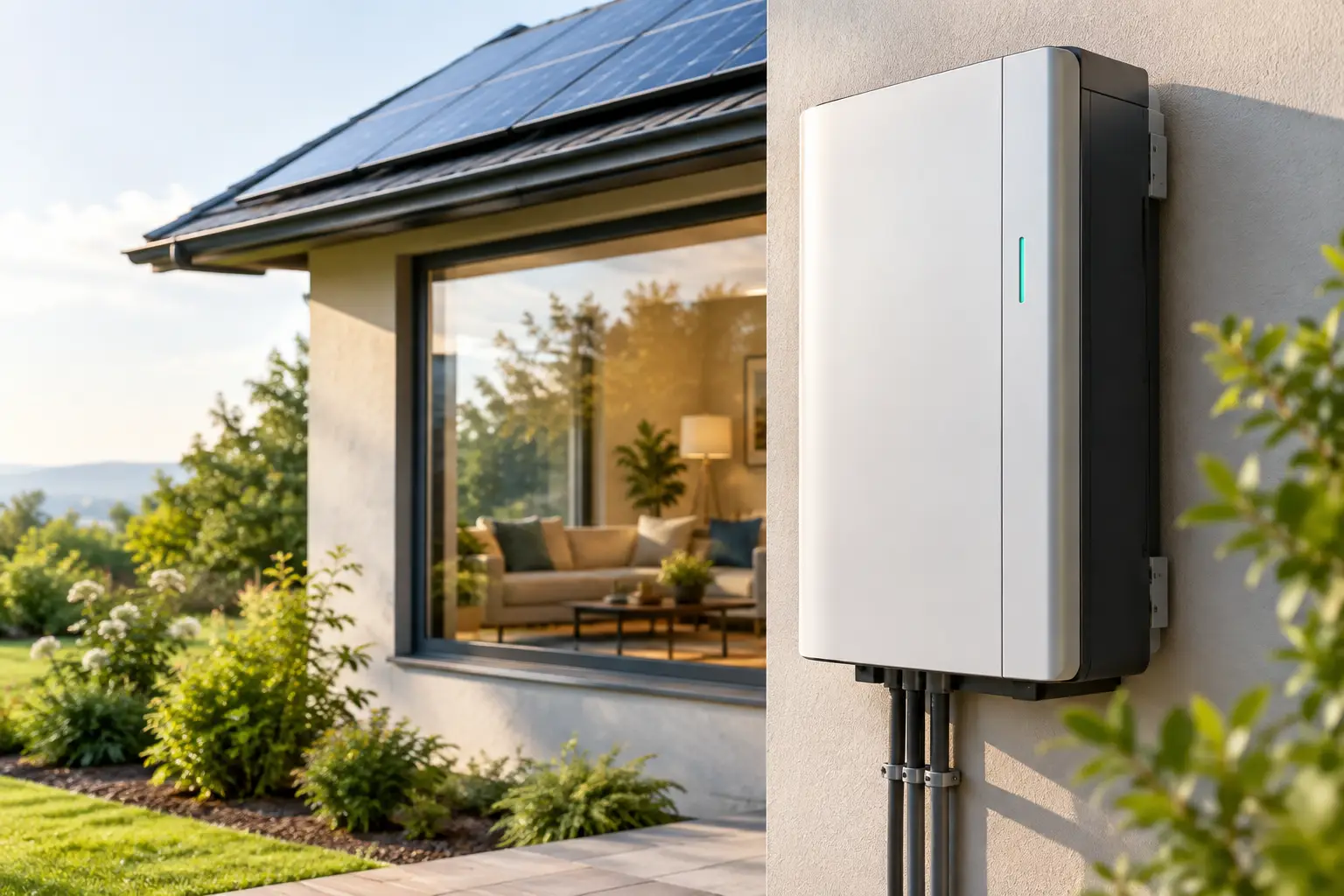
A home battery can do far more than keep the lights on during a blackout. But can batteries power a house in a meaningful, reliable way? Yes – if the system is designed around how your household uses energy, which appliances need backup and whether you have solar generation to recharge it.
For many Australian homes, battery storage turns daytime solar production into usable power after sunset, when electricity prices often rise. It can reduce grid purchases, protect essential circuits during outages and give you greater control over your energy costs. The key is setting realistic expectations about capacity, power output and how long you want the battery to carry the home.
Can batteries power a house all day?
They can, but not every house, every day or with every appliance running at once. A battery stores a fixed amount of energy, measured in kilowatt-hours (kWh). Its inverter also has a maximum power output, measured in kilowatts (kW). Both figures matter.
Think of capacity as the size of the fuel tank and power output as the width of the pipe. A 13 kWh battery may hold enough energy to cover a typical evening’s essential loads, but it may not be able to run several high-demand appliances simultaneously if its output limit is modest.
A well-sized solar and battery system can cover much of a household’s daily consumption in favourable weather, particularly when the home uses power thoughtfully. On cloudy days, during winter or after several high-use evenings, you may still draw electricity from the grid. That is normal. The aim is not necessarily to eliminate the grid at any cost, but to buy far less power from it when tariffs are highest.
Going completely off-grid is possible, though it requires more battery capacity, more solar generation and often a backup generator. For most suburban homes with a grid connection, a hybrid system provides a more practical balance of savings, resilience and upfront cost.
What a home battery can run
The answer depends on your battery, solar production and the circuits included in your backup setup. In a blackout, many households choose to back up essential loads such as lighting, refrigeration, internet equipment, selected power points, garage doors and medical devices.
Modern batteries can also support everyday loads including televisions, laptops, washing machines and pool pumps when the system has sufficient capacity and output. Solar generation during the day can help supply these appliances directly while recharging the battery for later use.
High-demand electric equipment changes the calculation. Ducted air conditioning, electric hot water systems, ovens, induction cooktops, clothes dryers and electric vehicle charging can drain stored energy quickly. This does not mean they cannot be used with a battery. It means the system needs to be designed for the way you actually live, rather than a generic battery size chosen from a brochure.
A household that wants to operate air conditioning during an outage needs a different backup design from one that only wants the fridge, lights and Wi-Fi protected. Some systems can provide whole-home backup, while others use an essential-loads backup board. Both approaches can be valuable when matched to your priorities.
A simple evening example
Suppose a household uses 10 kWh between sunset and sunrise. A battery with around 13 kWh of usable storage may cover much of that period, allowing for system losses and some reserve capacity. Add heavy air conditioning, cooking and an EV charger, however, and that same battery can be depleted in a few hours.
Your consumption pattern is more useful than a national average. Smart monitoring can show when your home imports power, when solar is exported and which periods create the biggest opportunity for battery savings.
Battery capacity is only half the decision
When comparing battery systems, capacity receives most of the attention. It should not be the only number you consider.
Continuous output determines how much the battery can supply at one time. Backup capability determines what happens when the grid fails. Usable capacity tells you how much stored energy is available in practice, rather than the headline total. Warranty terms, battery chemistry, operating temperature, installation location and whether the system can be expanded later also affect long-term value.
For example, a smaller battery with strong output may suit a home that has short, sharp peaks in demand. A larger battery may be better for a family that uses more energy overnight or wants to retain more solar generation from a large rooftop system. A modular design can be sensible where future needs may grow, such as planned EV charging, electrified heating or a home office.
The right answer also depends on your electricity plan. Time-of-use tariffs, demand charges and solar feed-in rates can all influence when it makes financial sense to charge, discharge or preserve battery capacity for later.
How solar keeps a battery working harder
A battery without solar can still provide backup power and can sometimes charge from the grid at lower tariff periods. However, solar is what makes battery storage especially compelling for many Australian properties.
Without a battery, excess solar often flows to the grid in the middle of the day for a comparatively low feed-in credit. Later, when the household needs energy, it buys electricity back at a much higher retail rate. A battery captures a portion of that surplus solar for evening use instead.
This increases solar self-consumption and can reduce exposure to rising retail prices. It also gives your system more flexibility: solar can run daytime appliances, refill the battery and export any remaining generation.
Solar generation varies with season, weather, roof orientation and shading. A quality system design accounts for these factors rather than promising the same battery performance every day of the year. On a bright summer day, the battery may fill early. In a run of wet winter weather, conserving stored energy for essential loads may be the smarter approach.
Backup power needs planning, not assumptions
Not every battery provides blackout protection automatically. Some battery installations are designed only to reduce bills while the grid is operating. To keep selected circuits running in an outage, the system needs suitable backup hardware, compliant electrical design and a clear plan for what will be supported.
There can also be a short changeover period when the grid goes down. Critical equipment with no tolerance for interruption may require additional protection. Your installer should explain this before installation, particularly if you rely on medical equipment, operate a business from home or have security systems that need continuous power.
Backup duration is not fixed. A battery that lasts overnight under light loads may last only a few hours if the air conditioner, oven and dryer are all running. During daylight, solar can extend backup time by powering loads and recharging the battery. Sensible load management is what turns a backup battery from a short-term convenience into a genuinely useful resilience solution.
How to choose the right battery size
Start with your bills and interval usage data, not a guess. Look at total consumption, evening use, daytime solar exports and the appliances that create high peaks. Then decide what outcome matters most: lower bills, blackout backup, less grid dependence or preparation for an all-electric home.
A professional assessment should consider your existing solar system, switchboard, roof generation, tariff structure, household plans and available rebates. It should also show the assumptions behind estimated savings. A battery is a long-term investment, so clear modelling is more valuable than an oversized promise.
For small businesses, sizing also needs to reflect operating hours and critical equipment. A café, workshop or office may have substantial daytime solar opportunity, but its backup priorities and demand profile will differ sharply from a family home.
GridFree Solar designs integrated solar and battery systems around these real-world details, including installation, monitoring and support with eligible rebate and compliance requirements. That helps ensure the system is built for the property, not simply sized to meet a sales target.
A battery changes how you use energy
The best battery system does not ask your household to live in the dark or watch an app all evening. It gives you visibility and choice. You can schedule flexible loads for solar-rich hours, store more of the energy your roof produces and keep critical power available when the grid is unreliable.
If you are considering storage, begin with a clear picture of your energy use and the backup you would genuinely value. A properly designed battery will not just power a house when conditions are perfect – it will make the home more capable when power is most expensive or least certain.