
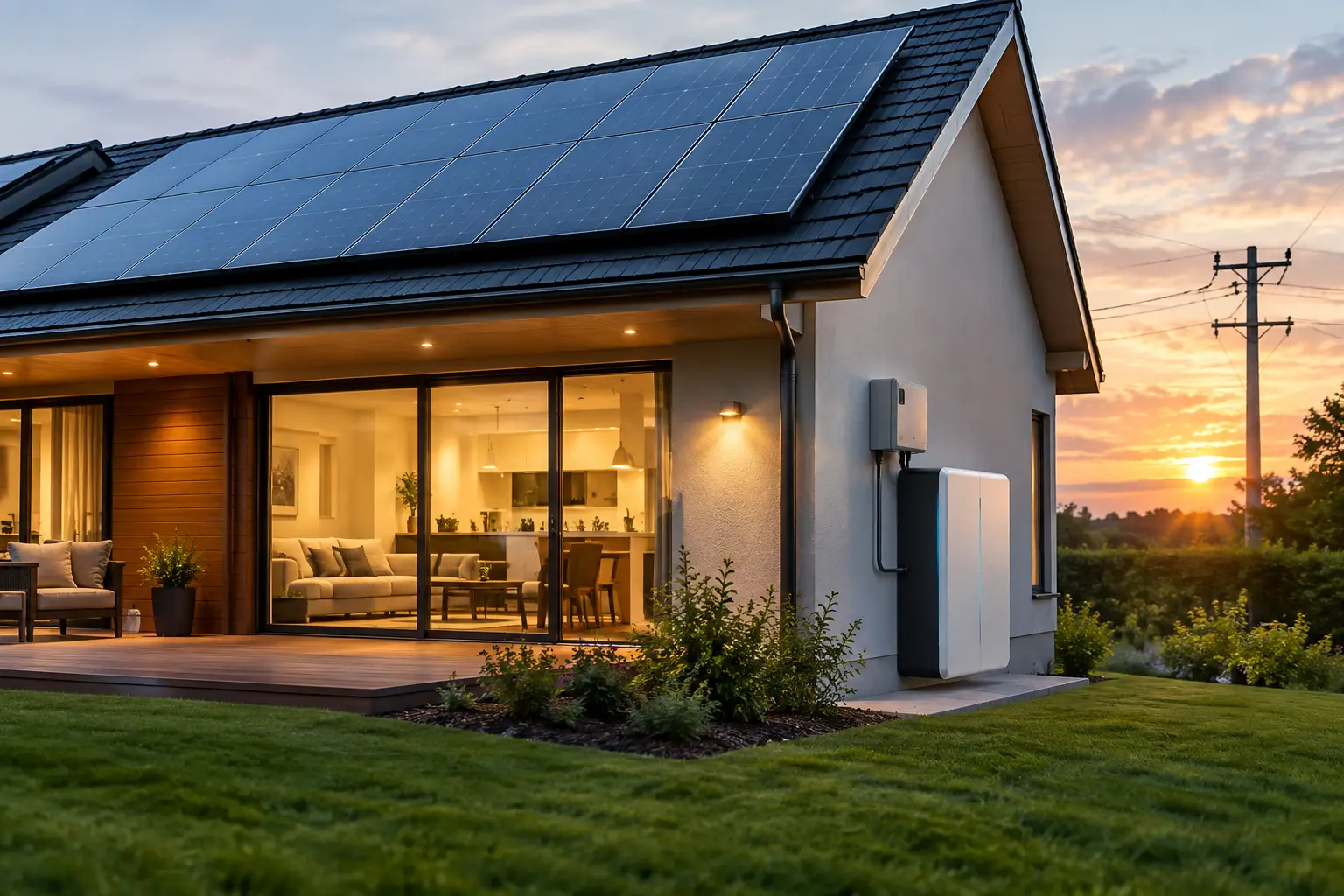
When the lights go out across the street, standard rooftop solar usually goes out too. That surprises many homeowners, but it is the reason a blackout proof home solar system needs more than panels on the roof. It needs a battery, approved backup hardware and a design that prioritises the loads that matter most.
For Australian households facing rising power prices, storm outages and increasing grid uncertainty, backup power is no longer just a nice extra. It is a practical way to keep refrigeration, lighting, internet, security and selected power points operating while the grid is unavailable. The key is designing the system around your actual needs, rather than buying the largest battery or solar array your budget can stretch to.
What makes home solar work during a blackout?
A grid-connected solar system without a battery is designed to shut down when the grid fails. This safety measure prevents electricity from feeding back into power lines while crews may be working on them. Even if the sun is shining and your panels are producing energy, a conventional solar inverter will not power your home during an outage.
To provide backup, the system requires a battery-capable hybrid inverter or a compatible battery inverter, battery storage and a backup gateway or changeover device. When the grid fails, this equipment safely separates your property from the network and creates its own stable power supply for the circuits selected for backup.
The battery supplies energy immediately, while solar can recharge it during daylight if conditions allow. That combination is what turns solar from a bill-saving asset into an energy resilience system.
It is worth being precise about the term “blackout proof”. No home energy system can promise unlimited electricity through every outage, weather event or equipment fault. A well-designed system can, however, provide reliable backup for agreed essential loads and extend that backup with solar generation. The result depends on battery capacity, inverter output, your usage and available sunlight.
Start with the loads you cannot afford to lose
The most cost-effective backup design does not attempt to run every appliance in the house as if nothing has happened. Ducted air conditioning, electric ovens, pool pumps, hot water systems and EV chargers can consume a great deal of power. Including all of them may require a larger, more expensive battery and inverter setup.
Instead, identify the circuits that protect comfort, safety and everyday function. For most homes, that includes the fridge and freezer, selected lights, internet and mobile charging, television, garage door, security system and a few general power outlets. Homes with medical equipment, home offices, sump pumps or electric gates may have additional priorities.
A qualified installer can establish an essential-loads board that backs up those chosen circuits. This gives you a clear plan for what will keep working, avoids accidental battery drain and keeps the system more affordable. In some properties, whole-home backup is possible, but it should be assessed against the home’s maximum demand and the performance limits of the battery and inverter.
Capacity and power are different things
Battery capacity is measured in kilowatt-hours, or kWh. It tells you how much energy the battery can store. A 13 kWh battery can theoretically deliver 13 kWh of stored energy, though usable capacity and reserve settings vary by product.
Power output is measured in kilowatts, or kW. It tells you how much electricity the battery and inverter can deliver at one time. A battery may have enough stored energy to run essential loads overnight, but still be unable to start several high-demand appliances at once if its output limit is too low.
This distinction matters in a blackout. A household running a fridge, lights, internet and a few devices may use modest energy over several hours. Add a kettle, microwave, clothes dryer or air conditioner at the same time and the power demand can rise quickly. Good system design considers both the length of backup you want and the appliances you expect to run together.
How long will battery backup last?
There is no honest one-size-fits-all number. Backup duration is determined by usable battery capacity divided by your actual consumption, then influenced by solar production the next day.
As a simple illustration, a home with a 10 kWh usable battery and carefully managed essential loads averaging 500 watts could have roughly 20 hours of stored backup before allowing for system losses. If daytime solar replenishes the battery, the household may continue operating essential circuits for much longer. If cloud, rain or heavy consumption reduces solar charging, backup time will shorten.
Your usage habits make the biggest difference. During an outage, avoid treating the battery like the grid. Run energy-hungry appliances one at a time, delay non-essential washing and cooking where possible, and use heating and cooling carefully. Smart monitoring makes this easier by showing battery state of charge, solar production and household demand in real time.
Designing blackout proof home solar for Australian conditions
Australian roofs, weather patterns and electricity connections vary widely. A backup system that works well in a Brisbane suburban home may need a different approach for a rural property, a Melbourne townhouse or a small business with refrigeration.
Single-phase homes are generally simpler to configure, while three-phase properties need careful planning. Some backup systems can support selected circuits on one phase, while others can provide more comprehensive three-phase backup. The right choice depends on where your essential appliances are connected and whether any critical equipment requires three-phase supply.
Solar array size also matters. A larger array can create more opportunity to recharge the battery during the day, particularly in winter or during prolonged outages. However, more panels alone do not guarantee better backup. The inverter must be able to manage solar generation while operating in backup mode, and the battery must have room to accept charge.
Battery reserve settings should be part of the conversation too. Many households set aside a percentage of battery capacity for outage protection instead of discharging it fully each evening to minimise grid imports. A higher reserve offers more emergency coverage but may mean buying a little more electricity from the grid on ordinary days. It is a sensible trade-off for households where continuity matters.
The equipment and installation details that matter
Backup performance is not only about the battery brand or headline capacity. The installation needs to be correctly engineered, compliant and matched to your switchboard. Older switchboards may require upgrades before backup equipment can be installed safely. Cable runs, metering arrangements, roof condition, phase configuration and the location of the battery all affect the final design.
A quality installer will explain the backup circuit layout before work begins. You should know which appliances will run during an outage, whether there is a brief changeover period, what happens if battery charge is low, and how to operate the system if an exceptional event occurs.
Look for a proposal that clearly sets out solar panel capacity, battery usable capacity, continuous and peak power output, backup capability, warranty terms and monitoring. It should also address applicable electrical standards and network requirements, rather than presenting a battery as a plug-and-play add-on.
Rebates and incentive programs can improve the economics of a battery-led system, but eligibility and available support can vary by state, system type and timing. Administrative details matter. A provider that manages documentation, compliance and commissioning can remove a significant source of stress from the project.
Can solar recharge your battery during an outage?
With the right hybrid system, yes. Once the backup equipment has isolated your home from the grid, solar panels can continue producing power for backed-up loads and charge the battery with excess generation. This is the feature that makes a properly designed system far more useful than a battery alone during a multi-day outage.
There are limits. Solar output changes with weather, season, roof orientation and shade. On a very cloudy day, generation may only cover part of your household demand. If the battery is already full and demand is low, the system may also curtail panel output because there is nowhere for the electricity to go.
For this reason, the best outage strategy combines suitable equipment with sensible energy use. The goal is not unlimited power. It is to maintain the services that make your home safe, connected and liveable until the grid returns.
A practical path to a reliable backup system
Start with an energy assessment, not a product brochure. Review your electricity bills, daytime solar generation, evening usage and any appliances that are genuinely critical. Then decide whether you need essential-load backup or whole-home capability, how many hours of overnight autonomy you want and whether future needs such as an EV, pool equipment or a growing family should be allowed for.
From there, a tailored design can balance panel capacity, battery size, inverter output and backup circuits against your budget. GridFree Solar can assist with system design, certified installation, rebate paperwork and monitoring so the system is built around the way your property actually uses energy.
A well-planned backup system gives you more than a response to the next outage. It lets you use more of your own solar, reduce reliance on expensive grid electricity and make everyday energy decisions with greater confidence. The most useful first step is simply to identify what must stay on when everything else goes dark.