
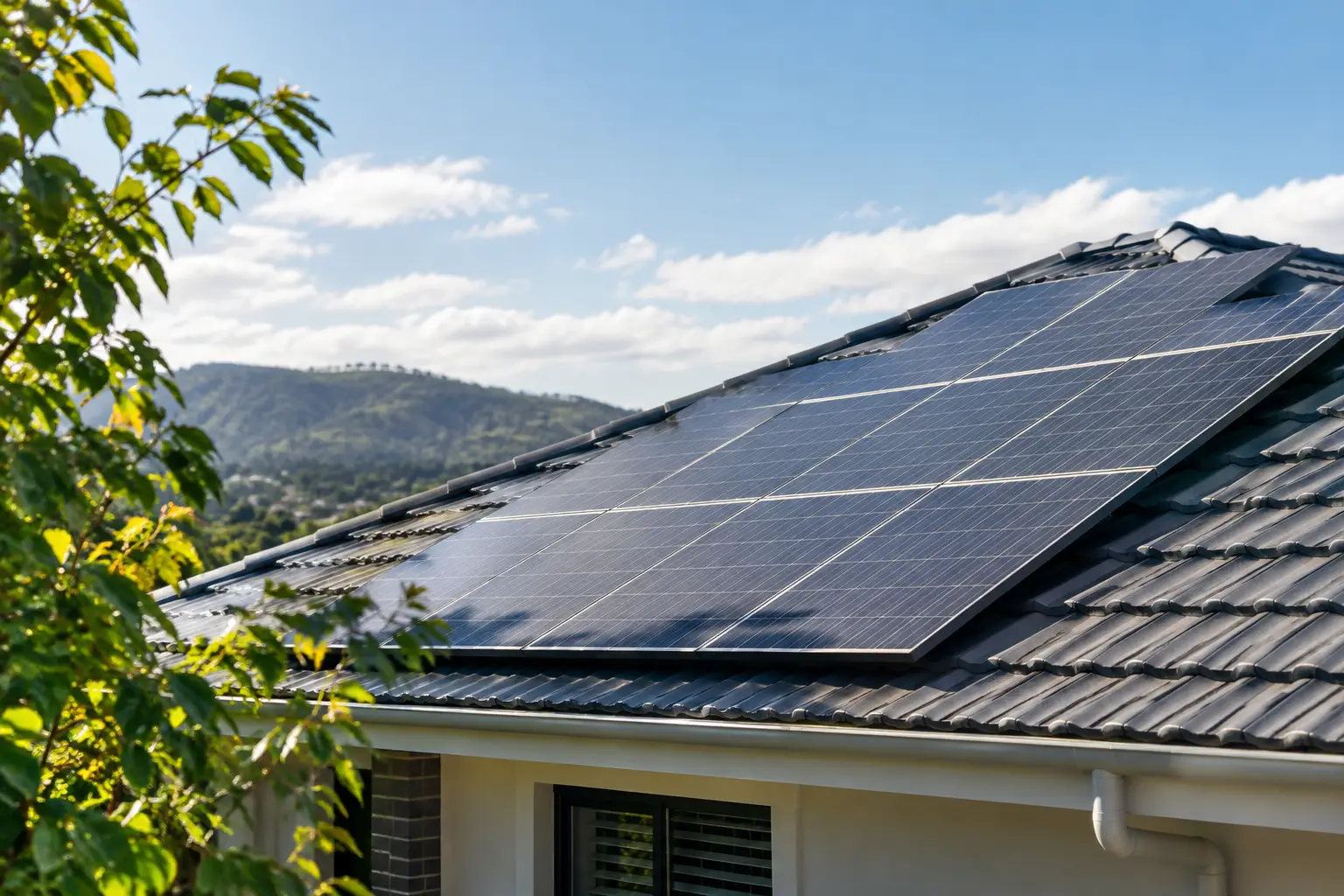
A tree that shades one corner of your roof at 3 pm can affect more than one panel. That is why choosing the best solar panels for shade is not simply about buying the highest-wattage module on the brochure. It is about designing a system that keeps producing useful power when your roof is not in full sun – and storing that power when it is most valuable.
For Australian homes and small businesses, partial shade is common. It can come from gum trees, neighbouring buildings, chimneys, vents, TV aerials or a second storey. The right equipment can reduce the impact, but no solar panel can generate at full capacity when it is shaded. A practical design starts with an honest assessment of where shade falls, when it occurs and how much usable roof area remains.
What makes shade difficult for solar panels?
Solar panels contain groups of solar cells connected together. When part of a panel is shaded, those cells produce less current. In a traditional string system, that weaker section can restrict the output of other panels connected in the same string, much like a narrowed section of pipe limits water flow.
Modern panels are much better at handling partial shade than older designs. Bypass diodes allow electricity to move around a shaded cell section, rather than bringing the whole panel to a standstill. Half-cut cell designs also split a panel into smaller electrical sections, which can limit the loss when shade covers only part of the module.
Still, the extent and timing of shade matters. Light, moving shade from leaves may cause only a modest reduction. A solid shadow across several panels for hours each day is a different design problem. This is why a quote based only on your electricity bill and roof size is not enough. Your installer should assess the site, including seasonal sun angles, before recommending a system size or layout.
Best solar panels for shade: features that matter
There is no single panel that is best for every shaded roof. The most suitable choice depends on the shade pattern, roof orientation, budget, electricity use and whether you plan to add a battery. However, several panel features are worth prioritising.
Half-cut cells and multiple bypass diodes
Panels with half-cut cells and well-designed bypass diode layouts are a sensible starting point for roofs with occasional partial shade. Because the panel is divided into smaller sections, shade over one area may have less effect than it would on a conventional full-cell design.
This does not mean a half-cut panel will solve heavy shading on its own. It means it provides a better foundation for a system designed to manage real-world conditions.
N-type cell technology
Many premium panels now use n-type cell technology, including TOPCon designs. These panels can offer strong efficiency, good performance in warm conditions and lower degradation over time compared with some older technologies.
For a shade-prone roof, efficiency helps you get more generation from limited clear roof space. It should not be confused with shade tolerance, though. A highly efficient panel still needs sunlight. The advantage is that each unshaded square metre can work harder, which may allow a better layout around obstructions.
A strong product warranty and Australian support
Shade adds complexity, so long-term reliability matters. Look beyond the headline wattage and consider the product warranty, performance warranty, manufacturer support in Australia and whether the panel is approved for use under relevant Australian programs.
A lower-priced panel can be a reasonable choice on a clear, simple roof. On a complex roof with limited usable space, investing in higher-quality equipment and better system design can offer more value over the life of the system.
Panels are only one part of the answer
On shaded roofs, the inverter architecture is often as important as the solar panel itself. This is where the difference between a basic system and a properly tailored energy system becomes clear.
A standard string inverter is often cost-effective for roofs with consistent sun exposure. Panels are grouped into strings, and the inverter converts their DC electricity into AC power for your property. If one panel is regularly shaded, it can reduce the performance of the string it belongs to.
Power optimisers and microinverters are designed to reduce this mismatch. An optimiser is fitted to individual panels, allowing panel-level performance management while still using a central inverter. A microinverter sits behind each panel and converts power at the panel itself. Both options can be useful where shade affects some panels but not others, or where roof sections face different directions.
They are not automatically the right answer for every property. They add equipment and cost, and the best option depends on the system layout, future battery plans and service access. For mild, short-duration shade, a carefully designed string layout may be enough. For multiple roof faces, recurring shade or a roof broken up by obstructions, panel-level electronics can protect more of your expected generation.
Start by reducing shade where practical
The cheapest kilowatt-hour is often the one you do not lose. Before choosing equipment, consider whether shading can be reduced safely and legally. Selective tree pruning, moving a satellite dish or avoiding a chimney shadow in the panel layout may improve output without adding technology.
Tree work needs to be handled responsibly. Large or protected trees may require council approval, and indiscriminate pruning is rarely a sensible solution. In many cases, the best approach is simply to place panels away from the most affected section of roof.
A good design may use fewer panels in a clearer area rather than filling every available space. This can feel counterintuitive, but panels that receive reliable sunlight generally deliver better value than panels installed in an area with regular heavy shade.
Why a battery can make a shaded system more valuable
Shade often changes when your solar power is produced, not just how much is produced. Your roof may receive good morning sun before a neighbouring building casts a shadow in the afternoon, or it may clear later in the day once the sun moves above nearby trees.
A solar battery helps you use more of the electricity your system does generate. Instead of exporting surplus energy for a lower feed-in tariff, you can store it and use it after sunset, during the evening peak or when your shaded roof is no longer producing strongly.
For households, that can mean running lights, appliances and selected circuits with more of your own stored solar energy. For small businesses, a battery can help reduce purchases from the grid during expensive operating hours. Depending on your retailer, battery system and local program availability, it may also support participation in a virtual power plant.
Battery size should match your actual generation profile and consumption, not an optimistic estimate based on an unshaded roof. Oversizing a battery for a heavily shaded system can leave capacity underused in winter. Conversely, a smaller battery paired with a realistic solar design may deliver a more sensible return.
How to compare quotes for a shaded roof
When comparing solar proposals, do not rely on the total panel capacity alone. A 10 kW system can perform very differently depending on orientation, shade, inverter setup and the quality of the design.
Ask each provider to explain which areas of roof are shaded, which panels are affected and how the system accounts for that loss. Request estimated annual generation, not just panel nameplates. It is also worth asking whether the design uses separate strings, optimisers or microinverters, and why that approach is recommended.
If you are considering a battery now or later, confirm that the inverter and switchboard arrangement supports the plan. Battery-ready can mean different things between providers. Clear documentation, appropriate warranties and a qualified installation team matter just as much as the equipment selection.
Government incentives and rebates can also affect the upfront cost, but eligibility and program rules can change. Professional help with paperwork and compliance reduces the risk of missed requirements or unexpected delays.
A better result comes from a site-specific design
The best solar outcome for a shaded property is rarely the biggest advertised system. It is the system that puts high-performing panels in the clearest positions, manages unavoidable shade intelligently and aligns generation with how you use energy.
At GridFree Solar, that means looking at solar, battery storage, monitoring and available rebate support as one connected solution. A detailed site assessment can turn a difficult roof into a system that still delivers worthwhile savings, greater control and dependable energy for years to come.