
A blackout changes the value of your energy system quickly. The lights are out, the fridge starts warming up and the garage door may not open. For households looking at the best blackout backup options, the real question is not simply what can produce electricity. It is what will keep the parts of your home that matter running safely, automatically and for long enough.
For most Australian homes, a battery connected to solar is the strongest long-term answer. But it is not the only option, and it is not always necessary to back up every appliance. The right choice depends on your outage risk, electricity use, budget and the level of comfort you want to maintain when the grid goes down.
What blackout backup actually means
Backup power is different from a solar system that reduces your daytime bills. Standard grid-connected solar panels are designed to shut down during a blackout. This safety requirement protects electricians and network workers from electricity flowing back into damaged lines.
To use solar power during an outage, your system needs the right inverter, battery and backup switching capability. The system isolates your property from the grid, then supplies selected circuits or, in some cases, the whole premises from stored energy and available solar generation.
That distinction matters. A home may have a large solar array and still have no power during a blackout. Before assuming an existing system can provide backup, have its inverter, switchboard and battery compatibility assessed by a qualified installer.
The best blackout backup options compared
Solar battery with essential-load backup
A home battery stores excess solar energy for use after sunset, during peak-price periods and through a grid outage. With essential-load backup, the battery powers a dedicated group of circuits, commonly lighting, the fridge, internet, selected power points, a garage door and possibly a small air conditioner.
This is the most practical option for many households. It provides automatic changeover when the grid fails, is quiet, requires little day-to-day attention and can recharge from your solar panels during daylight hours. It also delivers value when there is no blackout by reducing electricity bought from the grid.
The trade-off is that backup capacity needs to be planned. A battery with 10 kWh of usable storage may keep essential loads operating for many hours, or longer if solar production is available, but it will not support unrestricted use of high-demand appliances. Ovens, electric hot-water systems, ducted heating and multiple air conditioners can drain stored energy quickly.
Whole-home battery backup
Whole-home backup is designed to keep most or all household circuits running during an outage. It suits larger families, homes with medical equipment, properties in outage-prone areas and owners who want fewer compromises when the grid is unavailable.
The battery is only one part of the design. Your inverter must provide enough backup power, measured in kilowatts, to start and run your appliances. Storage capacity, measured in kilowatt-hours, determines how long those appliances can run. A system may have plenty of energy stored but still be unable to run several high-load appliances at once if its backup power output is too low.
Whole-home backup costs more because it often requires a larger battery, a capable hybrid inverter and more detailed switchboard work. It can be an excellent investment where resilience is a priority, but it should be based on real usage data rather than a promise that every appliance can run indefinitely.
Battery backup for critical circuits
Critical-circuit backup is a more focused version of essential-load backup. Instead of supplying a broad section of the house, it protects only the circuits you cannot reasonably do without, such as refrigeration, lighting, communications, security systems and a medical device.
This approach can reduce upfront cost while delivering meaningful protection. It is especially suitable for households that experience occasional short outages and want to preserve food, stay connected and maintain basic safety without sizing a battery around heavy heating or cooling loads.
A clear conversation about priorities is crucial. If your home office must operate, include the office circuits. If you rely on a bore pump, electric gate or sump pump, these need to be assessed for their starting load and added to the backup plan where practical.
Standby generator
A generator can provide substantial power for long outages, particularly on regional properties and small commercial sites. Petrol, diesel, LPG and natural-gas generators are available, with some systems designed to start automatically through a transfer switch.
Generators can be cost-effective where outages are infrequent but may last days. They can also handle loads that would require a very large battery system. However, they create noise, need regular servicing, rely on fuel availability and must be installed correctly to prevent dangerous back-feeding into the grid.
A portable generator should never be plugged into a household power point to energise the home. That is unsafe and illegal. If a generator is part of your backup plan, it needs a compliant changeover arrangement installed by a licensed electrician.
Portable power stations and UPS units
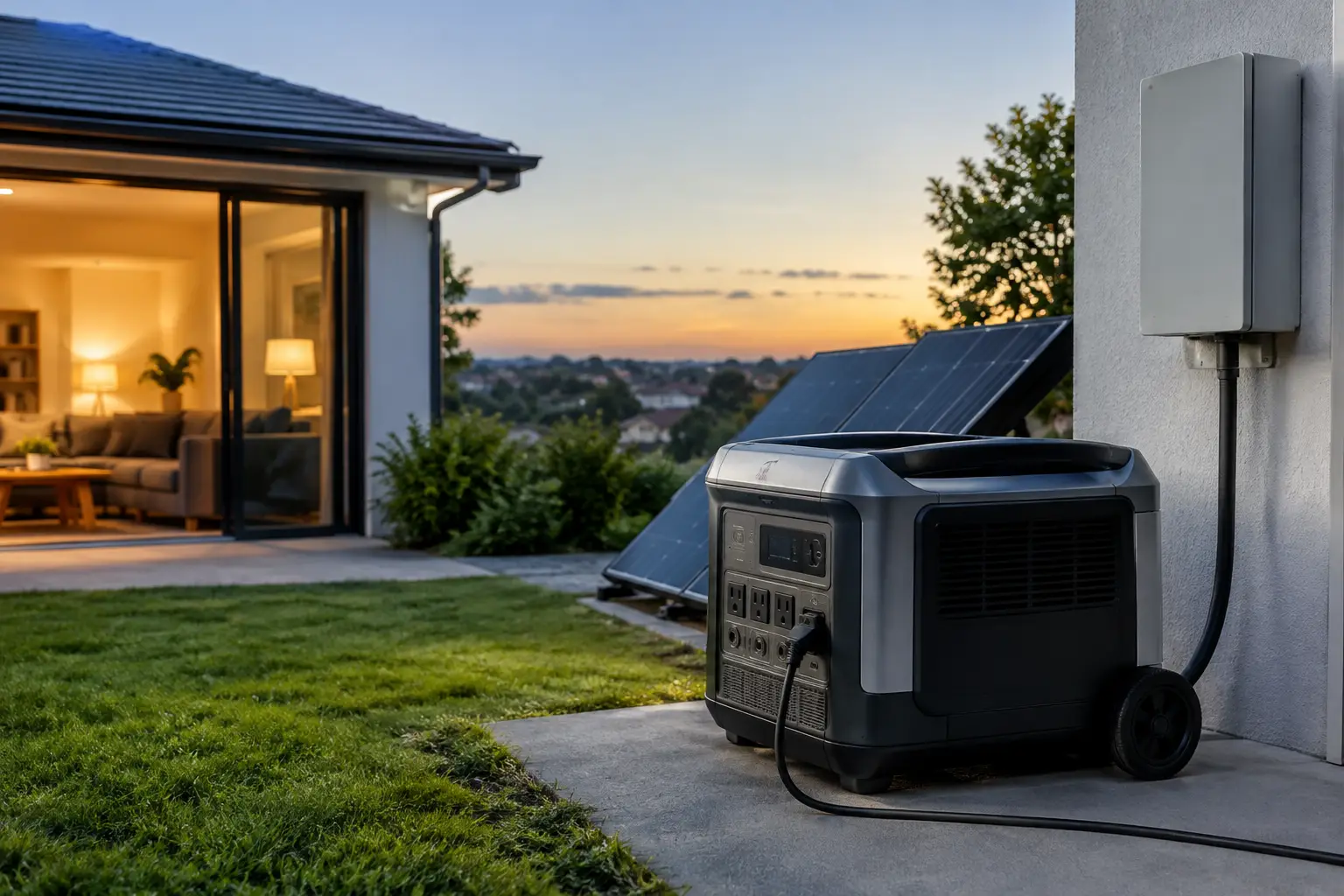
Portable battery power stations are useful for small, short-term loads. They can charge mobiles, run a modem, power a laptop or keep selected low-wattage equipment operating. An uninterruptible power supply, or UPS, can bridge a brief interruption for computers, networking equipment or security systems.
These products are convenient, but they are not substitutes for a properly integrated home battery. Their capacity is usually modest, they do not automatically power household circuits and they may not have the output needed for a refrigerator, pump or air conditioner. Think of them as a supplementary layer of resilience rather than whole-home blackout protection.
How to choose the right battery size
The best system starts with the loads you intend to back up, not a battery size picked from a brochure. List the appliances and circuits that must operate during an outage, estimate their energy use and decide how long you want to cover them.
A typical resilience plan might prioritise refrigeration, lights, Wi-Fi, phone charging, a television, garage access and a few kitchen power points. Add heating, cooling, pumps or medical equipment and the required capacity can rise sharply. Your installer should also account for appliance start-up surges, particularly for pumps, refrigerators and air conditioners.
Solar generation changes the equation. During a daytime outage, solar can replenish the battery and extend your autonomy significantly, provided the weather is favourable and your system is configured for off-grid operation. Overnight, during heavy cloud or through several days of poor weather, stored capacity becomes more important.
It is wise to discuss a reserve setting as well. Some homeowners keep a portion of their battery held back for blackouts. Others use more of it each evening to reduce bills and accept a lower reserve. There is no universal setting. It depends on local outage patterns and how much backup confidence you want.
Don’t overlook installation and compliance
Backup power is a system design issue, not just a battery purchase. Your switchboard may need upgrades, your chosen battery needs a suitable location and the inverter must meet current Australian standards and network requirements. Older solar systems can sometimes be upgraded, although compatibility varies by brand, model and installation age.
For small businesses, the design should also consider refrigeration, point-of-sale systems, internet, alarms, emergency lighting and equipment that must shut down safely. Losing power for two hours can have a very different impact on a home office, a café or a workshop.
A professional site assessment should explain exactly what will remain powered, what will not, how the system changes over during an outage and how long it is expected to run under realistic conditions. Clear answers here prevent disappointment later.
A practical path to energy independence
The best blackout backup options are the ones matched to the way you live or operate your business. A carefully sized battery with solar and essential-load backup gives many homes the best balance of savings, convenience and resilience. A larger whole-home system may be worthwhile where outages are common or uninterrupted power is critical, while a generator can make sense for remote locations and extended disruptions.
GridFree Solar can assess your current usage, solar production and backup priorities, then design a compliant system that supports both lower power bills and greater control when the grid is unavailable. The aim is simple: when the next outage arrives, you know exactly what your system will keep running.