Last Updated: November 6, 2026
Quick Summary
Professional solar panel cleaning removes dust, pollen, bird droppings and grime that block sunlight from reaching the solar cells, restoring lost output. It also works as an inspection, letting a trained technician spot cracks, chips, discolouration and hot spots that affect panel lifespan and warranty position.
- Soiling is the industry term for dirt build-up on the panel surface that quietly reduces output.
- Heavy dust, farmland or construction sites typically need cleaning every 3-6 months.
- Bird droppings are acidic and should be removed promptly rather than waited out.
- Never use a high-pressure washer, which can force water past panel seals and damage the junction box.
- Ask for a current certificate of public liability insurance before booking a cleaner.
Table of Contents
- What Professional Solar Panel Cleaning Actually Does for Your System
- DIY vs Professional Solar Panel Cleaning: What Each Really Involves
- Solar Panel Cleaning Safety: Roof Access, Working at Height and Electrical Risk
- What to Look for in a Solar Panel Cleaning Service
- Book a Cleaning and Inspection with GridFree Solar
- Frequently Asked Questions
What Professional Solar Panel Cleaning Actually Does for Your System
Professional solar panel cleaning removes the layer of dust, pollen, bird droppings and airborne grime that settles on the glass and blocks sunlight from reaching the solar cells underneath. Treated as a maintenance task with a measurable purpose, it is not merely cosmetic.
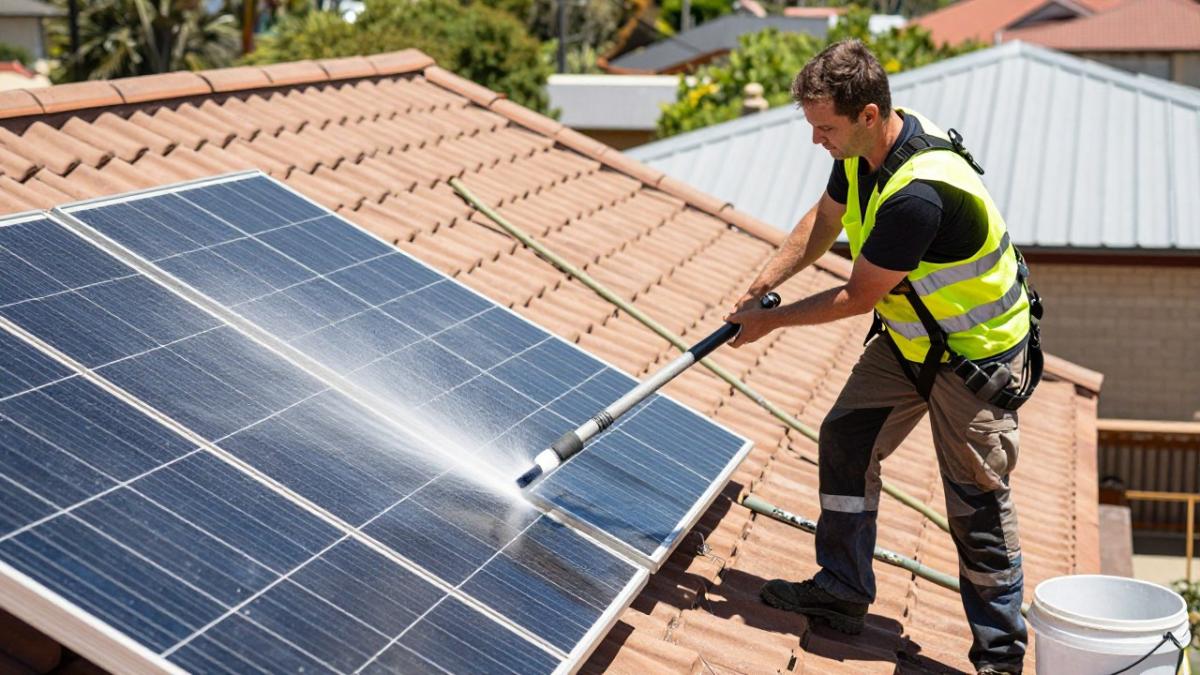
The physics is simple. Solar cells generate electricity from light that reaches the panel surface. When soiling builds up, less light gets through, and output drops. Rain helps, but it rarely clears everything. Dust baked on by a hot day, sticky pollen and droppings all resist a light shower.
(/solar-panel-cleaning-guide-australian-homes/) covers the practical detail.
DIY vs Professional Solar Panel Cleaning: What Each Really Involves
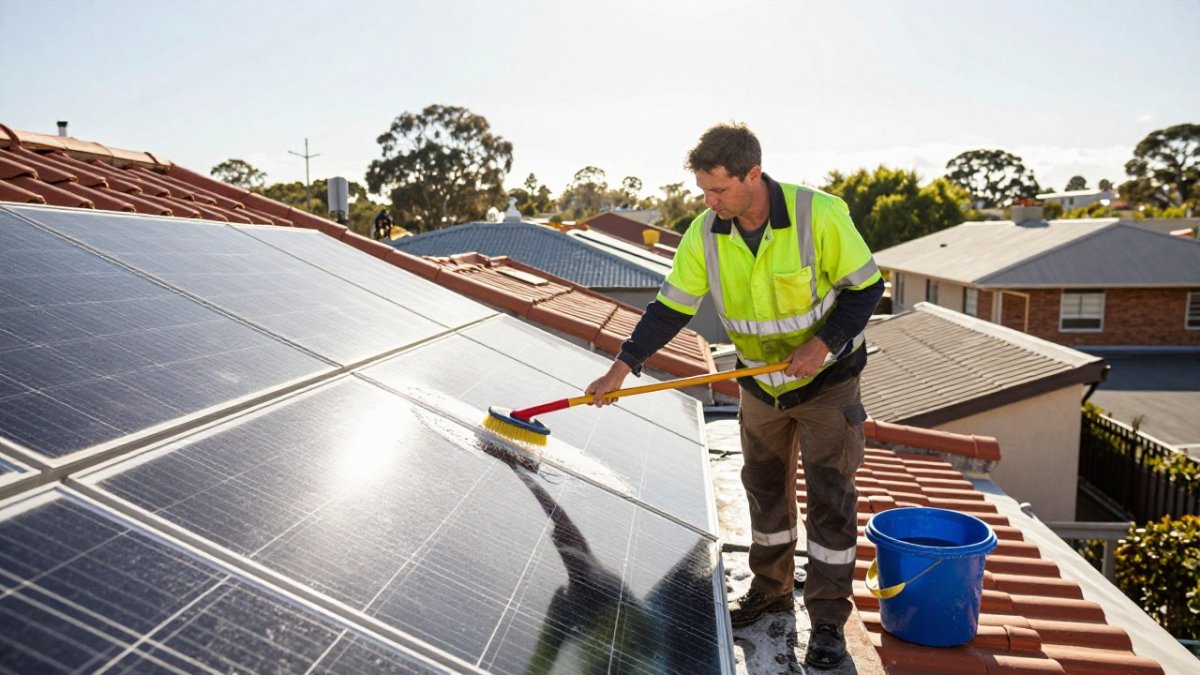
DIY solar panel cleaning is possible for ground-mounted or easily reached arrays, using soft brushes, plain water and no abrasive chemicals. Professional cleaning brings safe roof access, proper equipment and an inspection. The real difference is risk and what gets checked, not just who holds the hose.
A common mistake is scrubbing hot panels in full sun with a hard brush or a household detergent. That can scratch the glass coating or leave residue. Another is using a high-pressure washer, which can force water past the panel seals and damage the junction box.
If you are weighing whether to hire out the wider solar work too, our breakdown of whether professional solar installation is worth the cost makes the parallel case for professional handling.
Solar Panel Cleaning Safety: Roof Access, Working at Height and Electrical Risk
Cleaning solar panels safely means managing two hazards at once: working at height on a roof, and proximity to live electrical equipment. Panels generate DC electricity whenever light hits them, so they cannot simply be switched off at the isolator the way a normal appliance can.
Roof access is the bigger danger in practice. Falls from residential roofs cause serious injuries, and wet, sloping or fragile roof surfaces make them more likely. A professional cleaner uses fall protection, plans the access route and knows which roof surfaces will take weight.
Electrical risk is real but manageable with care:
- Do not spray water directly into junction boxes, connectors or the inverter
- Avoid cleaning damaged panels or exposed wiring
- Keep water away from the isolator and meter box
- Never stand on the panels themselves
For a fuller picture of the electrical side, our guide to solar inverter safety standards explains the requirements that sit behind a compliant system. Watch out: a homeowner cleaning a damaged panel with a hose can create a shock risk they never see coming.
What to Look for in a Solar Panel Cleaning Service
A good solar panel cleaning service should be insured, use the right equipment, and inspect the system as part of the job. Ask about fall protection, water type and whether they check output before and after. The cheapest quote is rarely the safest one, but the more useful question is how you verify any of this before someone climbs on your roof.
Most guides assert that professionals are safer. Fewer explain how to check. Here is a practical verification checklist you can work through before booking.
Insurance and working at height
- Ask for a certificate of currency for public liability insurance and confirm it is current. A verbal assurance is not enough.
- Ask how they manage working at height: harness, anchor points, roof access plan and whether they use a spotter or second person.
- Confirm they will not walk on the panels themselves, which can crack cells and void warranties.
Equipment and method
- Soft-bristled brushes and purified, deionised or filtered water for a spot-free finish.
- No high-pressure washers, which can force water past panel seals and into the junction box.
- No abrasive chemicals or harsh detergents that can scratch the glass coating or leave residue.
- A clear plan for how water is kept away from junction boxes, connectors, the isolator and the inverter.
Inspection and documentation
- A visual inspection of panels, mounting and cabling while on the roof, with any cracks, chips, discolouration or hot spots noted.
- A written report or photos of anything flagged, so you have a record for warranty or insurance purposes.
- Before-and-after output evidence where monitoring allows, rather than a verbal claim of improvement.
References and credentials
- Ask for references from similar roofs in your area, and check whether the business is accredited for the electrical work it touches.
- Confirm who actually attends the job, the business you booked or a subcontractor, and whether that person holds the relevant competence.
- Check that the provider follows manufacturer guidance for your panel brand, since some manufacturers specify cleaning methods and products.
Questions to ask before booking
- Can you provide a current certificate of public liability insurance?
- How do you manage fall protection and roof access?
- What water and brushes do you use, and do you use a pressure washer?
- Will you inspect the panels and provide a written report?
- Can you show before-and-after output where monitoring allows?
- Do you follow the panel manufacturer’s cleaning guidance?
- Who will attend the job, and what are their credentials?
Watch out: a provider who cannot produce an insurance certificate or describe a fall-protection plan is a risk to you as the homeowner as well as to themselves, because an injury on your roof can become your problem.
The same instincts that help you spot a reliable installer apply here. Our guide to choosing reliable solar companies covers the verification steps worth repeating for any trade on your roof.
Book a Cleaning and Inspection with GridFree Solar
A dirty array is a quiet drain on your returns, and a missed defect is a bigger one. The challenge is finding a cleaner who treats the job as maintenance and inspection rather than a quick scrub.
GridFree Solar is a CEC Accredited Installer and works to AS/NZS 5139:2019 and AS/NZS 3000 standards. We also provide expert rebate guidance to help homeowners make sense of their options.
Frequently Asked Questions
Does cleaning solar panels improve their performance?
Yes, when soiling is heavy enough to block sunlight. Dust, pollen, bird droppings and leaf litter reduce the light reaching the solar cells, which lowers energy output. The size of the gain depends on how dirty the panels are and how much rain has fallen. A professional clean restores the panel surface so more sunlight is absorbed, and an inspection at the same time can catch hot spots, cracks or discoloration that quietly drag down performance.
Is solar panel cleaning worth it, or should I wait for the rain?
Rain helps but does not remove everything. Bird droppings, baked-on dust and pollen tend to stick to the glass, and run-off from a dirty roof can leave a film behind. Solar panel cleaning is worth it when your panels are visibly soiled, your output has dropped, or your property sits near trees, farmland, a busy road or the coast. Compare the cleaning cost against the value of the energy you are losing, and ask for before-and-after readings so the result is measurable.
Can I clean solar panels myself?
You can, with limits. Use a soft brush, plain water and a mild detergent, work early morning or late afternoon when the glass is cool, and never stand on the panels. Avoid abrasive pads, high-pressure hoses and harsh chemicals, which can scratch the glass or damage seals and void warranty protection. The real risk is solar panel cleaning safety: roof access and working at height cause the majority of serious injuries, so if your array is steep, high or hard to reach, book a professional.
What should I look for in a solar panel cleaning service?
Look for a provider that uses deionised water and soft brushes, carries public liability insurance, and follows safe working-at-height practices. Ask whether they inspect the system as part of the visit and provide before-and-after photos or performance readings.
