
Last Updated: November 26, 2026
Quick Summary
Choosing a certified small wind turbine installer means verifying three things before you sign: current Clean Energy Council accreditation, the electrical licence required for the work, and insurance covering the installation. Check each credential against the public register or state regulator, and insist the numbers appear in the contract.
- Verification takes about fifteen minutes and is your single best protection against an unqualified installer.
- No quote is meaningful until a site assessment measures or models wind at hub height.
- Ask every installer the same questions in writing and compare the answers side by side.
- Total installed cost matters more than the headline turbine price when comparing quotes.
- Keep any pre-assessment payment small and refundable until the site is confirmed suitable.
Table of Contents
- How do I choose a certified small wind turbine installer?
- What small wind turbine installer qualifications should you look for
- Why a small wind turbine site assessment matters before you sign
- Questions to ask a wind turbine installer before hiring
- Small wind turbine installation cost: what drives the quote
- Red flags, contract protections and post-installation checks
- Book your site assessment with GridFree Solar
- Frequently Asked Questions
How do I choose a certified small wind turbine installer?
Choosing a certified small wind turbine installer means verifying three things before you sign: current Clean Energy Council accreditation, the electrical licence required for the work, and insurance covering the installation. A small wind turbine is a structural and electrical asset, and the person who bolts it to your property carries real liability. This guide walks through the checks that separate a qualified installer from a persuasive one.
A turbine tower is load-bearing, wiring must meet Australian standards, and grid connection needs network distributor approval.
Accreditation, licensing and insurance are three separate checks, and an installer can hold one without the others.
What small wind turbine installer qualifications should you look for
Look for current Clean Energy Council accreditation, an unrestricted electrical licence held by the person doing the wiring, and professional indemnity plus public liability insurance. Those three cover the design, the electrical work and the financial risk.
Accreditation, licensing and insurance
Installer accreditation is formal recognition that a tradesperson has met the training and competency requirements for renewable energy work.
Electrical work must be carried out by a licensed electrician with an unrestricted licence for the scope of the job.
Professional indemnity covers design errors; public liability covers damage or injury on site. Ask for certificates of currency, not a verbal assurance.
How to verify credentials step by step
Verification takes about fifteen minutes and is your single best protection. Work through it in this order:
- Ask for the accreditation number and check it on the Clean Energy Council’s public register
- Confirm the accreditation is current and covers small wind systems
- Request the electrician’s licence number and check it with your state’s electrical regulator
- Ask for certificates of currency for professional indemnity and public liability
- Confirm the business name on the insurance matches the business quoting you
- Check the company’s ABN and trading history
For a deeper walkthrough of the accreditation side, see our guide on how to choose CEC accredited installers. For a state-specific process, see how to check a solar installer’s accreditation in Victoria.
Clean Energy Council accredited installer register
Why a small wind turbine site assessment matters before you sign
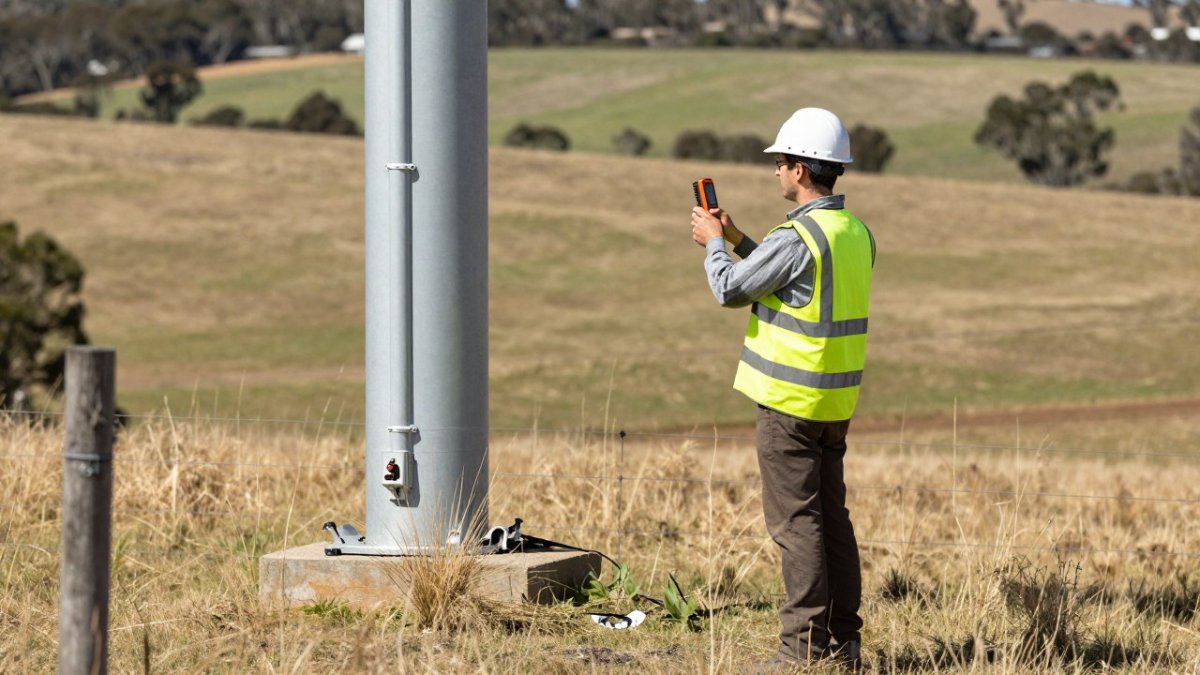
A site assessment determines whether a small wind turbine will actually produce useful power on your property. Wind resource varies enormously over short distances, and a site that looks breezy at ground level may be turbulent and unreliable at hub height. No quote is meaningful until the assessment is done.
What a proper site assessment covers
A thorough assessment covers the following:
- Wind speed and consistency measured or modelled at the proposed hub height
- Turbulence from trees, buildings and terrain, which shortens turbine life
- Tower height and siting, including clearance from boundaries and structures
A common mistake is accepting an installer’s estimate without any measurement or modelled data at hub height. Ask what data the assessment used.
Questions to ask a wind turbine installer before hiring
Ask every installer the same questions and compare answers side by side.
Work through the questions in four groups. The first establishes whether they are allowed to do the work at all.
- What accreditation and licence numbers will appear on the contract?
- Who performs the electrical work, and are they licensed?
- Can you show certificates of currency for professional indemnity and public liability?
The second group tests whether the design is grounded in your site rather than a template.
- What wind data did you use to size this system, and at what hub height?
- What tower height are you proposing, and why that height?
- What turbulence exposure did you account for from trees, buildings and terrain?
The third group covers approvals and grid connection, where timelines and costs hide.
- Who lodges the planning application and the grid connection request?
- What council overlays or setbacks apply to my title, and have you checked them?
- What is the expected timeline for approvals, and what happens to my deposit if approval is refused?
The fourth group is about what happens after the installers leave.
- What does the warranty cover, and who honours it if you stop trading?
- What is the maintenance schedule, what does each service cost, and what is your response time for a fault?
- What commissioning tests and documentation will I receive at handover?
- What happens if the turbine underperforms the predicted yield in the first year?
That last cluster is the one most homeowners forget.
Score each installer against the same questions and keep the written answers. Our questions to ask a solar installer checklist follows the same structure.
Small wind turbine installation cost: what drives the quote
Installation cost depends on tower height, foundation requirements, distance to the connection point, and whether planning approval is needed. Two properties buying the same turbine can receive very different quotes for legitimate reasons. The mistake is comparing totals without comparing scope.
Comparing quotes and total installed cost
Total installed cost is the number that matters, not the headline turbine price. Build a comparison across every quote you receive:
| Quote item | What to check | Why it changes the total |
|---|---|---|
| Turbine and tower | Model, rated output, tower height | Taller towers cost more but capture better wind |
| Foundations | Engineered design, excavation, concrete | Soil and rock conditions vary widely |
| Electrical works | Cable runs, inverter, switchboard | Distance to the connection point drives cost |
| Approvals | Planning application, grid connection | Fees and consultant time add up |
| Commissioning | Testing, documentation, handover | Some quotes omit this entirely |
| Maintenance | First service, ongoing schedule | Unpriced servicing is a hidden cost |
| Contingency | Allowance for site surprises | Quotes with zero contingency often grow |
Ask each installer to break their quote into these lines. A quote that cannot be broken down is a quote you cannot compare. Our solar quote comparison guide sets out a structured method.
Rebates and incentives can reduce the upfront figure, and eligibility rules change. Ask the installer to state in writing which incentives they have applied and what happens if eligibility falls through.
Red flags, contract protections and post-installation checks
The warning signs cluster around pressure and vagueness. An installer who pushes for a same-day deposit, refuses to put accreditation numbers in the contract, or cannot explain the wind data behind their sizing is telling you something. Recognise the pattern early, then lock the important commitments into the contract.
Red flags to walk away from
Most problems that surface after a deposit is paid were visible in the proposal. The common patterns are:
- Pressure to sign on the day. A legitimate installer can survive you taking a week to compare quotes. A same-day discount that expires at midnight is a sales tactic, not an engineering one.
- No site assessment before quoting. A quote issued without a site visit or modelled wind data is a guess dressed up as a proposal.
- Credentials that cannot be verified. If the accreditation number does not appear on the public register, or the electrician’s licence cannot be checked with the state regulator, stop.
- Rated output presented as yield. A turbine’s nameplate capacity is not what it will generate on your site.
Watch out: paying a large deposit before any site assessment has been completed leaves you with almost no leverage if the assessment later finds the site unsuitable. Keep any pre-assessment payment small and refundable.
Contract protections worth insisting on
The contract is where verbal assurances either become enforceable or evaporate. Insist on the following terms before you sign:
- Credentials in the contract. Accreditation and licence numbers written into the contract, not just shown to you on a phone.
- A defined scope. Every item in the quote breakdown listed explicitly, including what is excluded, so variations are visible rather than assumed.
- Staged payments. Payment tied to milestones such as site assessment, delivery, commissioning and handover, rather than front-loaded deposits.
- A commissioning report at handover. A written record of the tests performed, the settings applied and the measured output at handover.
If an installer resists putting these terms in writing, that resistance is itself information. Domestic building contracts may set out cooling-off periods and deposit limits, so ask which contract an installer proposes to use and read it before signing. For a broader protection checklist, see our guide on avoiding solar scams in Victoria.
Post-installation commissioning and performance verification
Commissioning is the step that proves the system works, and it is where a qualified installer separates from a crew that simply leaves. At handover, ask for and check:
- The commissioning report, including the tests performed, the inverter or controller settings, and the measured output at the time of commissioning.
- The electrical safety certificate, issued for the electrical work performed.
- The as-built documentation, including the single-line diagram, equipment manuals and warranty registrations.
- A monitoring handover, showing you how to read the system’s output and what normal performance looks like across seasons.
Then compare the first months of performance data against the predicted yield. Seasonal variation means a short window is not conclusive, but a consistent shortfall against the stated assumptions is worth raising while the installer still has an active obligation to you. Ask how they handle a performance shortfall: whether they re-check the wind data, inspect for turbulence or shading, or adjust the tower or siting.
Victorian Building Authority on domestic building contracts
Australian Energy Regulator on embedded generation connections
Book your site assessment with GridFree Solar
At GridFree Solar, our CEC accredited installers work to AS/NZS 5139:2019 and AS/NZS 3000. We offer expert rebate guidance and maintenance and smart monitoring support after installation.
Frequently Asked Questions
What qualifications should a small wind turbine installer have?
A qualified installer should hold a current electrical licence for the work being done, relevant accreditation for small wind systems, and professional indemnity insurance. They should also be able to show manufacturer certification for the turbine model they are proposing. Ask for the licence number and accreditation details, then verify them with the issuing body rather than relying on a logo on a quote. Experience with small wind turbine site assessment and grid connection is just as important as paperwork.
How can I check whether a wind turbine installer is certified?
Ask for the installer’s accreditation number and electrical licence number, then confirm them directly with the relevant Australian regulator or accreditation body. Check that the certification covers small wind turbine work, not just solar panels. Request a certificate of currency for professional indemnity insurance and confirm the policy is current. A reputable installer will provide these without hesitation. If they cannot produce verifiable credentials, treat that as a warning sign and look elsewhere.
Do I need council approval to install a small wind turbine?
It depends on your local council and the turbine’s height and location. Many small wind turbine installations require planning approval, and some may need building approval as well. Before signing a contract, ask your installer whether they will handle the planning application or whether it sits with you. A thorough small wind turbine site assessment should flag any local planning, building or zoning requirements early, so you are not surprised by refused permits after paying a deposit.
What should a small wind turbine installation quote include?
A complete quote should list the turbine and tower model, foundation and civil works, electrical connection and grid connection costs, planning or permit fees, commissioning, and any applicable rebates or small-scale technology certificates. Ask whether maintenance and warranty terms are included and for how long. Small wind turbine installation cost varies with tower height, site access and grid distance, so compare total installed cost rather than the headline turbine price. Get everything in writing before you commit.
