
Last Updated: November 17, 2026
Quick Summary
Most residential solar systems need only light, periodic solar maintenance: a visual check a few times a year, a monthly look at monitoring data, and a professional service every few years. Skipping it lets dust, shading and unnoticed faults quietly reduce output.
- Inspect panels from the ground monthly and clean only when a visible haze or bird droppings build up.
- Use plain water or a non-abrasive cleaner with a telescopic soft-bristle brush; never use high-pressure jets.
- Never walk on panels or climb onto the roof; leave roof access to a qualified installer.
- Check the inverter display or app for error codes weekly and keep its vents clear of debris.
- Keep records of cleaning and servicing, since many warranties assume the system has been looked after.
Table of Contents
- Do Residential Solar Systems Need Regular Maintenance?
- How Often to Clean Solar Panels and the Safe Way to Do It
- Solar Panel Maintenance Checklist: Visual Inspections and Shade Checks
- Solar Inverter Maintenance and Battery Checks
- Using a Solar Panel Monitoring App to Catch Problems Early
- Troubleshooting Low Energy Production and Maintenance Costs
- Booking Your Next System Check with GridFree Solar
- Frequently Asked Questions
Do Residential Solar Systems Need Regular Maintenance?
Most residential solar systems in Australia need only light, periodic upkeep, but skipping regular solar maintenance can quietly cost you output. Dust, pollen, bird droppings and shading all reduce what your panels generate, and a fault left unnoticed can keep a system underperforming for months.
The good news is that routine care is simple. A visual check a few times a year, a look at your monitoring data each month and a professional service every few years cover most of what a healthy system needs. Solar panels are built to last decades, but their performance depends on the components around them, including the inverter, cabling and battery where you have one.
Maintenance also protects your warranty position. Many panel and inverter warranties assume the system has been looked after, so keeping records of cleaning and servicing as part of your solar maintenance is worth the effort.
How Often to Clean Solar Panels and the Safe Way to Do It
Cleaning frequency depends on where you live and what falls on your roof. In most coastal or suburban areas, panels stay reasonably clean with rain alone and may need a manual clean only once or twice a year. In dusty inland regions, near unpaved roads, or downwind of agricultural activity, grime can build up every few weeks during dry spells. After a dust storm, bushfire ash event, or a long stretch without rain, check the array and clean if a visible film has formed. Bird droppings are the exception: they are acidic and can stain glass, so remove them promptly rather than waiting for the next scheduled clean.
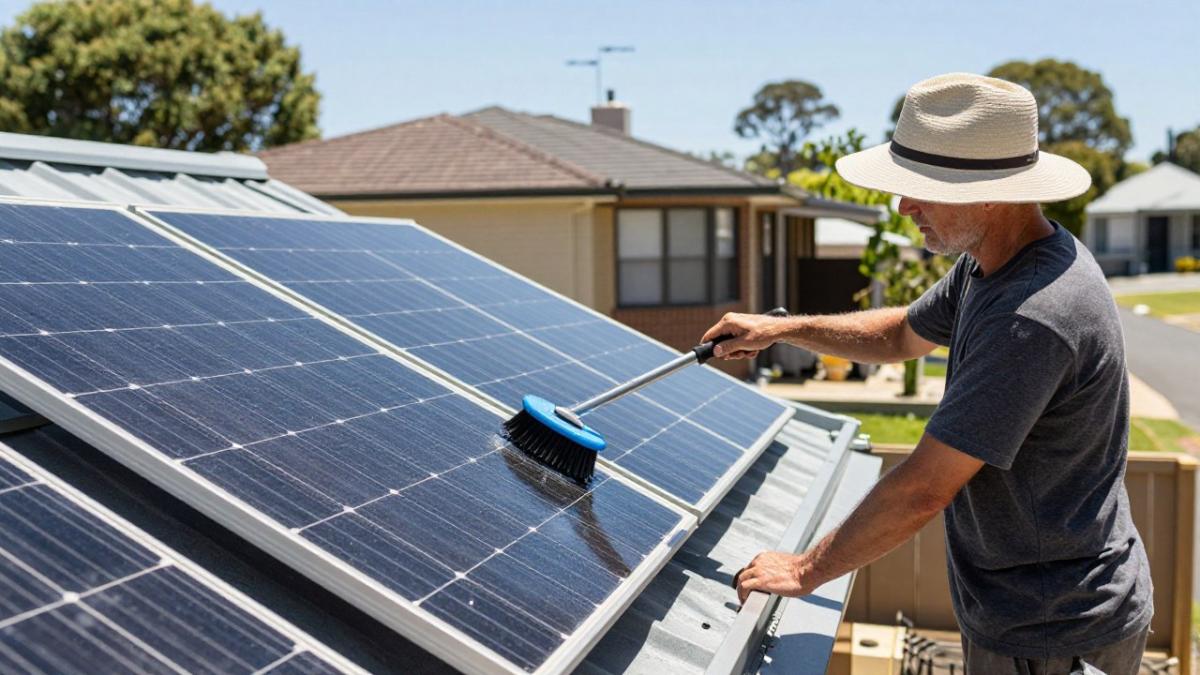
A practical rule is to inspect from the ground monthly and clean when you can see a dull haze or droppings from a safe vantage point. Rain does much of the work in many areas, so avoid over-cleaning; every roof trip carries risk.
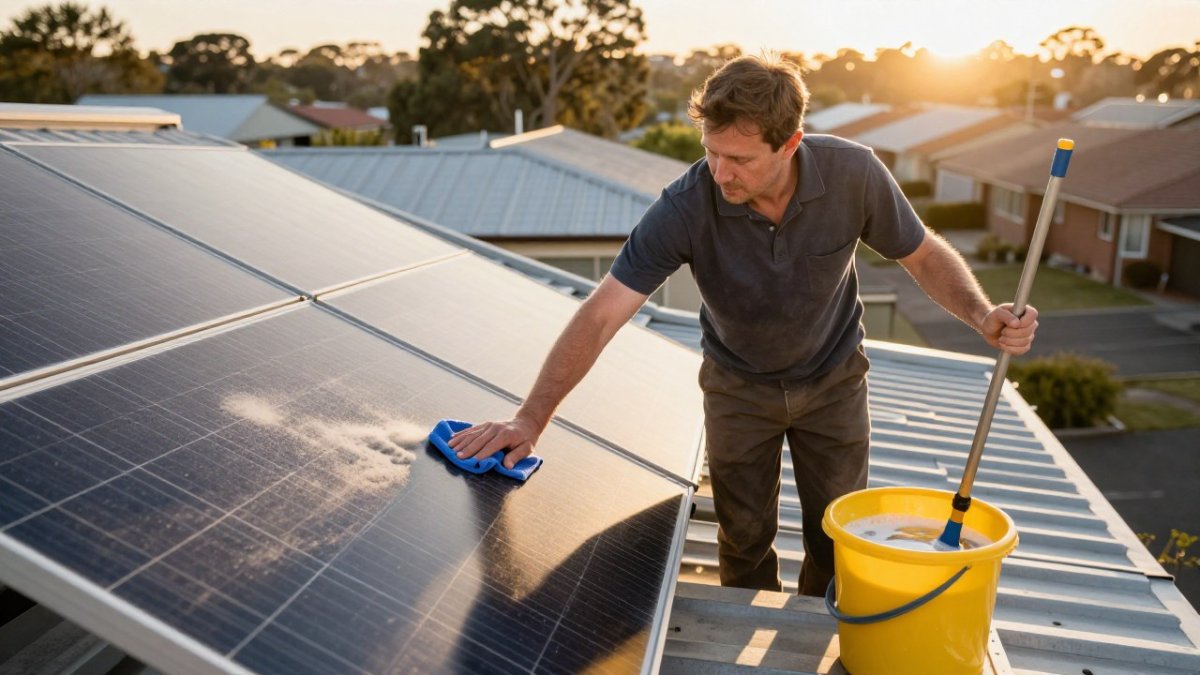
For the cleaning itself, stay on the ground wherever possible. A telescopic soft-bristle brush with a garden hose reaches most single-storey arrays without climbing. Use plain water or a non-abrasive panel cleaner, never high-pressure jets, abrasive pads, or harsh detergents. Clean in the cooler parts of the day so water does not evaporate and leave spots. If you use a ladder, keep three points of contact, have someone spot you, and never lean it against the panels or guttering. Keeping gutters clear of debris also helps prevent dirt and runoff from reaching the panels, making Narrandera Gutter Cleaning a useful part of a broader solar maintenance routine.
Watch out: Never walk on panels or work on the roof in wet, windy, or hot conditions. If your array is on a two-storey roof, steep pitch, or tiled surface, or if you need to remove heavy debris, that is a job for a professional. Roof access and any work near the array’s wiring or isolators must be left to a qualified installer or licensed electrician.
Regional differences matter. Coastal salt spray can leave a film that plain rain does not remove, so a fresh-water rinse every few months helps. In areas with heavy pollen, clean after the main flowering season. Where snow or frost is possible, never chip ice off panels; let it melt naturally and check for damage afterwards. If you have a battery, keep its vents and surrounding area clear of leaves and debris at the same time.
Read the full guide here: solar panel cleaning guide for Australian homes.
Solar Panel Maintenance Checklist: Visual Inspections and Shade Checks
A short visual inspection catches many problems early. From the ground with binoculars, or from a safe vantage point, look for cracked glass, discoloured or bubbling panels, loose mounting and any corrosion on frames and brackets.
Check for shade changes too. Trees grow, and a branch that was clear three years ago may now cast a shadow across the array during the morning or afternoon. A small amount of shading on one panel can reduce output from the whole string, so trim branches before they become a problem.
Watch out: do not climb onto the roof to inspect panels. Falls are a serious risk, and a qualified installer can do this work safely.
A full homeowner safety inspection checklist covers the rest: homeowner safety inspection checklist. For properties with heavy tree cover, see solar panel maintenance tips under tree cover.
The main checks a homeowner can carry out safely from the ground are summarised below.
| Check | How often | Watch for |
|---|---|---|
| Visual inspection from the ground | Regularly, with binoculars or from a safe spot | Cracked glass, discoloured or bubbling panels, loose mounting, corrosion |
| Shade check | Periodically | Branches that now shade the array in morning or afternoon |
| Roof access | Only by a qualified installer | Never climb onto the roof to inspect panels |
Solar Inverter Maintenance and Battery Checks
The inverter is the hardest-working component in the system and the most likely to fail first. Check its display or app for error codes weekly, keep the unit clear of dust, and ensure its vents are not blocked by leaves, stored items, or overgrown plants. Inverters are usually mounted in shaded, ventilated spots, but heat and dust still build up over time. If the unit is in a garage or shed, confirm the space stays well ventilated in summer.
Keep the serial number, installation date, and service records handy; warranty claims usually require proof of professional installation and maintenance. If the inverter is more than eight years old and production has gradually declined, ask a professional to assess whether a replacement is more economical than a repair.
If you have a battery, check its status through the monitoring app and note any drop in stored capacity. A healthy battery should hold a predictable amount of energy overnight, and a sudden fall in usable capacity or error alerts warrant a professional check. Keep the battery enclosure clear of clutter and ensure vents are unobstructed. Battery maintenance beyond app checks and visual inspection should be left to a licensed electrician or the manufacturer’s accredited installer.
Monitoring and communications are part of whole-system maintenance. If your inverter or battery stops reporting to the app, check the home internet connection and the unit’s Wi-Fi or ethernet link before assuming a fault. Many monitoring gaps are caused by a router restart, a changed password, or a weak signal, not by the solar equipment itself. Reconnecting the system to the network is usually a homeowner-safe task; opening the inverter or battery enclosure is not.
Watch out: Electrical work on the inverter, isolator, or wiring should be left to a licensed electrician. Repairs that touch the internal circuitry or the grid connection should be handled by a qualified professional. Do not open the inverter or battery casing, and do not attempt to reset a fault by switching the isolators unless the manufacturer’s instructions explicitly say it is safe to do so.
GridFree Solar offers battery upgrade and replacement services, and you can read about battery costs, sizing, and choices in the Melbourne solar battery guide.
Using a Solar Panel Monitoring App to Catch Problems Early
A monitoring app is the most practical way to spot underperformance between visits. Most inverters and batteries connect to a cloud platform that tracks production, consumption and grid exchange in near real time.
Make a habit of checking the daily production figure. A sudden drop on a sunny day points to a fault, shading or dirt, while a gradual decline over months can signal ageing or a developing problem. Set alerts where the platform offers them so you hear about faults promptly.
Troubleshooting Low Energy Production and Maintenance Costs
When production drops, work through the likely causes in order: check for shading, look for dirt or debris, review the inverter for error messages and confirm the grid connection is stable. Many dips are temporary and resolve after rain or a clean.
If the cause is not obvious, contact a professional. Pricing for a professional service depends on the provider and system size. For current pricing and what a service involves, contact GridFree Solar for a quote.
Watch out: resist the urge to replace panels or inverters before a professional diagnosis. Many “faults” turn out to be shading, a loose connection or a setting that can be corrected.
Booking Your Next System Check with GridFree Solar
Regular care keeps your system working as designed, and a professional check gives you confidence that it is safe and compliant. GridFree Solar can help you check your system, and you can contact us for details. Book a system health check to find out where your system stands today.
Frequently Asked Questions
How often should residential solar panels be cleaned?
Most residential panels only need cleaning two to four times a year, or after a long dry spell or heavy dust or pollen season. In many parts of Victoria, rain does much of the work, but it does not remove bird droppings, sticky sap or caked-on dirt. Check the panels visually each season and clean only when you can see clear buildup. Avoid cleaning during the hottest part of the day, because cold water on hot glass can cause thermal stress. If your panels are hard to reach, a telescopic brush with a soft head from a hardware store can handle light cleaning from the ground.
Can I clean solar panels myself?
Yes, for ground-accessible panels, cleaning with a soft brush and clean water is a reasonable DIY task. Use water with a soft brush or a non-abrasive panel cleaning solution, and never use a pressure washer, abrasive pads or harsh detergents, which can scratch the glass or damage the coating. Do not walk on the panels or climb onto a roof without proper fall protection and training. If the array is on a steep or multi-storey roof, or you are unsure about roof access, book a qualified professional instead. Stop immediately if you notice exposed cabling, burning smells or sparking.
How can I tell if my solar system is underperforming?
Compare your daily generation on the monitoring app with similar sunny days over previous months, rather than judging by your power bill alone. A sustained drop without a change in weather or shading usually points to a fault, dirty panels, a failed string or an inverter problem. Shade from new tree growth is a common cause, so check for it at different times of day. If the output stays low after cleaning and clearing shade, arrange a professional inspection, since electrical faults should not be diagnosed by a homeowner.
