
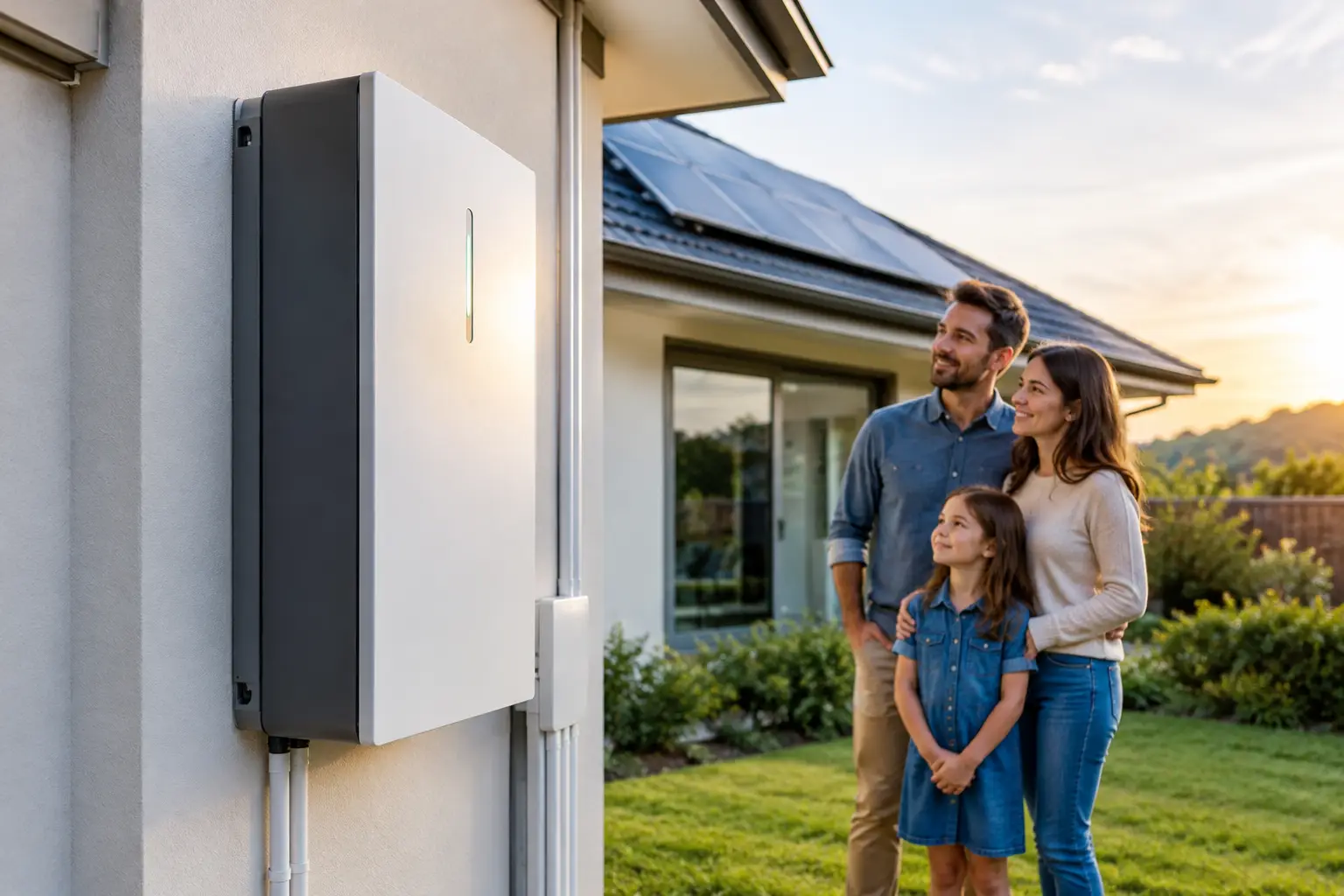
A home battery can keep essential appliances running through an outage, store more of your solar generation and reduce the power you buy at peak rates. But those benefits rely on the system being designed, installed and maintained properly. This residential battery safety guide explains what Australian homeowners should expect from a safe battery installation – and the simple steps that protect your household over the long term.
Safety starts before the battery is installed
Most household batteries use lithium-ion chemistry. They are highly effective energy storage systems, but they contain a significant amount of electrical energy in a compact enclosure. Safety is not a matter of selecting a battery with the biggest capacity. It starts with choosing suitable equipment, a compliant location and an installer who understands how the entire solar, battery and switchboard system will operate together.
A quality installer will assess more than your electricity bill. They should inspect the proposed battery location, existing switchboard, cable routes, solar inverter, access for emergency services and the way your household uses power. They should also explain whether your chosen battery can support backup power, which circuits will remain available during an outage, and any limits on high-demand appliances such as ducted air conditioning, ovens or pool pumps.
For Australian homes, battery systems must be installed to applicable electrical and battery installation requirements, including AS/NZS 5139 where relevant. Your installer should provide compliance documentation, product manuals, shutdown information and clear instructions for using the monitoring app. If a quote is vague about the battery location, switchboard work or safety equipment, ask for detail before you proceed.
Choose the location carefully
The right location varies by property and battery model. A garage, external wall or purpose-built utility area may be suitable, provided it meets the manufacturer’s requirements and relevant standards. The goal is to protect the equipment while keeping people, vehicles and combustible materials away from it.
Batteries should not obstruct an exit route or be installed where they could be struck by a car. They also need appropriate clearances from windows, doors, vents and other building features. Do not assume an enclosed cupboard is safer because it keeps the battery out of sight. Some battery systems require specific ventilation or spacing, and every model has its own installation instructions.
Australian conditions add another layer of planning. In bushfire-prone areas, system placement and protection need careful consideration. In flood-prone locations, equipment should be positioned to reduce water exposure. Coastal homes may need extra attention to corrosion resistance, while a west-facing wall with intense afternoon sun may not be appropriate unless the battery is rated and protected for those conditions.
A residential battery safety guide for installation day
Installation day is when design becomes a working energy system. A certified installer should isolate power when required, install approved protection devices, complete the electrical connections, configure the battery and test its operation. This is not a job for a handy homeowner or an electrician without battery storage experience.
The installer should also commission the monitoring platform. This matters for safety as much as savings. Monitoring can show battery state of charge, solar production, grid imports and exports, faults, and unusual performance changes. It gives you an early warning when something is not operating as expected.
Before the team leaves, ask them to show you the key parts of the system. You should know where the battery isolator and main switchboard are located, what happens during a blackout, how to identify an alert in the app, and who to call for support. Keep the shutdown procedure somewhere accessible, but do not attach paperwork directly to the battery or cover warning labels.
For homes with solar panels, a battery upgrade may require changes to the inverter, switchboard or export settings. The cheapest way to add storage is not always the safest or best-performing option. A well-matched system may cost more upfront, but it can deliver clearer backup capability, more useful battery capacity and fewer compromises later.
Everyday battery safety is mostly about awareness
Once installed, a modern battery should run quietly in the background. You do not need to inspect it every day or understand every number on the app. You do need to notice changes and avoid interfering with the system.
Keep the area around the battery clear. Do not stack paint tins, cardboard boxes, petrol containers, tools, garden chemicals or rubbish against it. Avoid hanging items from cables or using the battery enclosure as a shelf. If the battery is in a garage, make sure bikes, storage racks and vehicles cannot knock into it.
Check the monitoring app from time to time, particularly after a storm, outage or electrical work at the property. A sudden loss of battery communication, repeated fault messages, unexplained shutdowns or a major drop in stored energy should be investigated by your installer or the manufacturer’s authorised support team.
Physical warning signs require a faster response. Contact your installer if you notice unusual heat, swelling, cracking, leaking, discolouration, strong odours, buzzing or popping sounds around the battery. Do not open panels, remove covers or attempt to reset internal components yourself. Battery systems contain live electrical parts even when they appear inactive.
Keep firmware and monitoring active
Battery software controls charging, discharging, temperature management and communication with your solar system. Manufacturers may issue firmware updates to improve performance, fix faults or maintain compatibility with network and virtual power plant programs.
Where your system supports remote updates, keep the mobile app connected and ensure your installer has current contact details. If you participate in a virtual power plant, ask how dispatch events work, what reserve level is kept for your home, and whether you can change your backup preferences. Smart controls can improve returns, but you should understand the settings rather than treating them as invisible.
Prepare your household for a fault or fire
Battery incidents are uncommon when approved equipment is correctly installed, but a plan removes uncertainty when something does go wrong. Every adult in the home should know not to touch a damaged battery, exposed cables or a system affected by floodwater.
If you see smoke, flames, hear loud venting noises or suspect a battery fire, move people away from the area immediately and call 000. Tell emergency services that a lithium-ion home battery is involved. Do not try to dismantle the system or put yourself at risk to reach an isolator. Follow any emergency instructions supplied for your specific battery, but prioritise evacuation and keep a safe distance.
Working smoke alarms remain essential. Consider whether alarms near the battery location, as permitted by their installation guidance, will alert occupants quickly without causing nuisance alarms. Your electrician or fire safety professional can advise on the right approach for the building.
After a major storm, flood, impact from a vehicle, or nearby fire, arrange a professional inspection before returning the battery to normal operation. Damage may not be visible from the outside. If floodwater has reached electrical equipment, do not touch it until a qualified professional confirms it is safe.
Protect safety through professional maintenance
Home batteries are generally low-maintenance, but low-maintenance does not mean no maintenance. Periodic professional checks can identify loose connections, corrosion, damaged conduits, pest activity or issues with the surrounding solar and switchboard equipment. The right frequency depends on the battery model, site conditions, warranty requirements and age of the system.
Keep your purchase records, installation certificate, warranty details and service history together. It is also sensible to tell your home insurer that you have installed battery storage and confirm that the system is noted on your policy. If you renovate, build a garage extension or change the area around the battery, have the installation reassessed before relocating equipment or enclosing it.
A battery’s usable capacity will gradually reduce over time. This is expected and does not automatically mean the system is unsafe. What matters is whether performance remains within the warranty terms and whether the battery still matches your household’s energy needs. A family adding an electric vehicle, heat pump or home office may need a revised energy plan well before the original battery reaches end of life.
At GridFree Solar, safe battery storage is treated as a complete system decision: site assessment, compliant installation, clear handover, monitoring and ongoing support. The strongest protection for your home is not a complicated routine. It is a properly designed system, installed by qualified professionals, with a household that knows what normal operation looks like and when to make the call.