
Table of Contents
- What Is Solar Battery Retrofitting and Why Homeowners Consider It
- The Key Advantages of Adding Battery Storage to Existing Solar
- The Real Drawbacks of Solar Battery Retrofit Projects
- Solar Battery Retrofit Cost: What Determines Your Investment
- Solar Battery Compatibility with Existing Solar Panels and Inverters
- AC-Coupled vs DC-Coupled Battery Systems: Which Retrofit Approach Fits Your Setup
- Solar Battery Payback Period: When You’ll See Real Returns on Your Investment
- Is Retrofitting Solar Batteries Right for Your Home?
- Frequently Asked Questions
Last Updated: October 4, 2026
What Is Solar Battery Retrofitting and Why Homeowners Consider It
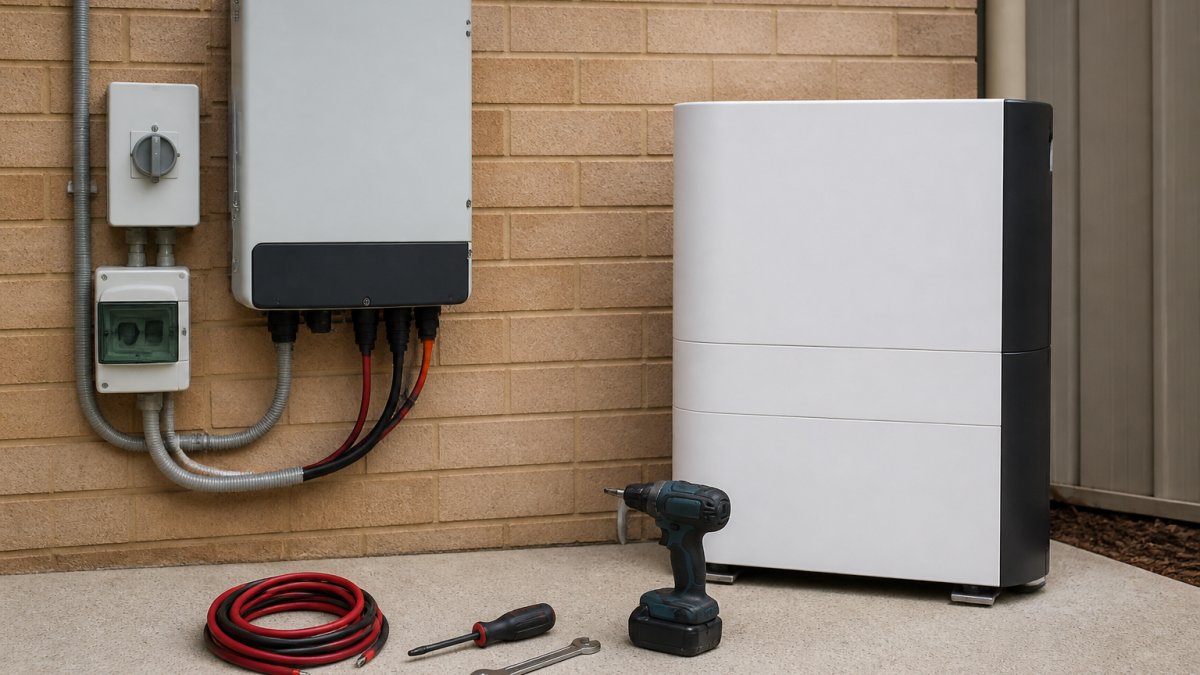
A solar battery retrofit adds battery storage to an existing solar panel system, integrating storage into a system already generating power.
Homeowners retrofit to reduce rising electricity bills. You keep existing panels and inverter while adding storage that captures solar energy for evening use instead of exporting it to the grid.
The Key Advantages of Adding Battery Storage to Existing Solar
The primary advantage is energy independence. Batteries capture midday solar generation for evening use, reducing reliance on grid electricity during peak pricing windows.
Batteries enable automatic bill savings by using stored solar energy during peak-rate hours instead of drawing grid power.
Batteries enable grid export during off-peak windows (typically 6-8 PM), earning credits. GridFree Solar customers can earn 15¢ per kilowatt-hour by exporting power back to the grid from 6-8pm, and a $1 daily bonus for avoiding grid use during peak hours.
Batteries provide backup power during outages for essential loads only, not whole-house coverage.
Retrofitting preserves your existing investment by adding capability to hardware already working, more cost-effective than full replacement.
The Real Drawbacks of Solar Battery Retrofit Projects
The biggest drawback is cost. Inverter incompatibility often requires replacement or a separate battery inverter, adding thousands to the project.
Complexity is the second drawback. Adding batteries requires electrical upgrades including new switchboard circuits, cabling, and rewiring for bidirectional power flow. Many older installations need costly upgrades.
Older inverters are less efficient at managing battery cycles. Hybrid inverters are more efficient but require full inverter replacement.
Modern lithium-ion batteries lose roughly 1-2% of capacity per year. Warranties typically cover 8,000-10,000 charge cycles (10-15 years of daily use). GridFree Solar’s Clean Energy Council (CEC) Approved Batteries comply with AS/NZS 5139:2019 standards.
Outage protection is limited. Batteries power only designated essential loads (lighting, refrigeration, communications), not heavy appliances like air conditioning or hot water systems.
Payback periods can be long (10-15 years) if electricity rates are low or daytime consumption is already high.
Solar Battery Retrofit Cost: What Determines Your Investment
Battery capacity typically ranges from 5-15 kWh. A 10 kWh battery is common for covering evening consumption plus export opportunities.
Inverter replacement is often the hidden cost driver. If your existing inverter can’t handle battery charging and discharging, you need a hybrid inverter or a separate battery inverter. This component alone represents a significant portion of retrofit spending.
Electrical upgrades vary by home. Older switchboards may need rewiring to isolate essential loads and support bidirectional current flow. If your home’s electrical infrastructure is already modern, upgrades are minimal. If it’s older, expect additional expense.
Labour costs reflect the complexity of the work. A retrofit requires a CEC Accredited Installer who understands both solar systems and battery integration. This expertise costs more than basic electrical work, but it’s essential for safety and warranty compliance. GridFree Solar’s CEC Accredited Installers ensure compliance with AS/NZS 5139:2019 and AS/NZS 3000 standards, which is non-negotiable for insurance and safety.
For a realistic picture of your retrofit cost, you need a site assessment. Every home’s electrical setup is different, and an installer must evaluate your switchboard, existing cabling, and inverter compatibility before quoting. This is why comparing prices across quotes is essential, a quote without an on-site assessment is likely incomplete.
| Factor | Impact on Cost | Typical Range |
|---|---|---|
| Battery capacity (kWh) | Higher capacity = higher cost | 5-15 kWh |
| Inverter replacement | Major cost if incompatible | Often $3,000-$6,000+ |
| Electrical upgrades | Varies by home age and condition | $1,000-$5,000+ |
| Labour (CEC accredited) | Reflects expertise and compliance | Significant portion of total |
| Switchboard rewiring | Depends on existing infrastructure | $500-$3,000+ |
Solar Battery Compatibility with Existing Solar Panels and Inverters
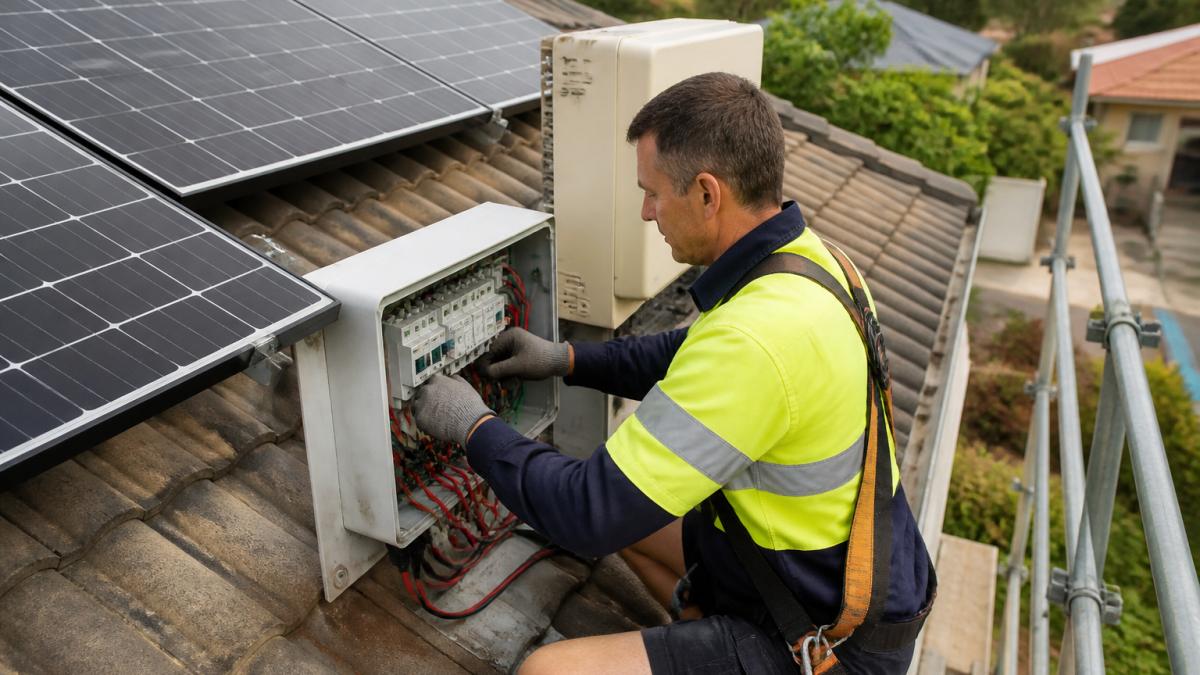
Compatibility is the critical retrofit question, and it’s not always straightforward. Your existing solar panels are almost always compatible with batteries, panels are passive devices that generate DC electricity. The bottleneck is your inverter and electrical infrastructure.
Your inverter converts DC power from panels into AC power for household use. If it’s a standard solar inverter (not a hybrid model), it has no pathway to accept power from batteries or send it back to the grid.
Hybrid inverters are designed to manage both solar input and battery charging/discharging in one unit.
A separate battery inverter (often called a battery management system or BMS) works alongside your existing inverter. It’s less efficient than a hybrid approach because power converts twice, once from solar to AC, then back to DC for battery charging.
Your switchboard is equally critical. It must have space for new circuits that isolate essential loads and support bidirectional current flow (power coming from the battery back to the grid). Older switchboards designed for solar-only systems often can’t accommodate this without rewiring or replacement.
A qualified installer performs a compatibility assessment by examining your inverter model, switchboard capacity, existing cabling gauge, and earthing setup. This assessment determines whether a retrofit is feasible and which approach (hybrid replacement or separate battery inverter) makes sense for your home.
GridFree Solar’s accredited installers conduct this assessment as part of the retrofit process, ensuring your system complies with AS/NZS 5139:2019 battery storage safety standards and AS/NZS 3000 electrical installation standards. This compliance isn’t optional, it’s required for insurance coverage and safe operation.
AC-Coupled vs DC-Coupled Battery Systems: Which Retrofit Approach Fits Your Setup
When retrofitting, you’ll hear two terms: AC-coupled and DC-coupled. Understanding the difference is essential because it affects efficiency, cost, and compatibility.
DC-coupled systems connect the battery directly to the solar array’s DC side, before the inverter. Power flows: panels → battery → inverter → household. This is the most efficient pathway because electricity converts only once (DC to AC). There’s minimal energy loss, and the system responds quickly to changes in solar generation and household demand.
However, DC-coupled retrofits are more complex. They require replacing your existing inverter with a hybrid inverter that handles both solar input and battery management. This means temporarily shutting down your solar system, rewiring DC connections, and replacing the inverter, a more invasive retrofit.
AC-coupled systems connect the battery on the AC side, after the inverter. Power flows: panels → inverter → AC → battery inverter → battery (and reverse for discharge). This approach works with your existing inverter; you simply add a battery inverter alongside it. It’s less invasive and faster to install.
The trade-off is efficiency. Power converts twice, once from solar DC to household AC, then back to DC for battery charging. This double conversion loses roughly 5-10% of energy as heat. Over a year, that adds up, but for many households, the simplicity and lower installation cost of AC-coupling justify the efficiency loss.
For a retrofit, AC-coupling is often the practical choice because it preserves your existing inverter and avoids a full system shutdown. DC-coupling makes more sense if your inverter is already failing or if you’re willing to replace it for maximum efficiency.
GridFree Solar assesses your system and recommends the approach that balances efficiency, cost, and installation complexity for your specific home.
Solar Battery Payback Period: When You’ll See Real Returns on Your Investment
Payback period is the time it takes for bill savings and export credits to cover the retrofit cost. It’s highly dependent on your electricity rates, consumption patterns, and how much solar energy you currently export unused.
A household with high daytime consumption (working from home, running a pool pump, or using air conditioning) benefits less from batteries because more solar energy is already being used on-site. For these homes, payback can exceed 15 years.
A household with low daytime consumption (everyone at work, minimal daytime appliances) exports most solar energy to the grid at wholesale rates. Retrofitting a battery captures that energy for evening use at retail rates, a much more valuable use. These homes see payback in 8-12 years, depending on rates and battery size.
Electricity rate increases accelerate payback. If your rates rise 5-7% annually (a common trend), the financial case strengthens year on year. A system that looks marginal today becomes compelling in five years.
Export opportunities also matter. If your network operator pays feed-in tariffs for exported energy (common in many regions), and if your battery can export during high-value windows (typically 6-8 PM), payback improves. GridFree Solar customers earning 15¢ per kilowatt-hour by exporting power back to the grid from 6-8pm see faster payback than households in regions with lower feed-in rates.
To estimate your payback, you need to know three things: your current annual electricity bill, the percentage of that bill driven by evening peak rates (when batteries help most), and the retrofit cost.
The reality is more nuanced. Payback depends on assumptions about rate increases, battery degradation, and whether you maintain consistent consumption patterns. A conservative estimate adds 2-3 years to account for real-world variation.
Is Retrofitting Solar Batteries Right for Your Home?
Retrofitting makes sense if three conditions are met: your existing solar system is in good working order, your electricity rates include peak-rate pricing or export opportunities, and you’re willing to invest capital for long-term savings.
If your solar panels are failing or your inverter is nearing end of life, consider replacing the entire system with a battery-ready setup rather than retrofitting. The cost difference narrows when you’re already replacing components, and a new system is simpler to design and install.
If your electricity rates are flat (no peak pricing) and your network operator pays minimal feed-in tariffs, the financial case for batteries weakens. In these regions, retrofitting is primarily about resilience and energy independence, not bill savings.
If you’re in a region with high peak-rate pricing, strong feed-in tariffs, or frequent outages, retrofitting is compelling. The financial returns are real, and the resilience benefits matter.
Your consumption pattern also matters. If you work from home and use significant daytime electricity, batteries help less because more solar energy is already being used on-site. If you’re away during the day and consume most electricity at night, batteries capture maximum value.
A retrofit assessment from a qualified installer clarifies whether your home is suitable. GridFree Solar’s team conducts this assessment at no cost, evaluating your switchboard, inverter, cabling, and consumption patterns to determine whether retrofitting makes sense and what approach suits your home best.
The decision ultimately comes down to your priorities. If maximising bill savings and energy independence is the goal, and if your rates and consumption patterns support it, retrofitting is worth the investment.
Retrofitting solar batteries is a significant decision, and getting it right requires accurate information about your home’s electrical setup and your energy consumption. Rising electricity costs make the financial case increasingly compelling, but only if your system is compatible and your usage patterns align with battery benefits.
Frequently Asked Questions
How much does it cost to retrofit a solar battery to an existing system?
Retrofit costs depend on your existing solar setup, battery capacity, inverter type, and electrical upgrades needed. Systems requiring AC-coupling or switchboard modifications typically cost more than DC-coupled retrofits. Pricing varies based on installer, location, and battery model selected. Contact GridFree Solar for a personalised quote tailored to your home’s specific requirements and existing infrastructure.
Can any solar system have a battery added, or do I need a compatible inverter?
Not all existing solar systems are equally retrofit-ready. Compatibility depends on your inverter type, age, and electrical configuration. Older string inverters may require replacement or an additional hybrid inverter for DC-coupling, while some systems work well with AC-coupled batteries. A professional assessment from a CEC Accredited Installer can determine whether your panels and inverter support battery storage and what upgrades, if any, are necessary.
What is the payback period for a retrofitted solar battery system?
Payback periods vary significantly based on your electricity consumption, local feed-in tariff rates, and battery capacity. Homes with high daytime energy use or peak-period consumption typically see faster returns. Government rebates and loans for solar, including the Cheaper Home Batteries Program, can shorten payback timelines. Most households see meaningful savings within 5-10 years, though this depends on rising electricity rates and your specific usage patterns.
Is retrofitting a battery worth it if my solar system is already 5 years old?
Age alone doesn’t disqualify a retrofit. What matters is your inverter’s compatibility, remaining panel efficiency, and your household’s energy needs. Older panels still generate usable electricity; adding storage lets you use more of it during peak-rate periods rather than exporting at lower feed-in tariff rates. A professional evaluation can confirm whether your existing system justifies the retrofit investment based on your bill-reduction potential and available government incentives.