
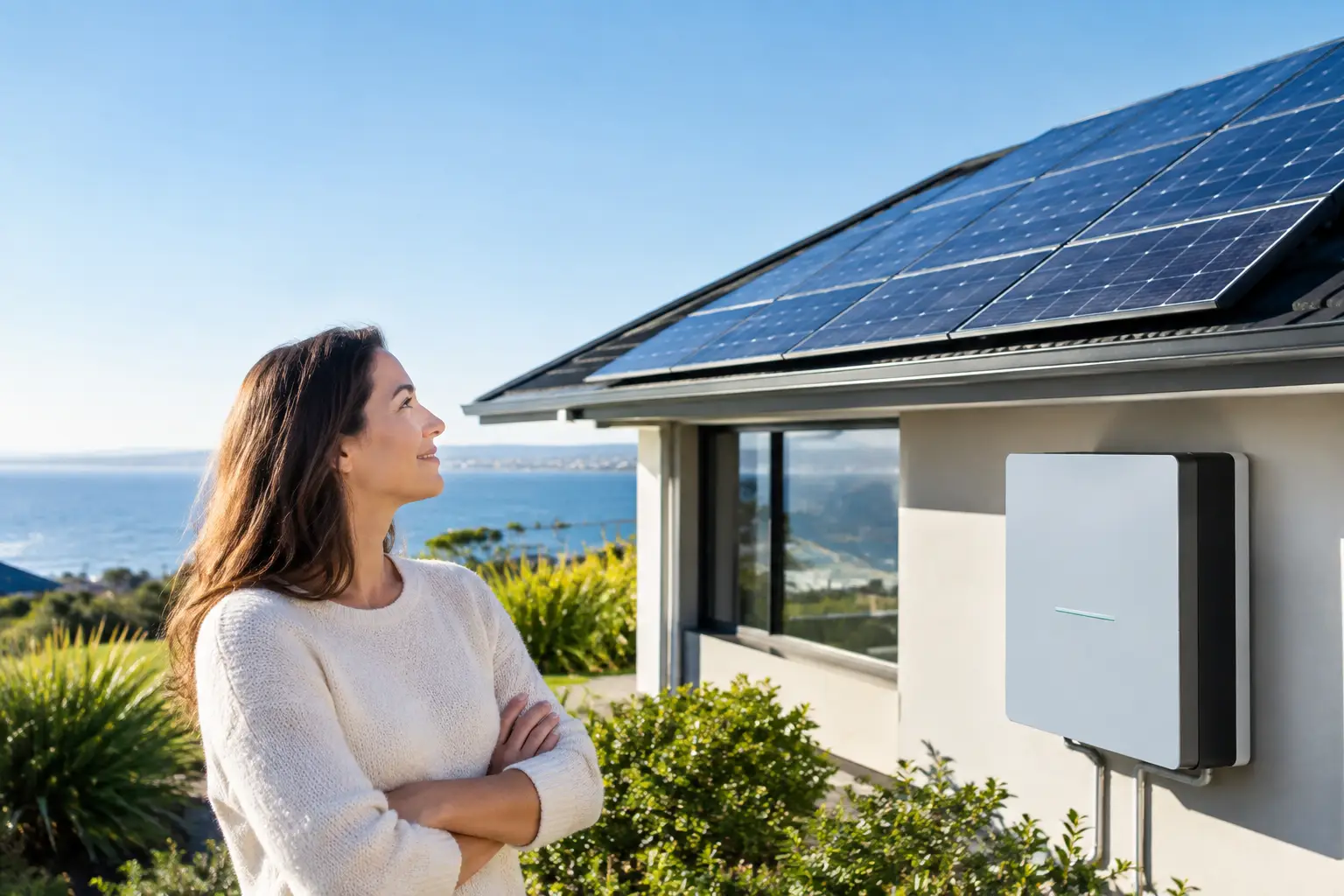
A sunny afternoon can produce more power than your home can use, yet many households still buy electricity after sunset. That is the real question behind do solar panels need batteries: not whether panels can operate without one, but whether storing your unused solar will improve your savings, backup protection and control over rising energy costs.
The short answer is no. Solar panels do not need a battery to generate electricity or reduce your power bills. A standard grid-connected solar system can power your home during the day and export surplus energy to the grid. A battery becomes valuable when you want to use more of that solar power at night, keep selected circuits running during an outage, or reduce your reliance on electricity retailers.
How solar panels work without a battery
Most Australian solar systems are grid-connected. During daylight hours, your panels generate direct current electricity, which an inverter converts into usable alternating current for your property. Your home uses that solar energy first. If your system is producing more than you need, the excess is exported to the grid and you receive a feed-in tariff.
When solar production drops in the late afternoon or overnight, your property draws electricity from the grid as usual. This setup is straightforward, reliable and often delivers a strong return on investment, particularly for households that use plenty of electricity during the day.
For example, a household with someone working from home, a pool pump, air conditioning, electric hot water controls or daytime appliance use can consume a meaningful share of its solar generation as it is produced. In that case, panels alone may make excellent financial sense.
The limitation is that exported solar is generally worth less than the electricity you buy back later. Feed-in tariffs vary by retailer and location, but the gap between export value and evening import costs is what makes battery storage increasingly attractive.
Do solar panels need batteries for backup power?
Not necessarily, but panels alone will usually not keep your home powered during a blackout.
This surprises many new solar owners. Even on a bright day, a typical grid-connected solar system shuts down during an outage. This is a safety requirement that protects network workers from electricity being fed into damaged lines while repairs are underway.
A battery system with backup capability can keep nominated essential loads operating when the grid goes down. Depending on the system design, that might include lights, the fridge, internet, selected power points, security systems and a garage door. Larger battery and inverter configurations may support more of the home, but whole-home backup is not automatic and should be designed around your actual energy needs.
Backup power also depends on the battery’s available capacity, the power it can deliver at one time, your switchboard configuration and whether the system can continue charging from solar during an outage. These details matter more than a simple claim that a battery provides backup.
When adding a battery makes financial sense
A solar battery stores surplus daytime generation for use later. Instead of exporting every unused kilowatt-hour for a relatively modest credit, you can use stored solar during the evening peak, when grid electricity is often more expensive.
A battery can be a strong fit if your household produces plenty of excess solar, uses most electricity after 4 pm, or has a high electricity bill despite already having panels. It can also suit homes preparing to add an electric vehicle, induction cooking, a heat pump or more efficient electric heating and cooling. These upgrades can reduce gas use, but they also increase the value of managing when electricity is generated, stored and consumed.
For small businesses, the case depends on operating hours. A café, workshop or office with substantial daytime demand may benefit more from additional panels than storage. A business with evening loads, refrigeration, security requirements or exposure to outage costs may see a clearer case for a battery-led system.
Financial outcomes are property-specific. The size of your existing system, your tariff, consumption profile, battery price, available rebates and future electricity usage all affect payback. A sensible design starts with your interval usage data, not a one-size-fits-all battery size.
What a battery changes in your daily energy use
Without storage, solar generation and household consumption need to happen at roughly the same time for you to receive the maximum benefit. With storage, you have more flexibility.
Your battery can charge during the middle of the day, then discharge after sunset to cover household demand. Smart monitoring shows when power is being generated, exported, stored and imported. That visibility helps you shift flexible loads, such as dishwashers, washing machines and pool pumps, into solar-producing hours.
Some systems can also be configured around time-of-use tariffs. Where suitable, a battery may charge from the grid during lower-cost periods and reserve energy for higher-cost periods. This approach needs careful modelling, as tariff structures and retailer plans change. The aim is not simply to cycle a battery as often as possible, but to use it in a way that supports savings and long-term battery health.
Eligible systems may also participate in a virtual power plant. In these programs, a battery can provide energy or grid support at certain times in exchange for bill credits or other benefits. Terms, access to stored energy and potential earnings differ between programs, so it is worth understanding the conditions before enrolling.
Choosing between solar only, battery only and an integrated system
If you are starting from scratch, installing solar panels and a battery together can produce the cleanest system design. The inverter, battery capacity, backup requirements and switchboard work can be planned as one integrated solution. It also avoids designing a solar system that leaves little room for future expansion.
That said, solar only is often the right first step when your budget is limited or most of your energy use happens during daylight hours. Choose equipment and system design that make a later battery upgrade practical. Ask whether the inverter is battery-ready, how much additional capacity can be added and whether future backup wiring has been considered.
If you already have solar, adding a battery can be an effective upgrade. Your installer will assess the existing inverter, solar capacity, switchboard, available space, metering and local network requirements. In some cases, an AC-coupled battery is suitable; in others, replacing or upgrading the inverter may provide better long-term performance.
Battery only installations can also work for properties with an existing solar system, but storage cannot create more solar energy than your panels generate. If your roof has room and your usage has increased, additional panels may be part of the better answer.
Battery size is about usable energy and power
Battery size is often discussed in kilowatt-hours, which measures how much energy it can store. But kilowatts matter too. Kilowatts describe how much power the battery can supply at a given moment.
A battery with enough stored energy for an evening may still struggle if several high-demand appliances start at once. Electric ovens, ducted air conditioning, electric hot water and electric vehicle charging can create large loads. This is why a proper assessment looks at both your daily consumption and the appliances you expect to run during peak periods or a blackout.
It is also worth considering usable capacity rather than the headline figure alone. Batteries reserve a small amount of energy to protect their cells, and performance changes over time. Warranty terms should clearly state the guaranteed capacity, expected throughput, product warranty period and any conditions that apply.
Questions to ask before you invest
Before choosing storage, ask how much solar you currently export, when your household uses the most electricity and what you want a battery to achieve. Lower bills, blackout protection and greater energy independence are all valid goals, but they can require different system designs.
Also ask which circuits will receive backup, whether solar can recharge the battery during an outage, what monitoring is included, and how rebate paperwork and compliance will be managed. Government incentives and network rules can affect upfront cost and installation timing, so accurate advice is worth more than a generic quote.
GridFree Solar designs solar and battery systems around the way each property actually uses power, with installation, rebate support and ongoing monitoring considered from the start.
A battery is not compulsory for solar, but it can turn unused daytime generation into evening savings and practical resilience. The best next step is to match your system to your household or business habits, so every dollar you invest is working toward a clearer energy outcome.