
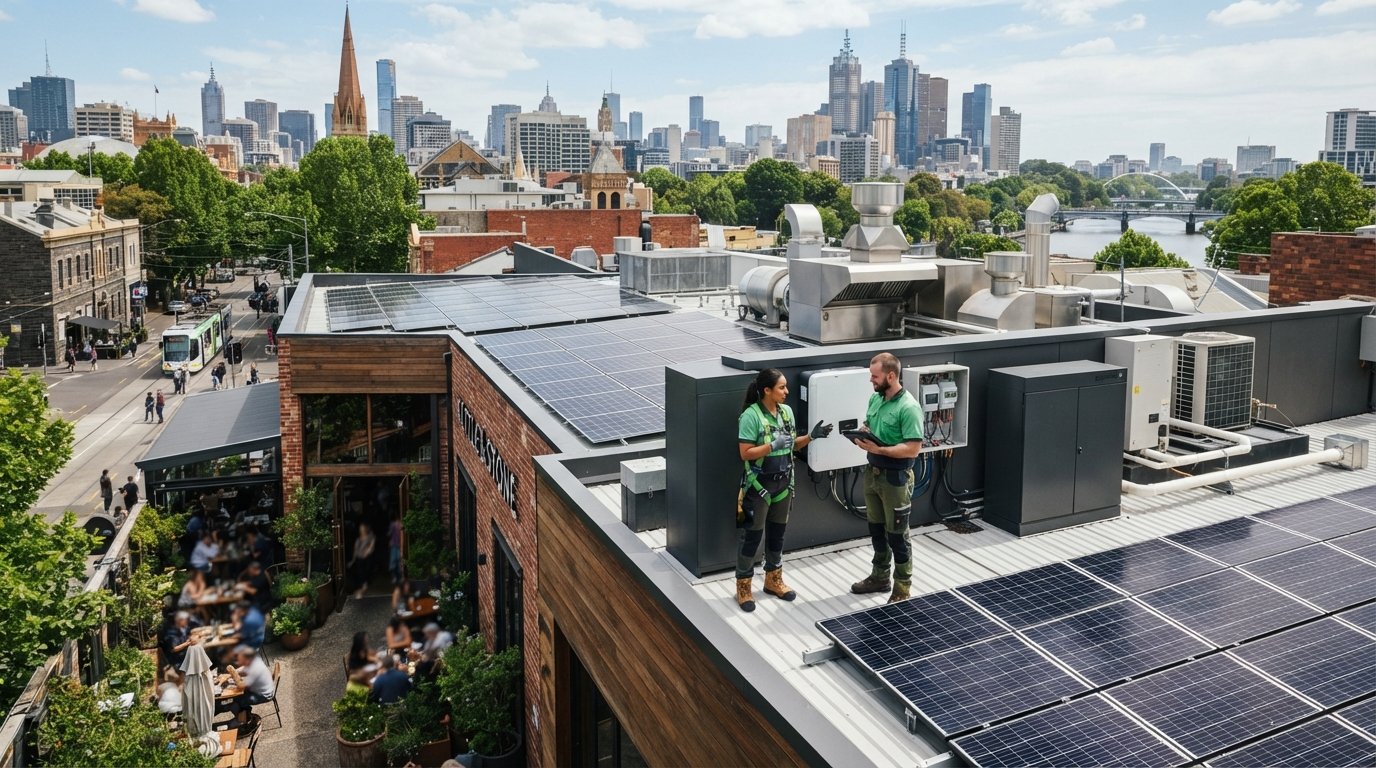
What if your heaviest overhead wasn’t your rent or your produce, but the very power keeping your coolroom running? In Melbourne’s competitive hospitality scene, 24/7 refrigeration and high-intensity kitchen equipment drive energy costs that can swallow your profits. You understand the pressure of rising utility rates and the frustration of seeing hard-earned revenue vanish into the grid every quarter. Implementing solar for cafes and restaurants Melbourne wide has evolved from a sustainability trend into a vital financial survival strategy for 2026.
This comprehensive guide shows you how to take control of your energy future. You will discover how tailored commercial solar and battery systems are helping local venues slash their power bills by up to 70%. We provide a clear roadmap for navigating Victorian solar rebates, managing installations on leased urban properties, and building a brand that resonates with eco-conscious diners. From protecting your business against future price hikes to optimising your peak-hour consumption, we cover the technical and financial essentials you need to thrive. It’s time to transform your roof into a strategic asset that fuels your growth and secures your bottom line.
Key Takeaways
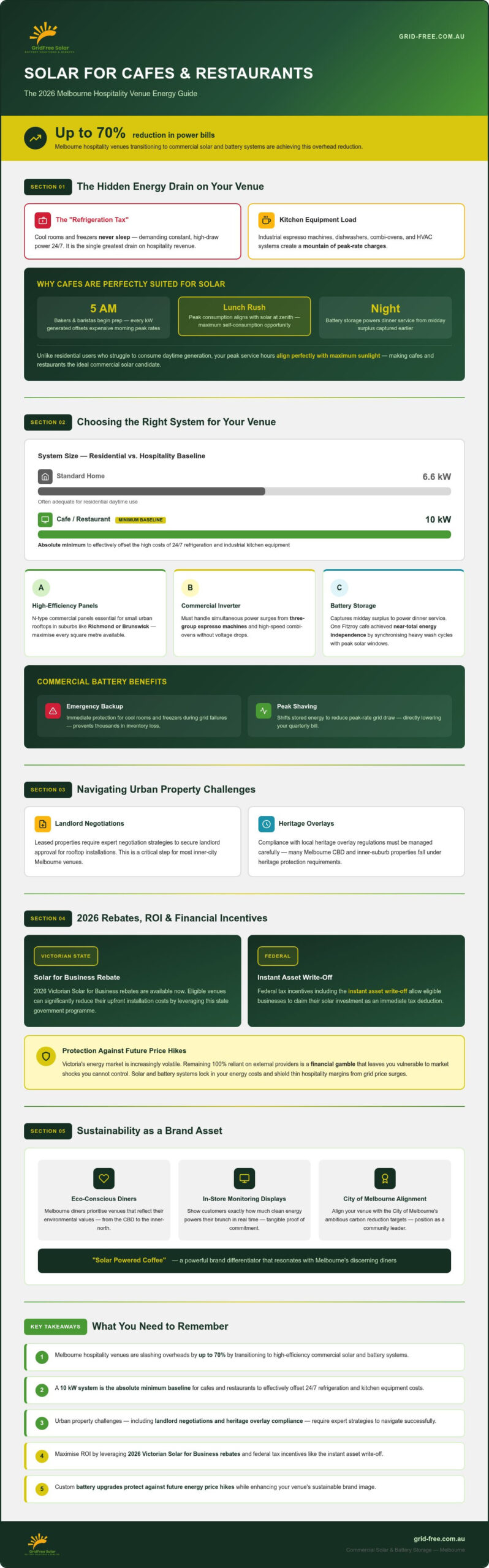
- Learn how Melbourne hospitality venues are slashing overheads by up to 70% by transitioning to high-efficiency commercial solar and battery systems.
- Understand why a 10kW system is the essential baseline for solar for cafes and restaurants Melbourne to effectively offset the high costs of 24/7 refrigeration.
- Navigate urban property challenges with expert strategies for landlord negotiations and compliance with local heritage overlays.
- Maximise your return on investment by leveraging current 2026 Victorian Solar for Business rebates and federal tax incentives like the instant asset write-off.
- Discover how custom battery upgrades provide critical protection against future energy price hikes while enhancing your brand’s sustainable image.
Why Solar is the Secret Ingredient for Melbourne Cafes in 2026
Victoria’s energy market is increasingly volatile. For a Melbourne cafe, exorbitant power bills are a silent profit killer that can no longer be ignored. 2026 has marked a definitive shift where energy independence is no longer a luxury choice. It’s a survival requirement. Implementing solar for cafes and restaurants Melbourne wide provides a critical shield against the inevitable price surges that threaten thin hospitality margins. You aren’t just buying panels; you’re securing your bottom line against a grid that only gets more expensive.
The High Cost of Hospitality Energy
The “Refrigeration Tax” is the single greatest drain on your revenue. Unlike a standard office, your cool rooms and freezers never sleep. They demand constant, high-draw power 24 hours a day, 7 days a week. When you add high-intensity espresso machines, industrial dishwashers, and HVAC systems to the mix, your energy profile becomes a mountain of peak-rate charges.
Your business model is uniquely suited for solar. While residential users often struggle to use their generation during the day, your peak service hours align perfectly with maximum sunlight. Your panels work hardest exactly when your grinders are running and your ovens are at full capacity. The rapid solar power adoption across Australia proves that savvy operators are moving away from total grid dependence. Remaining 100% reliant on external providers is a financial gamble that leaves you vulnerable to market shocks you cannot control.
Sustainability as a Marketing Asset
Melbourne’s diners are some of the most discerning in the world. From the CBD to the inner-north, customers prioritise venues that reflect their own environmental values. “Solar Powered Coffee” is a powerful brand differentiator that resonates with this demographic. By installing a commercial system, you align your venue with the City of Melbourne’s ambitious carbon reduction targets, positioning yourself as a community leader.
Visualising this commitment is key. Modern solar monitoring displays in-store allow you to show customers exactly how much clean energy is powering their brunch in real time. It’s a tangible proof of your commitment to a greener future. In 2026, being an eco-friendly venue is a core part of your identity. It attracts loyal patrons who are happy to support a business that invests in the local environment. Solar is the secret ingredient that stabilises your overheads while building a brand that stands for more than just great food.
Choosing the Right System: Matching Solar to Your Service Hours
Generic residential sizing tools are useless for your business. A standard home might manage with a 6.6kW system, but for solar for cafes and restaurants Melbourne, a 10kW array is the absolute baseline. You must offset the massive daytime draw of industrial kitchens. Small urban footprints in suburbs like Richmond or Brunswick require high-efficiency N-type commercial panels to maximise every square metre of limited roof space. Your inverter selection is equally critical. It must be a high-performance commercial unit capable of handling the simultaneous power surges from three-group espresso machines and high-speed combi-ovens without voltage drops.
Hospitality Load Profile Analysis
Your energy usage is aggressively front-loaded. Bakers and baristas often begin prep at 5 AM. While the sun is low during these early hours, every kilowatt generated helps offset expensive morning peak rates. The lunch rush represents your highest consumption period. This is when you maximise self-consumption by running heavy appliances while solar production is at its zenith. For venues operating into the night, energy storage solutions Melbourne allow you to capture midday surplus to power the dinner service. A cafe in Fitzroy recently achieved near-total energy independence by synchronising their heavy wash cycles with peak solar production windows.
Commercial Battery Storage for Restaurants
Reliability is non-negotiable in hospitality. A single power outage can ruin thousands of dollars in premium stock. Commercial batteries act as a high-tech insurance policy. They provide immediate emergency backup for your cool rooms and freezers during grid failures, preventing catastrophic inventory loss. They also perform “peak shaving,” shifting stored energy to cover the evening rush when grid rates are at their most expensive. If you already have an existing setup, maintaining its efficiency is vital. Timely solar battery replacement Melbourne ensures your storage capacity doesn’t degrade, keeping your venue protected during high-demand periods.
Transitioning to a smarter energy system requires deep local knowledge of Melbourne’s specific weather patterns and grid constraints. You can optimise your venue’s energy design by partnering with a specialist who understands the unique rigours of a commercial kitchen environment.
Navigating Leases and Urban Roof Constraints in Melbourne
Melbourne’s hospitality heart beats in dense, heritage-rich precincts. Unlike a sprawling rural facility, your venue likely operates within a complex urban landscape where space is at a premium. Implementing solar for cafes and restaurants Melbourne wide requires a sophisticated approach to physical and legal constraints. You may face overshadowing from Southbank high-rises or strict aesthetic requirements from the Melbourne City Council. These aren’t deal-breakers. They are variables that demand expert engineering and strategic negotiation. Success in the CBD or inner suburbs depends on your ability to turn a restricted roof into a high-performance power plant.
The “Solar Lease” Model
Most cafe operators don’t own their premises. This is often the primary reason solar is overlooked, yet it remains a massive missed opportunity. Pitching solar as a capital improvement is a powerful move. An installation increases the property’s asset value and improves its long-term energy rating, which is a major win for landlords. You can negotiate a rent-neutral agreement where the landlord funds the installation in exchange for a slightly extended lease or a shared savings model. From a tax perspective, commercial tenants can often access significant benefits through depreciation or the instant asset write-off. It transforms an “expensive” roof into a shared strategic asset.
Overcoming Melbourne’s Urban Shade
In high-density areas like the CBD or Richmond, overshadowing is a constant reality. If a neighbouring building blocks your sun for even two hours, a standard string inverter system will suffer a massive drop in efficiency. You must use micro-inverters or power optimisers. These technologies allow each panel to operate independently. If one panel is in the shade, the rest of the array continues to produce at maximum capacity.
Space optimisation is equally vital. We use high-density commercial panels and custom tilt frames to extract every possible kilowatt from small footprints. A professional site audit is mandatory here. “Near enough” is not acceptable when your ROI depends on precise production windows. We also navigate the complexities of grid connection in the CBD, where export limits are common. In these scenarios, we focus on “zero-export” designs that prioritise self-consumption, ensuring you use every bit of energy you generate rather than losing it to grid restrictions. We take the technical complexity out of the process, providing a seamless transition to energy independence regardless of your building’s age or location.
Rebates, ROI, and the 2026 Financial Forecast
Energy is no longer a fixed cost you simply accept. In 2026, it is a manageable line item that you can aggressively reduce. The financial landscape for solar for cafes and restaurants Melbourne has reached a tipping point where the cost of inaction far outweighs the initial investment. With grid prices projected to remain volatile through 2030, securing your own generation capacity is a move toward long-term fiscal stability. Most local hospitality venues now see a full return on investment in under four years, turning a monthly liability into a permanent asset.
Victorian Commercial Rebates
The Victorian Solar for Business Program remains a cornerstone of commercial adoption in 2026. Eligible businesses can access substantial rebates that significantly lower the entry barrier for high-capacity systems. Beyond the initial rebate, the state government provides interest-free loans to cover the remaining cost, allowing you to pay off the system using the savings generated from your reduced power bills. You can also combine these state incentives with federal Small-scale Technology Certificates (STCs) to maximise your upfront discounts. Identifying eligible batteries for Victorian rebate is essential for venues looking to add storage, as these incentives specifically target systems that help stabilise the local grid during peak periods.
Calculating Your Cafe’s ROI
Your return on investment is driven by self-consumption rather than feed-in tariffs. Because commercial electricity rates are significantly higher than what retailers pay you for excess energy, every kilowatt you use on-site is worth far more than what you export. The federal government’s Instant Asset Write-Off continues to be a vital tool for hospitality, allowing you to accelerate the depreciation of your solar equipment and claim immediate tax benefits.
When evaluating the solar battery cost Australia 2026 outlook, remember that storage protects your most expensive evening service hours. The Net Present Value of a 30kW system for a mid-sized restaurant represents the total current worth of all future energy savings and tax incentives minus the initial capital expenditure. Failing to transition now means exposing your business to the compounding costs of grid reliance for the next decade. You can request a custom financial feasibility study to see exactly how these 2026 incentives apply to your specific premises.
The GridFree Solar Advantage: Custom Commercial Solar for Melbourne
Generic solar systems don’t belong in a professional kitchen. A residential-grade setup will buckle under the constant, high-intensity draw of industrial espresso machines and walk-in cool rooms. At GridFree Solar, we specialise in high-performance solar for cafes and restaurants Melbourne hospitality leaders rely on for long-term stability. Our designs are purpose-built for the unique rigours of your industry. We account for the intense heat of kitchen roof spaces and the massive electrical surges required by heavy-duty equipment. This is hospitality-grade engineering. It’s built to last. It’s built to perform.
Integrated monitoring is our standard. You can track your generation and consumption in real-time directly from your phone or even your POS system. This data allows you to make informed decisions about when to run heavy wash cycles or prep equipment to maximise your self-consumption. Knowledge is power. Seeing your overheads drop in real-time provides the financial peace of mind every business owner deserves. We ensure your system isn’t just a roof ornament, but a functional tool for profit protection.
Why Choose a Local Melbourne Installer?
We are a local, Melbourne-based team. We understand this city’s unique urban planning and micro-climates. Our deep knowledge of solar panel installation Melbourne regulations ensures your project moves through council and grid approvals without delay. GridFree Solar provides direct access to the latest Tier-1 commercial hardware. This means faster response times for maintenance and local support that actually understands the Melbourne grid. You aren’t just a client; you’re a partner in our city’s sustainable future.
Our Commercial Installation Process
We respect your service hours. A messy, prolonged installation is a nightmare for any venue manager. Our process is streamlined for rapid deployment with zero disruption to your customers or your kitchen flow. We get in, get the job done, and get you generating power as quickly as possible.
- Step 1: The Energy Audit. We dive deep into your power bills and load profile to identify exactly where your money is going.
- Step 2: Custom Design. We maximise your specific roof area, accounting for the shade and urban constraints unique to your Melbourne postcode.
- Step 3: Rapid Deployment. Our team works around your schedule to get you generating power with zero service disruption.
Don’t let another quarterly bill drain your hard-earned profits. Get a custom commercial solar quote for your Melbourne venue today and secure your energy future.
Future-Proof Your Profits with Local Solar Expertise
The transition to solar for cafes and restaurants Melbourne wide is no longer just an environmental choice; it’s a financial imperative. By synchronising your energy generation with your peak service hours and 24/7 refrigeration needs, you protect your margins from the volatility of the grid. You’ve seen how tailored system design and strategic battery storage can slash overheads. Now is the time to act before energy prices climb further in 2026.
GridFree Solar provides the high-authority expertise required for such a critical transition. As CEC Accredited Installers and Victorian Government Rebate Experts, we manage the administrative and technical burden on your behalf. We are Specialists in Commercial Load Profile Analysis, ensuring your system is engineered for the specific rigours of a busy commercial kitchen. Don’t let rising costs dictate your future. Take the first step toward energy independence and a more sustainable brand image today. Your roof is your most underutilised asset; it’s time to put it to work.
Request a Free Energy Audit for Your Melbourne Venue and discover how much you could save. We look forward to helping your business thrive in a cleaner, more efficient Melbourne.
Frequently Asked Questions
How much can a Melbourne cafe save with solar in 2026?
Hospitality venues in Victoria can reduce their quarterly power bills by up to 70% by transitioning to high-efficiency commercial systems. Because cafes run heavy refrigeration and kitchen equipment during daylight hours, they achieve higher self-consumption rates than typical residential properties. This immediate offset of peak-rate electricity, combined with current Victorian business rebates, ensures that most local operators see a full return on their investment in under four years.
What happens if I don’t own the building my restaurant is in?
Leaseholders can still access the benefits of solar by negotiating a capital improvement agreement with their landlord. Installing solar for cafes and restaurants Melbourne wide often increases the property’s long-term energy rating and asset value, making it an attractive prospect for building owners. Some operators choose to split the savings with their landlord or opt for modular systems that can be relocated if the business moves to a new premises in the future.
Do I need a battery for my cafe solar system?
A battery isn’t strictly required for daytime generation, but it’s vital for protecting expensive stock in your cool rooms 24/7. Storage allows you to capture surplus midday energy and shift it to cover your high-draw evening dinner service when grid rates are most expensive. In 2026, many Melbourne venues are integrating batteries to act as an emergency backup, preventing catastrophic inventory loss during sudden grid failures or local power outages.
How long does a commercial solar installation take in Melbourne?
The physical installation of a commercial system typically takes between one and three days depending on the complexity of your roof. We prioritise rapid deployment to ensure there is zero disruption to your service hours or kitchen operations. The longer phase involves navigating Melbourne City Council permits and grid connection approvals, which our local team manages on your behalf. We aim to get you generating clean energy with minimal impact on your daily service.
Is solar effective in Melbourne given the cloudy weather?
Melbourne’s weather is perfectly suitable for solar generation because modern commercial panels utilise UV light, which penetrates even on overcast days. While peak production occurs in direct sunlight, high-efficiency N-type panels maintain strong output during typical Victorian grey skies. Our local designers use historical weather data to engineer systems that provide consistent power throughout the year, ensuring your cafe remains energy-independent regardless of the season or daily weather fluctuations.
Are there specific solar rebates for Melbourne small businesses in 2026?
Small businesses in Melbourne can access the Victorian Solar for Business rebate, which provides a significant upfront discount on system costs. In 2026, eligible venues can also apply for interest-free loans to cover the remaining balance, allowing the system to effectively pay for itself through energy savings. When combined with federal Small-scale Technology Certificates (STCs), these incentives represent a major financial opportunity to upgrade your energy infrastructure with minimal capital outlay.
How do I maintain solar panels on a busy urban street?
Urban environments can lead to a buildup of dust and soot, particularly in high-traffic areas like the CBD or Southbank. While rain handles most cleaning, we recommend an annual professional inspection to ensure your sensors and inverters are operating at maximum efficiency. Our integrated monitoring software allows you to track production from your phone, making it easy to spot any performance drops that might indicate a need for a quick rinse or technical check.
Will solar power my commercial espresso machine and ovens?
A professionally engineered solar system is built specifically to handle the high-draw surges of industrial kitchen equipment. We perform a detailed load profile analysis to ensure your inverter capacity matches the simultaneous demand of your espresso machines, ovens, and dishwashers. By aligning your heaviest energy use with peak daylight hours, you can run your most power-hungry appliances using free, on-site generation rather than relying on expensive grid electricity during your busiest periods.