
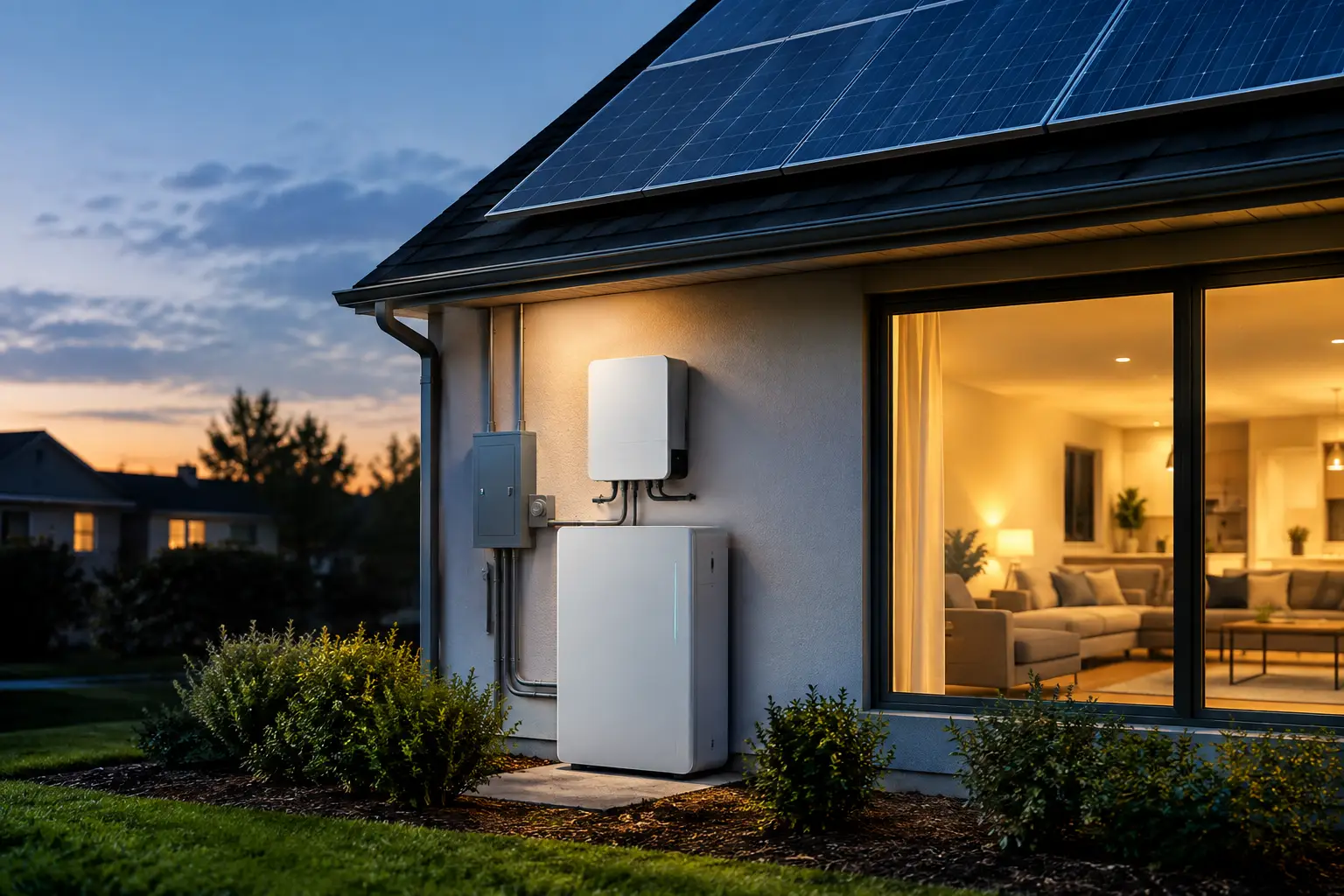
A blackout quickly shows the difference between having solar panels and having usable backup power. Standard grid-connected solar is designed to shut down when the network goes off. A solar battery system with dedicated backup wiring can keep selected appliances running instead. Understanding how solar backup circuits work helps you choose a system that protects the loads that matter most, rather than paying for battery capacity that does not match your needs.
How solar backup circuits work in a blackout
A solar backup circuit is a separate electrical circuit, or group of circuits, connected to a battery-backed inverter. It is designed to supply selected appliances when grid power is unavailable.
In normal operation, your home uses power from solar panels, the battery and the grid according to how the system has been programmed. Excess solar can charge the battery, run household loads or be exported to the grid. The backup circuit sits ready in the background.
When the grid fails, the battery inverter detects the outage and safely disconnects your property from the electricity network. This is called anti-islanding protection. It prevents your solar system from sending electricity back into grid lines while network crews may be working on them.
Once isolated, the inverter creates a small, independent power supply for the backup circuits. Your battery then supplies electricity to those selected loads. If the sun is out, the solar panels can also continue generating energy to support the home and recharge the battery, provided the inverter and system design allow it.
The changeover can take a few seconds. Some appliances may briefly switch off and restart, while equipment on a well-designed backup system can resume operation with minimal interruption. The exact behaviour depends on the inverter, battery, backup gateway or switchgear, and the loads connected.
Why solar panels alone do not provide blackout power
It is a common assumption that rooftop solar will keep working whenever the sun is shining. In a typical solar-only system, that is not the case during a grid outage.
Most solar inverters are grid-following. They need the grid’s voltage and frequency as a reference point before they can operate. When the grid disappears, the inverter shuts down as a safety requirement. Your panels may be producing energy on the roof, but that power cannot be used inside the property.
A battery-backed system uses an inverter capable of forming its own stable electrical supply during an outage. This is what allows solar production and stored battery energy to continue serving the nominated backup loads.
For homeowners focused on energy resilience, the battery, inverter and backup wiring matter just as much as the solar panel capacity.
What is connected to a backup circuit?
Most households do not back up every circuit in the switchboard. Instead, they choose essential loads that keep the home safe, comfortable and functional during an outage.
Common inclusions are lights, the fridge and freezer, internet equipment, a few general power outlets, security systems, garage doors and selected kitchen appliances. Some households also back up a home office circuit, medical equipment or a wastewater pump where continuity is especially important.
High-demand appliances are usually assessed more carefully. Ducted air conditioning, electric ovens, cooktops, pool pumps, electric hot water systems and EV chargers can draw significant power. Including them may require a larger battery, a higher-output inverter, additional backup hardware or a whole-home backup design.
There is no single right list. A household that works from home may prioritise internet, laptops and refrigeration. A small business may need lighting, point-of-sale equipment, communications, refrigeration or security. The practical question is not simply what you would like to run, but what needs to run at the same time and for how long.
Essential-load backup versus whole-home backup
Essential-load backup uses a dedicated backup sub-board. Only the chosen circuits are moved onto this protected supply. It is a cost-effective approach for many properties because it focuses battery output on the equipment that delivers the most value in an outage.
Whole-home backup aims to supply most or all circuits in the building. It provides greater flexibility, but it does not mean every appliance can run at once. The system still has a maximum continuous output and a maximum surge capacity. Turning on several large appliances together can overload the inverter, even if the battery has plenty of stored energy.
Whole-home backup can be an excellent option for larger battery systems and properties with carefully managed electrical loads. It needs detailed design, especially for three-phase homes and businesses, where backup requirements can vary between phases and equipment types.
What happens minute by minute when the power fails?
The process is automatic, but several things happen in sequence. First, the system identifies that the grid supply is outside acceptable operating limits. The battery inverter or backup gateway then disconnects from the grid to protect line workers and comply with electrical safety requirements.
Next, it energises the backup supply and begins powering the protected circuits from the battery. Depending on the system, solar generation can then restart against the battery inverter’s locally created supply.
During daylight, solar may cover the essential loads first and use any surplus to recharge the battery. At night, or during heavy cloud, the battery carries the load on its own. When grid power returns, the inverter checks that the supply is stable before reconnecting the property to the network and returning to normal operation.
This is why battery size is only part of the answer. Backup performance also depends on inverter output, solar generation, the selected circuits and how energy is used while the outage lasts.
How long will a solar battery run backup circuits?
Backup duration depends on usable battery capacity and the amount of electricity your selected loads consume. A battery with 10 kWh of usable storage could theoretically run a steady 1 kW load for around 10 hours. In real conditions, appliance cycling, conversion losses and battery reserve settings affect the result.
A fridge does not use its rated power continuously, while a kettle, microwave or toaster draws a high load for a short period. Heating and cooling loads can use far more energy than lighting, communications and refrigeration. That is why good system design considers both energy use over time, measured in kilowatt-hours, and peak demand, measured in kilowatts.
Solar can substantially extend backup time during the day. On a clear day with modest essential loads, panels may power the home and preserve much of the battery charge. In winter, during storms or across several cloudy days, output will be lower. A backup plan should be designed for realistic conditions, not only ideal summer production.
Many battery owners also set a minimum reserve level. This keeps part of the battery available for an outage rather than using all stored energy overnight to avoid grid imports. A higher reserve gives more protection but may slightly reduce daily bill savings. The best setting depends on how reliable the local grid is, your usage pattern and how highly you value blackout coverage.
The design details that make backup reliable
Reliable backup starts with a clear load assessment. An installer needs to understand the appliances you want protected, their starting currents, your existing switchboard layout, whether the property is single-phase or three-phase, and the likely duration of outages in your area.
The battery and inverter must be matched properly. A large battery paired with a low-output inverter may store plenty of energy but struggle to start or run high-demand equipment. Conversely, a powerful inverter with insufficient battery capacity may provide strong output for only a short period.
Switchboard work also matters. Backup circuits must be clearly separated, labelled and installed in line with applicable Australian electrical standards and local network requirements. Existing solar systems can often be upgraded with battery storage and backup capability, but compatibility needs to be checked rather than assumed.
Monitoring adds another useful layer. A good energy monitoring platform shows solar production, battery state of charge, household demand and grid imports or exports. During an outage, this visibility helps you make informed choices, such as delaying the dishwasher or avoiding unnecessary heating loads until solar generation improves.
Backup power is not the same as unlimited power
A solar battery backup system gives you control during an outage, but it works best when expectations are practical. It is designed to supply selected energy needs, not necessarily replicate the grid without limits.
If your priority is keeping food cold, lights on, phones charged, internet connected and essential equipment operating, an essential-load circuit may deliver outstanding value. If you need to support air conditioning, pumps, commercial refrigeration or a larger property, the system may need greater battery storage, inverter capacity and more sophisticated backup configuration.
GridFree Solar designs battery-led systems around the way each property actually uses energy, including the backup loads that matter when the grid is unavailable. A properly planned circuit turns stored solar into practical resilience: power where you need it, when the rest of the street may be waiting for the lights to return.