
Table of Contents
- What You’ll Need Before You Start
- Step 1: Understand Your Energy Consumption Patterns
- Step 2: Choose the Right Time-of-Use Electricity Pricing Plan
- Step 3: Optimize Load Shifting and Appliance Scheduling
- Step 4: Maximize Solar Battery Feed-In Tariffs and Grid Export
- Step 5: Monitor System Performance and Adjust Settings
- Step 6: Participate in Virtual Power Plant Benefits
- Step 7: Maintain Battery Health to Preserve Long-Term Savings
- Frequently Asked Questions
Last Updated: August 24, 2026
What You’ll Need Before You Start
Before maximizing solar battery savings, understand your solar system’s capacity (kilowatts), battery storage size (kilowatt-hours), and home energy consumption patterns. Access your electricity bill and understand your tariff structure, flat rate or time-of-use pricing. GridFree Solar recommends a professional system assessment to establish your baseline performance and savings potential.
You’ll also need real-time system visibility. Most modern solar and battery systems include monitoring apps or dashboards showing state of charge, production, and consumption. If yours lacks this, consider upgrading to a smart energy management system. Finally, check whether your electricity retailer offers time-of-use or feed-in tariff programs, these pricing structures are essential for maximizing savings.
Contact your electricity retailer early to understand available tariff options. Some retailers have limited time-of-use offerings, and switching providers may be necessary to unlock your battery system’s full potential.
Step 1: Understand Your Energy Consumption Patterns
Your energy consumption pattern is the foundation for every optimization strategy. Most households have distinct peaks and troughs: morning showers and breakfast, midday lows, and evening cooking and heating. Understanding when you use the most energy allows you to shift consumption to times when your battery is charged or grid rates are lowest.
Review your electricity bill to identify peak consumption hours, then use your monitoring app to track real-time consumption over at least two weeks, ideally across different seasons. Look for patterns: Do you use more energy in winter mornings? Is there a spike during dinner preparation? Does air conditioning or heating run heavily during specific hours? These patterns directly inform load shifting and scheduling strategies.
Many households discover their perceived peak consumption doesn’t match reality. Once you map your true consumption profile, identify which loads are flexible, washing machines, dishwashers, pool pumps, and which are fixed, like refrigeration and heating. Flexible loads can be scheduled during high solar production or low-cost periods.
Your consumption pattern is unique to your home. Spend time understanding your specific profile before implementing any changes.
Step 2: Choose the Right Time-of-Use Electricity Pricing Plan
Time-of-use electricity pricing is one of the most direct levers for maximizing solar battery savings. Instead of paying a flat rate, time-of-use tariffs charge different rates during different periods: off-peak (typically 10pm-7am), shoulder (early morning and evening), and peak (usually 3pm-9pm). Some retailers offer super-off-peak rates during midday hours (11am-2pm).
The strategy is to align consumption with the cheapest periods and export your battery during the most expensive periods. If your retailer offers a high feed-in tariff during peak hours, for example, 15¢/kWh from 6pm-8pm, charge your battery to export during that window. GridFree Solar recommends comparing at least three retailers’ time-of-use offerings, as rate differences and time windows significantly impact total savings.
Step 3: Optimize Load Shifting and Appliance Scheduling
Load shifting means moving energy consumption to times when electricity is cheapest or when your solar system produces the most energy. Run high-energy appliances during peak solar production (typically 9am-3pm) or during off-peak electricity periods, rather than during peak rate hours.
Start with your most flexible, highest-energy appliances: washing machines, dishwashers, pool pumps, and hot water systems. Most modern appliances have delay-start features. Set your dishwasher to run at 2pm when solar production peaks and your battery is charging. Schedule your pool pump during midday hours. If you have a hot water system with a timer, set it to heat during peak solar production.
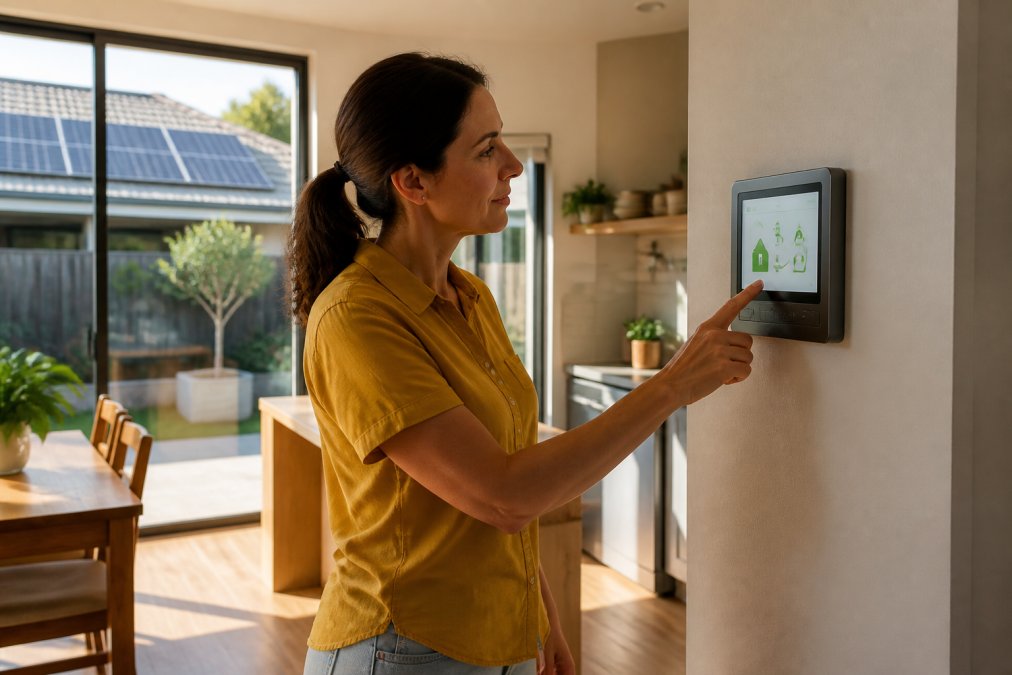
For appliances without built-in scheduling, install smart plugs or switches to control them remotely or on a timer. Start with just two or three appliances, typically your pool pump, dishwasher, and hot water system. Get comfortable with the changes before expanding to other loads.
Scheduling appliances during peak solar production only works if your battery isn’t already full. If your battery reaches 100% state of charge before your scheduled load runs, you’ll draw from the grid instead of stored solar energy. Adjust your schedule based on seasonal solar production variations.
Step 4: Maximize Solar Battery Feed-In Tariffs and Grid Export
Feed-in tariffs are payments you receive when exporting surplus energy back to the grid. In Australia, rates vary significantly by retailer and region, ranging from around 5¢ to 15¢/kWh. Some retailers offer premium rates during specific peak periods, for example, 15¢/kWh from 6pm-8pm, creating a clear incentive to export during those windows.
Charge your battery during low-cost periods and discharge it during high-rate export periods. If your retailer offers peak export rates from 6pm-8pm, have your battery fully charged by 6pm to export as much as possible during that window. Some retailers also offer bonus payments for avoiding grid use during peak demand periods. GridFree Solar’s systems, for example, can earn a $1 daily bonus for avoiding grid use during peak hours, plus standard feed-in tariff payments.
To maximize feed-in tariff income, monitor your battery’s state of charge carefully. Most lithium batteries perform best between 20% and 80% state of charge for daily cycling. However, to maximize grid export, you’ll want your battery at or near 100% during your retailer’s peak export rate window. Balance cycling for longevity with charging for export by charging aggressively during low-cost periods and discharging strategically during high-value export windows.
Check whether your retailer offers virtual power plant programs or demand response schemes. These can add another 5-10% to your annual energy savings.
Step 5: Monitor System Performance and Adjust Settings
Your monitoring app should show kilowatt-hour production, consumption, battery state of charge, and grid import/export in real time. Review this data daily initially to understand system behaviour, then check weekly or monthly as patterns become familiar.
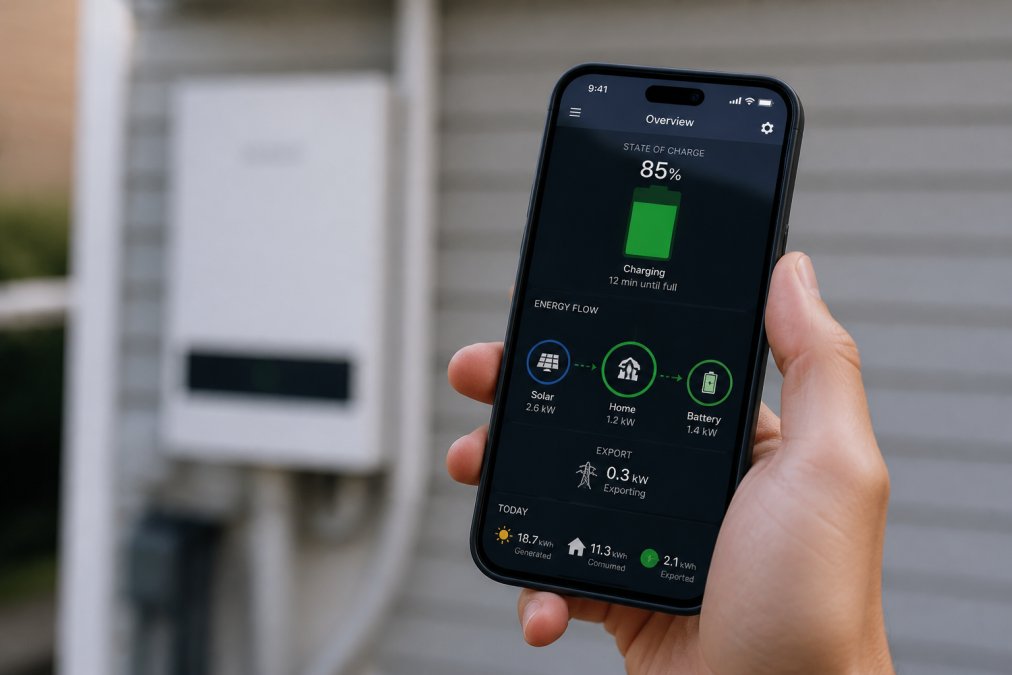
Look for anomalies. If your battery isn’t charging quickly during peak solar hours, your inverter settings may need adjustment. If you’re importing more grid energy than anticipated during peak hours, your load-shifting strategy isn’t working. Most inverters have settings controlling how aggressively they charge the battery, minimum state of charge before drawing from the grid, and priority given to battery charging versus household consumption. These should be tuned to your tariff structure and consumption patterns.
Settings that work in summer may not be ideal in winter, so plan to review and adjust seasonally. Track your monthly energy bills and compare against your baseline consumption before the battery was installed. If savings are declining, it may indicate a system issue, consumption pattern change, or tariff structure shift.
Set a monthly calendar reminder to review your monitoring app data. A 15-minute check catches small issues before they compound. If you notice consistent production decline or unexpected grid import increases, contact your installer immediately.
Step 6: Participate in Virtual Power Plant Benefits
Virtual Power Plant (VPP) programs aggregate household batteries into a coordinated network that responds to grid demand signals. When the grid is stressed during peak periods, your battery can export energy, and you receive payment for that service.
Participation is typically voluntary and managed through your battery’s software. When enrolled, the program operator can request your battery to discharge during high grid demand periods. You receive payments, typically a few dollars per export event, plus standard feed-in tariff payments. Over a year, VPP participation can add $200-$500 to your total savings.
The key consideration is whether VPP participation conflicts with your energy security goals. If you want your battery fully charged for evening peak hours to maximize your own consumption and export income, a VPP discharge request at 5pm might not align with your strategy. Research specific VPP programs available through your retailer or battery installer, asking about dispatch frequency, payment rates, and opt-out options.
Step 7: Maintain Battery Health to Preserve Long-Term Savings
Your battery’s long-term performance directly determines your long-term savings. A battery that degrades faster than expected requires earlier replacement, eroding your return on investment.
Most modern lithium batteries are rated for 8,000-10,000 cycles before capacity degrades to 80% of original capacity (peer-reviewed research). A cycle is one complete charge-discharge event. Shallow cycles preserve battery life far more effectively than deep cycles. Keeping your battery between 20% and 80% state of charge during normal operation, with occasional full charges for export events, extends useful life by several years (peer-reviewed research).
Temperature management is equally important. Lithium batteries perform best between 15°C and 25°C. If your battery is installed in an uninsulated garage or shed in a hot climate, it will degrade faster. Ensure adequate ventilation and consider installing a small cooling fan if temperatures regularly exceed 30°C.
Schedule regular system maintenance as recommended by your installer, including checking inverter settings, inspecting connections, and running diagnostics. GridFree Solar includes comprehensive maintenance support with its installations, ensuring your system remains optimized and healthy throughout its lifespan.
Battery degradation is gradual and largely invisible until severe. Proactive maintenance, shallow cycling, temperature management, and regular diagnostics preserve your battery’s capacity and extend your payback period by years.
Maximizing your solar battery savings requires understanding your energy patterns, choosing the right pricing plan, and actively managing your system’s performance. Load shifting, feed-in tariff optimization, monitoring, and battery maintenance work together to reduce electricity costs and extend your system’s financial return. GridFree Solar’s CEC-accredited installers and energy management experts can help you implement these strategies with confidence, ensuring your system is sized correctly, installed safely to AS/NZS 5139:2019 standards, and optimized for your specific situation. Connect Now to discuss how to maximize solar battery savings for your home and start reducing your energy bills today.
Frequently Asked Questions
How do I get the most out of my solar battery?
Maximise self-consumption by running high-energy appliances during peak solar production hours (typically 10am-2pm). Monitor your state of charge regularly and adjust load shifting based on seasonal changes. Enrol in a virtual power plant scheme if available to earn additional revenue while supporting grid stability. Most homeowners see optimal results when combining these strategies with a time-of-use tariff aligned to their usage patterns.
Does a solar battery really save money?
Yes, solar batteries reduce electricity bills by storing excess daytime generation for evening use, avoiding peak-rate charges. Additional savings come from feed-in tariffs when exporting surplus power. Return on investment depends on your tariff structure, system size, and consumption patterns. Many homeowners also qualify for government rebates through schemes like the Cheaper Home Batteries Program, which accelerates payback. A professional energy audit can forecast your specific savings based on your roof orientation, shading, and local rates.
What is the best way to use solar battery storage?
The best approach combines three practices: (1) Shift high-load appliances to peak solar hours to maximise self-consumption; (2) Reserve battery capacity for off-peak evening hours when grid rates are highest; (3) Monitor your energy management system weekly to track depth of discharge and adjust settings seasonally. Time-of-use tariffs make a significant difference, align your battery discharge schedule to your retailer’s peak demand windows. If your system supports virtual power plant participation, enable it to earn revenue during grid stress events while maintaining household comfort.
Can I claim government rebates for solar batteries?
Yes. The Cheaper Home Batteries Program and Small-scale Renewable Energy Scheme offer rebates and credits for eligible battery installations. Rebate amounts vary by state and depend on battery capacity and your household income. Your installer should guide you through eligibility and application. CEC-accredited installers can help ensure your system meets compliance standards (AS/NZS 5139:2019 and AS/NZS 3000) required for rebate approval. Contact your state’s energy regulator or a professional installer for current eligibility criteria and available incentives in your area.
This article was written using GrandRanker