
Table of Contents
- What Is a CEC Approved Solar Battery?
- Why Choose CEC Approved Products for Home Energy Storage
- Best Solar Battery for Home Backup: Top CEC-Listed Options
- How to Choose a Home Solar Battery: Selection Criteria
- Solar Battery Rebate Eligibility 2026: Government Incentives
- How to Verify Battery Certification and Search the CEC Register
- Safety Standards and Compliance for CEC Approved Batteries
- Frequently Asked Questions
Last Updated: August 18, 2026
What Is a CEC Approved Solar Battery?
A CEC approved solar battery is a residential energy storage system independently tested and certified by the Clean Energy Council to meet strict safety, performance, and reliability standards. This certification ensures the battery meets Australian electrical safety regulations, fire safety requirements, and technical specifications outlined in standards like AS/NZS 5139:2019 and AS/NZS 3000.
CEC approval is the gateway to government rebates and incentives. When you install a battery from the Clean Energy Council’s approved product list, you become eligible for schemes like the Cheaper Home Batteries Program. The approval process involves rigorous testing of battery chemistry, thermal management, electrical safety, and system integration to ensure the unit won’t fail catastrophically or pose fire risk in Australian homes.
Without CEC approval, you’ll lose access to rebates worth thousands of dollars and won’t have the same safety assurances. The certification acts as a quality gate, confirming the manufacturer has invested in compliance and the product has been stress-tested against real-world failure scenarios.
Not all batteries sold in Australia are CEC approved. Some overseas models lack the necessary certifications for local grid connection or rebate eligibility. Always verify approval status before purchase.
Why Choose CEC Approved Products for Home Energy Storage
Choosing a CEC approved solar battery protects you from safety incidents and financial loss. Independent engineers have tested the battery under extreme conditions, overcharge scenarios, temperature extremes, and fault conditions to confirm it handles failures safely.
Government rebates for battery storage are restricted to CEC approved products. Depending on your location and household income, you could receive discounts on an approved system. A non-approved battery saves money upfront but costs far more in lost rebates and potential liability.
CEC approval also signals the battery is designed for Australian grid conditions. Approved batteries have been tested for grid compatibility, which matters if you plan to participate in virtual power plant schemes or export power back to the grid.
Insurance and warranty protection are clearer with approved products. If you install a non-approved battery and it causes damage, your home insurance may deny claims. Approved products come with manufacturer warranties backed by companies that understand Australian regulations.
CEC approval is mandatory for rebate eligibility and provides legal protection, safety testing, and grid compatibility assurance that non-approved batteries cannot offer.
Best Solar Battery for Home Backup: Top CEC-Listed Options
The best solar battery for home backup depends on your energy usage, budget, and whether you want a simple add-on to an existing system or a fully integrated solution.
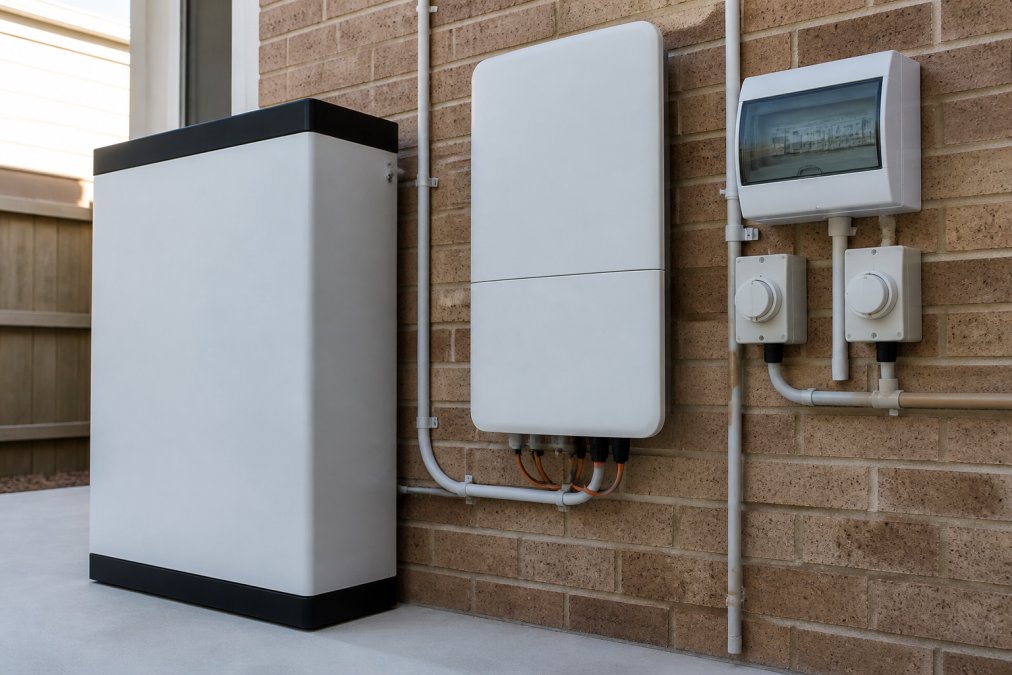
Tesla Powerwall 3
The Tesla Powerwall 3 is a premium all-in-one system combining battery, inverter, and solar management in a single unit. It delivers 13.5 kWh of usable storage with an integrated solar inverter capable of handling up to 20 kW of solar input.
The Powerwall 3 can deliver 5, 10, or 11.04 kW continuously, handling high-demand appliances like electric cooktops and pool pumps without dropping power. The integrated design simplifies installation because you don’t need a separate battery inverter.
The main limitation is cost. Powerwall 3 systems are significantly more expensive than modular alternatives, and pricing is often quote-based rather than transparent.
Best for: Homeowners building a new system from scratch who want seamless integration and the highest continuous power output.
Alpha-ESS Smile5
The Alpha-ESS Smile5 is a modular LFP battery system offering excellent value. It comes in three standard capacities, 13.99 kWh, 27.99 kWh, and 41.99 kWh, specifically designed to align with government rebate thresholds, maximising your subsidy.
The Smile5 uses cobalt-free lithium iron phosphate chemistry, which is safer and more sustainable. The system is VPP-ready for virtual power plant schemes and includes a 10-year manufacturer warranty.
The Smile5 requires a compatible hybrid inverter, which often means replacing your existing string inverter if you already have solar.
Best for: Budget-conscious homeowners with existing solar systems who want a modular, scalable solution that maximises rebate eligibility.
Sungrow SBR High Voltage Battery System
The Sungrow SBR series offers modular capacity from 6.4 kWh to 25.6 kWh with excellent round-trip efficiency above 90%. The system uses LFP chemistry and integrates seamlessly with Sungrow’s SH-series hybrid inverters.
Sungrow has strong local support in Australia with established service networks. The modular design allows you to expand capacity later if needed.
If your current inverter isn’t a Sungrow SH-series model, you’ll need to replace it to use the SBR battery.
Best for: Homeowners with existing Sungrow inverters or those planning a new system who want modular capacity and excellent local support.
BYD Battery-Box Premium HVM
The BYD Battery-Box Premium HVM is a high-voltage modular system with usable capacities from 8.3 kWh to 22.1 kWh. It works with most popular high-voltage inverter brands including Fronius, GoodWe, SMA, and Sungrow, offering valuable flexibility.
The system supports 100% depth of discharge, meaning you can use the full battery capacity without degrading it prematurely. BYD’s global expertise in lithium battery chemistry translates to reliable performance and long service life.
Installation complexity depends on your existing setup. If your inverter is already compatible, installation is straightforward.
Best for: Homeowners who want maximum flexibility in inverter choice or those with existing compatible inverters.
LG Chem RESU Prime
The LG Chem RESU Prime offers 16 kWh of usable capacity with continuous power output of 7 kW and peak output of 11 kW, suitable for larger homes. The system is stackable up to 32 kWh for significant expansion.
LG’s reputation for quality battery technology is well-deserved, with proven performance across global markets and excellent round-trip efficiency above 90%. The system can be installed indoors or outdoors.
RESU Prime systems are among the most expensive options and require a compatible high-voltage inverter.
Best for: Larger homes with high energy consumption or those needing substantial backup power.
Fronius Solar Battery LFP Series
The Fronius Solar Battery LFP Series offers modular capacities from 6.3 kWh to 15.8 kWh and integrates with Fronius Symo GEN24 Plus hybrid inverters. If you have an existing Fronius solar system, this battery is the natural upgrade path.
Fronius has exceptional local support in Australia with established service networks. The LFP chemistry provides excellent safety and long cycle life.
The limitation is brand lock-in. If you’re using a different brand, you’d need to replace your inverter.
Best for: Homeowners with existing Fronius solar systems seeking a seamless, integrated battery upgrade.
GoodWe Lynx Home U Series
The GoodWe Lynx Home U Series is a low-voltage LFP battery with 5.4 kWh per module, expandable to 32.4 kWh. This is an affordable entry point into battery storage, ideal for budget-conscious homeowners or those testing the concept.
The plug-and-play modular design makes installation straightforward. LFP chemistry ensures safety and longevity with competitive pricing.
Low-voltage systems don’t suit all inverter types or applications requiring high power output.
Best for: Budget-conscious homeowners or those starting small who want a low-cost, modular battery system.
Redback Smart Battery System
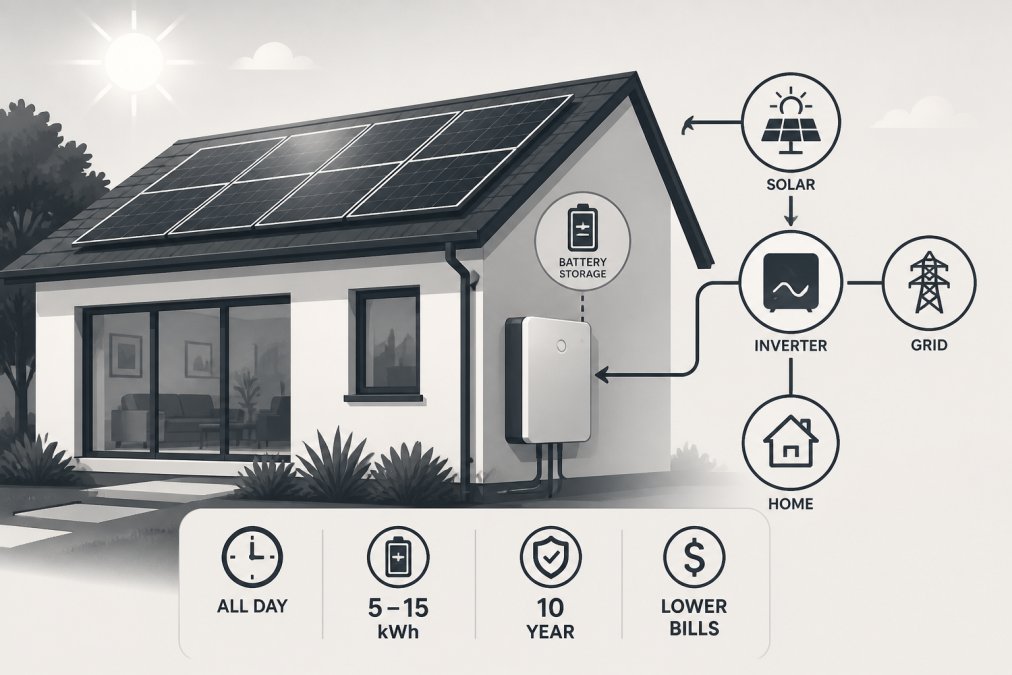
The Redback Smart Battery System is an Australian-engineered AC-coupled solution available in 7.2 kWh, 9.6 kWh, and 14.2 kWh capacities. AC-coupling means it connects to the grid side of your existing inverter, allowing you to add battery storage without replacing your current solar equipment.
Redback is Australian-owned with Brisbane-based technical support and a 10-year warranty. The system includes backup power capability when configured with a backup circuit.
AC-coupled systems have slightly lower round-trip efficiency than DC-coupled systems because energy is converted twice, though the difference is minimal for most Australian homes.
Best for: Homeowners with existing solar systems who want to add battery storage without replacing their current inverter.
How to Choose a Home Solar Battery: Selection Criteria
Selecting the right solar battery requires evaluating five key criteria: usable capacity, power output, chemistry type, inverter compatibility, and total installed cost including rebates.
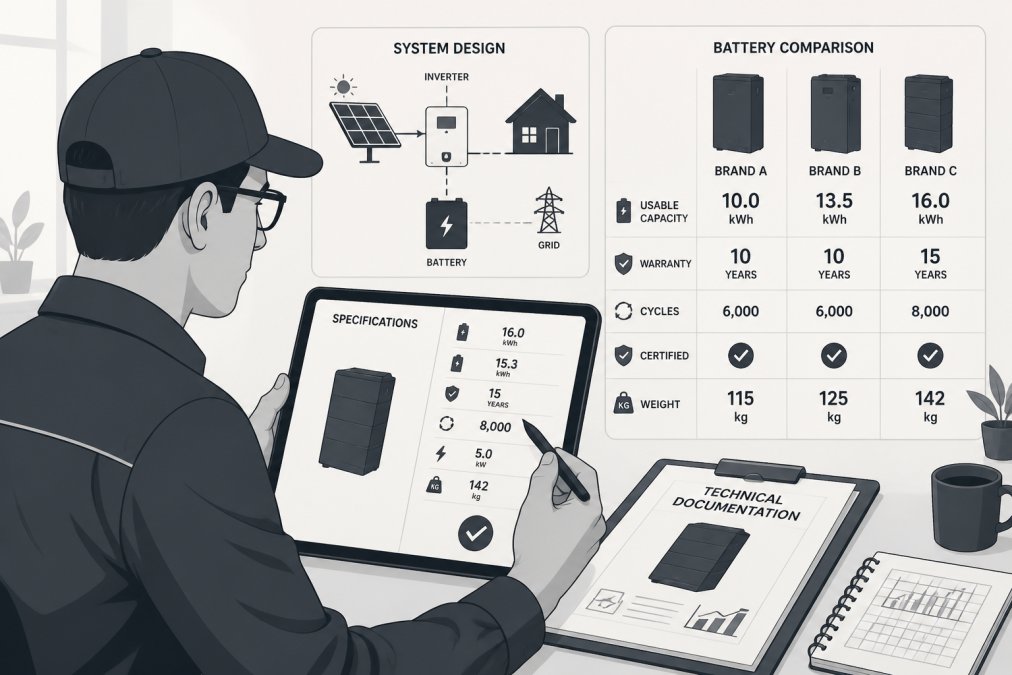
Usable Capacity (measured in kWh) determines how much energy the battery stores. Most Australian homes use 15-25 kWh daily, so a 13-15 kWh battery covers roughly half to two-thirds of daily consumption. Consider your actual usage by reviewing 12 months of electricity bills.
Power Output (measured in kW) determines which appliances the battery can run simultaneously. A 5 kW system can run a kettle and dishwasher together but struggles with an electric cooktop. A 10+ kW system handles multiple high-demand appliances without dropping power.
Battery Chemistry affects safety, lifespan, and cost. Lithium Iron Phosphate (LFP) is the standard for residential batteries in 2026 because it’s safer, lasts longer (8,000+ cycles typical), and performs better in Australian heat. All CEC approved batteries use LFP or equivalent safe chemistry.
Inverter Compatibility determines whether you need a new inverter or can use your existing one. DC-coupled systems require a hybrid inverter and often mean replacing your current equipment. AC-coupled systems work with most existing inverters. If you already have a functioning solar system, AC-coupling saves money and complexity.
Total Installed Cost includes the battery unit, inverter (if needed), installation labour, and electrical work. Pricing depends on quantity, dates, and delivery. Get quotes from at least three installers because labour costs vary significantly.
Request a detailed quote breakdown showing battery cost, inverter cost (if applicable), labour, electrical work, and rebate deduction separately. This makes it easy to compare across installers.
Solar Battery Rebate Eligibility 2026: Government Incentives
Battery rebate eligibility in 2026 depends primarily on whether your battery is CEC approved and whether your household meets income thresholds for specific programs.
The Cheaper Home Batteries Program provides rebates for CEC approved batteries installed by accredited installers. Eligibility is based on household income, with higher rebates for lower-income households. Check the Department of Climate Change, Energy, Environment and Water website for current income thresholds and your postcode eligibility.
The Small-scale Renewable Energy Scheme (SRES) creates tradeable certificates for small-scale solar and battery systems. Some battery systems generate certificates that can be sold to offset installation costs. Your installer can advise whether your chosen battery qualifies.
State-based programs vary significantly. Victoria, New South Wales, and Queensland offer different rebate structures and eligibility criteria. Contact your state government’s energy efficiency program to understand what’s available in your area.
Most rebate programs require installation by a CEC accredited installer. GridFree Solar is CEC accredited and provides expert rebate guidance to ensure you claim every incentive available.
Rebate programs change frequently. Always verify current eligibility and amounts with official government sources before committing to a purchase. Some programs have limited funding and close early when budgets are exhausted.
How to Verify Battery Certification and Search the CEC Register
Verifying that a battery is genuinely CEC approved takes five minutes and prevents costly mistakes. Visit the CEC approved products register, search for your battery model by name or manufacturer, and confirm it appears on the approved list.
Check the approval date. Batteries approved in 2024-2026 have been tested against current safety standards.
Verify the installer is CEC accredited. The CEC register also lists approved installers. GridFree Solar is CEC accredited and maintains current certification, ensuring your installation meets all regulatory requirements.
Request the battery’s technical datasheet from your installer. Legitimate manufacturers provide detailed datasheets; anyone refusing to share this information is a red flag.
Check for additional certifications beyond CEC approval: AS/NZS 5139:2019 (Australian battery safety standard), AS/NZS 3000 (electrical installation standard), UN38.3 (lithium battery transport safety), and IEC 62040-1 (electrical safety for UPS systems).
Safety Standards and Compliance for CEC Approved Batteries
CEC approved batteries must meet multiple safety standards to prevent fire, electrical hazards, and system failures.
AS/NZS 5139:2019 is the Australian standard for battery energy storage systems. It covers electrical safety, thermal management, fire safety, and system integration. Batteries meeting this standard have been tested for overcharge protection, short-circuit handling, thermal runaway prevention, and safe shutdown during faults.
AS/NZS 3000 is the Australian electrical installation standard governing how batteries connect to your home’s electrical system, including isolation devices, circuit protection, and earthing.
UN38.3 covers lithium battery transport and handling safety. Batteries that pass UN38.3 have demonstrated they won’t catch fire during normal operation or minor accidents.
IEC 62040-1 is the international electrical safety standard for uninterruptible power supply systems, covering voltage regulation, frequency stability, and safe operation during grid faults.
CEC approval requires independent laboratory testing against these standards. The manufacturer cannot self-certify; third-party testing houses conduct the evaluation.
Fire safety is critical. Lithium batteries can catch fire if overcharged, short-circuited, or exposed to extreme heat. CEC approved batteries include multiple protection layers: cell-level thermal fuses that disconnect individual cells if they overheat, module-level battery management systems that prevent overcharge, and system-level isolation that shuts down the entire battery if dangerous conditions are detected.
Australian homes are particularly at risk from battery fires because of high ambient temperatures. Summer temperatures in inland areas regularly exceed 40°C, stressing battery cooling systems. CEC approved batteries have been tested in Australian heat conditions to ensure they remain safe.
Non-approved batteries may lack proper thermal management for Australian conditions. A cheap battery that works fine in a temperate climate can overheat and fail dangerously in Australian summer. CEC approval, not just price, should determine your choice.
Frequently Asked Questions
What does it mean for a solar battery to be CEC approved?
A CEC approved solar battery has been tested and certified by the Clean Energy Council to meet Australian safety standards, electrical performance requirements, and renewable energy compliance. Approval ensures the battery meets AS/NZS 5139:2019 standards and qualifies for government rebates like the Cheaper Home Batteries Program. CEC approval confirms the product is safe, reliable, and eligible for installation rebates and incentive schemes.
Are CEC approved batteries required to qualify for solar battery rebate eligibility 2026?
Yes, CEC approval is a mandatory requirement for most government rebates and incentive programs in 2026. The Cheaper Home Batteries Program and Small-scale Renewable Energy Scheme both require batteries to be on the CEC approved list. Using a non-approved battery disqualifies you from federal rebates and may void warranty coverage under some state schemes. Always verify the battery’s CEC listing before purchase.
How do I check if a solar battery is on the current CEC list?
Visit the Clean Energy Council’s official product register at www.cleanenergycouncil.org.au and search the battery database by product name or manufacturer. The register is updated regularly as new products undergo testing and certification. You can also ask your installer to verify CEC approval before installation. Most reputable suppliers will provide CEC certification documentation with their products.
What safety standards do CEC approved batteries meet?
CEC approved batteries comply with AS/NZS 5139:2019 (energy storage systems), AS/NZS 3000 (electrical safety), IEC 62040-1 (UPS electrical safety), and UN38.3 (lithium battery transport safety). These standards cover fire safety, electrical hazards, thermal management, and performance testing. CEC accredited installers ensure batteries are installed to comply with these standards, protecting your home and maximising system reliability.
Selecting a CEC approved solar battery protects your home, maximises government rebates, and ensures long-term energy independence. GridFree Solar’s CEC accreditation and expert rebate guidance take the guesswork out of the process. Our team helps you navigate product options, verify compliance, and claim every incentive available. Connect Now to discuss which approved battery system is right for your home and how much you could save through government support.
This article was written using GrandRanker