
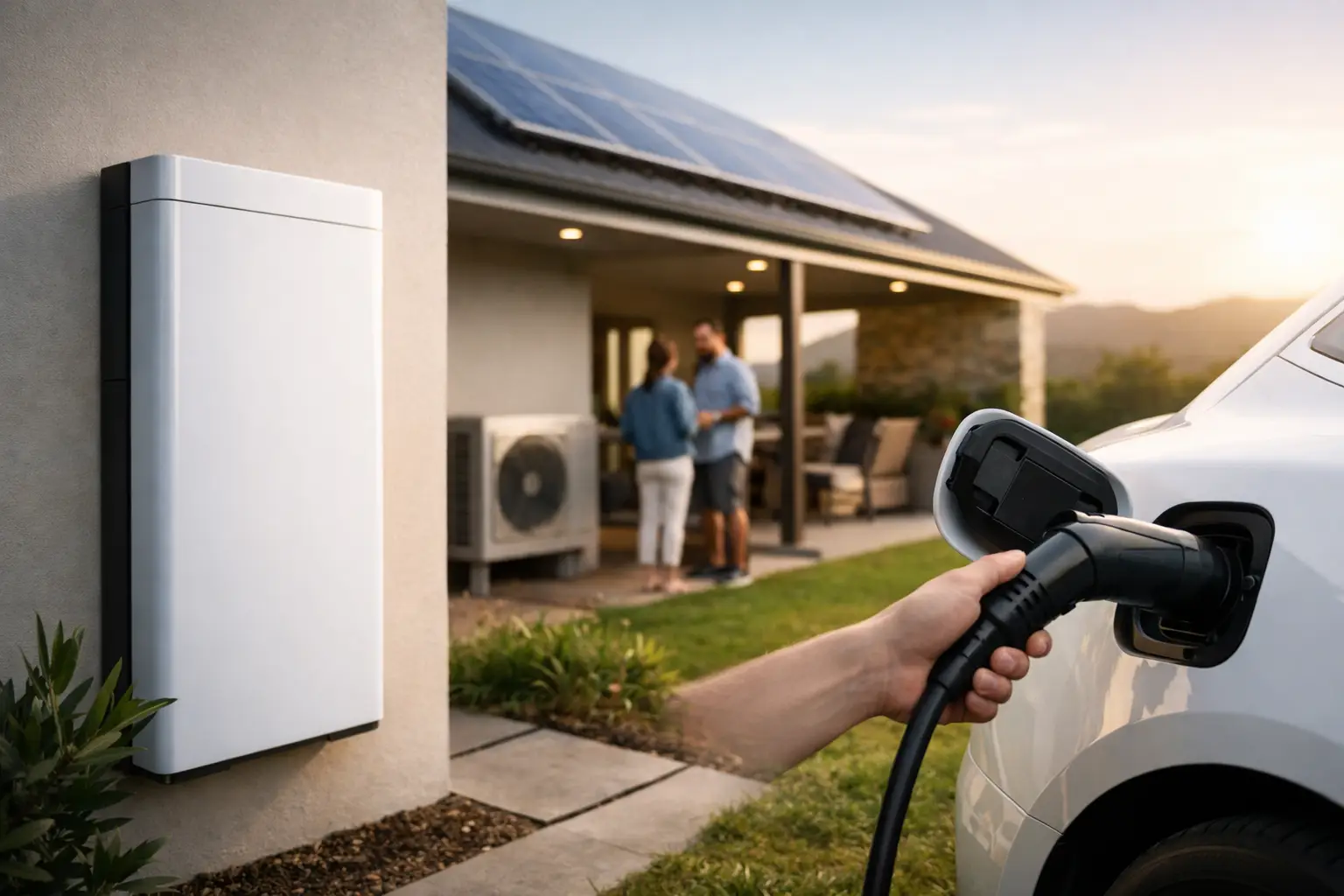
A solar system can produce plenty of power at midday, then leave you buying electricity at the highest evening rates. A battery changes that equation by storing surplus solar for the hours your household actually needs it. This home battery buyers guide explains what to look for before you invest, so your system delivers genuine savings, reliable backup and long-term value.
A home battery is not a one-size-fits-all appliance. The right choice depends on your solar generation, evening consumption, tariff, backup expectations and future plans. Buying the largest battery available is not always the smartest financial decision. A properly designed system should suit the way your home uses energy, not just the size of your roof.
Start with the outcome you want
Most homeowners choose battery storage for a combination of lower bills, greater energy independence and protection from outages. Those goals overlap, but they can lead to different system designs.
If reducing electricity bills is the priority, the focus is on capturing solar that would otherwise be exported to the grid for a low feed-in tariff. Your battery then supplies the home after sunset, reducing the amount of expensive grid energy you buy. This is often the best starting point for homes with strong daytime solar production and high evening use.
If backup power matters most, confirm exactly what the battery will keep running during a blackout. Some systems provide backup only to selected essential circuits, such as lights, the fridge, internet, a few power points and a garage door. Others can support most or all of the home, provided the battery and inverter are sized appropriately. Whole-home backup costs more and still has limits, particularly if several high-draw appliances run at once.
For households planning an electric vehicle, pool heating, reverse-cycle air conditioning or a move away from gas, future demand deserves attention now. A battery system can often be expanded later, but not every model allows it, and a future upgrade may require additional equipment. Discuss the next five to 10 years of energy use during the design stage.
Home battery buyers guide: size the system properly
Battery capacity is measured in kilowatt-hours, or kWh. This tells you how much energy the battery can store. Power output is measured in kilowatts, or kW, and tells you how much energy it can deliver at one time. Both figures matter.
A battery with plenty of capacity but limited output may not comfortably run several appliances together. Conversely, a high-output battery with modest capacity may handle a kettle or air conditioner briefly but run flat early in the evening. Good design balances storage capacity with the loads your household wants to cover.
Your electricity bill is useful, but it is only the beginning. Half-hourly smart meter data provides a clearer picture of when you import power, export solar and use energy overnight. Seasonal patterns also matter. A household may produce ample surplus solar in summer but far less in winter, when heating demand rises and daylight hours shorten.
As a practical example, a family that exports substantial solar through the middle of the day and uses most electricity between 5 pm and 10 pm may benefit from a battery sized around that evening gap. A household that is home during the day, runs appliances from solar and has low night-time demand may need less storage. There is no meaningful “average household battery” without looking at the data.
Usable capacity matters more than the headline figure
Do not compare batteries on total capacity alone. Check usable capacity, which is the energy available for regular use after the system protects a portion of the battery to support its lifespan. Also ask about round-trip efficiency. Energy is lost when electricity is stored and later discharged, so a more efficient system returns more of the solar energy you generated.
Battery performance can also be affected by temperature, installation location and the way the system is operated. Your installer should recommend a suitable location that meets manufacturer clearances, Australian standards and access requirements for future service.
Choose backup power with open eyes
Backup is one of the most valuable features of home battery storage, but it is frequently misunderstood. A standard solar system generally switches off during a grid outage for safety. Solar panels alone do not keep your home powered when the street loses electricity.
A battery designed with blackout backup can isolate your property from the grid and continue supplying nominated loads. The design needs to account for both battery output and solar production. On a sunny day, rooftop solar may recharge the battery while supporting the house. At night, the available backup time depends on the battery’s usable energy and what you leave switched on.
Ask whether the quoted system includes backup hardware, automatic changeover and essential-load wiring. Confirm whether your cooktop, hot water system, ducted air conditioning, pool pump and EV charger will be backed up, or whether they will be excluded. Clear answers before installation prevent expensive surprises later.
Look beyond the battery brand
A recognised brand is reassuring, but the quality of the complete system matters just as much. The battery, inverter, backup gateway, switchboard work, cabling, monitoring platform and installation standards all affect safety and performance.
Choose an installer that explains the proposed design in plain language and provides a detailed quote. It should identify the usable battery capacity, continuous power output, backup capability, expected inclusions and any site-specific electrical upgrades. If the property has an older switchboard, limited wall space or difficult cable routes, these should be addressed upfront rather than added as vague extras.
Warranty terms deserve close reading. Look at the product warranty, performance or capacity warranty, labour coverage and the process for making a claim. A long manufacturer warranty is valuable, but local support and an installer who remains available after commissioning are equally important. GridFree Solar designs and installs integrated solar and battery systems with this whole-of-system view, including monitoring and support after the job is complete.
Factor in tariffs, rebates and virtual power plants
The financial return from a battery is shaped by how it is operated. Time-of-use electricity plans typically charge more in peak periods and less at other times. A smart battery can prioritise stored solar for expensive evening periods and, in some cases, charge from the grid when rates are low for later use. Whether this makes sense depends on your retailer plan, solar output and household consumption.
Government rebates and state-based incentives can reduce upfront costs, but eligibility rules, approved products, installation requirements and funding availability can change. Treat advertised rebate figures carefully until your property and proposed system have been assessed. A provider that manages the paperwork can save time and help avoid mistakes that delay approval.
You may also be offered a virtual power plant, or VPP. In a VPP, an energy provider can coordinate participating batteries to support the broader grid during periods of high demand. In return, you may receive credits, a lower tariff or other benefits. It can improve the return on your battery, but read the agreement closely. Check how often the battery may be dispatched, whether a minimum reserve is protected for your home, the contract term and any exit fees.
Make monitoring part of the purchase
A battery should not become a black box on the wall. A quality monitoring app lets you see solar generation, household use, battery charge, grid imports and exports in near real time. This helps you understand savings and spot unusual behaviour early.
Monitoring also encourages smarter habits. You may find it makes sense to run the dishwasher, washing machine or pool equipment during solar-rich hours, leaving more stored energy for the evening. For small businesses, monitoring can reveal daytime load patterns and help identify whether battery storage, solar expansion or tariff changes will deliver the best result.
Before signing, ask who will assist if the app stops reporting, the battery shows a fault or the system needs a firmware update. The installation day is only the start of the relationship. Ongoing technical support is part of a dependable energy solution.
Questions to ask before you approve a quote
A good consultation should leave you clear about the outcome, not overloaded with jargon. Ask how the recommended capacity was calculated from your usage data, what appliances will work in a blackout, and whether the battery can be expanded later. Ask for estimated self-consumption and bill savings assumptions, including the tariff and feed-in rate used.
Also confirm the warranty pathway, whether rebate administration is included, and what site upgrades may be required. If you are comparing quotes, compare usable kWh, kW output, backup scope and installation inclusions side by side. A lower upfront price can conceal a smaller battery, no blackout protection or limited aftercare.
The best battery is the one that fits your home’s energy habits now and remains useful as those habits change. With a clear design, quality installation and a system you can monitor easily, stored solar becomes a practical way to take more control of every kilowatt-hour your roof produces.