A fully off-grid property sounds simple until you hit three cloudy days, a heavy overnight load and a battery bank that is already doing the hard work. That is where the best off grid solar system with generator backup proves its value. Not as a compromise, but as a smarter, more reliable way to keep power available when solar production drops and demand keeps moving.
For most homes and small commercial sites, the strongest off-grid setup is not just panels on a roof and a generator in the shed. It is a balanced system where solar handles everyday production, battery storage covers evening and overnight use, and a generator steps in only when needed. Done properly, that reduces fuel costs, protects battery life and gives you far more control over your power supply.
What makes the best off grid solar system with generator backup?
The short answer is sizing, integration and control. The best system is not the one with the biggest panel array or the largest generator. It is the one designed around your actual energy use, seasonal conditions and backup expectations.
A good off-grid system starts with accurate load assessment. If your household runs air conditioning, pumps, refrigeration, hot water systems and workshop equipment, your design needs to reflect those peaks, not just your average daily usage. Too many people are sold on panel counts alone, then find their batteries cycling too deeply or their generator running more often than expected.
A quality system also needs the right inverter-charger. This is the part that manages energy flow between solar panels, batteries, your property loads and the generator. If that equipment is poorly matched, the whole system becomes clunky. You end up with avoidable generator starts, inefficient charging or limited backup performance when you need it most.
Then there is the battery. In most modern systems, battery storage is what turns solar generation into real energy independence. It lets you use daytime solar after sunset, ride through bad weather and reduce the number of hours your generator needs to run. In practical terms, a strong battery-led design usually matters more than chasing extra panel capacity alone.
The core parts of a reliable system
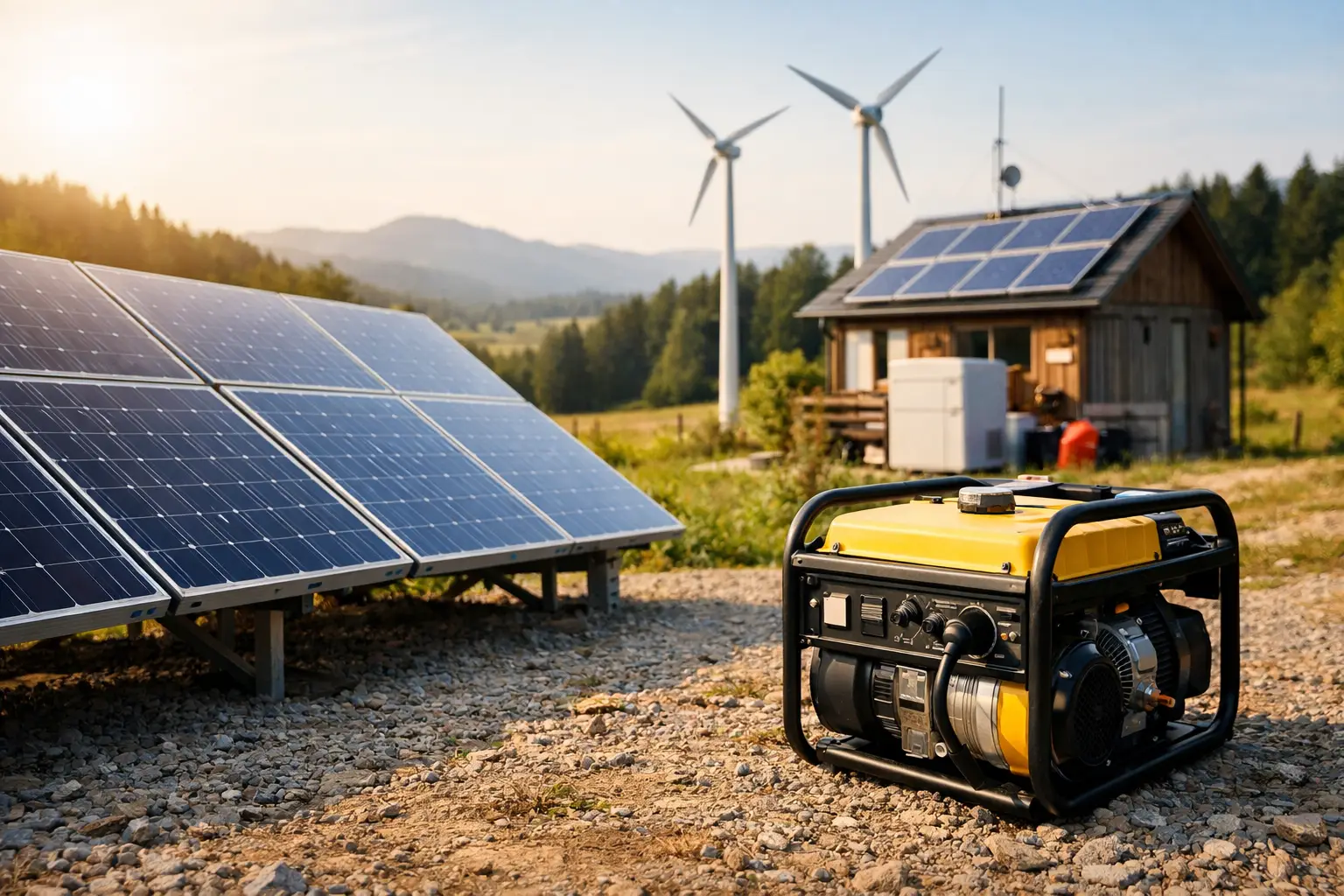
The best off-grid setups are built around four working parts: solar panels, battery storage, an inverter-charger and a generator with automatic or well-managed manual backup.
Solar panels should be sized to cover your regular daily loads and recharge your battery bank efficiently during available sun hours. In Australia, panel performance can vary significantly between summer and winter, and between regions. A system that looks generous in January may feel tight in June, especially if heating loads increase or weather turns poor for several days.
Battery storage should be large enough to carry your property through overnight usage and provide a sensible reserve. The right battery size depends on how much autonomy you want. Some clients are comfortable with one day of stored power before generator support. Others want two or more days to reduce generator use as much as possible. There is no universal answer, but undersizing the battery is one of the most common mistakes in off-grid design.
Your inverter-charger is the control centre. It converts stored battery power into usable electricity for the property, manages solar input and handles generator charging logic. This is where system intelligence really matters. Better equipment can start the generator when battery levels fall to a set threshold, prioritise solar when available and charge batteries at rates that support long-term performance.
The generator is not there to replace the solar system. It is there to support it. In a well-designed setup, the generator is an insurance policy and a battery recovery tool, not your main power source.
Why generator backup still matters in a modern off-grid system
Some people assume batteries have made generators unnecessary. In reality, generators still play a very useful role, particularly for regional properties, high-load sites and homes that want year-round reliability.
Extended cloud cover is the obvious reason. Even an efficient solar array can struggle through multiple poor-production days, especially in winter. A generator gives you a way to top up batteries without waiting for weather to improve.
It also helps with unusual demand spikes. If you have guests staying, run heavy machinery, or hit a period where pumps, cooling or refrigeration are working harder than normal, backup generation prevents the system from being pushed beyond its comfortable limits.
There is also a battery protection benefit. Deeply draining batteries too often shortens lifespan. A properly integrated generator can step in before that happens, preserving battery health and reducing long-term replacement costs.
How to choose the right generator size
Bigger is not always better. An oversized generator can run inefficiently, burn more fuel than necessary and create unnecessary noise. An undersized one may struggle to charge batteries properly while supporting live loads.
The right generator size depends on your inverter-charger capacity, battery charging requirements and the peak loads you may need to support while the generator is operating. For many residential systems, the goal is not to power every appliance directly from the generator all day. It is to provide enough supply to recharge batteries effectively and carry essential or typical loads at the same time.
Fuel type matters too. Diesel generators are often favoured for durability and long-run performance, particularly on larger rural properties. Petrol units can suit smaller or occasional-use systems, but storage and operating costs need to be weighed carefully. LPG can also make sense in some setups where fuel availability and storage are priorities.
This is one of those areas where it pays to avoid guesswork. The right sizing choice can save money upfront and reduce operating costs for years.
Common design mistakes that cost more later
The biggest mistake is designing for ideal conditions instead of real conditions. A property may use modest power on paper, but once you include water pumps, fridges, freezers, cooking appliances, heating, cooling and weekend usage spikes, the load profile can look very different.
Another mistake is over-focusing on panels and under-investing in battery storage. Extra panels help during the day, but they do not solve evening demand or multi-day weather events on their own. If the battery is too small, the generator will still do more work than you expected.
Poor generator integration is another issue. A generator sitting beside an off-grid solar system is not the same as a generator properly integrated into it. Automatic start capability, battery-triggered operation and correct charger programming make a major difference to convenience and reliability.
Finally, many property owners overlook future changes. If you plan to add a shed, workshop, pool equipment, EV charging or extra refrigeration, your system should allow for that. Off-grid power is far easier and cheaper to plan properly at the start than to retrofit in a hurry later.
What a good system design process should look like
A reliable provider should begin with your usage, not a product catalogue. That means looking at daily consumption, seasonal changes, appliance loads, backup expectations and site conditions. Orientation, shading, roof space, ground-mount options and generator location all affect design quality.
From there, the system should be built around outcomes: how many hours or days of battery support you want, how often you are comfortable using the generator and what level of resilience you expect during poor weather.
This is also where experienced support matters. Off-grid systems involve more than installation. They need thoughtful commissioning, compliance, monitoring and aftercare. When you are investing in an energy system that has to perform every day, technical design and long-term service matter just as much as the hardware itself.
For many households and small businesses, the strongest solution is a battery-first solar design with generator backup reserved for heavy demand and low-solar periods. That approach gives you lower fuel usage, quieter day-to-day operation and better control over electricity costs over the long term.
Is the best system the same for every property?
Not at all. A family home in outer suburbia with moderate evening usage will need a different setup from a rural property running pumps and cooling equipment, or a small business that cannot afford downtime. The best off-grid system is always site-specific.
That is why simple package pricing can be misleading. Two properties may appear similar, but their actual performance needs can be very different once you assess peak demand, seasonal loads and autonomy requirements. A cheaper quote is not always cheaper if it leads to extra generator runtime, battery stress or an early upgrade.
The better approach is to design for reliability first, then optimise for value. At GridFree Solar, that usually means focusing on how solar, batteries and backup generation work together as one complete system rather than treating each component as a separate purchase.
If you want the best off-grid outcome, think less about buying a generator to rescue an undersized solar setup and more about building an energy system that runs cleanly most of the time, then calls on backup only when it genuinely should. That is where off-grid power starts to feel less like a risk and more like real control.