

Last Updated: November 24, 2026
Quick Summary
Public liability cover is the core wind turbine insurance requirement for installation, and most installers and property owners also need cover for the turbine structure itself. No single national policy mandates wind turbine installation insurance requirements, so what applies depends on who does the work and where the turbine sits.
- Mandatory cover is a floor set by contracts, lenders or approvals, not a ceiling.
- Ask installers for a certificate of currency rather than accepting a verbal assurance.
- Call your home insurer before installation and get the turbine disclosure in writing.
- A defective workmanship exclusion means the policy won’t pay to fix the installer’s own faulty work.
- Choose a broker who writes renewable energy risks and compare limits, exclusions and excesses.
Table of Contents
- What insurance is required for wind turbine installation?
- Wind turbine public liability insurance explained
- Why wind turbine installation contractor insurance matters
- How home insurance for wind turbines fits in
- Risk factors specific to wind turbine installation
- Insurance compliance checklist before installation
- How to get quotes from specialised wind turbine insurance brokers
- Frequently Asked Questions
What insurance is required for wind turbine installation?
Public liability cover is the core insurance requirement for wind turbine installation, and most installers and property owners also need cover for the turbine structure itself. No single national policy mandates wind turbine installation insurance requirements across the board, so what applies to you depends on who is doing the work and where the turbine sits. This wind turbine insurance guide breaks down the cover types, the gaps and the checks that matter before anyone climbs a tower.
Here’s the part most people miss: insurance for a wind turbine is not one product. It’s a stack of policies that each cover a different failure.
Mandatory cover versus recommended cover
Mandatory cover is what a contract, a lender, a council approval or a network connection agreement requires you to hold before work starts. Recommended cover is what protects you from losses those rules don’t address.
In practice, the mandatory list usually looks like this:
- Public liability for the installer, often set at a minimum sum insured in the contract
- Contract works cover for the installation period, if the contract requires it
- Home building insurance that notes the turbine, if your lender or insurer requires disclosure
Recommended cover tends to include:
- Cover for the turbine and tower against storm and impact damage
- Cover for battery storage if the system includes one
- Income protection for the export revenue you’d lose if the turbine stops
The distinction matters because “mandatory” is a floor, not a ceiling. Meeting the contract minimum does not mean you’re properly covered.
Wind turbine public liability insurance explained
Wind turbine public liability insurance covers injury to other people and damage to their property caused by your turbine or your installation work. It is the policy most often named in installation contracts, and it is the one that responds when something goes wrong beyond your own boundary.
For an installer, this cover follows the work. A dropped component, a damaged roof, a third party injured on site: public liability is the policy that responds.
For a homeowner, it covers the rare but serious scenario where part of the turbine or its mounting fails and damages a neighbour’s property.
The limit question is often overlooked. A contract that specifies a minimum sum insured is setting a floor, not a recommendation. Check the figure against the replacement cost of nearby structures, not against the price of the turbine.
Watch out: a public liability policy that excludes “defective workmanship” will not pay for the cost of fixing the installer’s own faulty work, only the damage it causes. Read the exclusions before you sign.
Why wind turbine installation contractor insurance matters
Wind turbine installation contractor insurance is the package a professional installer carries to cover the job from start to finish. It typically bundles public liability, contract works, and cover for the installer’s own plant and equipment. Because the same plant and equipment risks can extend to the electrical supply infrastructure around a property, Brux Electrical considerations may also include whether a private power pole needs its own insurance.
Why does it matter to you as a customer? Because it tells you whether the installer can absorb a mistake.
Ask three questions before you engage anyone:
- What is your public liability limit, and can you send a certificate of currency?
- Does your contract works cover include the turbine components before handover?
- Are you covered for work at height, and is that noted on the policy?
A common mistake is accepting a verbal assurance. Ask for the certificate of currency, which is a one-page document showing the policy is active. It takes the installer minutes to send and tells you far more than a handshake.
Safe Work Australia guidance on working at heights sets out the duty to manage fall risks, and an installer’s insurance should reflect that they work to it.
How home insurance for wind turbines fits in
Home insurance for wind turbines is the piece most homeowners overlook. Your standard home building policy may not automatically cover a structure-mounted turbine, and a freestanding tower is often treated as an outbuilding or a separate structure.
Call your insurer before installation, not after. Ask directly:
- Is a roof-mounted turbine covered under the existing building sum insured?
- Does a freestanding tower need to be listed separately?
- Is the battery storage unit covered, and under which section?
The answers vary by insurer and by policy wording, so there is no single rule to rely on. Get the answer in writing.
If your policy excludes the turbine, you have two options: add it as a listed item, or take out a separate policy for the renewable energy equipment. Both are common and neither is expensive relative to the cost of replacing a tower out of pocket.
Risk factors specific to wind turbine installation
The risks here are different from a rooftop solar job. A wind turbine is a tall, moving structure that catches wind loads, and that changes the insurance picture.
The main risk factors are:
- Wind and storm loading on the tower and mounting points
- Work at height during installation and maintenance
- Vibration and fatigue on fixings over years of operation
- Third-party exposure if a component fails and falls outside the boundary
- Battery storage fire risk where the system includes a battery
That last point deserves attention. Battery storage brings a fire risk that a turbine alone does not, and insurers increasingly ask specific questions about it.
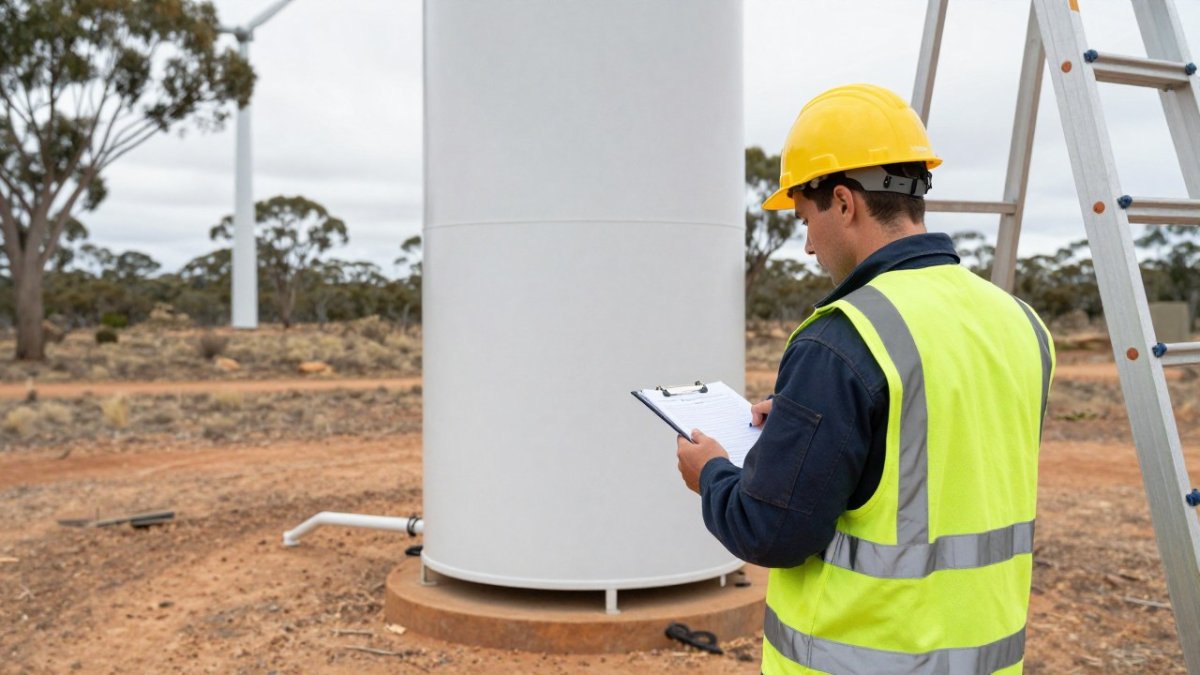
Planning and legal requirements sit alongside the insurance question, and they are worth checking before you commit. Our guide to residential wind turbine legal requirements covers what approvals and planning rules apply.
Insurance compliance checklist before installation
Work through this list before any installer starts on site. It takes an hour and prevents most disputes.
- Confirm the installer’s public liability limit meets the contract minimum
- Obtain a current certificate of currency, not a verbal assurance
- Check the policy covers work at height
- Confirm contract works cover includes components before handover
- Read the defective workmanship exclusion
- Call your home insurer and disclose the turbine in writing
- Confirm whether the tower needs to be a listed item
- Confirm the battery storage unit is covered
- Check whether storm and impact damage to the turbine is included
- Keep copies of every certificate and policy document
| Check | Who provides it | Why it matters |
|---|---|---|
| Certificate of currency | Installer | Proves cover is active now |
| Public liability limit | Installer | Confirms it meets contract minimum |
| Work at height cover | Installer | Installation and servicing risk |
| Contract works cover | Installer | Protects components pre-handover |
| Home policy disclosure | Your insurer | Avoids a claim being refused |
| Battery cover confirmation | Your insurer | Fire risk is a common exclusion |
How to get quotes from specialised wind turbine insurance brokers
Start with a broker who writes renewable energy risks, not a generalist call centre. A specialist knows which insurers ask about tower height, which exclude battery storage, and which will cover a freestanding structure without a fight.
Here is a suggested approach:
- Gather the system details: turbine model, tower height, mounting type, battery make and model.
- Note the installer’s credentials, including CEC accreditation and the standards the work complies with.
- Ask your home insurer first, so you know what is already covered.
- Approach two or three brokers who specifically list renewable energy.
- Compare limits, exclusions and excesses, not just the premium.
- Get every quote in writing before you compare.
A common mistake is comparing premium alone. A cheaper policy with a defective workmanship exclusion or a battery carve-out can cost far more when a claim lands.
Australian Securities and Investments Commission guidance on general insurance explains what a broker must disclose to you, which helps you ask better questions.
Insuring a wind turbine installation comes down to stacking the right cover in the right order: installer liability, contract works, home policy disclosure and battery cover. Miss one and the gap only shows up when you claim.
At GridFree Solar, our CEC Accredited Installers work to AS/NZS 5139:2019 and AS/NZS 3000, and we use CEC Approved Batteries. We also offer expert rebate guidance.
Get started with GridFree Solar and install a system you can insure with confidence.
Frequently Asked Questions
Does home insurance cover a residential wind turbine?
Most standard home building policies do not automatically cover a wind turbine. Some insurers treat it as a fixed structure and extend cover; others exclude it or require the turbine to be listed separately. Check whether your policy names the turbine, what perils it covers (storm, lightning, mechanical failure) and whether the sum insured reflects the replacement cost. If the turbine is not listed, ask for an endorsement before installation so there is no gap in cover.
Do I need public liability insurance to install a wind turbine?
Yes. Wind turbine public liability insurance is essential for anyone installing a turbine, whether you are a contractor or a homeowner coordinating the work. It covers third-party injury or property damage, such as a component falling onto a neighbour’s roof or a passer-by being injured on site. Contractors should carry their own policy and provide a certificate of currency. Homeowners should confirm their own liability cover extends to the installation period.
What should a wind turbine installation contractor have in place?
A reputable contractor should hold wind turbine installation contractor insurance that includes public liability, contract works cover, and cover for plant and equipment. Ask for a certificate of currency and check the policy is current and the sum insured is adequate for your project. Also confirm the contractor holds the relevant electrical and working-at-height qualifications for your state, and that any subcontractors are covered under the same policy.
Can installing a wind turbine affect my home insurance?
It can. Insurers assess wind turbines as a potential risk because of vibration, storm exposure and the possibility of component failure. Some will raise your premium or add an exclusion; others will require an engineering certificate before extending cover. Notify your insurer before installation, provide the design and compliance documentation, and get written confirmation of what is and is not covered so there are no surprises at claim time.
