
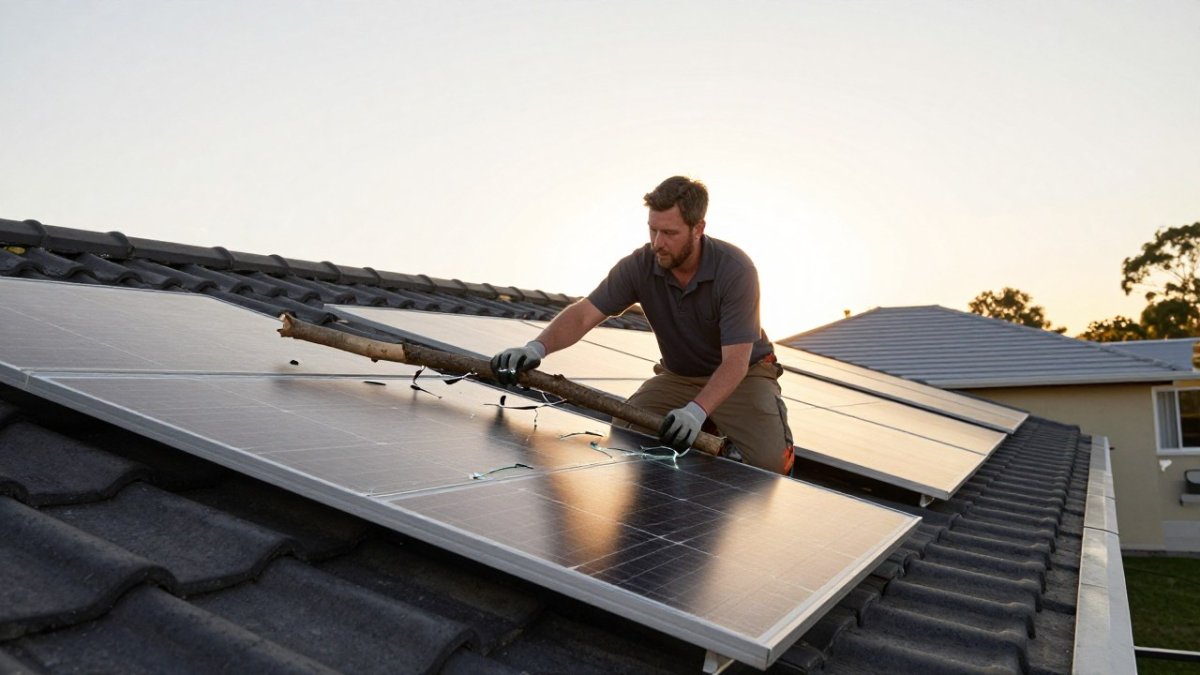
Last Updated: November 20, 2026
Quick Summary
Falling branches can crack panel glass, dent frames and tear the backing sheet, and a heavy limb can cause lasting solar panel damage. Hidden microcracks may also appear, so turn the system off only if safe, keep people clear, and arrange a licensed professional inspection before any clean-up.
- Heavy limbs landing with force cause the most serious solar panel damage.
- Backing sheet damage is the most serious and exposes internal wiring to moisture.
- Panels can be live in daylight, so never touch the array or cabling yourself.
- Call 000 first if there is fire, sparking, injury or risk of roof collapse.
- Check your monitoring app daily for a week after a storm for hidden output loss.
Table of Contents
- Can Falling Branches Damage Solar Panels?
- Immediate Safety Steps After a Tree Falls on Your Roof
- Signs of Solar Panel Damage From Debris
- Solar Panel Inspection After Storm Damage
- Repair or Replace? Warranty and Decision Steps
- Home Insurance Cover for Solar Panel Damage
- Booking Your Post-Storm Solar Inspection With GridFree Solar
- Frequently Asked Questions
Can Falling Branches Damage Solar Panels?
Yes, falling branches can crack panel glass, dent frames and damage the backing sheet. Most panels handle small debris well, but a heavy limb landing with force can do lasting harm.
The short answer is that damage depends on the size of the branch, the height it falls from and where it lands. A few leaves rarely cause trouble. If you suspect hidden electrical damage, our inverter repair vs replacement guide explains how to decide between the two.
Panel durability and impact resistance
Solar panels are built to be tough. That test rating does not mean a panel is immune. A falling branch can carry far more force than a hail stone of the same size, especially when it is heavy and lands at an angle.
Panel glass is strong, but it is not unbreakable. A single hard strike can cause hidden microcracks even when the glass looks intact. These cracks may grow over time as the panel heats and cools each day.
Cracked glass, frame dents and backing damage
Damage usually falls into three groups:
- Cracked glass: Visible cracks or chips on the front surface, which let moisture in.
- Frame dents: Bent aluminium frames that put stress on the glass and mounting rails.
- Backing damage: Tears or punctures in the rear sheet, which can expose the internal wiring.
Backing damage is the most serious. Moisture reaching the cells and wiring can cause corrosion and electrical faults. If you see any of these signs, avoid touching the panel and arrange a professional assessment.
Immediate Safety Steps After a Tree Falls on Your Roof
Safety comes first, and the order of actions matters. A branch resting on an array can be holding damaged glass, live conductors or a weakened roof structure in place.
Work through this checklist in order:
- Keep people clear. Move children, pets and visitors away from the house and the fall zone. Do not stand under overhanging limbs or damaged roof edges.
- Call emergency services first if there is danger to life. Ring 000 if there is fire, smoke, sparking, a person is injured or trapped, or the roof structure looks like it may collapse. Do not wait to assess the solar system first.
- Do not touch the array or any cabling. Even a branch that looks harmless can be pressing on live DC conductors. Solar panels generate voltage whenever there is light, so the system is not “off” just because the inverter is quiet.
- Isolate the system only if it is safe to reach the switches. If you can reach the inverter and the main switchboard without going near the damaged area, turn the solar supply off at the inverter and then at the switchboard. If the switches are near water, sparking or exposed wiring, leave them alone and wait for a licensed electrician.
- Photograph and note from the ground. Take wide and close photos from a safe position, note the time and date, and write down what you saw and heard. This record is valuable for insurance and for the technician.
- Arrange a professional assessment before any clean-up. A licensed electrician or accredited installer should confirm the system is safe before a roofer, arborist or cleaner goes near the array.
Watch out: A branch can be resting on a live conductor while the panels look undamaged from the ground. Never assume the system is safe because the lights are still on or the inverter shows no error.
When to shut down the solar system
Shut the system down if you see sparking, smell burning, notice water near the inverter or battery, see exposed wiring, or hear arcing or buzzing near the array.
Do not attempt repairs yourself. Once a professional has made the system safe, document the damage and the surrounding area for your insurer, including any fallen limbs that may help establish what happened, with Steve’s Tree Service LLC.
What not to do after a branch strike
- Do not hose down or wash debris off a damaged array.
- Do not cover panels with a tarp unless a professional directs you to.
- Do not cut or prune the branch yourself if it is touching the roof or array.
- Do not sign anything from a door-to-door repairer before your insurer and a qualified inspector have seen the damage.
Signs of Solar Panel Damage From Debris
Many owners only notice a problem when their bills rise or the monitoring app shows lower output. Check for damage both by eye and by looking at system performance.
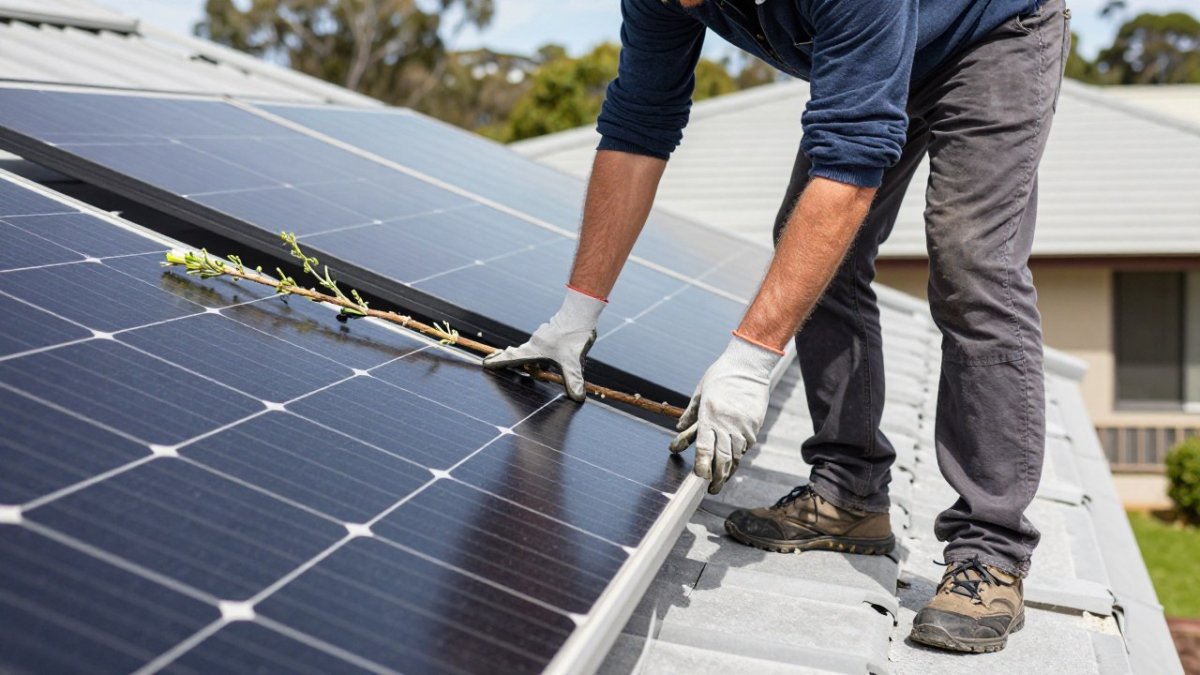
A homeowner in work gloves examining a rooftop panel after a storm is a common first step, but only inspect from a safe position, such as a ladder with a second person present.
Visible damage checklist
Look for these signs from the ground or from a safe ladder position:
- Cracks, chips or stars in the glass
- Bent or dented aluminium frames
- Panels shifted out of line on the mounting rails
- Torn or punctured backing sheets
- Debris trapped between panels or under the array
- Scorch marks or discolouration on panels or cables
Hidden electrical and performance damage
Some damage does not show. Check your monitoring app each day for a week after a storm. A sudden drop in output on sunny days, or one panel reporting far less than the others, can point to a fault.
Warning signs include:
- Output lower than expected for the time of year
- Error codes or alerts on the inverter display
- A string of panels reporting zero or very low output
- Warm or discoloured connectors
Watch out: A panel can look fine from the ground and still have internal cracks. Do not assume good visible condition means the system is safe.
Use this quick reference to spot the most common damage types and what they usually mean.
| Damage type | What it looks like | Action |
|---|---|---|
| Cracked glass | Visible cracks or chips on the front surface | Lets moisture in; arrange assessment |
| Frame dents | Bent aluminium frames | Stresses glass and mounting rails |
| Backing damage | Tears or punctures in the rear sheet | Most serious; exposes wiring |
| Hidden output loss | Lower output on sunny days, or one panel far below the rest | Check monitoring app for a week after storm |
| Inverter alerts | Error codes or alerts on the inverter display | Testing needed before replacing panels |
Solar Panel Inspection After Storm Damage
A professional inspection is the only reliable way to confirm damage. A qualified technician can test the wiring, check insulation resistance, inspect each panel closely and measure output across each string.
Ask the inspector to:
- Check the physical condition of every panel and frame.
- Test the DC and AC wiring and connections.
- Review inverter and battery performance logs.
- Provide written notes with photos for your insurer.
Choose an accredited installer or electrician. Keeping a record of every inspection can help with warranty claims and insurance.
Repair or Replace? Warranty and Decision Steps
The right call depends on what was damaged, how old the system is and what your warranty and insurer will cover. A single cracked panel is usually a straightforward replacement. Widespread backing damage, bent mounting rails or a compromised roof structure can push the decision toward a larger repair or a full replacement.
Use this decision guide to sort the damage before you agree to any work:
- One or two panels with cracked glass or a dented frame: replacement of the affected panels is usually feasible, provided the mounting rails and wiring test clear.
- Backing sheet tears or punctures: treat as urgent. Moisture ingress can corrode cells and wiring, so the panel should be isolated and assessed rather than left in service.
- Bent or shifted mounting rails: this is a structural issue, not just a panel issue. A roofer and an installer may both need to sign off before the array is re-energised.
- Roof damage under the array: repair the roof first. Reinstalling panels over a compromised roof risks a second failure.
- Inverter alerts or a string reading zero: the fault may be wiring or a connector rather than the panel itself. Testing is needed before anyone quotes for replacement panels.
- System near end of life: if the array is old and multiple panels are affected, compare the cost of repair against replacement with a newer, higher-output system.
Start with your warranty paperwork. Our solar panel warranty explained guide covers your rights and what to check before you agree to any work, and our battery warranty guide explains what can void cover. If you are unsure whether your system has reached the end of its life, our replacement checklist can help you judge timing, and our Solar Battery Needs Replacement guide explains when a battery should be replaced rather than repaired.
Before any repair begins, build an evidence file:
- Date-stamped photos of the damage from the ground and from a safe position.
- The professional inspection report, including test results and photos.
- Written quotes for repair and for replacement, itemised by panel, labour and any roof work.
- Copies of your warranty terms and your insurance policy wording.
- A written record of every phone call and email with your insurer, installer and manufacturer.
Watch out: A verbal assurance that “it’s covered” is not a decision. Ask for the outcome in writing before you authorise work, because insurers and manufacturers can decline a claim if repairs start before assessment.
Home Insurance Cover for Solar Panel Damage
Many home insurance policies cover storm damage to a roof, but cover for solar equipment varies. Some policies treat panels as part of the roof, while others list them separately or exclude them. Read your policy wording and ask your insurer directly.
Document everything before any clean-up or repair begins. Keep photos, the inspection report, invoices for temporary repairs and any emails with your insurer. If the claim is rejected, ask for the reason in writing and compare it against your policy.
Booking Your Post-Storm Solar Inspection With GridFree Solar
A professional check gives you a clear answer. GridFree Solar is a CEC accredited installer. Contact us to discuss inspection and repair options for your system.
Contact GridFree Solar to arrange an inspection and get a quote for any repairs. Pricing depends on the extent of the damage. Visit the GridFree Solar website for current pricing or to request a quote.
Frequently Asked Questions
Can a falling branch break a solar panel?
Yes. A heavy branch or limb landing with force can crack the tempered glass, dent the aluminium frame or puncture the backing sheet. Small leaves and gumnuts are less likely to cause structural damage, but they can shade cells and reduce output. Even when a panel looks intact, microcracks can form inside the glass, so a visual check alone does not confirm the panel is undamaged. If a branch has struck the array, switch off the system and arrange a professional inspection before relying on it again.
What should I do if a branch falls on my solar panels?
Keep people away from the roof and any fallen debris first. Where it is safe, turn off the solar isolator and the inverter, and do not touch exposed wiring or damaged panels. Photograph the damage from the ground and from a safe distance, note the date, then contact your installer or a CEC accredited installer to assess the system. Remove branches only from a safe position, or leave that to a qualified tree service and an electrician.
Will home insurance cover solar panel damage from a fallen branch?
This depends on your policy wording and whether solar panels are declared as part of the home or as an added item. Many home policies cover storm and falling-object damage, but cover limits, excesses and exclusions vary. Keep your installation invoice, warranty documents, system details and dated photos of the damage, and lodge the claim promptly. Ask your insurer in writing whether the panels, inverter and battery are included before you need to make a claim.
