
Table of Contents
- How Temperature Affects Solar Battery Performance and Charging
- Solar Battery Temperature Range: Operating Limits and Optimal Conditions
- Solar Battery Performance in Hot Weather: Heat Stress and Degradation
- Solar Battery Performance in Cold Weather: Reduced Charging and Storage Efficiency
- Humidity, Moisture, and Weather Exposure: Long-Term Battery Health
- Solar Battery Lifespan in Extreme Weather: Seasonal and Climate Effects
- Climate-Specific Installation and Thermal Management Strategies
- Frequently Asked Questions
Last Updated: October 8, 2026
How Temperature Affects Solar Battery Performance and Charging
Temperature is the single most important environmental factor determining solar battery performance climate conditions and how efficiently your solar battery stores and releases energy. Every battery has an optimal range, typically 15°C to 25°C; outside it, chemical reactions slow or accelerate unpredictably, cutting charging efficiency and usable capacity.
Above the optimal range, the electrolyte becomes more volatile, accelerating degradation. In the cold, ions move more slowly, temporarily lowering the energy you can draw per cycle, the colder it gets, the longer charging takes and the less power is immediately available.
Solar Battery Temperature Range: Operating Limits and Optimal Conditions
No single temperature range applies to every solar battery. The numbers depend on chemistry, cell format, BMS configuration, and whether the battery is charging or discharging. The table below reflects typical manufacturer specs for the three common household chemistries, always check your model’s datasheet.
| Chemistry | Typical charge range | Typical discharge range | Optimal band | Cold-charge cut-off |
|---|---|---|---|---|
| LFP (lithium iron phosphate) | 0°C to 45°C (with heater below 0°C) | -20°C to 55°C | 15°C to 25°C | ~0°C without heater |
| NMC lithium-ion | 0°C to 45°C | -20°C to 55°C | 15°C to 25°C | ~0°C |
| Lead-acid (AGM/gel) | -20°C to 50°C (reduced current in cold) | -20°C to 50°C | 20°C to 25°C | None, but capacity drops sharply |
Two things stand out: the discharge range is almost always wider than the charge range, because charging is more chemically stressful; and lead-acid looks widest on paper, but its usable capacity and cycle life fall away faster at the edges than lithium chemistries.
Why charging is the limiting operation
Charging a lithium-ion cell below roughly 0°C can cause lithium plating: lithium deposits as metal on the anode instead of intercalating into the graphite. It is irreversible, reduces usable capacity, and in severe cases risks an internal short circuit. That’s why almost every lithium BMS blocks charging below about 0°C, even though the battery will discharge at -10°C.
Some premium systems include a heater pad that warms cells to a safe charging temperature using grid power or a small portion of the battery’s own charge, the most useful feature for cold-climate installations, converting a hard charging block into a short delay.
What ‘derating’ actually means in practice
Above roughly 35°C, most lithium BMS units reduce charge current rather than allowing full current until a hard cut-off. The pattern is consistent: full current to a threshold, a gradual taper, then a hard stop. On a hot afternoon, your battery may accept less charge than your panels produce, with the surplus exported or curtailed.
Discharge derating is less common but occurs at the extremes. In the cold, internal resistance rises and voltage sags more under load, so the BMS may limit discharge current to keep voltage above the inverter’s minimum.
The gap between ‘operating’ and ‘optimal’
A battery rated to operate from -20°C to 55°C does not perform at rated capacity across that whole range. The operating range is where it won’t suffer immediate damage; the optimal band, typically 15°C to 25°C, is where capacity, round-trip efficiency, and cycle life meet their design values.
At the cold edge you may see only a fraction of rated capacity; at the hot edge, full capacity but accelerated degradation. A system sized on nameplate capacity in a climate that regularly sits outside the optimal band will under-deliver on both energy and lifespan.
When comparing battery quotes, ask for the charge and discharge temperature ranges separately, and ask whether the BMS blocks charging below 0°C or merely derates it. The answer tells you more about cold-climate suitability than the headline capacity figure.
How this connects to system sizing
If your climate spends much of the year outside 15-25°C, sizing should account for reduced usable capacity in the shoulder seasons and reduced cycle life in the extremes. A common approach is adding 10-20% headroom to nominal capacity in climates with large seasonal swings, and prioritising chemistries and BMS features that match the dominant stress, heat tolerance for hot climates, heater-equipped packs for cold ones.
AS IEC 62619 secondary lithium cells and batteries safety standard
Solar Battery Performance in Hot Weather: Heat Stress and Degradation
High temperatures accelerate the chemical reactions inside the battery, which sounds beneficial but actually speeds degradation.
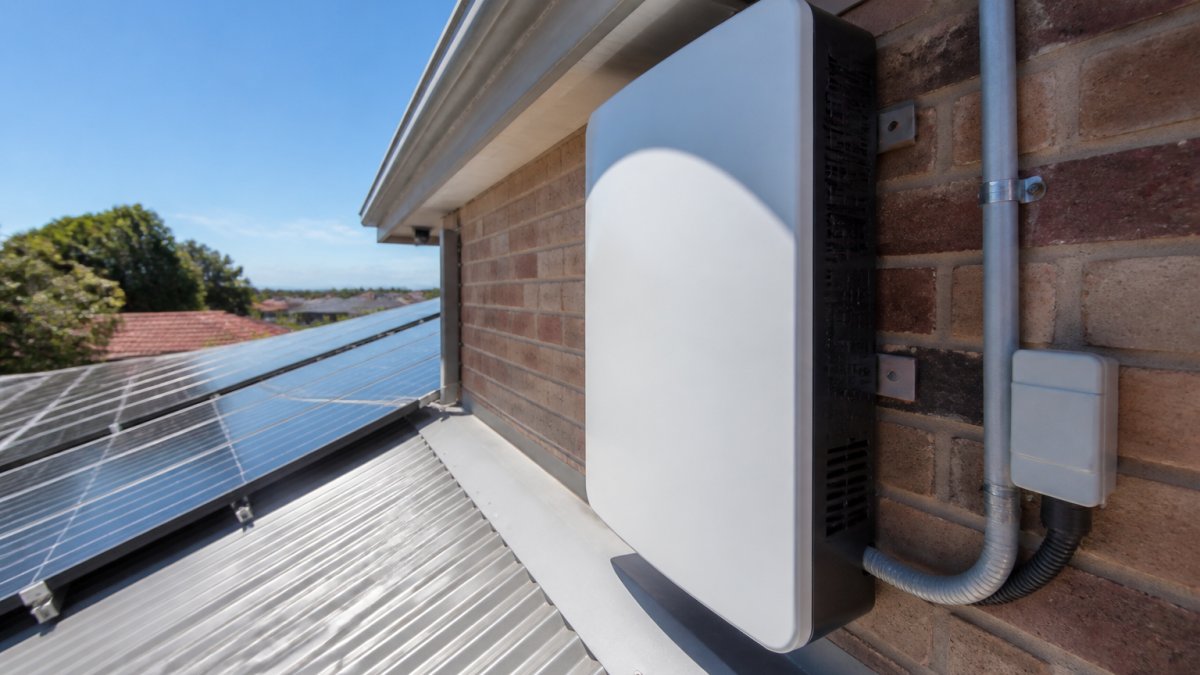
In hot climates, overheating cuts the number of charge-discharge cycles your battery completes before capacity falls below usable levels.
Heat also affects the BMS’s ability to balance charge across cells.
The practical consequence: homes in hot climates need either larger battery systems to offset reduced efficiency, or active thermal management, ventilation, shading, even cooling, to keep the battery within its optimal range.
Solar Battery Performance in Cold Weather: Reduced Charging and Storage Efficiency
Cold temperatures slow ion movement through the electrolyte, temporarily reducing extractable power. At 0°C, a battery might deliver only 50% of rated output.
Charging efficiency also suffers.
The seasonal effect is pronounced in cold climates. Winter brings lower temperatures and reduced solar irradiance from shorter days and cloud cover. These compound: panels generate less, and the battery charges and discharges less efficiently, a double penalty when heating demand is highest.
Recovery is automatic: once the battery warms, full capacity returns. But energy lost during the charging delay is gone, over a winter, 10-20% of what the system would have stored in milder conditions.
Humidity, Moisture, and Weather Exposure: Long-Term Battery Health
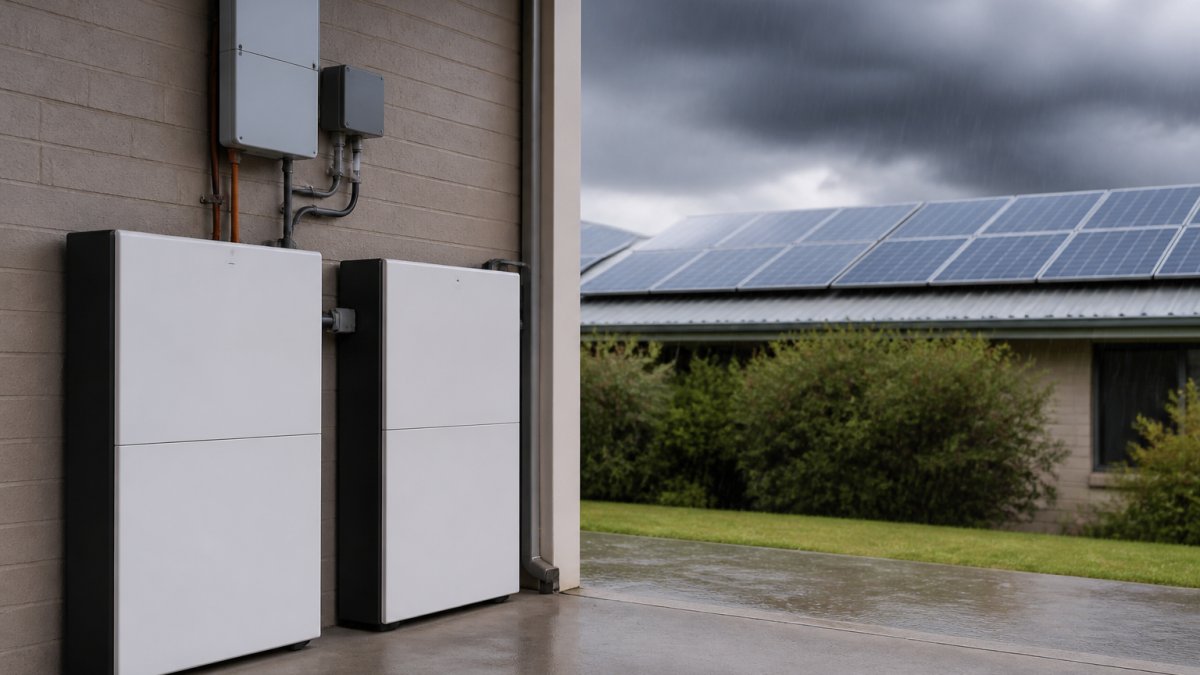
Humidity and moisture don’t directly affect the chemistry inside a sealed battery, but they threaten connections, terminals, and BMS electronics. Corrosion on terminals raises electrical resistance, reducing charging and discharging efficiency over time.
Water ingress is rare in modern sealed lithium-ion systems, but it’s a real risk in damp locations without proper ventilation or weatherproofing.
Rain and cloud cover affect panel output directly, indirectly stressing the battery with charge-discharge cycles that don’t match its optimal pattern.
The practical implication: placement matters. Installations with good ventilation, protection from direct water spray, and low ambient humidity stay much closer to manufacturer specifications.
Solar Battery Lifespan in Extreme Weather: Seasonal and Climate Effects
Extreme weather does not affect every chemistry the same way. The three dominant household chemistries, LFP, NMC lithium-ion, and lead-acid (AGM and gel), have different thermal tolerances, charge cut-offs, and degradation curves.
LFP is the most heat-tolerant common lithium chemistry, rated for a wider operating window and holding up better under sustained heat than NMC, one reason it’s the default for hot-climate installations.
NMC offers higher energy density for space-constrained installations but is more heat-sensitive.
Lead-acid is the most cold-tolerant on discharge but least heat-tolerant overall. High temperatures dramatically shorten cycle life, every 8-10°C above 25°C roughly halves service life.
If your climate regularly exceeds 35°C, LFP is usually the safer chemistry choice. If your climate regularly drops below 0°C, the deciding factor is not the cell chemistry alone but whether the battery has an integrated heater or a BMS that permits charging only after warm-up.
How the BMS changes the outcome
The BMS is the single biggest lever between a battery that survives a heat wave and one that doesn’t. A well-configured BMS will:
- Derate charge current as cell temperature climbs, rather than allowing full current until a hard cut-off.
- Block charging below the chemistry-specific low-temperature threshold (commonly around 0°C for LFP) until a heater or ambient warming brings cells into range.
- Balance cells more aggressively when temperature spread across the pack widens, which is typical during rapid weather changes.
- Log thermal events so you can see, months later, whether a heat wave actually pushed the pack outside its comfort zone.
A battery without these behaviours isn’t necessarily unsafe, but it degrades faster in extreme climates and may void warranty terms specifying operating temperature limits.
Standards and installation requirements
In Australia, battery installations must comply with AS/NZS 5139:2019 (Safety of battery systems for use with power conversion equipment), which sets requirements for location, ventilation, fire separation, and thermal safety. AS/NZS 3000 (the Wiring Rules) covers the electrical installation, and AS IEC 62619 addresses safety of industrial lithium cells and batteries, including thermal propagation. These are the baseline against which insurers and network operators assess an installation.
What actually shortens lifespan in extreme climates
Three patterns account for most climate-driven lifespan loss:
- Sustained heat above the optimal band. A week-long heat wave pushing cells to 45°C won’t instantly kill a battery, but it accelerates calendar ageing. The effect is cumulative across summers.
- Repeated cold charging without warm-up. The more damaging cold-weather risk, because lithium plating is permanent. Cold discharging is inefficient but recoverable; cold charging is not always recoverable.
- Wide daily temperature swings. Cycling between 5°C at night and 40°C in the afternoon causes thermal expansion and contraction of internal components plus repeated BMS intervention. Stable microclimates, shaded, ventilated, insulated, reduce this stress.
Practical expectations by climate
Most practitioners find a well-installed LFP system in a temperate climate delivers close to rated cycle life, while the same system in a hot, unshaded location may lose a meaningful fraction unless thermal management is added.
The honest position: climate affects lifespan through chemistry, BMS behaviour, and installation quality.
If your battery is installed in an uninsulated garage or exposed wall where summer cell temperatures regularly exceed 40°C, check the warranty terms. Many manufacturers specify a maximum operating temperature and will decline claims where logged data shows sustained operation above it.
AS/NZS 5139:2019 battery system safety standard
Climate-Specific Installation and Thermal Management Strategies
Thermal management is the most effective way to protect battery performance across climates. Ventilation, passive or active, keeps the battery closer to its optimal operating temperature.
Placement is the first design choice. Rooftop installations in full sun run hotter than basement or garage installations but benefit from better natural ventilation.
BMS units with active thermal controls are available for high-performance installations.
| Climate Type | Primary Challenge | Recommended Strategy | Expected Lifespan Impact |
|---|---|---|---|
| Hot, dry | Overheating and accelerated degradation | Shading, passive ventilation, larger capacity | 10-15% reduction |
| Cold, wet | Reduced charging efficiency, moisture risk | Insulation, active ventilation, weatherproofing | 10-20% reduction |
| Temperate, moderate | Minimal stress | Standard installation, passive cooling | 0-5% reduction |
| Extreme seasonal swings | Alternating heat and cold stress | Thermal controls, optimised placement | 15-25% reduction |
Climate has a measurable, lasting impact on how your solar battery performs and how long it lasts.
Frequently Asked Questions
At what temperature do solar batteries become less efficient?
Most lithium solar batteries operate optimally between 15°C and 35°C. Performance begins declining noticeably above 40°C and below 0°C. At temperatures above 50°C, chemical reactions accelerate inside the battery, reducing usable capacity and charging efficiency significantly. Cold temperatures below 0°C slow charging rates and temporarily reduce available energy storage. Battery management systems help stabilise performance across this range, but extreme temperatures still shorten battery lifespan over time.
How does hot weather affect solar battery performance?
High temperatures increase internal chemical reaction rates, causing the battery to degrade faster and lose capacity with each charge cycle. In extreme heat above 45°C, batteries may reduce their charging rate automatically to prevent overheating and thermal damage. This means slower energy storage during peak solar production hours. Heat also reduces the total usable capacity of the battery, so you store less energy even on sunny days. Proper ventilation and thermal management systems are essential to maintain performance in hot climates.
Do solar batteries work in cold weather?
Solar batteries do work in cold weather, but their performance is reduced. Low temperatures slow down the chemical reactions inside the battery, temporarily decreasing available capacity and charging efficiency. A battery rated at 10 kWh in warm conditions might deliver only 7-8 kWh of usable energy in freezing conditions. Charging is particularly affected, cold batteries accept charge more slowly. However, once the battery warms up, full capacity returns. Modern battery management systems help optimise cold-weather performance, and most systems continue operating safely well below freezing.
How can I protect my solar battery from temperature extremes?
Install the battery in a well-ventilated, sheltered location away from direct sun exposure and cold winds. Ensure adequate airflow around the unit to dissipate heat in summer. In very hot climates, consider a shaded installation or enclosure designed for thermal control. Use a battery management system that monitors temperature and adjusts charging rates to prevent overheating or cold-weather stress. Regular maintenance checks, especially before seasonal extremes, help identify issues early. Professional installers, such as GridFree Solar’s CEC-accredited specialists, can design climate-specific placement and ventilation strategies tailored to your local weather patterns.