
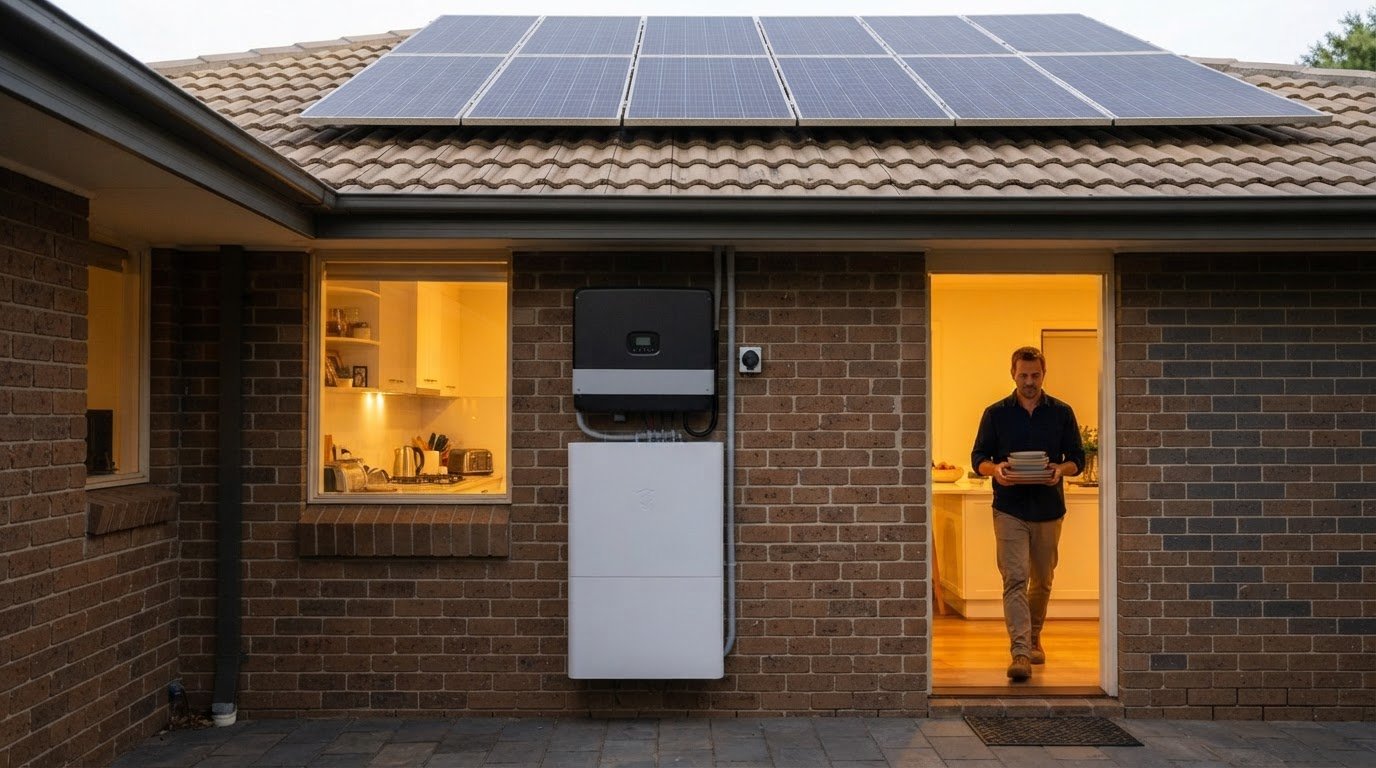
The biggest battery isn’t automatically the best fit for a large Melbourne home. Household batteries in Australia typically range from 4 kWh to 14 kWh, but the right capacity depends on how much electricity your household uses at night and how much solar generation is available to charge it. Choosing a solar battery for large family homes in Melbourne starts with those two figures, not the size of the house alone.
It makes sense to want enough stored energy to cover busy evenings, especially when several appliances are running. But capacity is only part of the decision: battery power output affects how many appliances can run at once, while usable capacity and backup capability shape how the system works in practice.
This guide explains how to compare battery capacity, power and features, then size a system around night-time use and solar generation. You’ll also see why a battery needs reliable solar charging and how solar and battery installation can bring those choices together for your Melbourne home.
Key Takeaways
- Battery location matters: available space and installation conditions help shape which system suits your home.
- Compare usable storage with power output, so the battery can store enough energy and run the appliances you need.
- Professional sizing weighs evening electricity use against the solar generation available to recharge the battery.
- Whether you’re adding storage to existing panels or planning a combined system, compatibility affects the installation design.
Which Solar Battery Is Best?
For a large Melbourne home, the best battery matches night-time electricity use, solar generation and the installation site. Australian household batteries typically have capacities of 4 to 14 kWh, with modular systems offering a way to expand storage.
In Victoria, use an installer registered or licensed and accredited for battery installation. Under the Cheaper Home Batteries Program, on-grid systems must be technically capable of participating in a virtual power plant.
Battery location and space needs
Battery location and space needs help determine where a system can be installed. The model, configuration and manufacturer’s requirements shape its footprint and placement. A professional assesses available wall or floor space, installation access and proximity to the home’s electrical equipment. These details can affect system design, cable routes and the work needed to connect solar panels and storage.
Battery and installation costs
Battery and installation costs cover the storage equipment and the work required to integrate it with a home’s electrical system. The price depends on the household and system, and is provided after a quote request; capacity, inverter compatibility, switchboard work and installation design affect it. A larger battery is not automatically cheaper over time: compare the expected value of stored electricity with the system’s upfront cost. Solar that would otherwise be sent to the grid as an export may be stored for later use.
Battery chemistry and system design also matter. Most household batteries are lithium-ion, while modular storage can suit homes needing a different capacity over time. The right choice depends on night-time demand and how much rooftop solar can reliably charge the battery. A battery that is too large for available solar generation may not fill as intended.
Installation planning should account for the existing solar setup or any planned panel installation. For an eligible system, the national program began providing a discount on small-scale battery installation costs on 1 July 2025. A professional can assess system compatibility, available space and connection requirements, then design solar and battery installation around the home’s energy use.
How professionals compare battery capacity, power, features and specifications
Battery specifications show how much energy a system stores and how it supplies a home. Professionals compare those figures with appliance demand, solar generation and the household’s priorities.
Battery capacity and power specifications
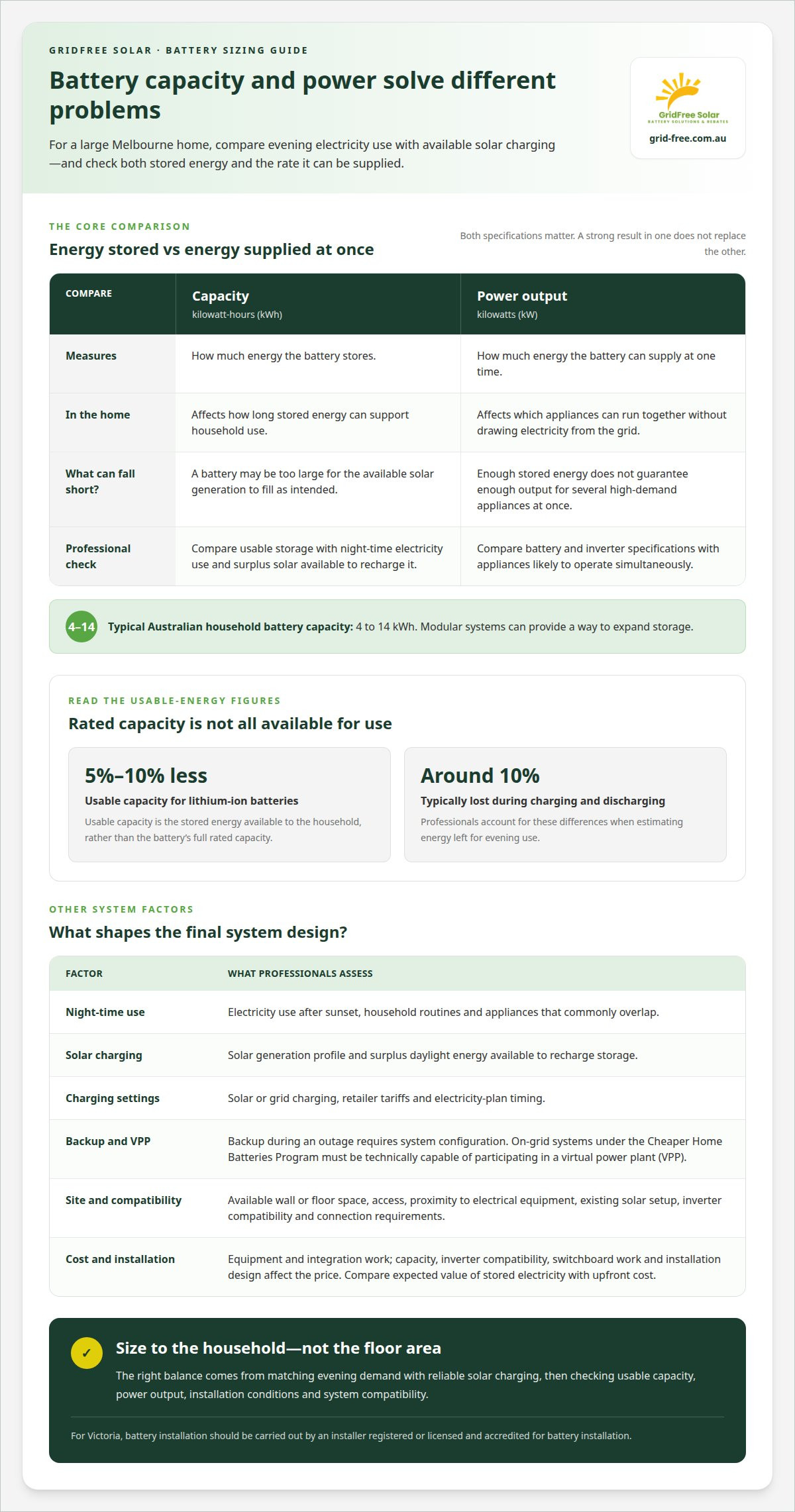
Capacity measures stored energy in kilowatt-hours, while rated power output, measured in kilowatts, limits how much the battery can supply at once. Both matter: capacity affects how long the battery can support household use, while power determines which appliances can run together without drawing electricity from the grid. Professionals compare the inverter and battery specifications with expected loads, including appliances that may operate simultaneously.
Usable capacity and power output
Usable capacity is the stored energy available to the household, rather than the battery’s full rated capacity. For lithium-ion batteries, usable capacity is typically 5% to 10% less than actual capacity, and around 10% of stored energy is typically lost during charging and discharging. Professionals account for these differences when estimating how much energy remains for evening use. A battery’s power output is a separate limit: sufficient capacity won’t run several high-demand appliances together if its output is too low.
Charging and outage backup
Charging features determine how a battery takes in electricity from solar panels or the grid. A home battery can charge from grid electricity when it’s cheaper, depending on its settings and the household’s electricity plan. Professionals consider retailer tariffs alongside solar charging, since the timing of charging affects potential electricity bill savings.
Backup is a separate feature, not an automatic result of adding storage. The system must be configured to supply power during an outage, and its output affects which appliances can operate. Under the Cheaper Home Batteries Program, on-grid systems must be technically capable of participating in a virtual power plant. A VPP links batteries and rooftop solar to help meet local grid demand; participation settings can affect how stored energy is used. These details help professionals weigh potential savings against household priorities. A professional battery system assessment can bring these specifications together.
How a professional sizes a battery around household night-time usage and solar generation
Professional sizing matches a household’s evening electricity demand with solar energy available to recharge storage. For a solar battery for large family homes Melbourne, the design should reflect actual usage patterns, not floor area or household size alone.
Night-time use and solar generation
Night-time use and solar generation together indicate how much storage a household can usefully fill and draw down. A professional reviews electricity consumption after sunset alongside the solar system’s generation profile, including surplus energy available during daylight. This shows whether a proposed capacity suits the home’s routine. For example, homes using more power after sunset need a different balance from homes that use most electricity during daylight hours.
Batteries for high evening demand
Battery choices for high evening demand must account for both stored energy and the load appliances place on the system. A professional considers which appliances commonly overlap, such as cooking equipment and heating, rather than estimating from total daily use alone. A battery may hold energy for later but still have limits on how much power it supplies at once. Sizing a solar battery for large family homes Melbourne means weighing both demands.
Household energy needs and battery options
Battery options differ in storage capacity and configuration, giving professionals ways to match a design to household requirements. They consider existing solar equipment, expected evening use and whether needs may change. Modular storage can be designed around current requirements, while compatibility with the solar setup influences the available configuration. The aim is to avoid capacity the home cannot regularly use or recharge.
Battery suitability and benefits for solar homes
A battery may suit a solar household when daytime generation exceeds immediate use and electricity is needed later. Stored solar energy can then serve evening demand, reducing reliance on grid electricity during those periods. A professional also weighs estimated bill savings against upfront cost and household energy patterns. Solar batteries for large family homes in Melbourne are most useful when generation, storage and routine use align.
Solar batteries and panels for Australian homes
For Australian homes, panels and batteries work as one energy system, but their roles differ. Solar panels generate electricity during daylight; a battery stores surplus for later household use. Match storage with usable solar output, rather than treating panel capacity and battery capacity as interchangeable. A system with little surplus generation may struggle to fill a larger battery, even when evening demand is high.
Adding storage to existing panels usually uses AC coupling in Australia. This arrangement connects a battery through an inverter to the solar system, allowing existing panels to remain part of the design. For a new installation, the professional plans panels, inverter and battery together. That coordinated design determines how solar electricity flows to household loads, storage or export, and how components operate together.
An islandable solar and battery system can disconnect from the grid during an outage. When sunlight is available, panels can continue generating and charge the battery to support household use. This differs from a standard grid-connected system, which may not provide backup simply because a battery is installed. The distinction matters for households prioritising resilience alongside greater use of their own solar generation.
Eligibility also shapes Australian system choices. Under the Cheaper Home Batteries Program, an eligible battery must have Clean Energy Council accreditation and appear on the CEC approved products list. On-grid systems must also be technically capable of joining a virtual power plant. A VPP coordinates connected batteries and panels to help meet local grid demand, so participation settings affect stored energy use. The Enphase IQ Battery 5P, for example, is listed with a 15-year warranty. To plan around existing or new panels, explore solar and battery installation.
GridFree Solar
GridFree Solar helps Melbourne households turn battery sizing decisions into a system plan suited to their solar generation and night-time use. If you’re weighing up storage for a large home, its team can consider how your existing panels, electricity use and battery requirements fit together. This gives you a clearer basis for choosing a professionally installed system, rather than sizing storage by home size alone.
For homes with existing solar, GridFree Solar’s Battery Upgrade & Replacement service can add or replace storage as household needs change. For a new setup, solar and battery installation can bring panels and storage into one project. The right approach depends on your current system and how your household uses electricity after sunset.
Contact GridFree Solar to discuss a battery system suited to your home’s night-time use and solar generation.
Make your next energy decision with confidence
A battery decision is also a household planning decision. The system should reflect how the home is used now, the role you want stored energy to play and how your solar setup fits future plans. That keeps the focus on a practical design, rather than choosing capacity in isolation. It also helps distinguish everyday energy goals from occasional priorities, so the plan reflects how your household typically operates.
For a solar battery for large family homes Melbourne, a useful next conversation can centre on your priorities, preferred backup arrangements and expected changes at home. GridFree Solar can discuss how solar and battery installation may fit those needs. There are no cookie-cutter plans: the system plan is shaped around your household.
Start with what you want your system to do, then contact GridFree Solar to discuss your options. A clear plan is a practical foundation for choosing a system that suits your home. You’re ready to take the next step with confidence.
Frequently Asked Questions
Am I eligible for battery rebates?
Eligibility depends on the battery and installation meeting applicable program conditions. GridFree Solar helps customers navigate and claim solar and battery rebates, including handling the paperwork. For a Melbourne home, include the proposed system configuration in your eligibility assessment before factoring a rebate into your budget.
Does where I live matter for a home battery?
Yes. Your location helps determine the relevant electricity network and connection arrangements. In Melbourne, the property is in Victoria, and the installation design also depends on its existing electrical setup, solar equipment and available space. Two homes with similar evening use may need different designs if their panels, switchboards or grid connection arrangements differ. These site details influence how the battery integrates with the home.
Are there state or territory rebates and loans?
Rebates and loan programs are separate forms of assistance, and their conditions can differ. For a Melbourne property, Victoria is the relevant state, while national programs may also apply. A rebate is subject to eligibility rules; a loan is finance that must be repaid under its terms. Treat each separately in your budget, and don’t assume both apply to the same installation.
What size battery do I need?
There’s no single capacity that suits every home. A professional can use electricity consumption records and solar system data to estimate evening demand and available charging energy. The assessment should account for changes in household routines, such as more people being home after sunset, and whether you want backup power. Those priorities help distinguish useful storage from capacity your solar system may not regularly fill.
What solar battery capacity is suitable for a large family home in Melbourne?
Household size alone doesn’t determine capacity. A professional considers the home’s evening consumption, solar generation and appliances expected to run together. For example, a family using electricity for cooking, heating and laundry after sunset may need a different storage profile from a household with similar occupancy but lower evening use. Reviewing consumption patterns helps tailor the system to actual demand.
How much does a home solar battery system cost in Melbourne, including installation?
There isn’t one set cost for every Melbourne home. The price depends on the system and is provided after a quote request; battery capacity, inverter compatibility, the existing solar system, electrical work and installation design can affect it. A useful comparison considers the complete installed system and any eligible rebate, rather than the battery unit alone.