
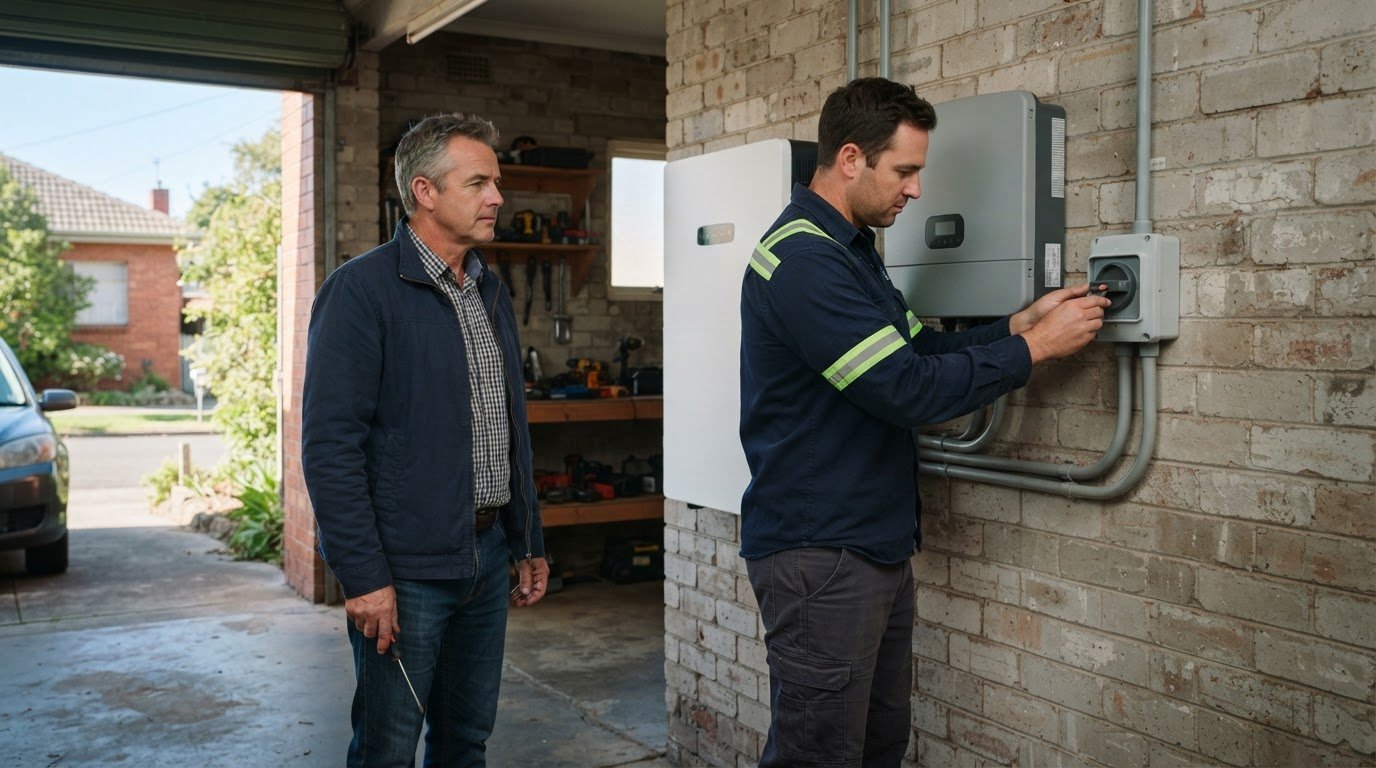
A solar battery is not a safe DIY shortcut. The risks of DIY solar battery installation include electric shock, fire and incorrect system integration, as well as problems with electrical compliance, home insurance and warranties.
It’s understandable to want to take control of an energy upgrade, and a solar battery can be a valuable addition to your home. But wiring, inverter compatibility and safety checks require specialist care: mistakes can put people and property at risk.
This guide explains the main hazards, how Australian electrical requirements and insurance may affect a DIY installation, and what warranties could cover. You’ll also learn why specialist electrical knowledge and training matter, and how to choose a safer path for a home battery system.
Key Takeaways
- Understand how Australian electrical requirements and installation standards can affect grid connection, insurance and rebate eligibility.
- Learn why battery and inverter manufacturers’ installation instructions matter when it comes to warranty cover.
- Identify the electrical knowledge and safety checks involved before deciding whether a battery installation is suitable for DIY.
- Recognise practical hazards such as working at height and exposed solar wiring, and why professional installation is the safer option for a home system.
Insurance and electrical compliance certificates
DIY battery work can affect insurance, grid connection and rebate eligibility. Australian installations must meet electrical requirements, including the applicable battery installation standard.
Electrical compliance certificates
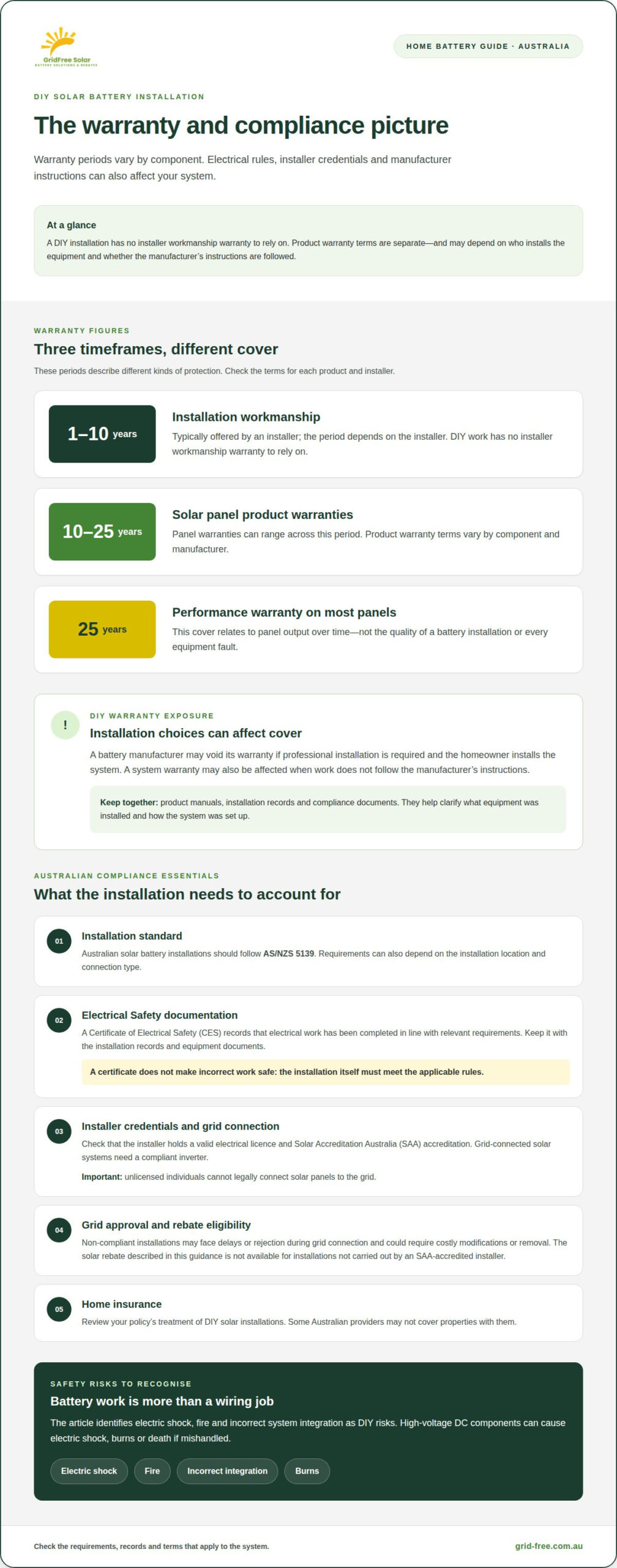
A Certificate of Electrical Safety (CES) records that electrical work has been completed in line with relevant requirements. It gives homeowners documentation about their battery installation, which may be useful if an insurer asks about electrical work after a claim or the system needs attention later. A certificate does not make incorrect work safe: the installation itself must meet the applicable rules. Keep the CES with the system’s installation records and equipment documents.
Installation regulations and local codes
Installation regulations and local electrical codes set requirements for safe battery placement and electrical connection. Australian solar battery installations should follow AS/NZS 5139. Requirements can also depend on the installation’s location and connection type. An installation that fails to comply may face delays or rejection during grid connection, and could require costly modifications or removal. Solar systems connected to the grid need a compliant inverter. Unlicensed individuals cannot legally connect solar panels to the grid, so DIY work must not cross into that connection. Incorrect wiring or documentation can complicate approval and leave the household with a system that cannot operate as intended.
Rebate eligibility is another consideration: Australian solar installations not carried out by an SAA-accredited installer are not eligible for the solar rebate described in this guidance. That makes accreditation relevant to the upfront cost, as well as electrical compliance.
Choosing a licensed battery installer
Before choosing an installer, homeowners should check that the person holds a valid electrical licence and is accredited by Solar Accreditation Australia (SAA). These are key requirements for Australian solar installers. Ask how the proposed battery and inverter will be integrated with the existing system, and what compliance documentation will be provided when work is complete. Those details help clarify responsibility for the electrical work and grid connection. Also review your home insurance policy’s treatment of DIY solar installations: some Australian providers may not cover properties with them. A licensed, accredited installer can help reduce compliance risks, while documented work gives you a clear record for future system queries.
Warranty implications of DIY installation
A DIY battery installation can affect equipment warranties if the manufacturer requires professional installation or the work doesn’t follow its instructions. Before proceeding, understand which protections apply to the battery, inverter and panels, and what may be excluded.
Can a DIY-installed battery qualify for Australian rebates or state incentives? A solar installation not carried out by an SAA-accredited installer is ineligible for the solar rebate described here. That rule doesn’t establish eligibility for separate state incentives.
Workmanship and product warranties
Workmanship warranties cover installation work, while product warranties cover faults in equipment under the manufacturer’s terms. Solar installation workmanship warranties typically last 1 to 10 years, depending on the installer. DIY work has no installer workmanship warranty to rely on, so correcting installation faults may become the homeowner’s responsibility.
Product terms vary by component. Solar panel warranties can range from 10 to 25 years, and most panels have a 25-year performance warranty. That performance cover relates to panel output over time, not the quality of the battery installation or every equipment fault. Read the terms for each product separately.
Battery and system warranty conditions
A battery manufacturer may void its warranty if professional installation is required and the system is installed by the homeowner. A solar system warranty may also be affected if installation doesn’t follow the manufacturer’s instructions. For example, incorrect inverter integration or battery configuration could lead to a dispute about whether a later fault resulted from the installation.
Keep product manuals, installation records and compliance documents together. If a fault occurs, these records help clarify what equipment was installed and how the system was set up. Warranty coverage and home insurance are separate protections: a warranty decision doesn’t determine whether an insurer covers damage.
Check the terms before installation
Review each manufacturer’s installation requirements and warranty exclusions before choosing DIY. Look for any requirement for a licensed or accredited installer, and note whether the battery, inverter and panels have different conditions. For a professionally installed system, solar and battery installation can help keep the work aligned with equipment requirements and warranty conditions.
Electrical knowledge and safety training
Battery installation involves electrical wiring, inverter integration, battery configuration and safety checks. Site the battery and provide ventilation according to the manufacturer’s instructions, with protection from weather where specified.
Prescribed electrical work certification
Certification records that electrical work has been assessed and documented under the requirements that apply locally. In Australia, electrical licensing and installation rules vary by jurisdiction, so the relevant requirements depend on where the home is located and what work is being done. Solar installers must hold a valid electrical licence and SAA accreditation. This matters because certification and installer credentials help establish that electrical work has been handled through the proper process, rather than relying on an owner’s own assessment.
High-voltage DC hazards
High-voltage direct current (DC) components can cause electric shock, burns or death if mishandled. Solar panels produce electricity when exposed to sunlight, so connected wiring can remain hazardous even when the system is not operating normally. Safe work requires knowing how to isolate components, handle electrical connections and complete checks without exposure to live conductors. A wiring error can create a serious hazard, not just reduce system performance.
Battery installation also involves matching the inverter and battery configuration to the system. Improper connections can compromise electrical protection and create faults that are difficult to identify without technical training. For off-grid systems, consulting a qualified electrician is strongly recommended for safety and system design. Potential savings from doing the work yourself should be weighed against the consequences of a wiring mistake.
Shock and fire hazards
Incorrect wiring or improper battery handling can lead to electric shock or fire. Nine solar battery fires were reported in Australia from 2019 to 2022. That figure is a reminder that installation quality and safety checks matter, even when equipment is designed for home use. A qualified installer understands how the components work together and can assess the system before it is commissioned.
Safety training must cover more than connecting cables. It includes recognising hazards, using appropriate protection and verifying that the battery, inverter and wiring operate as an integrated system. Without that knowledge, a DIY installation can put household members and property at risk.
DIY installation safety risks
Roof access and handling are major practical hazards in a DIY solar project. Panels typically measure 170 cm by 100 cm and weigh around 18–23 kg. Their size can make them awkward to carry and position, particularly on a roof where movement is restricted. A dropped panel or tool can also endanger people below, so the work area needs careful control.
Planning the route matters. Moving equipment to the roof involves several transitions, each requiring a secure grip and clear access. Stairs, ladders and roof edges leave little room to adjust an awkward load. The risks of DIY solar battery installation include these physical tasks, not just the technical work of connecting equipment.
Keep household members and visitors away from the area while equipment is being moved. Clear a route for carrying equipment and tools, and don’t leave materials where someone could trip. These precautions help reduce disruption and protect people who aren’t involved in the installation.
Long or complex work can also make it harder to stay organised. Switching between roof tasks and equipment handling may lead to rushed decisions or misplaced tools. The risks of DIY solar battery installation are easier to manage when each stage is planned, access stays clear, and work stops if the task becomes difficult to control.
For a home project, professional solar and battery installation provides a safer alternative to handling the work yourself. Discuss your solar and battery installation needs with GridFree Solar.
GridFree Solar
GridFree Solar can help when you’re weighing a home battery against the safety, compliance and warranty concerns of DIY work. Its solar and battery installation service gives households in Melbourne a professional way to integrate storage with a solar system. Battery upgrades and replacements are also available for existing systems.
That support is relevant if you’re planning a new installation, adding storage to existing panels or replacing a battery. The right setup depends on how the battery, inverter and current system work together, so treat the installation as a complete project rather than a standalone task.
For a safer next step, contact GridFree Solar to discuss your solar and battery installation needs.
Make your next energy upgrade a considered one
Choosing how to add battery storage involves more than installation. The risks of DIY solar battery installation are a reason to plan around your home’s energy needs, existing equipment and the responsibilities that come with electrical work. A considered approach can help you move forward with clarity, rather than treating a battery as a standalone purchase.
GridFree Solar offers residential solar panel installation, commercial solar solutions, and battery upgrades and replacements. These services support different needs, from planning a solar system for a Melbourne home to updating storage on an existing setup. There are no cookie-cutter plans: the next step depends on your project.
Talk through your plans and the questions you still have. Contact GridFree Solar for advice about your solar and battery needs, then take the next step with confidence.
Frequently Asked Questions
Are Solar Batteries Safe?
Yes, solar batteries can be used safely when the system is properly installed and configured. A battery works with other electrical equipment, so compatibility and correct setup matter. Treat exposed wiring or damaged equipment as hazardous, and don’t attempt repairs yourself. If there’s an emergency involving a solar battery, call 000 immediately.
Should you choose DIY or professional installation?
For a home battery connected to a solar system, choose professional installation by certified installers. The work involves more than mounting equipment: the battery, inverter and existing system must operate together, and the installation must meet applicable electrical requirements. DIY may suit some plug-and-play equipment, but that’s different from installing a fixed home battery system.
When Is DIY Solar A Good Idea?
DIY may suit some plug-and-play solar kits designed for uses such as caravans or camping. An off-grid kit also differs from a home system connected to the electricity grid. A small portable setup doesn’t mean fixed battery wiring is suitable for DIY. For off-grid system design, consult a qualified electrician.
What are the main safety risks of DIY home battery installation in Australia?
The main risks include falls while handling equipment on a roof, electric shock from solar wiring, and fire caused by incorrect connections or battery handling. Panels can produce electricity in sunlight, so connected wires may remain hazardous. The battery must also work with the inverter and other system components. A mistake can put the installer and household at risk.
Can homeowners legally install a solar battery themselves in Australia?
There isn’t a single answer for every type of work and connection. In Australia, an unlicensed person cannot legally connect solar panels to the electricity grid. Battery work must also meet applicable local electrical requirements. Whether a homeowner can perform a particular task depends on the work involved and jurisdiction, so don’t assume a grid-connected installation is lawful as a DIY project.
What Australian electrical licensing rules apply to installing a home battery?
Solar installers in Australia must hold a valid electrical licence and Solar Accreditation Australia accreditation. Grid-connected work also involves relevant safety and connection requirements. GridFree Solar identifies CEC Approved Battery, CEC Accredited Installer, AS/NZS 5139:2019, AS/NZS 3000, Certificate of Electrical Safety (CES), Grid Connection Approval, UN 38.3, IEC 62040-1, CEEW or equivalent, Victorian Electrical Safety Laws and WHS compliance within its stated compliance framework.