
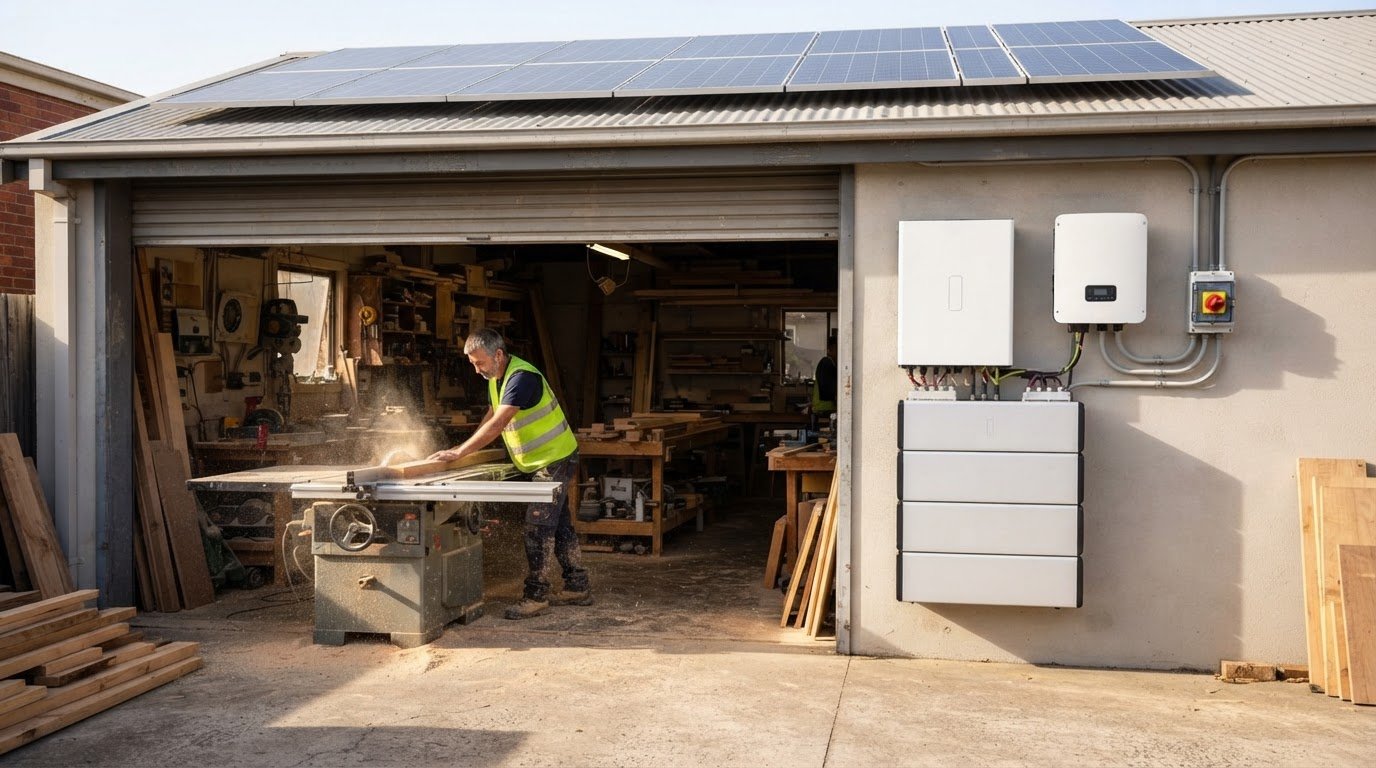
A solar business case is strongest when it considers more than panel output. Presenting a business case for solar energy means comparing system costs with the electricity your business uses, potential feed-in tariff credits for surplus power, and the time savings may take to offset the investment. The Reserve Bank of Australia says solar has become a cost-effective source of electricity generation.
Look beyond headline savings. The value of presenting a business case for solar energy depends on how closely generation matches your business’s electricity use and how much surplus power is exported to the grid.
This article explains how self-consumption and feed-in tariffs affect savings, which factors shape payback, and how solar may contribute to more predictable energy costs, business reputation and property value. Use this framework to weigh financial and wider business benefits against your organisation’s priorities.
Key Takeaways
- Match solar generation to your business’s daytime electricity use to understand how much power you can consume on site.
- Factor feed-in tariff credits into your savings estimate, but distinguish surplus electricity from solar power used directly.
- Assess payback against system size, location, energy use and any demand charges on your electricity plan.
- Weigh potential reputation and property-value considerations alongside energy savings when assessing solar’s broader business benefits.
Electricity self-consumption and feed-in tariffs
Commercial solar projects in Australia must account for applicable planning, grid-connection and electrical requirements. Details depend on the location and project design. The Reserve Bank of Australia notes that tighter grid-connection technical standards have contributed to delays and higher costs for new renewable energy projects.
Using solar power on site
Electricity self-consumption means using solar power at your premises as it is generated, while a feed-in tariff credits excess electricity exported to the grid. The balance matters because solar used on site helps avoid buying that electricity from your retailer. For example, a business operating during daylight hours may use more generation directly, while surplus power can earn a feed-in credit.
Reducing business electricity bills
Solar can lower a business’s electricity bill by reducing the amount of grid power it buys while panels are generating. The impact depends on how closely generation matches the premises’ demand and the value of exported electricity under the applicable feed-in tariff. A business that uses power during the day may consume more solar directly; one with lower daytime demand may export more.
Using solar during business hours can make energy expenses more predictable and help a business manage exposure to changing electricity costs. It does not remove that exposure: the premises may still draw power from the grid when solar output is low or demand rises. Compare operating hours with electricity-use data to identify when solar generation could offset grid purchases.
A battery can store solar electricity for use when panels aren’t generating enough, including at night or during cloudy conditions. This can shift some solar use beyond daylight hours, although battery systems have a high upfront cost and may take longer to pay back than solar PV alone. Include storage only when its contribution to the business’s electricity use supports the financial case.
Estimating costs, savings and payback
Compare the system’s upfront cost with expected bill savings, export credits and ongoing expenses. Then test how those assumptions affect payback.
Calculating solar payback
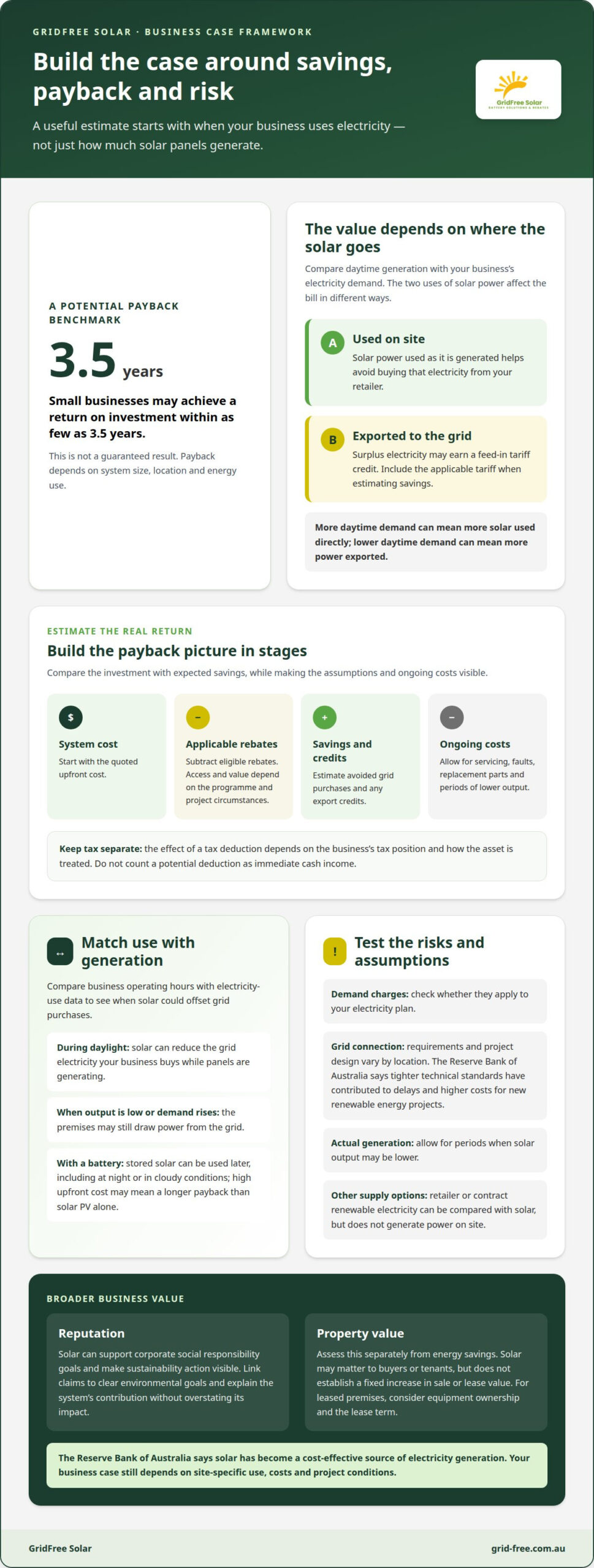
Solar payback estimates how long cumulative savings take to offset the system’s upfront cost. It matters because the result helps compare solar’s financial return with continued grid purchases. Small businesses may achieve a return on investment within as few as 3.5 years, depending on system size, location and energy use.
To compare commercial solar with grid power, estimate which electricity purchases solar could offset, then account for the grid demand that remains. Renewable electricity bought through a retailer or contract is another option, but it does not generate power on site. Model each option against the business’s usage, contract terms and investment priorities.
Accounting for incentives and tax deductions
Incentives can reduce the upfront amount a business needs to fund, so include eligible solar or battery rebates in the estimate. In Australia, rebate access and value depend on the applicable programme and project circumstances. Treat tax deductions separately: their effect depends on the business’s tax position and how the asset is treated.
Build the estimate in stages: record the quoted system cost, subtract any applicable rebate, then compare the remaining investment with projected savings. Do not treat a potential tax deduction as immediate cash income. Show the assumptions behind each estimate and model the tax effect separately.
Including risks and maintenance costs
Allow for maintenance, equipment faults and changes in actual solar generation. Include expected servicing and component-replacement costs in the forecast, along with periods when output may be lower. These factors affect net savings and payback, so omitting them can make the projected return look stronger than it is.
Grid connection is another project risk. The Reserve Bank of Australia says tighter technical standards have contributed to connection delays and higher costs for new renewable energy projects. Include connection requirements and potential timing impacts in the project assessment. A commercial solar project can be assessed against the site’s electricity use and investment goals.
Brand reputation and property value
Solar can connect a business’s public sustainability commitments with visible action. Businesses may use solar to support corporate social responsibility goals, reduce their carbon footprint and promote sustainability. For a customer-facing organisation, rooftop panels make that investment visible at the premises. A credible reputation case links the installation to clear environmental goals rather than relying on broad claims about sustainability.
Make the business case specific. Explain what the solar installation contributes, which business goals it supports and how the organisation will communicate that contribution. For example, describe solar as one part of the company’s emissions-reduction work, alongside other initiatives. Measured, accurate language helps customers, staff and business partners understand the system’s role without overstating its impact.
Assess property value separately from energy savings. A solar system may matter to buyers or tenants considering a building’s operating costs and energy infrastructure, but it does not establish a fixed increase in sale or lease value. Distinguish demonstrated bill savings from any expected effect on market value. This keeps the financial case clear for property owners, investors and potential occupants.
For an owner-occupied site, assess the installation as both an energy asset and a building improvement. For leased premises, consider who owns the equipment and how it fits the lease term before assigning value to it. A system’s usefulness to a future occupant depends on the site’s electricity demand and operating pattern. These details matter when comparing a solar-equipped property with one relying solely on grid electricity.
Present reputation and property value as supporting considerations, not substitutes for financial analysis. A strong proposal connects measurable energy benefits with the business’s sustainability objectives, then explains how the equipment fits the property. This gives decision-makers a fuller view of the investment while keeping claims about customer perception and asset value grounded in the specific business and building.
Business benefits of rooftop solar
Rooftop solar can support different business goals, from managing operating costs to advancing sustainability commitments. The right case depends on the business’s scale, roof space and electricity demand. Small businesses typically use less power than medium-sized and large businesses, so a moderate-sized system can offset most of their electricity use.
Where a medium-sized business has sufficient roof space, a larger solar array may generate a higher share of its energy needs. This helps align the investment with the scale of the operation, instead of installing capacity without a clear business purpose. The Reserve Bank of Australia says solar has become a cost-effective source of electricity generation.
Commercial rooftop solar also gives large businesses a practical way to support corporate social responsibility goals. Generating renewable electricity on site can contribute to efforts to reduce a business’s carbon footprint and promote sustainability. Connect the project to specific organisational goals, then explain its expected contribution in plain, measured terms. This makes the business case more relevant to decision-makers and staff.
Assess, approve and install a business system by moving through these project stages:
- Assess the site’s roof space, business electricity needs and project objectives.
- Develop a system proposal that connects expected generation with the business case.
- Review the proposal and secure the relevant internal approvals before proceeding.
- Plan installation and grid connection around the project’s technical requirements.
These stages help connect the initial opportunity to an investment decision and an installation plan. For example, a small business seeking to offset most of its electricity use has different capacity needs from a medium-sized business with room for a larger array. Discuss your commercial rooftop solar project as a way to assess how a system could fit your site and business objectives.
GridFree Solar
GridFree Solar helps businesses in Melbourne and across Victoria put solar investments into practice with commercial solar solutions and solar and battery installation. These services can support your assessment of whether on-site generation suits the premises, electricity use and business objectives. A clear business case informs the system decision; the installation turns that decision into an operational energy asset.
For businesses with an existing system, GridFree Solar provides battery upgrades and replacements to increase energy storage capacity. The team also helps customers navigate and claim solar and battery rebates, which can lower upfront costs when applicable. These services support different stages of a business’s solar journey, from a new installation to upgrading an existing system.
To discuss your solar plans, contact GridFree Solar.
Turn your solar assessment into a clear next step
A strong decision starts with a proposal decision-makers can act on. Set out the business objective, the assumptions behind the financial model and the outcomes you will use to assess performance. This gives your team a practical basis for deciding whether to proceed, refine the project or revisit it later.
Presenting a business case for solar energy is also an opportunity to align the project with your site’s future needs. GridFree Solar provides commercial solar solutions, residential solar panel installation, and battery upgrades and replacements for businesses in Melbourne and across Victoria. The right option depends on the property, energy requirements and project goals.
If you’re ready to explore what solar could mean for your premises, contact GridFree Solar to discuss solar. A considered next step can help turn your business case into a confident, well-planned decision.
Frequently Asked Questions
What financial benefits can solar energy provide for Australian businesses?
Solar can reduce electricity purchases by supplying power to a business while panels are generating. Exporting surplus may earn feed-in tariff credits, while a battery may reduce peak demand charges if the electricity plan includes them. For a Melbourne business, the value depends on its operating schedule, electricity tariff and how much generated power it can use on site.
What is the typical payback period and return on investment for business solar in Australia?
Small businesses may achieve a solar return on investment within as few as 3.5 years, depending on system size, location and energy use. Treat this as a possible outcome, not a standard result for every business. A useful assessment models the premises’ consumption and solar output together, then compares projected savings with system costs and ongoing expenses.
How can businesses estimate solar savings using electricity bills and interval data?
Use electricity bills to understand charges and total consumption, then compare interval data with expected solar generation over matching periods. This reveals when the business uses electricity and whether solar output may coincide with demand. Estimate on-site use and exported energy separately. For example, a daytime operation and an after-hours business can have different consumption profiles despite similar total usage.
How should businesses assess battery storage, export limits and solar tariffs?
Assess a battery by estimating how much stored solar power the business could use later, then compare that value with the battery’s cost and expected payback. Include any demand-charge reduction if the electricity plan has demand charges. Use the applicable site and plan assumptions when modelling export limits and tariffs, as these affect the value of surplus generation.
What should an Australian business include in a solar project proposal for decision-makers?
Include the business objective, site and electricity-use profile, proposed system, expected generation, and assumptions about on-site use and exports. Show projected savings, costs, payback, risks and relevant rebates separately. For a Melbourne project, explain how the proposal fits the property and its operating needs. Written documentation must cover system details, installation compliance and consumer protections under Renewable Energy Regulations and Australian Consumer Law.