Table of Contents
- What Is Home Energy Management and Why It Matters Now
- Understanding Smart Home Energy Management Systems
- Step-by-Step Process for Reducing Household Electricity Bills
- Solar System Monitoring and Maintenance Services
- Optimising Energy Consumption: Passive Design and Insulation
- Integrating Solar Power, Battery Storage, and EV Charging
- Common Mistakes to Avoid When Managing Home Energy
- Frequently Asked Questions
Last Updated: August 28, 2026
What Is Home Energy Management and Why It Matters Now
Managing home energy consumption means monitoring, controlling, and optimising how your household uses electricity to reduce costs and environmental impact. Your electricity bill reflects two things: how much power you consume and when you consume it. Peak demand charges (typically 3-9pm on weekdays) cost significantly more per kilowatt-hour than off-peak rates. Most households waste money by running high-consumption appliances during expensive peak hours. A smart approach shifts consumption to cheaper windows and automates the process so you don’t have to think about it.
Grid demand peaks are becoming more severe as more people electrify heating and vehicle charging. Utility companies are introducing dynamic pricing models where rates change hourly. Battery storage costs have fallen, making it economical to store solar energy and use it strategically. If you’re not actively managing home energy consumption in 2026, you’re leaving hundreds of dollars on the table annually.
This guide covers the practical steps to reduce household electricity bills, integrate renewable energy systems, and automate your home for maximum efficiency.
Understanding Smart Home Energy Management Systems
A smart home energy management system (HEMS) is software and hardware that monitors real-time electricity consumption, forecasts demand, and automates appliance scheduling to minimise costs and maximise self-consumption of renewable energy.
Real-time monitoring and control
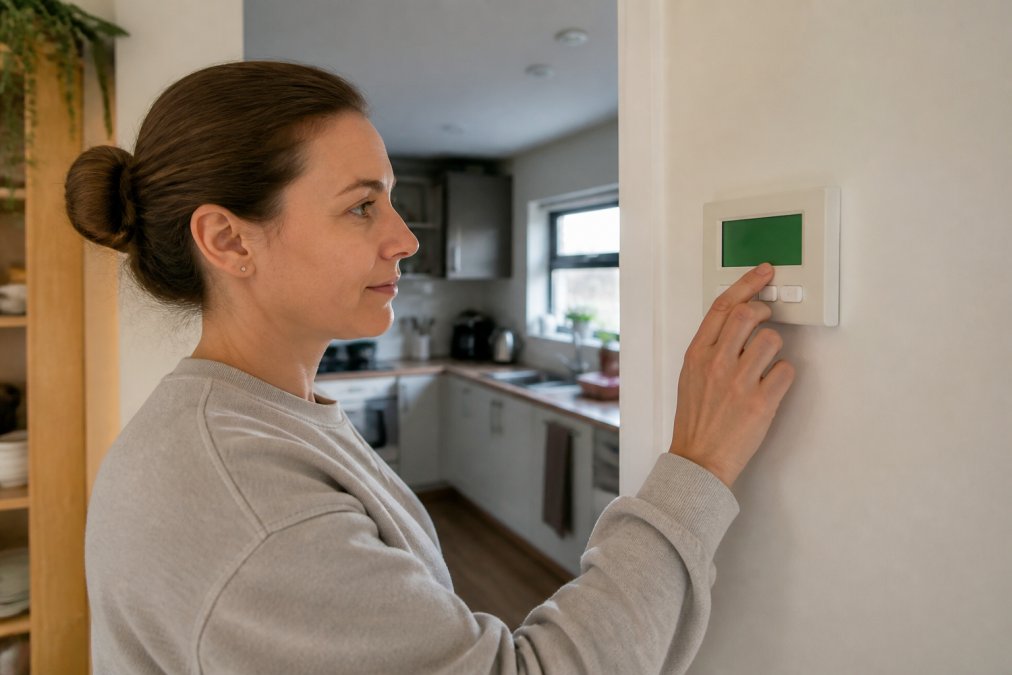
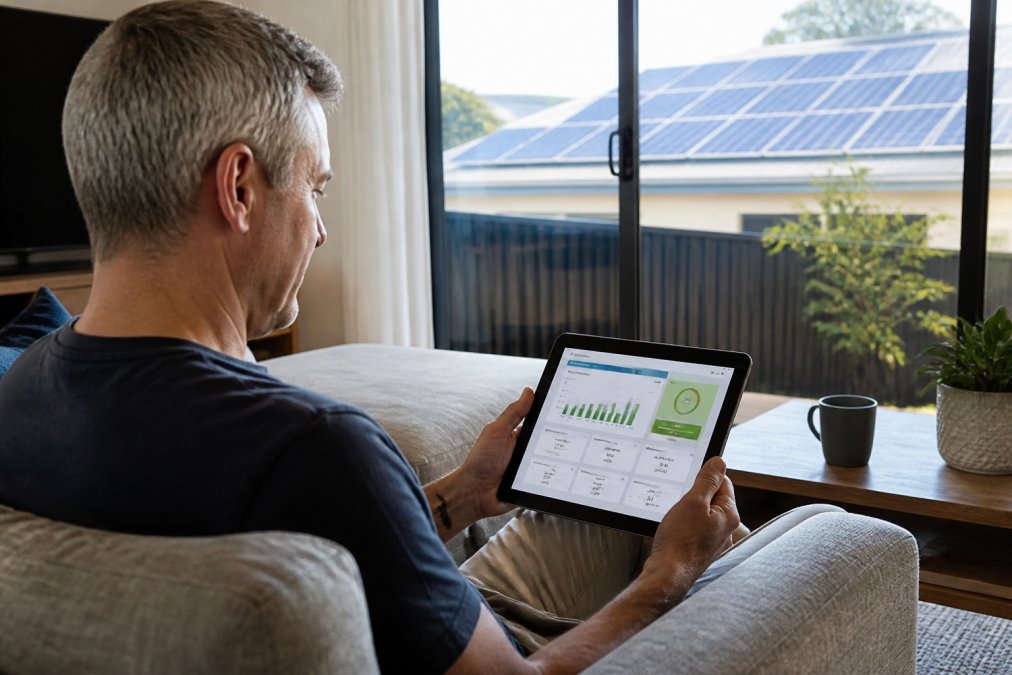
Real-time monitoring shows you exactly where your electricity goes, down to individual circuits and appliances. A modern HEMS displays consumption on a dashboard (mobile app or web interface) and triggers alerts when usage exceeds thresholds. You can control connected appliances remotely: turn off the pool pump from work, delay the dishwasher until off-peak, or preheat the hot water tank when solar generation is strong.
The real value emerges when you combine monitoring with automation. Manual control is unreliable; automation removes the human element. Rules execute consistently: “If solar generation exceeds 3 kW, turn on the pool pump.” “If grid price exceeds 40¢/kWh, charge the battery instead of the grid.”
Load shifting and demand response
Load shifting means moving consumption from expensive periods to cheap ones. In Australia, many networks offer time-of-use tariffs: off-peak rates (typically 11am-2pm and 8pm-7am) are 30-50% cheaper than peak. A HEMS identifies flexible loads, pool pumps, EV chargers, hot water systems, washing machines, and schedules them during off-peak windows. A pool pump running 6 hours during peak costs roughly twice as much as the same 6 hours during off-peak, saving hundreds annually with zero lifestyle impact.
Battery storage amplifies load shifting. You charge the battery during off-peak or when solar is abundant, then use battery power during peak. This arbitrage, buying cheap, using expensive, compounds savings. A 10 kWh battery cycled once daily across a 20¢/kWh price spread saves roughly $730 annually, before accounting for solar generation (peer-reviewed research).
Step-by-Step Process for Reducing Household Electricity Bills
Reducing household electricity bills requires a structured approach: start with visibility, identify the biggest consumption culprits, then implement efficiency and automation in sequence.
Step 1: Conduct an energy audit
An energy audit quantifies where your electricity goes. Request a professional energy audit from your network operator (often free or subsidised) or hire a private auditor. They’ll use thermal imaging to spot insulation gaps, check appliance efficiency ratings, and review your billing history. If professional audits aren’t available, download 12 months of billing data and use a plug-in power meter to measure individual appliances. Most households find that 3-5 appliances account for 60-70% of consumption (peer-reviewed research).
Step 2: Identify high-consumption appliances
High-consumption appliances are the key targets for managing home energy consumption. Typical culprits in Australian homes include air conditioning (30-50% of summer bills), pool pumps and heaters (10-20% annually), electric hot water systems (15-25% annually), and electric vehicle charging (5-15% if you own an EV). For each, note its wattage and typical daily runtime. A 2 kW pool pump running 8 hours daily consumes 16 kWh; at 35¢/kWh, that’s $2,044 annually. Reducing runtime to 4 hours saves $1,022.
Step 3: Implement passive design improvements
Passive design reduces the workload on heating and cooling systems without active equipment. Sealing air leaks around windows, doors, and ceiling access points costs $200-500 with a 1-2 year payback. Roof insulation (R1.5-R6 depending on climate zone) reduces heating and cooling load by 15-30%, costs $1,500-3,000, and pays back in 3-5 years. Double-glazing or reflective film reduces thermal transfer; thermal mass and shading reduce cooling load. These improvements require upfront capital but deliver permanent, maintenance-free savings.
Step 4: Integrate solar and battery storage
Size your solar system to your actual consumption, not your roof space. A 5 kW system generates roughly 20 kWh daily in temperate climates, 25 kWh in sunny regions. If your daily consumption is 15 kWh, a 5 kW system covers most daytime needs. Battery storage (8-15 kWh for most homes) captures excess solar and uses it during peak hours (3-9pm). GridFree Solar can assess your site, design a system tailored to your consumption profile, and handle all rebate applications; the Small-scale Renewable Energy Scheme and state-based battery rebates can offset 20-40% of system cost.
Step 5: Automate appliance scheduling
Automation is where managing home energy consumption becomes passive. Configure your HEMS to charge the EV during off-peak hours or when solar is strong, heat hot water during off-peak or when solar generation exceeds 3 kW, run the pool pump during off-peak windows, and shift flexible loads to cheap periods. Most modern HEMS platforms allow rule creation via a mobile app without technical expertise.
Solar System Monitoring and Maintenance Services
A solar system generates power reliably for 25+ years only if monitored and maintained. Monitoring detects performance drops; maintenance prevents safety hazards and component failure.
Real-time performance tracking
Real-time monitoring displays solar generation, battery charge state, grid imports, and exports on a live dashboard. You see immediately if generation drops below expected levels, a sign of soiling, shade, or inverter failure. Most systems alert you to faults: “Inverter offline,” “String A underperforming,” “Battery temperature high.” Early detection prevents extended downtime. Compare actual generation to weather forecasts; on a clear 25°C day, your 5 kW system should generate close to nameplate capacity. If it’s generating 60% of expected, soiling or shading is the culprit.
Preventative maintenance and safety compliance
Solar systems must comply with AS/NZS 5139:2019 (battery safety) and AS/NZS 3000 (electrical safety) (standards.org.au). Annual maintenance includes visual inspection of panels, wiring, and mounting hardware; thermal imaging to detect hot spots; battery monitoring; inverter firmware updates; and isolation switch inspection. GridFree Solar provides comprehensive maintenance plans that include scheduled inspections, performance reporting, and rapid fault response. Our CEC-accredited installers ensure your system meets all safety standards, critical for insurance claims and grid connection compliance.
Optimising Energy Consumption: Passive Design and Insulation
Passive design and insulation are the foundation of managing home energy consumption efficiently. They reduce the peak load on your HVAC system, which means smaller, cheaper solar and battery systems can meet your needs. Improving thermal performance through roof insulation (R4-R6, $1,500-2,500, reduces cooling load by 20-30%), wall insulation (R1.5-R2.5, $5,000-10,000, reduces heating and cooling load by 15-25%), window treatments ($500-1,500, reduces solar heat gain by 30-50%), and air sealing ($200-500, reduces air leakage by 20-40%) reduces peak demand and the size of solar and battery systems needed.
Integrating Solar Power, Battery Storage, and EV Charging
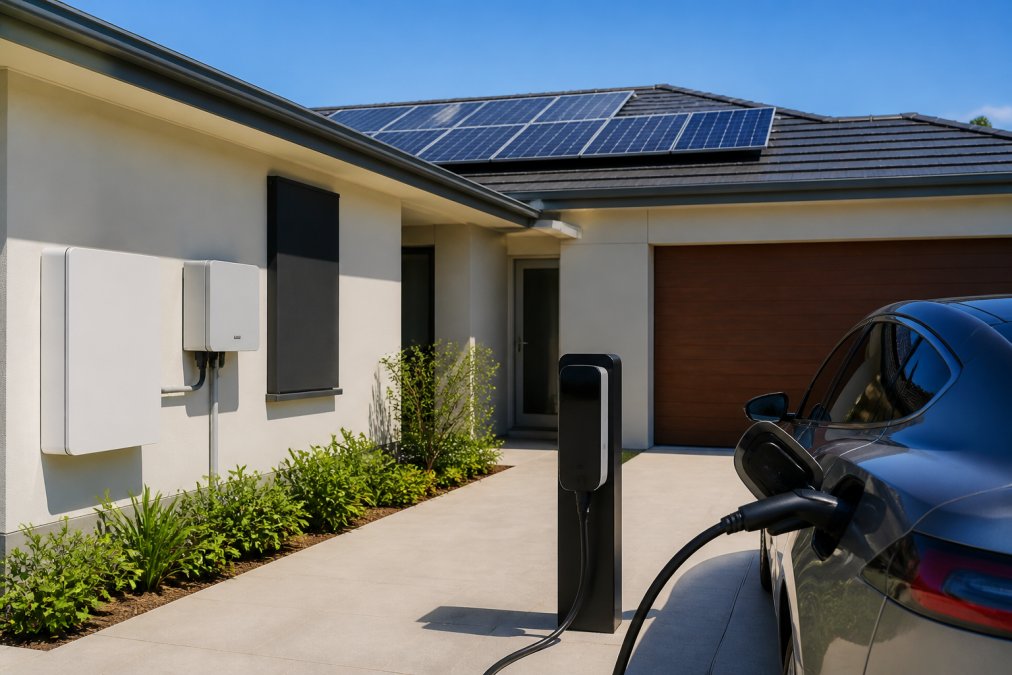
Solar, battery, and EV charging are interdependent. Integrate them correctly, and they amplify each other’s benefits.
Maximising solar generation and storage
Solar generation peaks at midday; household consumption peaks in evening. Battery storage bridges this gap: capture midday solar, use evening battery. A typical scenario: 9am-3pm, solar generates 4 kW while household consumes 1 kW; excess 3 kW charges battery and exports to grid. 3pm-9pm, solar generation drops and household consumes 3 kW; battery supplies 2 kW, grid supplies 1 kW. Battery storage is most valuable during peak-price windows. If your network pays 15¢/kWh for exports (6-8pm) and charges 50¢/kWh for peak imports (3-9pm), using battery to avoid that import saves $2.50 per cycle. Over 365 days, that’s $912 annually.
Automating EV charging schedules
EV charging is a flexible load and one of the best opportunities for managing home energy consumption. A typical EV charges 7-10 kWh nightly. If that happens during peak hours (6-9pm at 50¢/kWh), it costs $3.50-5. If it happens during off-peak (11pm-7am at 20¢/kWh), it costs $1.40-2. Shifting the charge saves $2-3 nightly, or $730-1,095 annually. Configure your HEMS to charge during off-peak windows by default, charge from battery if available, and charge from grid only if battery is depleted.
Common Mistakes to Avoid When Managing Home Energy
The most common mistake is treating managing home energy consumption as a one-time project instead of an ongoing process. Oversizing solar without considering consumption patterns wastes money on panels that export power at low rates. Undersizing battery storage limits flexibility; a 5 kWh battery cycles out in 1-2 hours of evening consumption. Ignoring insulation and passive design before installing solar is expensive; if your home loses 30% of heating and cooling through poor insulation, you’ll need a larger solar system to compensate. Failing to automate means you won’t benefit from consistent load shifting. Not monitoring performance after installation means you won’t detect faults, soiling, or shade issues.
Managing home energy consumption in 2026 is no longer optional if you want to control your electricity costs. The combination of time-of-use tariffs, battery storage, and automation creates real opportunities for savings, but only if you approach it systematically. GridFree Solar helps Australian homeowners design and install solar and battery systems that integrate seamlessly with smart home automation, then provides ongoing monitoring and maintenance to ensure your system performs as designed. Our CEC-accredited team handles rebate applications, ensures compliance with AS/NZS 5139:2019 and AS/NZS 3000 standards, and delivers the monitoring and support you need to maximise your energy independence and savings. Connect Now to discuss how we can tailor a managing home energy consumption solution to your home’s specific needs.
Frequently Asked Questions
How do smart home energy management systems work with solar in 2026?
Smart home energy management systems (HEMS) monitor real-time energy production from your solar panels and consumption across your home. They automatically shift high-load appliances to peak solar generation times, store excess energy in batteries, and coordinate EV charging schedules to maximise self-consumption. Systems can predict weather patterns and adjust automation rules accordingly, reducing reliance on grid imports and lowering electricity costs.
What is the most effective way to reduce home energy consumption?
A layered approach works best: start with passive design improvements like sealing air leaks, upgrading insulation, and optimising glazing to reduce heating and cooling demand. Then install solar panels paired with battery storage to shift consumption away from peak grid demand periods. Finally, automate appliance scheduling and monitor real-time energy use through a smart meter or HEMS. This combination typically delivers the biggest reduction in household electricity bills.
How long does it take to see savings from managing home energy consumption?
Savings begin immediately after your system is operational. Behavioural changes and automation adjustments often reduce bills within the first billing cycle. Solar and battery systems typically achieve payback periods of 5-7 years depending on your location, system size, and available rebates. Government schemes like the Small-scale Renewable Energy Scheme and the Cheaper Home Batteries Program accelerate this timeline significantly.
What qualifications should I look for in a solar installer for energy management advice?
Choose a Clean Energy Council (CEC) Accredited Installer who understands both solar installation and smart energy management system integration. Verify compliance with AS/NZS 5139:2019 (battery safety) and AS/NZS 3000 (electrical safety). Accredited installers provide expert rebate guidance, ensure proper system interoperability, and offer ongoing monitoring and maintenance services to maximise your energy savings and system performance.
This article was written using GrandRanker